"I got into an accident and was nervous about finding a personal injury attorney after hearing so many awful stories, but from the start, I felt confident with my choice in Kaplan Law, LLC." Read More - Ben
"Matt and Gillian took great care of me during a stressful time of my life. Very caring and knowledgeable group. I would definitely recommend Kaplan Law!" Read More - Kayleigh
"Incredible service and results! Matthew Kaplan and his paralegal Gillian did an amazing job for me. Not only did they resolve my case beyond my satisfaction, they also were very caring and supportive thru my recovery. I couldn't ask for a better attorney." Read More - Jamal
Matthew D. Kaplan

One of the stranger stories of the week comes from Minnesota where a fatal crash involving two cars and two semi-trucks Monday not only killed two people, but also released a swarm of millions of bees.

According to the Minneapolis Star-Tribune, rescuers responding to the fatal car-truck crash had to fight their way through dark clouds of bees released from one of the trucks, both of which were hauling bees that had spent the winter in Mississippi to North Dakota for the summer. The cars were reportedly crushed between the two trucks. Police are still investigating the cause of the fatal car-truck crash, according to the Star-Tribune.

The bee-laden semi-trailers collided with two cars on Interstate 35 closing what the Star-Tribune described as a five-mile stretch of the interstate for several hours. The paper quoted a fireman who was one of the first rescuers on the scene saying; “I saw this big black cloud… I opened up my door and got stung in the face by a couple of bees.”

A Portland driver accused of intentionally running over a cyclist last year was found guilty of assault by a Multnomah County judge Monday, according to media reports. Sentencing is scheduled for June 8, according to The Oregonian.

The Multnomah County judge cleared Wayne Thompson of first and second degree assault charges but found him guilty of the lesser crime of Third Degree Assault. The Portland auto and bike collision took place last August. According to The Oregonian Thompson and cyclist Michael Luther argued in a parking lot near the intersection of Northeast 122nd Avenue and Glisan Street before “Thompson put his car into reverse and backed into Luther at an estimated 40 mph, police said.” Witnesses said that at the time of the accident Thompson “was looking over his left shoulder, in the direction of travel, and appeared agitated when he struck Luther.”

Though he was wearing a helmet at the time of the incident, Luther suffered an Oregon traumatic brain injury and has been unable to return to work.

From Maine this weekend comes a strange and tragic story that should be a reminder for all Oregonians of the importance of safe driving. Police in Wells, a town in southern Maine, say a man died Saturday as a result of an unusual multi-car auto accident. What makes this tragedy stand out is the fact that the victim of this multi-car fatal accident was not in either of the vehicles involved in the crash: he died while standing on his lawn presiding over a yard sale – and the yard sale itself was what touched off the events leading to his death.

For Oregonians this tragic story offers several reminders: the importance of safe driving, of course; but also the fact that a Portland fatal car crash can happen anytime, anywhere and that those most severely impacted by an Oregon car crash need not be drivers or passengers in cars and trucks involved in a Portland, Medford, Eugene or Salem auto accident.

According to television station WCSH, the tragedy began early Saturday morning when a driver traveling along a road in Maine spotted a yard sale and decided to make a U-turn so that he could get a closer look. As he did so, “another truck hauling a 30-foot camper-trailer” struck his vehicle. The Truck-camper combo jackknifed onto the lawn where the yard sale was going on, killing the home’s owner and injuring his mother-in-law. The driver of the pick-up that caused the accident was also hospitalized with serious injuries, while the four people in the truck-camper suffered only minor injuries, the station reports.

A football player at Eastern Oregon University abruptly died last week after suffering an Oregon traumatic brain injury during what appeared to be an otherwise normal play, according to the Associated Press.

Dylan Steigers was 21. He had recently transferred to Eastern Oregon from the University of Montana and was listed as a freshman on the school’s football roster. The AP quotes school officials as saying they are investigating the incident, even as they offer counseling to Steigers’ teammates and family.

The Oregon traumatic brain injury that is believed to have led to Steigers death was an acute subdural hematoma, an injury in which jarring of the head leads to bleeding between the brain and the skull. The blood accumulation, in turn, puts pressure on the brain itself, a condition that can rapidly lead to serious injuries or death.

A dog attack on a child in California is a timely reminder for Oregon parents of the danger posed by untended animals and negligent owners. Oregon dog attacks can lead to serious injuries – a fact that today’s situation in California calls readily to mind.

The dog attack took place this morning in suburban Orange County. According to local news reports, a 6 year old girl and her three year old sister were walking near their home when they were set upon by a large boxer. As the children screamed for help their mother emerged from the family home to find the dog on top of the six year old, biting her. The mother and the girl’s 14 year old brother reportedly managed to get the dog off the girl. The family then retreated into their house, from which the mother emerged a few moments later holding a pistol. She shot the dog in the neck. The animal died a few hours later at the county animal care center. Police are still investigating the incident, including searching for the dog’s owner, according to the Orange County Register.

This shocking story is a reminder that the owners of vicious animals need to be held to account. The child in California was bitten in seven places, though she was not seriously injured. Many times, however, dog attack victims are not so lucky.

As a recent report in The Oregonian details, Adventist Medical Center has witnessed a dramatic drop in Portland hospital deaths from bloodstream infections in the three-plus years since it instituted a new set of simple, but effective, safety procedures. The development is obviously good for patients, but it also has implications for Oregon wrongful death and medical malpractice claims related to our state’s hospitals.

The paper explains that in 2006 Adventist began implementing a set of relatively simple procedures developed at Maryland’s Johns Hopkins University. These involve medical professionals carefully checking each other to ensure thorough hand-washing before care-givers have contact with patients, greater attention to the use of antiseptics to clean patients skin and more extensive use of “full surgical regalia”.

As the paper reports, data collected by the state shows a dramatic drop in mortality and infection rates once the new procedures went into effect – especially when compared with other Portland area hospitals that do not follow the Johns Hopkins guidelines. The newspaper, citing Adventist’s director of quality resources, reports that there have been no ICU infections at the hospital since the spring of 2007.

Late last month I summarized the key findings of a New York Times article on the latest gadgets available to Oregon drivers and designed to combat distracted driving. Products like this have become increasingly important since the Oregon distracted driving law went into effect in January. As a Portland distracted driving attorney I’ve worked hard to keep on top of both the technological and legal sides of this fast-developing area of the law.

As I noted last month, one barrier to effective high-tech solutions combating Portland distracted driving is what has become known as the “passenger problem”: if your anti-distracted driving app works mainly by disabling all or part of your phone while the car is in motion (as determined by the phone’s GPS), how does that effect someone who is riding in the car but is not behind the wheel? Cutting down on Portland injury car crashes linked to distracted driving is a priority for everyone – but it is also a reality of modern life that not everyone making calls or texting from a moving car is behind the wheel.

My earlier post noted that different products deal with this issue in different ways. I mentioned that one product, Zoomsafer, allowed users to bypass its call blocking functions by completing a timed puzzle – presumably one too difficult to attempt while driving. Shortly after publishing that blog, however, I received an email from ZoomSafer’s Marketing Manager, Eleanor Jones, which reads, in part:

“Users cannot bypass ZoomSafer’s software by successfully completing a timed puzzle. We believe that such a mechanism is incredibly dangerous as it encourages drivers determined to flout the block to completely disregard the road in order to regain access to their phones’ texting functions.”
The system, she writes, does have a “passenger mode” which, in effect, puts “the automatic speed detection on ‘snooze’.” This, frankly, is good news, if only because lack of some route around the passenger problem threatens to emerge as a major barrier to adoption of anti-distracted driving devices in Oregon and elsewhere around the country. We are probably still a year or so away from having good statistical data on the new Oregon distracted driving ban and its effectiveness, but high tech solutions designed to address user’s concerns while keeping them safe seem like a very good start.

Continue reading

As recently as last week officials at TriMet, metro Portland’s transit company, dismissed as impractical suggestions that the city should stop allowing busses to make left-hand turns. Criticism of the practice emerged in the wake of an April Portland fatal bus accident that left two people dead and three others injured after they were struck by a bus turning left through a crosswalk. The bus had a green light at the time, but the pedestrians also had a ‘walk’ signal, according to local media reports.

Since the accident it has emerged that federal safety data indicate that eliminating left turns from bus routes can have a significant effect on safety, as can other measures such as requiring drivers to honk their horns. An article in The Oregonian last week listed several cities in different parts of the country that have taken the study’s recommendations to heart, but noted that Portland is not among them. As recently as a few days ago Portland transit officials dismissed the idea of instituting similar changes here, claiming our city’s street grid makes such measures impractical.

Late last week, however, TriMet reversed itself. On Friday the authority announced that following last month’s Oregon bus injury crash changes are being made to routes 12, 17 and 44. According to an article in The Oregonian, “more operation, training and route changes are expected as part of a sweeping safety review.” The announcement follows the paper’s revelation that TriMet recently settled a Portland personal injury lawsuit with a woman who lost her leg in 2008 when she was struck by a bus making a left turn.

Last month, two people died and three others were injured in a Portland fatal bus accident when they were hit by a Tri-Met bus making a left-hand turn. Now, an investigation by The Oregonian demonstrates that data on the problem of busses and left-turn accidents has existed for some time, and that measures implemented in other cities could prevent Oregon bus accidents like the one that took place in late April.

The newspaper cites a federal study showing “that bus-pedestrian collisions are more than twice as likely to happen during left turns.” It notes that other cities, including Des Moines, Iowa and Cleveland, Ohio, instituted relatively simple procedures following the study’s release in an effort to improve safety. In both cities, for example, bus drivers are forbidden to make left-hand turns and are required to honk their horns before turning right. The article notes that six cities, including Cleveland and Richmond, Virginia, are equipping vehicles with “pedestrian warning systems”. In Richmond, for example, a loud recorded voice announces “Caution: bus turning” whenever the vehicle turns out of an intersection.

The newspaper quotes a Tri-Met spokeswoman, however, saying that a ‘no left turns’ policy for preventing Oregon bus accidents is not feasible in downtown Portland because of the way the city’s streets are laid out. The spokeswoman also dismissed the idea of a policy to require honking as busses turn on the grounds that it would make drivers rely on the horn “instead of their awareness of pedestrians.”

Oregon State Police are reportedly still investigating the circumstances of a three-car Oregon crash that took the life of a 72 year old woman from Roseburg last week. According to Eugene TV station KMTR, the Oregon fatal traffic accident took place near the intersection of Highway 42 and Carnes Road in the small town of Green, just west of I-5 between Medford and Eugene.

The Oregonian reports that 72-year old Nobu Cress was severely injured when her car was struck by a vehicle that ran a red light as she was turning left through the intersection. The vehicle that struck Cress also hit another car though the driver of that vehicle suffered only minor injuries. Cress was airlifted to a Portland area hospital, but later died, the newspaper reports. The driver of the car that struck her was treated at a hospital in Roseburg, closer to the accident site.

According to KMTR, “troopers have yet to release any information on what caused the crash, like a mechanical problem, medical problem or distraction,” though they did say that there is little evidence that the driver who ran the red light applied her brakes.

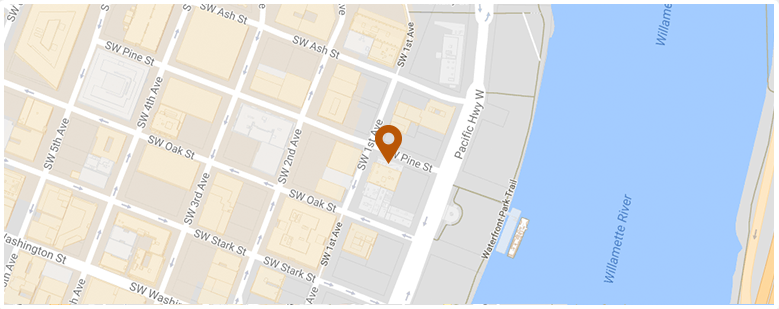
50 SW Pine St 3rd Floor Portland, OR 97204 Telephone: (503) 226-3844 Fax: (503) 943-6670 Email: matthew@mdkaplanlaw.com
map image