"I got into an accident and was nervous about finding a personal injury attorney after hearing so many awful stories, but from the start, I felt confident with my choice in Kaplan Law, LLC." Read More - Ben
"Matt and Gillian took great care of me during a stressful time of my life. Very caring and knowledgeable group. I would definitely recommend Kaplan Law!" Read More - Kayleigh
"Incredible service and results! Matthew Kaplan and his paralegal Gillian did an amazing job for me. Not only did they resolve my case beyond my satisfaction, they also were very caring and supportive thru my recovery. I couldn't ask for a better attorney." Read More - Jamal
Matthew D. Kaplan

An innovative program at a high school in Yamhill recently brought together students and local safety officials to demonstrate the dangers of Oregon drunk driving, according to an account in the Yamhill Valley News-Register.

The program, known as SKID (Stopping Kids Intoxicated Driving) was developed in 1998 by the Sheriff’s Office in Washington County, west of Portland. It encourages students to work with local police and fire officials, the sheriff’s office, state police and a local funeral home to demonstrate Oregon drunk driving car crash scenarios that are, in the paper’s words, “highly realistic but not real.”

The demonstration described by the newspaper was designed to simulate the effects of drunk driving and drug use in the imagined aftermath of prom night. In addition to the students assigned to simulate impaired driving, others were texting in the car, some of them riding without wearing seat belts. Those details were designed to emphasize to teens the importance not just of not driving while impaired, but also of not choosing to ride along with an impaired driver.

Oregon parents of a 12-year old boy killed in a go-kart accident in Washington state have filed a Washington wrongful death suit against Benton County, the city of Richland (where the accident occurred) “and several other people and organizations whose negligence (the parents) claim contributed to their son’s death,” the Tacoma News-Tribune reports.

Kenneth McKinster died in 2008 “when his kart slid off the track while he was trying to navigate a hairpin turn during a weekend racing event,” the paper reports. His parents believe the kart itself was poorly designed, and was later improperly maintained by the Tri-City Kart Club and by the city and county which, at the time, owned the track itself. According to area TV station KEVW the case is expected to be heard in court before the end of the year.

Go-karts are motorized vehicles capable of traveling at fairly high speeds but including very few of the safety devices we all take for granted in ordinary cars. That places a special responsibility on the owners and operators of go-karts and similar vehicles when it comes to safety. Injuries to children here in Oregon and Washington can easily occur, as this case tragically demonstrates.

Police are investigating the circumstances of an Oregon car crash involving two pick-up trucks and a semi-trailer that left one of the pick-up drivers dead, according to The Oregonian.

The accident took place last week in Dallas, west of Salem. According to the newspaper, a pick-up driven by a 58-year-old Grand Ronde man drifted across the centerline mid-evening on Oregon Route 22. The pick-up and semi-trailer collided, killing the pick-up’s driver. According to the Salem Statesman-Journal, another pick-up following behind the big rig was unable to take evasive action and rear-ended the larger truck.

The driver of the semi was injured in the Central Oregon truck accident and was taken to a local hospital. His injuries were not reported to be serious. The driver of the second pick-up was uninjured, the paper reported. Oregon 22 was closed for several hours while the Oregon State Patrol and local police launched their investigations of the accident.

A story from Northern California offers a vivid reminder for us here in Oregon that drunk driving can lead to all kinds of trouble above and beyond car crashes. According to a recent account in the Red Bluff Daily News, a man is now in prison after what appears to have been an alcohol-fueled road rage incident on Interstate 5.

The paper reports that the alleged incident unfolded after a 21-year-old driver passed a car on the right. That vehicle was driven by 66-year-old Warren Hawkins. The younger driver reportedly went around Hawkins after driving behind him for some time in the fast lane where Hawkins was reportedly traveling several miles per hour below the speed limit.

Hawkins allegedly responded by first pulling alongside the younger man “yelling and making hand gestures,” and then attempting to side-swipe him twice. He then moved back behind the 21-year-old’s vehicle so that he could ram it – again, twice. The paper reports that Hawkins next followed his alleged victim when he exited the interstate, making a u-turn in an intersection and then coming “back the wrong way… before swerving left to complete a circle” around the younger man. The out-of-control driver was reportedly shouting “death threats out an open window” when police arrived on the scene.

A poignant reminder of the long-term effects of concussions on football players cane over the weekend when Terry Bradshaw revealed in a blog post that “he is suffering from deficits in short-term memory and impairments in his hand-eye coordination,” according to the Los Angeles Times. The newspaper reports that the former Pittsburgh Steelers quarterback, a long-time NFL commentator on television, attributes his ever-worsening problems to “at least six concussions” sustained during his NFL career.

Bradshaw, of course, played in the 1970s and it might be argued that today’s players are better-trained and use better equipment than their predecessors. Two minutes watching NFL films from that era, however, will show any viewer that while today’s equipment may be better, today’s players are bigger, stronger, play the game faster and hit much, much harder than those of a generation ago.

Bradshaw’s revelations of the ongoing effects of brain injuries come at a time when the league is trying to improve its less-than-stellar record of caring for players once their careers are over. It also, as the paper notes, arrives at a time when team officials and players in the worlds of football and hockey are increasingly aware of the damage lesser hits can cause. The Times cites a doctor at UCLA who mentions the cumulative effects of multiple less-than-concussion-level hits – an issue that the NHL has recently begun paying particular attention to.

Following up a story I wrote about in February, The Oregonian reports that federal regulators have cleared Portland Adventist Medical Center of wrongdoing in a high-profile case in which a man died of a heart attack in the hospital’s parking lot.

As regular readers will recall, 61-year-old Birgilio Marin-Fuentes suffered a heart attack as he drove into Adventist’s parking facility on February 10. He crashed his car into a wall, but lay in the vehicle unnoticed for more than 20 minutes despite the presence of surveillance cameras in the facility and the fact that the emergency room door was only a short distance away.

Police eventually arrived to help the stricken man. There is some dispute over how the hospital acted at this point. Some accounts say a police officer who ran to the emergency room was rebuffed by desk staff there and told the emergency needed to be telephoned in before hospital staff could respond – despite the emergency being on their own property. Hospital spokespersons have rejected that version of events. Martin-Fuentes died shortly after being moved inside the hospital building.

On March 30 a case was argued before the US Supreme Court that has the potential to impact the use of nearly every generic prescription drug sold in America. The court heard oral arguments in a case involving generic drug manufacturers and their contention that they should be held to less strict labeling laws – and receive greater immunity from lawsuits – than the manufacturers of brand-name medications. This case has clear, significant implications for personal injury and medical malpractice law here in Oregon. The court’s final decision, expected in the late spring or early summer, will bear close scrutiny

According to a detailed account of the case on the website of the American Association for Justice, generic drug makers are arguing that a federal law requiring them to use the same labels as their brand-name rivals prohibits them from strengthening warnings to consumers and also, in effect, prohibits consumers injured by generic drugs from suing the manufacturers over labeling issues. They are making this claim, AAJ notes, despite a court brief filed by one of the congressmen who write the law saying that his, and Congress’, intent was nothing like what the drug makers claim.

At issue is a piece of legislation known as “Hatch-Waxman” that requires “a generic label to match that of its associated brand-name drug.” Lawyers for the plaintiffs, two women injured by a generic prescription drug for stomach conditions, described the case as turning on the manufacturers’ belief that “in the face of considerable information that the warnings on their products were inadequate” generic drug manufacturers did nothing to protect consumers, and feel they should suffer no consequences for that decision. The case is especially important since, as AAJ reports, “70 percent of all prescriptions in the United States are filled with generic drugs and that, of the drugs that have both a generic and a brand-name available, more than 90 percent of the prescriptions are filled with generics.”

A surprising – and heartening – article in the sports section of the New York Times last week revealed that heightened awareness of the serious nature of sports-related concussions and other traumatic brain injuries has turned up in an unexpected forum: video games.

The paper reports that “Madden NFL 12, the coming version of the eerily true-to-life NFL video game played by millions of gamers, will be realistic enough not only to show players receiving concussions, but also to show any player who sustains one being sidelined for the rest of the game – no exceptions.”

Considering the extent of the criticism being weathered by the real-life NFL over head injury issues and the long term health of the league’s players, this development can only be called striking. The article quotes John Madden himself saying that the change in the game’s format was driven partly by the desire for ever-greater realism, but also from a belief that children need to understand how serious a matter concussions can be. “We want that message to be strong,” Madden told the Times.

Oregonians could learn some lessons about the dangers of drunk driving accidents from an incident unfolding to our south, in Northern California.

A 64-year-old retired La Selva Beach man is facing serious charges after what media reports describe as a classic drunk driving hit-and-run accident. The Santa Cruz Sentinel, quoting police sources, says the alleged perpetrator “was driving a 2006 Camry south on State Park Drive approaching the Highway 1 off ramp just before 2 p.m.” last Sunday when he hit a 12-year-old boy in a crosswalk.

The paper reports that the driver fled, but witnesses at the scene “helped identify him” leading to his arrest just over an hour later. The good news is that the child does not appear to have been seriously injured.

A Florida judge has issued a key ruling in a closely watched wrongful death case that may have implications for student athletes here in Oregon and elsewhere.

The case concerns the death of Ereck Plancher, a 19-year-old student and football player at the University of Central Florida. Plancher died in March 2008 after collapsing during a spring workout that was being supervised by the university football coach. According to the Orlando Sentinel “an autopsy found that the stress of the workout triggered Plancher’s sickle cell trait, causing misshapen blood cells to damage his organs and shut down his body.”

Though the university “contends it did everything possible to save his life,” Plancher’s parents filed a wrongful death lawsuit against the school, its trustees and the UCF Athletics Association. Last week’s ruling allowed the parents to seek punitive damages in the case, but instructed the jury only to award such damages if the jurors “specifically find that no water and no athletic trainers were present for the final portion of Palncher’s workout.”

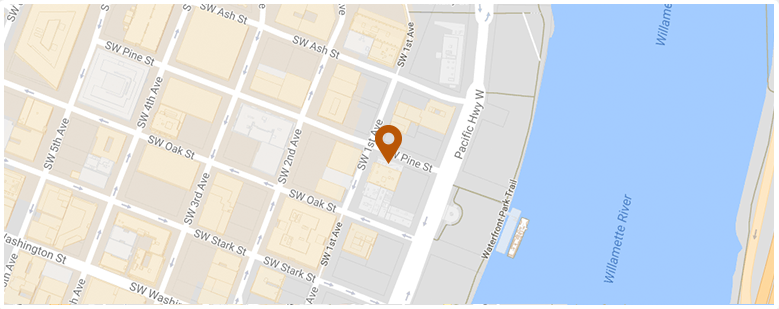
50 SW Pine St 3rd Floor Portland, OR 97204 Telephone: (503) 226-3844 Fax: (503) 943-6670 Email: matthew@mdkaplanlaw.com
map image