
Articles Posted in Motor Vehicle Accidents

Two serious Portland pedestrian accidents only hours apart – one of them fatal – highlight the danger pedestrians continue to face here in northern Oregon, despite a renewed public focus on the issue in recent months.

The first accident took place last Monday on Southeast 82nd Avenue where a 27-year old pedestrian was hit by a car and run over by not one but two vehicles, according to a report in The Oregonian. The victim is hospitalized in serious condition. According to an OSP spokesperson, the Oregon pedestrian car accident began when she was struck while crossing 82nd Avenue in a marked crosswalk Monday afternoon. A pick-up truck traveling behind the car that hit the pedestrian ran over her as it attempted to drive around the first car. The driver of the first car, apparently startled, then moved her vehicle – in the process running over the victim a second time. Neither driver was cited in the incident, according to The Oregonian, but an investigation is still under way.

The second Portland car accident took place Tuesday evening. Unlike the first accident, where both drivers are cooperating with police, this was a hit-and-run, and a reward is being offered for information leading to the arrest of the driver, according to The Oregonian. The accident, on Southeast Division St, led to the death of a pedestrian who was struck “as he crossed the wide road”, the newspaper reports. The victim was pronounced dead at the scene.
New Year’s Eve and the days leading up to it are always among the most dangerous times to be on the road be it here in Oregon or elsewhere in the country. This year was no exception. According to the Salem Statesman-Journal one death and a serious injury resulted from an Oregon truck crash near McMinnville in the hours before the New Years festivities kicked off.

According to the newspaper the wreck took place in the early hours of December 30 when a car “crossed the centerline and collided with a semi hauling a tanker trailer in the other direction” on Highway 18 northeast of McMinnville. As a result of the accident and subsequent investigations the highway was closed for most of the day, the paper reported.

Attempts by the semi to avoid a Central Oregon truck crash with the car, a Hyundai, caused another semi to be involved in the crash. As it rolled off of Highway 18’s eastbound lane the first semi also caught fire. According to the Statesman-Journal, neither of the truck drivers was injured. A passenger in the Hyundai, however, died of his injuries shortly after being transported to a local hospital. The Hyundai’s driver was hospitalized with what police described as serious injuries.

As we head into the New Year’s Eve weekend one of the nation’s largest cellphone companies is taking a proactive stance against distracted driving. AT&T has released an 11-minute video documentary, entitled “The Last Text,” to raise awareness of the dangers of texting behind the wheel as we head into the final weekend of the holiday season.

The video can be viewed at both of the source links below, as well as on YouTube. It is part of a broader anti-texting publicity campaign sponsored by AT&T under the umbrella title “It Can Wait.” The documentary “features stories about people whose lives were adversely affected by texting behind the wheel,” according to a report in USA Today.

Oregon, of course, has had a distracted driving law in place for almost exactly one year. That law makes texting by drivers illegal under pretty much any circumstances but, as I noted in a post just last week evading the ban is relatively easy and the fine for getting caught ($90) is relatively low. The Oregon distracted driving law is still too new for any significant body of data to have been gathered concerning its enforcement.

A crowd turned out on Barbur Boulevard last night to remember Angela Burke, according to an account posted on the Bike Portland website. Burke, 26, was killed last week by what The Oregonian, quoting police and witnesses, described as a speeding car (reportedly doing 75 in a 35 mph zone) traveling barely on the edge of control.

The Oregonian reports that the driver who allegedly struck Burke was arraigned last Friday “on allegations of negligent homicide and driving under the influence of intoxicants.” He was reported to have significant amounts of both alcohol and marijuana in his system at the time of his arrest, shortly after the Portland fatal pedestrian car crash that killed Burke. The suspect has another court date scheduled later this week.

As both the newspaper and Bike Portland noted, the stretch of Barbur where Burke died is notoriously difficult for Oregon pedestrians and cyclists to cross safely, especially at rush hour. Even those going to last night’s vigil were urged to take safety precautions.

A terrible story from California this week reminds all of us that distracted driving laws – be they here in Oregon or elsewhere – cannot, by themselves, stop some people from behaving destructively. To be effective, the laws require enforcement by police and the accountability provided by courts.

According to a report by the Los Angeles TV station KTLA, a 20-year-old Glendale woman now faces vehicular manslaughter charges “after allegedly running a stop sign and killing an elderly pedestrian while texting on her cell-phone.” The station reports that the pedestrian, an 80-year-old man, was thrown into the air and died of the head trauma suffered as he landed on the sidewalk. The accident took place in September. Police arrested the driver a few days ago after concluding a three-month investigation.

California’s laws on cellphone use by drivers are similar to Oregon’s (in some respects they are actually stronger: California explicitly bans cellphone use by school bus drivers in all circumstances, a provision the Oregon distracted driving law omits). Like California, the Oregon distracted driving law also allows for “primary” enforcement, meaning that offenders can be pulled over solely for breaking the ban on using a handheld phone or texting while driving. The question we have to ask is how often this actually happens (texting, in particular, is relatively easy to hide by simply holding the phone low enough that it is difficult or impossible for an officer glancing through the driver’s window to see).

A post-holiday news release from the Oregon State Police notes that the state recorded three Oregon fatal car crashes over the just-concluded Thanksgiving holiday weekend. The statement notes that this represents an increase over the same period during the last two years. Only two people died on Oregon’s roads over the 2009 Thanksgiving weekend, an identical figure to 2008. The statement noted, however, that the number of Oregon car crashes troopers responded to skyrocketed this year: “troopers reported responding to over 300 traffic crashes, nearly 2-1/2 times the number reported during last year’s Thanksgiving holiday period,” the statement said.

The statement noted that icy road conditions, particularly in Eastern Oregon, were a factor in all three of the state’s fatal holiday weekend accidents. The unusually high number of non-fatal crashes, however, are a special cause for concern as the vast majority of them cannot be attributed to bad weather.

In Gearhart, for example, a 21-year-old driver was cited by police on Thanksgiving Day for his role in a two-car accident that left one person seriously enough injured to require medical evacuation to Portland.

The death of a young Corvallis man on Thanksgiving Day as the result of an Oregon motor vehicle accident involving an armored car was a sad reminder of the dangers of driving on holiday weekends and has left a number of legal questions potentially unresolved.

Joseph Michael Pablo was riding in the back of an armored car early on the morning before Thanksgiving when the vehicle’s driver lost control, according to reports in the Corvallis Gazette-Times and the Salem Statesman-Journal. The accident took place off Highway 99W near Monmouth, southwest of Salem. The Gazette-Times reports that Pablo’s armored “truck was headed south and veered off the right side of the road, hit a tree and rolled several times before coming to rest on its roof.”

Pablo had been riding in the back of the truck as part of his job as a guard working for the company operating the vehicle. Pablo was transported to an area hospital in critical condition and died of his injuries the following day. The truck’s driver at the time of the Oregon fatal truck accident was not seriously injured and did not require hospitalization. He was cited for Oregon careless driving, according to the Gazette-Times.

Back in August I wrote about the dangers posed to children by ATVs, and the effort in Massachusetts to cut the number of deaths and injuries to young riders through a new law banning ATV use by kids 14 and younger. Now we have even more evidence of the need for such laws, and the need for accountability among ATV manufacturers.

According to a recent article in the trade publication The Safety Record, a new study conducted by Johns Hopkins University’s Center for Injury Research and Policy looks at ATV-related hospitalizations and injuries to children between 1997 and 2006. The study found a huge spike in both categories among children during that time period. The numbers are particularly noteworthy because, as The Safety Record notes, it was during this time that a 10-year consent agreement between the Consumer Product Safety Commission and ATV manufacturers expired. Under that agreement, reached in 1988, the manufacturers offered “free training for riders, warning labels, a public education campaign and a ban on three-wheeled ATVs,” the publication notes. Once the agreement expired some manufacturers continued to honor it voluntarily, but others did not.

During the 1997-2006 period, the study found, ATV-related injuries to children (defined as 17 years old or younger) increased by 150 percent overall. Some sub-groups showed even more alarming jumps: notably 15-17 year old boys, among whom injuries increased by 260 percent. “All-Terrain vehicles are inherently dangerous to children,” the report quotes Dr. Stephen Bowman, a Johns Hopkins professor and the study’s lead author, saying.

A pick-up truck running a stop sign caused an Oregon two-car crash that left one dead and ten injured, according to a report at MyCentralOregon.com. The crash took place on Highway 361 near Culver, in Central Oregon and was serious enough to require mobilizing troopers from two separate OSP barracks as well as the Jefferson County Sheriff’s office along with emergency medical personnel from both Jefferson County and Warm Springs.

According to the website, the accident took place when a pick-up driven by 28-year-old Andrea Orozco of Madras ran a stop sign and collided with a Toyota driven by Linda Ross, 61, of Metolius. The site reports: “The impact caused the Toyota to travel west where it came to rest off the highway. (Orozco’s) Ford Expedition traveled travelled northwest and overturned before coming to rest on its side.”

A passenger in Ross’ Toyota died from injuries sustained in the Oregon car crash several hours after the accident, while Ross herself was hospitalized with what the website report describes as “serious injuries”. Orozco was carrying eight passengers – two adults and six children ages 2 to 14. She and all of her passengers were transported to area hospitals with what were also described as “serious injuries”.

Hard on the tragic death of a Portland toddler in a Portland pedestrian accident, and new statistical evidence that the danger to pedestrians is increasing here in Oregon, the Portland Tribune has published an analysis highlighting some of the metro area’s worst intersections.

According to the paper, “Northeast Marine Drive now ranks No. 1 on the city’s new list of most dangerous stretches, with 16 fatalities in the past 10 years.” It is important to note that while Northeast Marine has seen the largest number of fatalities, the worst stretch of road for crashes overall is Southeast Powell Boulevard. Though there have been fewer pedestrian deaths there over the past decade (nine, versus the 16 on Northeast Marine), the overall crash rate is significantly higher than anywhere else in the city: 5345, including a stunning 356 just at the intersection of Southeast Powell and 82nd Avenue. See below for a link to the original article, which includes the full list.

The last few weeks have provided both tragic evidence for and statistical validation of the belief that reckless drivers need to be held to account for their actions. Crossing the street should not be the dangerous and life-threatening experience it has become in some parts of Portland. In recounting the story of one accident, the Tribune notes that the busy intersection on Burnside where it took place “is nearly impossible to cross on foot, though it is, in fact, a legal crosswalk.”

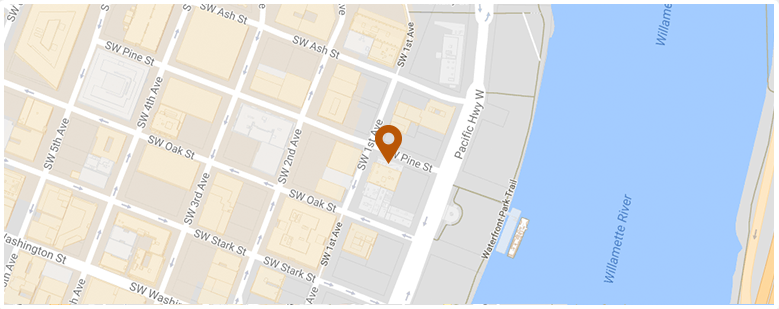
50 SW Pine St 3rd Floor Portland, OR 97204 Telephone: (503) 226-3844 Fax: (503) 943-6670 Email: matthew@mdkaplanlaw.com
map image
Contact Information