Articles Posted in Motor Vehicle Accidents

I could not let the month end without taking note of the fact that April is National Distracted Driving Awareness Month, so designated by the US National Safety Council.

As The Oregonian and other local media have noted, police and other law enforcement officials are marking the month with stepped-up efforts at both enforcement of the state’s two-year-old distracted driving law, and at education. The paper reports that last year the “state police pulled over 3,782 drivers suspected of texting or talking on a handheld cell phone, a 7 percent increase over 2010.” It further notes that the OSP issued over 1,400 tickets and 2,350 warnings.

It’s also worth noting that this month Idaho and West Virginia became the latest states to outlaw texting while driving. That brings the total number of states banning the practice to 37, according to the ‘Family Car Guide’ website.

The latest newsletter from Oregon’s Department of Transportation offers a timely reminder now that spring is here: “Warmer weather and longer days naturally bring out more walkers,” it notes. “It is each individual’s responsibility to be safe – on foot or behind the wheel.”

The agency offers a dual reminder. Drivers should be aware that more people will be walking (and, though the release does not mention it, biking) with the arrival of spring and summer. That fact requires special vigilance on the part of drivers. Pedestrians, however, also need to be reminded responsibility is, so to speak, a two-way street. Situational awareness can save your life.

According to the ODOT “as of April 11, 20 pedestrians have died in vehicle related crashes” across Oregon. That number represents a 25% increase in Oregon pedestrian car crashes compared to the same time period last year. The statistic is particularly striking since, as the newsletter notes, “overall Oregon is down slightly in vehicle-related fatalities for 2012 (74 deaths so far compared to 76 at this time in 2011).”

The New York Times’ online forum for expert discussion, “Room for Debate,” recently published an excellent look at bike-versus-car issues. While the debate was understandably somewhat New York-centric, it raised a number of interesting points that merit some thought on our part here in Oregon.

Portland, of course, has a far more bicycle-friendly reputation than New York City. As we have seen on too many occasions, however, that fact alone is not enough to ensure that urban bike riding here in Oregon is as safe as it ought to be, or that Portland bike and car accidents become as rare and unusual as they should.

As one of the participants, author Peter Calthorpe, writes “The answers are simple: create safe bike lanes, generous pedestrian spaces, visible, and short crossings and narrow car lanes to slow traffic.” As he readily acknowledges, this is easier said than done. It is important, though, to remember that this discussion is far from theoretical. As another participant, Yale Law School professor Tracey Meares, notes, on taking over as Miami police chief a few years ago John Timoney discovered “that vehicular homicides outnumbered ‘regular’ homicides.”

Six months after a Portland bicycle and car crash landed him in intensive care, retired football star Joey Harrington is working to put that experience to good use, according to Bike Portland. Harrington plans to combine his celebrity with his experience as an Oregon bike accident victim to promote children’s bicycle safety.

Bike Portland reports that the fundraiser, the “Bridge to Breakers – Helmets for Kids” ride, will be a 100-mile group ride on September 30. According to a statement released by the Harrington Family Foundation “the foundation would like to channel the attention from this accident to educate our community to the hazards associated with bicycle travel with the aim of reducing and preventing injuries to children.”

The injuries the former Oregon and NFL star suffered last August brought attention to Portland bicycle safety issues. He was clipped from behind by a passing car and, according to newspaper reports around the time of the accident, only avoided a severe Oregon traumatic brain injury because he was wearing a helmet.

Accidents involving school buses are arresting enough, but for two Oregon school bus accidents to take place in the same town – on the same road – in just three days is, to say the least, striking.

According to the Albany Democrat-Herald the first accident took place on a Friday afternoon earlier this month in Lebanon, southeast of Salem. In that incident, “a van pulling onto Highway 20 from Highway 226 hit the left side of a Bandon School District bus,” the newspaper reports. The van’s driver and her passenger – an elderly couple from Corvallis – were both hospitalized with “non-life-threatening injuries.” Two students on the bus were also injured and were taken to a separate hospital.

The following Monday, in the second incident, a nine-year-old boy was injured as the result of another Oregon School Bus crash on Highway 20. This incident, which took place just north of Lebanon, was part of a three vehicle Oregon car crash that began when one car waiting to make a left turn was rear-ended by another vehicle. The impact sent the first car out into the intersection, and into the path of the oncoming school bus. In addition to the child on the bus, the driver of the car that caused the rear-end collision was injured in the incident.

This story from Seattle is worth noting because it highlights one of the things bike riders in an urban environment fear most, and one of the types of Oregon and Washington bicycle accident that is most easily preventable – and one for which there is never really any good excuse.

According to West Seattle Blog, a local online publication, a cyclist in the Seattle area was hospitalized yesterday after “a car door opened in front of him causing him to flip over the door.” Quoting local police, the blog reports that despite the fact that he was not wearing a helmet the rider, a 30-year-old man, “remained conscious and responsive but could not remember the accident,” when police and emergency services personnel arrived to help him. He was taken to a local hospital “in stable condition.” The fact that the victim could not remember the accident is an especially worrisome sign – indicating a possible traumatic brain injury.

Several notable issues arise from this short item. The Washington bicycle accident is a reminder of how dangerous riding in a city can be – even a city as bike-friendly as ours are here in the Pacific Northwest. The victim in this accident appears to be extremely lucky, especially granted that he was not wearing a helmet. It is worth adding that the accident he experienced – being launched head-first over the handlebars – is just about the most dangerous kind of bike accident a rider can be involved in. That is why it is especially important that drivers always remember to look carefully before opening a car door. Checking one’s mirror alone is not sufficient: people getting out of a car need to turn around and look directly behind and beside the vehicle. We are all aware of our cars’ blind spots when they are moving. That awareness should not cease just because the car is parked.

A recent frightening incident on I-205 led to a multi-vehicle Oregon auto crash involving a pick-up truck, a large commercial truck and a TriMet bus. A man from Monmouth was injured, several other vehicles damaged and the busy road was closed for several hours during morning rush hour, according to both The Oregonian and the Portland Tribune.

The chain of events leading to the crash began with a driver “passing on the right shoulder” who then abruptly “cut back into traffic,” according to The Oregonian. The driver of a pick-up swerved to avoid the reckless driver, went into a spin and crashed into a tractor-trailer. A TriMet bus traveling behind the pick-up also swerved in an effort to avoid the unfolding accident but wound up becoming part of it. Exactly what happened to the reckless driver who set all of this in motion is not mentioned in the media accounts – a fact which implies that the person ultimately responsible managed simply to drive away (particularly since both newspapers report that the police did not issue any citations at the scene of the multi-vehicle Oregon traffic crash).

That only one person was hurt in such a complex Oregon highway accident is a testament to the importance of seat belts. According to the Tribune “all drivers were using safety restraints.” That, at least, can be taken as a good sign. It was also surely fortunate that the bus was empty at the time of the accident. As I have noted in previous posts, TriMet has had a couple of difficult years leading to some significant questions about how – and how safely – it operates.

The New Year brought with it quiet news of an important development in the battle against Oregon distracted driving. Beginning this month, Oregon drivers stopped by police for using a handset while driving will no longer be able to avoid the two-year-old Oregon distracted driving law’s penalties by claiming that they were making a work-related call.

The language of the original bill passed by the legislature and signed into law by the governor allowed an exception for use of a handheld cellphone by an Oregon driver if the call in question “is necessary for the person’s job,” as the Los Angeles Times writes. This was arguably intended to be a way to protect police and other emergency services personnel whose jobs often require the use of a cellphone or hand-held radio.

In practice, however, it developed into a glaring loophole. As the Gresham Outlook noted in a recent editorial, the work exception “was that annoying escape route for ticketed drivers who used the ‘I was on a work call’ defense to get out of paying fines.”

The Consumer Product Safety Commission has issued a voluntary recall of “Little Tricky” kids bike helmets. See the link below for the original CPSC news release, including pictures of the helmets themselves. Parents should immediately double-check their kids’ helmets to ensure that the children are not using the affected products.

The agency news release says that the helmets “do not comply with CPSC safety standards for impact resistance.” That means that in the event of an Oregon bicycle accident the helmets might fail to offer the required protection. “Customers could suffer impact head injuries in a fall,” the CPSC warns.

According to the CPSC the helmets have been on sale since 2006. The company’s “Triple Eight” and “Sector 9” size “S/M” (for “small/medium”) models are affected by the recall. The government is urging parents to ensure that their children stop using the helmets immediately, and to return the helmets to the manufacturer for a full refund.

A few days ago I wrote about the importance of access to our courts and the myth that Oregon personal injury lawsuits are frivolous actions designed to clog up the legal system and undercut the business community. A case settled earlier this month in the southern part of our state illustrates my point perfectly. Through a settlement announced just before Christmas a severely injured motorist has used the legal system to achieve accountability from those responsible for his suffering and, in the process, to see justice done.

According to an account by the Associated Press, the victim of a horrific Oregon car-truck accident a year ago in Central Point will receive a $1.4 million payment to account for the injuries and trauma he suffered when “a trailer detached from the rig that was pulling it and slammed into his Chevy Silverado, flattening it and trapping him inside.”

Trapped in the wreckage for an hour-and-a-half the pick-up’s driver was badly injured. Upon finally reaching a hospital “he was treated for a broken neck, spinal fluid leakage… and (multiple) fractures… as well as nerve damage in his right arm and wrist,” the news agency reports. His suit against the truck driver and the driver’s employer alleged that the truck was operating recklessly at the time of the Oregon truck crash and that the vehicle had not been properly maintained.

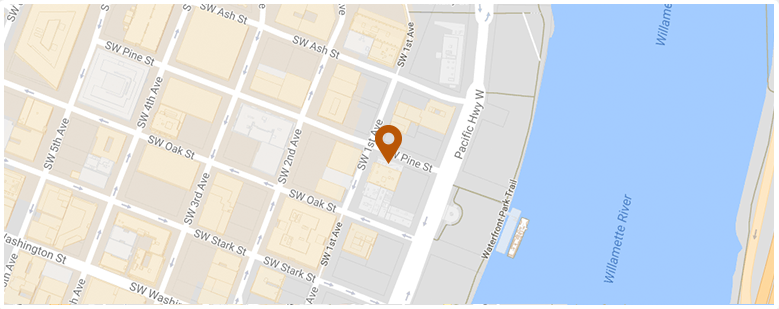
50 SW Pine St 3rd Floor Portland, OR 97204 Telephone: (503) 226-3844 Fax: (503) 943-6670 Email: matthew@mdkaplanlaw.com
map image
Contact Information