Articles Posted in Motor Vehicle Accidents

A fatal accident earlier this month at an Eastern Oregon railroad crossing where collisions involving trains and vehicles have occurred in the past raises serious questions about corporate responsibility and road/rail safety.

According to Oregon Public Broadcasting (citing an article that originally appeared in the East Oregonian), a 63-year-old county worker died earlier this month “when a train struck a road grader on Canal Road south of Hermiston” in the Eastern part of the state. The worker was using the grader to spread gravel along one side of the tracks at the time of the accident. According to OPB “the train dragged the grader about 100 feet before it stopped.” The grader operator died at the scene of the Oregon train and car accident.

What makes this tragedy especially noteworthy are facts indicating it was ultimately preventable. As the article explains, at the crossing in question “motorists cannot see trains coming from the west until they emerge around a nearby curve. The crossing is uncontrolled, meaning it does not have traffic control arms.”

A pair of recent stories from Washington go a long way toward putting Oregon’s, and the nation’s, distracted driving problem in context: last week the National Transportation Safety Board formally called for a nationwide ban on “driver use of personal electronic devices,” according to the Washington Post. This came only a few days after new data compiled by the National Highway Traffic Safety Administration showed that “for all the criticism and new legal bans, texting by drivers just keeps increasing, especially among younger motorists,” according to a report filed by the Associated Press.

Both of the organizations are independent federal agencies. The NHTSA studies and promotes highway and traffic safety while the NTSB is charged with investigating transportation accidents of all types (i.e. not just cars and trucks).

The NTSB statement was particularly strongly worded, according to the Post, and followed the lengthy investigation of a crash last year in Missouri in which “a 19-year-old pickup driver sent 11 texts in the 11 minutes before the accident.” The paper adds that the NHTSA’s data show that in 2009 (the last year for which numbers are available) distracted driving resulted in 5000 deaths and half-a-million injuries on America’s roads.

It is simple to understand the idea: the time we spend stuck in traffic takes an economic toll (lost wages, lost sales, etc). Those expenses, in turn, are part of a broader cost to society that we all bear as a result of gridlock (lost productivity, air pollution and its associated medical costs, etc). A recent study by AAA, however, puts forward a, perhaps, more startling idea: that the societal cost of auto accidents is far higher than that of mere congestion.

As outlined in a recent article from The Oregonian, the study put the overall “cost to society” of traffic congestion at $958 million per year for the Portland-Beaverton-Vancouver metro area. An eye-popping figure, to be sure. Using the same data, however, it concluded that “the annual societal cost of traffic crashes… is $2.74 billion.” The analysis was based on 2009 data (the newspaper article, accessed through the link below, includes, in turn, a link to the original report in pdf form).

The article goes on to note that these Oregon car crash figures are roughly in line with national averages. On a national basis the spread between the true cost of vehicle crashes versus the true cost of congestion is $300 billion versus $97.7 billion, making the ratio roughly 3-to-1 at both the state and the national level.

A tragic central Oregon car crash has left a teen driver dead and injured four others according to reports in The Oregonian.

The crash took place on US route 26 near Madras, Oregon. According to the newspaper, a 17-year old driver traveling toward the east “drifted off the north shoulder of the road, according to state police. The 17-year-old driver then overcorrected the car and it crossed into the westbound lane where it collided with a westbound 2006 Chrysler van.”

The teen driver was pronounced dead at the scene of the accident. Her passenger, also a 17-year-old girl, was transported to a hospital in Madras with what the paper describes as serious injuries. The driver of the van, a 38-year-old Portland man, and his two children all suffered what were described as minor injuries in the Oregon car crash and were released after treatment at the area hospital.

A fascinating article published in Slate a few days ago raises some intriguing questions regarding Oregon distracted driving laws and some of the latest technologies making their way into our cars and onto our cellphones.

The article focuses on Siri, the computerized ‘assistant’ bundled into the latest version of the iPhone. As the author notes, “Apple advertises Siri as a way to get stuff done while you’re otherwise occupied,” and notes that the company’s videos show people using the application while, among other things, driving.

The legal question for Oregonians and others raised by the article is simple: do distracted driving laws, like Oregon’s, which ban texting while driving extend to a text-by-voice service? “Voice texting could be illegal in many places,” the piece notes, because of wording in the relevant legislation that makes “it illegal to ‘send’ texts,” or, in some cases, prohibits any form of electronic communication. “Each of these versions would make Siri-based texting verboten, because even if you dictate a message, you’re still, technically, sending some kind of electronic communication.”

Reckless driving charges are now on the books for a Portland man after a four-car Oregon car accident allegedly caused by his reckless driving, The Oregonian reports. The crash took place in Sherwood, near Beaverton, Oregon.

The newspaper reports that the Oregon car crash on Route 99W took place Wednesday. “Witnesses told investigators an Audi A4 was speeding and weaving in and out of traffic for several miles” along the road before it “crashed into a line of cars stopped at a red light,” the paper notes. The Audi, driven by a 31-year old Portland man, was reportedly traveling at more than 50 miles per hour when it hit a car driven by a 19-year-old Newberg woman. That collision, in turn, set off a chain reaction that damaged two other cars and left the affected stretch of road closed for more than an hour.

The drivers of both the Audi and the car he struck were taken to an area hospital with what The Oregonian describes as “non-life-threatening injuries.” The driver, meanwhile, “was arrested on charges of reckless driving” by Washington County law enforcement officials.

An excellent piece by The Oregonian’s traffic and commuting columnist raised an issue that all of us who care about the Portland cycling community need to think about: how important is it that cyclists observe the traffic laws?

The Oregon bicycling accident article focuses specifically on the question of red lights. We all know, of course, that bicycles are vehicles just like a car or truck. Cyclists have the same right to use the road (with a few exceptions, such as interstate highways) as any car or truck, but with that right comes an equal set of responsibilities. We have all seen bikers who blow through red lights or stop signs or weave through traffic.

Leaving aside the obvious observation that such behavior is incredibly dangerous it is also illegal. As the newspaper notes, “the potential risks are known: a hefty ticket, hitting a pedestrian, possibly even getting killed.” What the column then goes on to do is address head-on, and effectively demolish, the excuse offered by many cycling scofflaws: the idea that they are saving time by ignoring the rules of the road. Just as we have all seen drivers weave dangerously through traffic only to find them sitting beside us at a red light a mile up the road, so the author carefully charts the progress of a Portland cyclist he observed riding dangerously, versus a law-abiding group whom the scofflaw passed when running a red light. The lone rider did not, in fact, get anywhere noticeably faster than the safe, law-abiding cyclists.

A young University of Oregon graduate died after being hit by a car while cycling in southern California, according to the advocacy group Bike Portland. Her death is a reminder that for as much progress as Portland has made in becoming a bike-friendly city we, and the rest of the country, still have a long way to go.

According to a local newspaper, the Pasadena Sun, 24-year-old Jocelyn Young’s fatal bike accident occurred when she fell from her bike and was struck and killed by a drunk driver. The paper describes the incident as a hit-and-run, noting that “several witnesses called police to notify them about the accident,” and that one witness followed the suspect into a neighboring city until police officers were able to locate him.

Young was treated by paramedics at the scene of the drunk driving accident but later died in hospital.

A tragic Salem-area car accident this week involving critical injuries to a child offers a sobering lesson in the importance of car and pedestrian safety as the new school year gets into full swing.

According to television station KGW a 16-year old girl suffered life-threatening injuries in an Oregon car accident in the small town of Jefferson, Oregon, south of Salem. “The 16-year-old girl was ‘walking along the side of the road’… when she was hit, according to Tammy Robbins with the Jefferson Fire District,” KGW reports.

The station’s online article goes on to note, also citing Robbins, that “the car that struck her smashed into a power pole after hitting the girl, but the driver was not injured.”

A statewide enforcement program officially known as “3 Flags” began in the waning days of August and is scheduled to stretch beyond Labor Day weekend. The initiative hopes to cut traffic-related Oregon child injuries and deaths through a combination of enforcement and education.

“The purpose of 3-Flags is to increase seatbelt use and decrease the number of speeding and/or impaired drivers,” according to MyEugene.org. In addition to people driving too fast, or engaged in Oregon drunk driving, the program also targets child seat use. The goal of this part of the program is both to increase awareness of Oregon’s child restraint laws – and of the resources available to help poorer parents get the child seats they need at a free or reduced price – and to ensure that parents using an approved booster or baby seat install and use it properly.

As the Gresham Outlook notes, in 2009 “observed booster seat use was only 58 percent among children ages 4 to 8… one-third of children in this age group who were killed or injured in crashes last year were not using booster seats.” As I noted in an earlier post, more than one highway safety study over the years has shown that the number of people – as many as ¾ of all drivers using the devices according to some sources – whose children ride in improperly installed child seats is shockingly high.

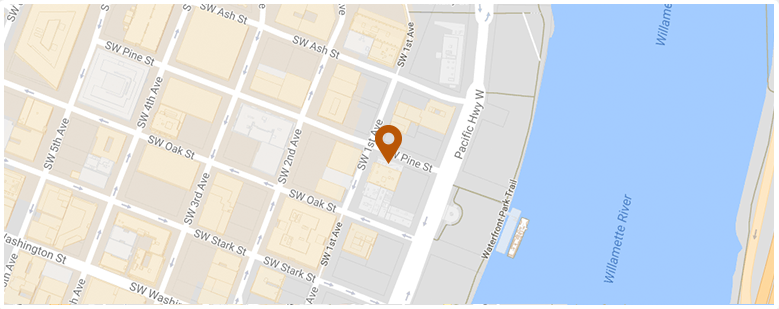
50 SW Pine St 3rd Floor Portland, OR 97204 Telephone: (503) 226-3844 Fax: (503) 943-6670 Email: matthew@mdkaplanlaw.com
map image
Contact Information