Articles Posted in Motor Vehicle Accidents

The death of a Portland bike rider on Barbur Boulevard last August has given new urgency to proposals to change the balance of cars and bikes along this important commuting artery.

As a recent article in The Oregonian outlines, an advocacy group, the Bicycle Transportation Alliance, is urging the ODOT “to put a harrowing section of the high-speed boulevard on a “road diet.” Essentially the group wants a northbound auto lane removed to make space for about two miles of buffered bike lanes and pedestrian paths in both directions of the critical north-south corridor.”

As one might expect many drivers are unhappy with this plan, citing the fact that, according to The Oregonian, ODOT relies on Barbur to relieve rush-hour traffic pressure on I-5. What is different about this dispute is the fact that commuting has emerged as the focus for both sides in this debate. Unusually for these sort of debates, the question is not one of balancing roadways against recreational bikeways but, rather, of balancing the needs of different types of commuters in a city that prides itself on its bike-friendly attitude. The paper reports that “nearly 800 bicycle commuters a day” travel along the route. For the cycling community Barbur is especially important as it offers a relatively flat route through hilly Southwest Portland.

This month SafeKids Oregon, an organization that regular readers know I have long supported and been associated with, is launching an important public education initiative. “Buckle Up: Every Ride, Every Time” aims to eliminate some of the myths surrounding kids and seat belt use.

The report begins by acknowledging that the United States has “made tremendous progress in child passenger safety over the last 30 years.” It notes that “the number of children dying in car crashes has declined 58 percent since 1987.” Despite this progress, however, a study commissioned by SafeKids Worldwide found that “one in four respondents admitted to having driven without their child buckled up in a car seat or booster seat.”

Even more surprising were the study’s findings related to age, income and education. Simply put, the data show many popular preconceptions to be myths. According to SafeKids, affluent parents (defined as those with a household income of $100,000 or more) were more than twice as likely to “say it is acceptable to leave their child unrestrained if they are not driving a far distance” compared to parents making less than $35,000 per year. This belief is especially worrying since about 60 percent of car accidents take place within 10 minutes of home.

Almost a generation ago New York became the first state to ban the use of handheld cellphones by people driving cars. Such bans are now common, if far from universal. As I have repeatedly written in the years since Oregon’s own distracted driving law went into effect, however, laws against distracted driving are good but are only a first step. Eliminating this practice takes enforcement, but it also takes education and, as New York is now demonstrating, innovative approaches to the problem.

Standing in front of large signs reading “It Can Wait – Text Stop 5 Miles” and “Text Stop: Parking Area 1 Mile” New York Governor Andrew Cuomo announced a new initiative this week to highlight places where drivers can easily stop to focus on their electronics.

According to New York public radio station WNYC “as part of the state’s effort to combat distracted driving, nearly 300 new signs are going up along New York roadways, highlighting 91 ‘texting zone’ locations – highway rest stops and other parking locations.” The station explained that the initiative involves only signage – no new rest stops are being constructed – but it aims to make progress simply by informing people that a safe opportunity to take care of their texts and phone calls exists only a short distance up the road.

A fatal car and bicycle accident in New Hampshire this weekend left two people dead and serves as a tragic reminder of the caution cyclists, unfortunately, must always take when riding on public roads.

According to reports by CBS News and the Associated Press, republished by Boston television station WBZ, police say a car “plowed into a group of bikers taking part in the annual Granite State Wheelmen” ride early Saturday morning. The 100-mile ride, known as a “century” in cycling argot, has been staged annually for 40 years and involved hundreds of riders according to the media reports, all of whom “were encouraged to follow the rules of the road as they encountered narrow colonial New England roads, steel decked bridges and weekend traffic.” Such events typically involve a significant amount of coordination with local law enforcement agencies to ensure that things go smoothly and that riders are able to travel safely.

In this instance, however, a south-bound vehicle driven by a 20-year-old man from nearby Seabrook NH “crossed over into the north-bound lane” hitting four cyclists, according to police sources cited by the news agency. The accident took place around 8:30 am on Saturday.

A recent report from NPR highlights how social media usage can become a factor in reckless and negligent driving cases. According to a report on the radio network’s website, “an 18-year-old California man stands accused of murder after law enforcement officials upgraded charges against him based on tweets and driving history.”

The accident at the center of this story took place in early June in northern California. The man was allegedly driving at more than 80 miles per hour in a 40 mph zone when he lost control of the car and hit a middle-aged couple who were riding in a marked “bike lane alongside Foothill Road, police say, in an area that is marked by a golf course and by large houses with swimming pools.” In other words: a residential area rather than a highway. The woman in the couple was killed in the accident and her husband was injured.

Citing reporting by the San Francisco Chronicle, NPR reports that the suspect stopped at the scene and “spoke with police” though he declined to give a formal statement. Last month he was arrested “on felony charges of vehicular manslaughter and reckless driving” but this was upgraded to murder, and the suspect’s bail revoked, after police took a closer look at his driving habits.

It’s a cliché: safety is everyone’s responsibility. It is also, however, true, and that fact was reinforced last week by Washington State’s Supreme Court. According to an Associated Press dispatch, republished by The Oregonian, the court held that “cities, counties and utility companies can be liable when faulty road design leads to injuries in car crashes – even when the driver is drunk.

According to the news agency the case focused on a crash near Anacortes. “Two people who had been drinking were injured when their car ran off the road and struck a utility pole that was reportedly closer to the roadway than guidelines dictated.” In overturning a lower court ruling the state Supreme Court held that “government entities owe a duty to ensure roads are reasonably safe for public travel, no matter whether the driver is at fault,” according to the AP.

Obviously this is not, and ought not to be taken as, an excuse of or license for drunk driving. Indeed, in legal terms it is important to remember that DUI is a crime regardless of whether one gets involved in an accident or not. In this instance, however, the court was addressing a bigger issue: whether a driver’s physical condition at the time of a particular accident can be used as an excuse by government or a utility company to escape responsibility for its own negligence. The court held that government and public utilities both have a broader responsibility to provide a safe environment for all users of public roadways. The bad behavior of individual drivers does not absolve the city or county from their responsibility to provide a roadway that is safe for everyone – regardless of the irresponsible behavior of some individual drivers.

A report published this week in The Oregonian notes that a 39-year-old Portland garbage truck driver has been cited for careless driving. What makes this news item especially noteworthy, however, is the fact that additional penalties have been imposed on the truck driver under Oregon’s “vulnerable road user” law as a result of a July accident that left a bicyclist seriously injured. Though it has been on the books for nearly six years, the “vulnerable road user” provision is an essential protection for cyclists and pedestrians with which many Oregonians are still unfamiliar, so it merits our attention today.

First, the details of the Portland bicycle crash. As reported by The Oregonian, on July 12 the garbage truck driver hit the bike rider as the truck “turned left from Southeast 17th Avenue onto southbound McLoughlin Boulevard… Police said (the victim) was riding his bike southbound on 17th Avenue on the east side of the street and was crossing McLoughlin when the collision occurred.”

The bike rider “suffered traumatic injuries and was hospitalized. He has since been released from OHSU Hospital.” The driver cooperated with police in their investigation.

An Oregon motorcycle crash that also involved a pickup truck left a Monmouth man dead over the weekend, according to a report in this morning’s Oregonian. The newspaper reports that the man “died Sunday morning in a collision between a pickup truck and a motorcycle on Oregon 51 north of Independence.”

The victim, age 22 according to the newspaper, “struck the right front side of the truck and crashed through (its) windshield” when the driver of the truck, a 77-year-old man, “attempted to turn his truck left into a driveway.” The paper also reports that witnesses say neither the motorcycle nor the truck appeared to be speeding at the time of the Oregon motorcycle accident. Although an investigation of the fatal crash is still underway, the newspaper cites police sources saying they believe alcohol was not involved in the Sunday morning accident. Both men were airlifted to Salem Memorial Hospital, according to The Oregonian, where the motorcycle rider was pronounced dead and the driver of the truck remains in critical condition.

Based on these details, what we appear to see here is a straightforward case of poor driving, the sort of accident that happens every day in every American city, and which is all the more tragic because it is so easily avoidable.

A report this week in The Oregonian is a welcome example of our legal system at work. The account of the conviction of a reckless Oregon hit and run driver who caused a two-vehicle crash in Tualatin is a reminder that the justice system can and does work for victims and our broader society alike.

According to the newspaper the 24-year-old man was arrested for causing the crash in a parking lot adjacent to Martinazzi Avenue in Tualatin last January. “Witnesses told police a man in a pick-up was driving erratically and struck another vehicle,” The Oregonian writes. “The suspect’s vehicle then hopped a curb near the roundabout at Southwest Avery Avenue and 86th Street and struck a road sign. Witnesses also said the driver didn’t stop for a red light” and that while doing all of this he narrowly missed a pedestrian.

Once arrested the suspect was charged with DUII, hit-and-run and reckless driving. Now, five and a half months later, he has been convicted, and will serve time in jail, pay a fine and lose his driving license for three years. The man was initially eligible for a diversion program but lost that status, according to the newspaper, when he was arrested again in February.

A recent Oregon car crash story in The Oregonian is relatively straightforward, and it is because of that tragic simplicity that it holds such stark lessons.

According to the newspaper four people including a child were injured last week when a driver who was allegedly following too closely behind another vehicle “slammed on the brakes of his Jeep to avoid a rear-end collision, swerved into the opposite lane of traffic and crashed into an RV towing a minivan. The jeep then struck a tree off the highway and rolled, and the RV came to a stop on top of it.”

It is worth adding that all of this took place in broad daylight – at 2:30 pm on Highway 47 near Forest Grove.

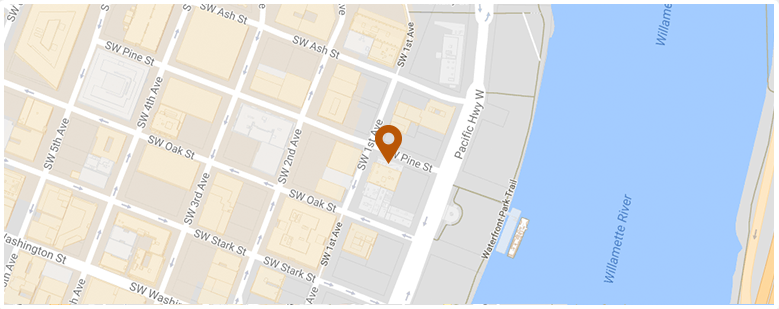
50 SW Pine St 3rd Floor Portland, OR 97204 Telephone: (503) 226-3844 Fax: (503) 943-6670 Email: matthew@mdkaplanlaw.com
map image