Articles Posted in Motor Vehicle Accidents

The Oregonian reports that a section of US-20 in Jefferson County was closed for several hours Monday in the wake of an Oregon car crash that left one person dead and several others injured. As of mid-morning one lane of the road had been reopened but police were warning motorists to expect long delays.

The fatal accident took place near Santiam Summit as the road passes through the Willamette National Forest between Corvallis and Bend. Relatively few details are available about the accident, which took place Monday morning around 9:30 am, though the newspaper does report that Life Flight helicopters were required to evacuate some of the injured. The exact type of vehicles involved in this Oregon crash have not been announced, but the location and the poor weather conditions that appear to have contributed to the accident are a reminder of the special care that trucks need to take in areas like the Willamette National Forest.

I have written frequently about the dangers that trucks face on in mountain areas. When even interstate highway travel is dangerous because of the weather and terrain it is especially important to proceed cautiously on narrow mountain roads. My past blogs on Oregon truck accidents have focused mainly on the northeast corner of our state – particularly the area around Cabbage Hill on Interstate 84. In the case of this accident, however, the newspaper’s note that “a spokesman for the ODOT said the highway has been hit with a lot of snow in the past few days” is an important reminder that the conditions on Cabbage Hill, while often extreme, are hardly unique in the more remote parts of Oregon.

An article in Wednesday’s Oregonian raised an interesting question: how many Portlanders are aware that traffic enforcement does not take place overnight? According to the newspaper the city’s last budget cut police funding and, as a result, “the (traffic enforcement) bureau lost five full-time officer positions, and so eliminated the 9 pm to 7 am traffic shift Wednesday through Saturday.”

What this means in practice is that there are fewer officers available to enforce Oregon drunk driving laws. The newspaper quotes Portland police chief Mike Reese saying: “Traffic officers are committed to saving lives. They hold people accountable when they break the law… It’s not easy work. DUII investigations require skill to make arrests prosecutable.” The chief is asking the City Council for $300,000 in additional funds to restore four of the five overnight officer positions that have been lost.

While there are no available statistics looking at how fatal Oregon car crashes are distributed throughout the day, the newspaper notes that Washington State does keep such records. North of the Columbia River “60 percent of all fatal crashes occur between 7 pm and 5 am,” according to a Portland police spokesman cited by the newspaper. There is no reason to suppose that the pattern is not at least broadly similar here in Oregon.

On Friday General Motors announced yet another expansion of the widening recall of its small cars. According to the New York Times, the company “is expanding its ignition-switch recall to include an additional 971,000 small cars worldwide, including 824,000 in the United States, that may have been previously repaired with defective switches.”

As I noted in a post earlier this month, well before today’s announcement GM had already recalled more than a million cars built since the 2003 model year because of a defect that may lead the ignition switch to cut off. That, in turn, could mean that air bags fail to deploy in the event of a crash. As the latest developments indicate it is now clear that many cars had the faulty switches added to them when they went in for repairs.

More disturbing, however, are the continuing revelations about the way in which GM has handled this scandal. In a move that may yet lead to wrongful death lawsuits, company documents have shown that GM misled grieving families for years, telling those who had lost loved-one in crashes linked to the flaw “that it did not have enough evidence of any defect in their cars, interviews letters and legal documents show.” This happened even as the company was internally debating the best way to fix the problem, the newspaper reports.

A reckless and dangerous driver caused problems on I-5 this afternoon but is now in jail, according to The Oregonian. The newspaper’s website reports that a 26-year-old Portland man is being held in the Marion County jail on charges of reckless driving and “18 counts of recklessly endangering another person.”

According to the newspaper, witnesses said the driver “was speeding, passing cars on the shoulder and weaving across all three lanes of traffic in a 1999 gold Ford Taurus… Oregon state police caught up with him right before 1 pm as he exited I-5 toward Salem Parkway Avenue.”

It goes without saying that incidents like these can cause serious, sometimes fatal, Oregon car accidents. In some instances these can lead to serous traumatic brain or spinal cord injuries or even deaths.

A disturbing article published this week in the New York Times outlines a series of failures by both corporate America and the federal government. Its focus is General Motors’ recent recall notices involving well over a million vehicles manufactured since the 2003 model year (click here for GM’s latest news release with full details of models and years effected). The vehicles have a defect in the air bag system that in some instances means the air bags will not deploy during a crash because the ignition switch has been cut off.

According to the Times, GM now acknowledges that at least 13 deaths can be tied to the defect. What is disturbing is the paper’s report that the automaker’s engineers were aware of the issue in 2004 – more than a year before the first of those 13 documented deaths. Equally bad is the record of federal regulators from the National Highway Traffic Safety Administration. According to the paper, “after two of the (Chevy) Cobalt crashes, the regulators took a close look at the cause, each time raising the possibility of a defect. They also met with GM about the issue. But despite the red flags, they never opened a broader investigation into whether the car was defective.”

As the paper goes on to report, a number of lawsuits related to the documented deaths have already made their way through the court system. Class action law was created precisely to enable ordinary Americans to defend their rights in cases of this sort of willful and negligent misconduct, especially when it results in wrongful deaths. The recall notices are still new and are still sinking in for many people (the initial recall was issued on February 19 and was later extended to hundreds of thousands of other vehicles) so it is also important to note that the full impact of the situation is not yet clear. It is clear that the court system will probably hear much more about these vehicles in the months and years to come.

New York City’s new mayor, Bill de Blasio, unveiled a plan yesterday designed to eliminate pedestrian traffic deaths in America’s largest city. His proposals are worth looking at here in Oregon because they may contain lessons we can learn from here in Portland.

According to the New York Times, the focus of the initiative is stepped-up enforcement of existing laws combined with a proposal to lower the city’s speed limit from 30 to 25 miles per hour. “Our lives are literally in each other’s hands. Our children’s lives are in each other’s hands,” the mayor told a news conference Tuesday.

The strategy is called “Vision Zero” and is “adopted from a Swedish traffic safety approach that views all traffic deaths as inherently preventable,” according to the Times. De Blasio advocated these measures during his campaign last year, but they took on special urgency when New York “experienced a spate of traffic deaths, including three pedestrian deaths last month in fewer than 10 days” in the first weeks after the new mayor took office.

Two former Portland-area prosecutors made headlines in The Oregonian this week with their advocacy of marijuana legalization. According to the newspaper Norm Frink and Mark McDonnell both believe that legalization is inevitable and, as a result, are trying to focus public attention on getting the details right.

“This is just a political fact in Oregon, even if some people don’t want to admit it,” the newspaper quoted Frink saying. “As a result,” the paper went on to note, “Frink and McDonnell, who headed the district attorney’s drug unit before retiring, on Tuesday announced that they wanted legislators to refer a marijuana legalization measure to voters in November.” The key to their idea is combining a voter referendum with legislative action. Oregonians would be asked to approve marijuana for personal use, but would charge the legislature with working out the details before the new law went into effect. “The two want to put off allowing legal possession of marijuana until after the legislature figures out how to set up a regulatory system,” The Oregonian reports.

The experience of Washington and Colorado would appear to validate this idea. When the two states became the first to make the possession and use of marijuana legal for personal recreational use the result was an immediate legal conundrum. At the most basic level, legalization puts state law in conflict with the federal government, but there are a number of equally serious – and in some ways more immediate – issues. Take drunk driving, for example. It ought to be relatively easy to agree that impaired driving brought on by pot use is just as dangerous as driving while drunk. Any state legalizing marijuana, however, will need to figure out ways to measure and assess the drug as part of a drunk driving arrest: what level of marijuana impairment crosses a safety line? What is the best and most efficiently to measure it? How should the use of marijuana and alcohol together be treated (presumably the two in combination could cross an impairment threshold at a point when neither, by itself, does so)?

With an ice storm warning now extending throughout the day Sunday and road closures throughout the Pacific Northwest this is a weekend to avoid any travel that is not absolutely necessary.

That is not just my opinion, it is the official word from public safety officials throughout the state. As The Oregonian has been reporting – and regularly updating on its home page – the severe weather gripping much of Oregon and Washington State poses a real threat to anyone out on the roads.

These warnings do not only apply to well-known danger zones, like the stretch of interstate in Eastern Oregon known as Cabbage Hill. According to the newspaper, local leaders in both Portland and Beaverton are urging everyone to “just stay home.” Portions of I-5 were closed at this writing. Roads and sidewalks are icy, Portland’s streetcars are not running and Tri-Met is “no longer reliable” according to city transportation officials quoted by the newspaper.

A leaked state audit of Tri-Met, details of which appeared in The Oregonian this morning, speaks of morale problems among “front-line” workers (such as bus drivers) and portrays an agency where “safety first” is often little more than a slogan.

The newspaper’s summary of the 54-page report is startling: “TriMet needs to fix a culture where low morale, secrecy, safety problems and more than $1 billion in unfunded financial obligations threaten to wreck the public transit agency,” the Oregonian says, summarizing the report’s key findings. The leaked report is a draft, not a final, official document but that fact does little to ease the sense that state auditors uncovered serious problems as they examined TriMet. The report was compiled by the Oregon Secretary of State’s office.

Perhaps even more surprising is the fact that TriMet does not appear to be disputing the picture the report paints. The newspaper reports that TriMet officials “took the Secretary of State’s criticisms in stride… in a 10-page response, TriMet General Manager Neil McFarlane didn’t disagree with the findings. Rather, he seemed to ask how high he should jump to implement the audit’s suggested improvements.”

An item posted late last night on The Oregonian’s website offers details of a serious Washington bicycle accident involving a teenage rider in which a motorist faces assault charges and, potentially, drunk driving charges as well.

The paper, citing the Everett Herald, reports that a 52-year-old Everett man driving a pick-up truck “allegedly struck a teenage cyclist, launching the boy off a 30-foot overpass… the crash caused the victim, 16, to fall about 20 feet onto a hillside, police said. His body then tumbled an additional 10 feet down into the street.” The paper reports that the boy’s injuries include a possible broken neck – meaning that, while they are not, according to the paper, life-threatening, they could be life-altering for both him and his entire family.

The pick-up truck driver “told police he had been drinking beer or wine a few hours before the crash and believed he suffered a seizure.” The paper reports that when he was arrested at the scene the suspect “had trouble standing and could not easily move his hands. Officers said the suspect slurred his speech and had bloodshot eyes.” Bail for the suspect was set at $25,000, the paper reports.

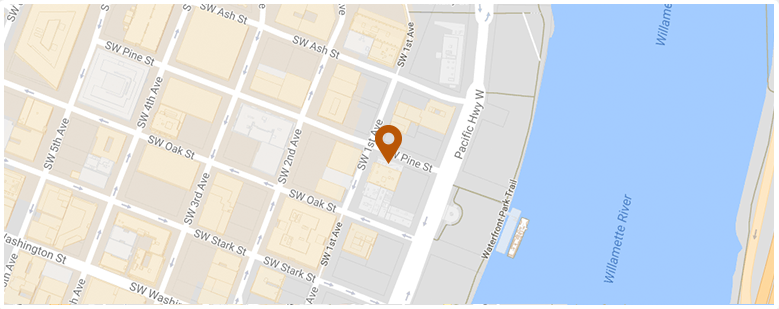
50 SW Pine St 3rd Floor Portland, OR 97204 Telephone: (503) 226-3844 Fax: (503) 943-6670 Email: matthew@mdkaplanlaw.com
map image
Contact Information