Articles Posted in Motor Vehicle Accidents

Portland residents began to get some sense this week of how the “street fee,” the proposal to help fund city roads and maintenance that has been debated all summer, may eventually help to improve health and safety around our city.

According to an article published this week in The Oregonian, “the (city’s) Transportation Needs and Funding Advisory Committee (this week) produced the most detailed list to date of potential transportation projects.”

Though explicitly described as a “wish list,” – a fact designed to indicate that not all of the projects listed in the report will be funded, and that some may be funded at different levels from those recommended in this report – the document does offer some sense of how city leaders would like to allocate the revenue raised by the Street Fee.  According to the newspaper “The list included an estimated $109 million in dozens of specifically identified sidewalks, pedestrian crossing, bicycle and other safety projects.” The estimate is “based on roughly $35 million annually in net revenue for a six year period.”

An article published earlier this month by Al Jazeera America looks at a new academic study focusing on the costs and benefits of bike lanes and other publicly-funded spending on cycling infrastructure. Living in Portland, a city often cited as one of the most bike-friendly in North America, its findings are not likely to be particularly controversial. Still, they are a useful reminder of how bike riding benefits the community at large and not just cyclists themselves.

The study (see link below) was published in Environmental Health Perspectives, an academic journal sponsored by the National Institutes of Health. It comes with the ponderous title “The Societal Costs and Benefits of commuter bicycling: Simulating the Effects of Specific Policies Using System Dynamics Modeling” but reaches, Al Jazeera reports, a fairly straightforward conclusion: “for every dollar spent on bike-related infrastructure, cities can receive anywhere from $6 to $24 in cost savings in the form of reductions to pollution and traffic congestion, as well as lowered health care costs from decreased traffic fatalities and increased exercise.”

Some of those conclusions may seem obvious to an audience here in bike-friendly Oregon, but they are a reminder that it is important to get the details of infrastructure right. More importantly, in focusing on the big picture – by, for example, citing long-term benefits such as lower health-care costs the study is especially useful.

In an effort to raise awareness regarding distracted driving Allstate, the insurance giant, is touring the country with a driving simulator designed to highlight the dangers of texting while behind the wheel.

According to a recent news release issued by the company (see below) the program, known as “Reality Rides,” was launched last summer and is expanding this year. It involves “a driving simulator that utilizes a real – but stationary – vehicle equipped with virtual reality technology, including a new curved LED television embedded in the car windshield. The television displays an animated environment and reacts to the driver’s motions.” Participants are invited to ‘drive’ the car while texting and/or talking on the phone as a way to experience just how significant the danger of distracted driving can be. Allstate plans to take the simulator to 40 cities over the course of the summer following what the company describes as a successful rollout of the program last year. This represents a significant expansion from the 26 “Reality Rides” events the company organized in 2013.

“Last year, the first tour surveyed more than 1,700 people… Seventy-three percent (of whom) said they learned more about distracted driving after experiencing the simulation,” the company says. The same survey – conducted at the simulator sites last year – found that “more than one-third of drivers say they text and drive at least some of the time.” The company is also using the simulator to promote Graduated Drivers License laws, under which teen drivers face more restrictions on their driving than adults. “Stronger teen driving laws… have been shown to reduce traffic fatalities by as much as 40 percent in the states where they have been adopted,” the company says.

Just as the July 4 holiday weekend got underway news broke of a sweeping recall of school buses. According to an Associated Press report, republished by ABC News, “Blue Bird is recalling more than 2,500 All American school buses and some transit buses to fix a problem that could make steering more difficult. The company also is recalling a smaller number of school buses that may be prone to a propane fuel leak, according to paperwork filed with the National Highway Traffic Safety Administration.”

It will be worth keeping an eye on the NHTSA vehicle recall website over the next week or two for further details as this story develops. At this writing the NHTSA had not posted information about the Blue Bird recall, presumably because the company’s paperwork has not yet been completely processed. In the meantime, however, it is safe to say that it is difficult to imagine a clearer risk of injuries to children than a school bus with a steering or a fuel leak issue.

The AP story did not say how many school buses are affected by the steering-related recall notice, only that it involves “some buses made between 2011 and last May.” The story put the number of transit buses affected at 400, but did not say in which cities they are currently on the road. The fuel leak issue involves “388 Vision school buses made in 2012 or 2013,” the news agency reports.

Bicyclist deaths in traffic accidents rose in 2012 (the most recent year for which data is available) both in absolute numbers and as a fraction of the nation’s overall road and highway death toll, according to a new report released by the National Highway Traffic Safety Administration.

As a table on the first page of the report shows, the total number of traffic-related fatalities fell by more than 20% over the last decade, from 42,884 nationwide in 2003 to 33,561 in 2012. During that same time period, however, the number of bicyclists killed on America’s roads rose from 629 to 726 – an increase of almost 20 percent. As a portion of overall traffic-related deaths that represented an increase from 1.5 percent to 2.2 percent – a small portion of the overall number, but a dramatic increase proportionately speaking.

At a time when people across the country are becoming more aware of the health and environmental benefits of cycling these are worrying numbers. It is good to see that tougher enforcement and better public education have brought the overall traffic death rate down so dramatically (indeed, in the 1970s and 80s it was well over 50,000 per year). At the same time it is alarming to see the rate of bicycle accidents and fatalities rise – especially in an era when one might hope that more bikes on our streets would lead to greater awareness and caution among drivers.

Recreational use of marijuana is now legal in two states, including Washington State, and Oregon is among the ever-increasing number of states that permit marijuana use for medical purposes.

As legal acceptance of the drug grows it was, perhaps, inevitable that, in the words of USA Today, “it’s looking like dope is playing a larger role as a cause of fatal traffic accidents.” Put another way: advocates of legalization have long argued that marijuana is no worse for you than alcohol. If, for the sake of argument, we accept that premise then it clearly follows that driving while high should be treated with the same degree of seriousness as driving while drunk.

The evidence is not merely anecdotal. According to USA Today, a recent study by Columbia University found that “of nearly 24,000 driving fatalities… marijuana contributed to 12% of traffic deaths in 2010, tripled from a decade earlier.” The newspaper reports that a recent National Highway Traffic Safety Administration study estimated that “4% of drivers were high during the day and more than 6% at night.” The majority of high drivers were under age 25 – an age group that already has proportionately high levels of both drunk driving and distracted driving, both here in Oregon and elsewhere around the country.

In the annals of reckless and irresponsible things people do behind the wheel this one deserves special mention. According to The Oregonian, a three-car crash injuring four people was touched off Sunday when a teenager driving through a tunnel on US 26 near Manning, Oregon “held his breath when entering the tunnel and fainted.”

Just before 5pm on Sunday afternoon the teen was driving a 1990 Toyota Camry. When the driver passed out the vehicle “crossed the center line, (hitting) an eastbound 2013 Ford Explorer head-on. Both vehicles then smashed into the interior tunnel walls and a third vehicle… hit the Camry,” according to the newspaper. A spokesman for the Oregon State Police is quoted by the paper saying that none of the victims sustained life-threatening injuries, but even he was at a loss to explain why the teenage driver of the Camry would have been holding his breath to begin with or why that would have resulted in the driver losing consciousness, particularly granted that the tunnel is not particularly long. An OSP spokesman told the paper that the 19-year-old driver “did not appear to be intoxicated” and that there was no evidence that drugs were involved either.

According to The Oregonian police were particularly puzzled because the tunnel in question – the Daniel L. Edwards Tunnel – is not especially long. Normally a car would pass through it in about 10 seconds, which hardly seems like enough time for a person holding his or her breath to lose consciousness. The driver of the Camry was cited “for reckless driving, recklessly endangering three other people and assault and is due to appear in Washington County Circuit Court.”

The tragic death last year of two teenage girls in a semi-truck accident has spurred an online petition drive organized by their family, and an advocacy movement for tighter regulation of large trucks.

“Their lives were abruptly ended and we want to see that same thing does not happen to others,” the girls’ mother said, according to Washington DC TV station WJLA, as she delivered a petition with over 11,000 signatures on it to the Department of Transportation earlier this month. The North Carolina family was driving down an interstate highway a year ago when “their family vehicle was struck, propelling it under a tractor trailer and killing the two girls,” the TV station reports.

In response, the grieving parents organized an online petition drive seeking tighter regulation of the trucking industry (you can see, and sign, the petition here). Specifically, the couple is calling for “improved under-ride guards to prevent vehicles from sliding under trucks, and also wants to require electric monitoring devices to decrease the number of truckers driving while fatigued. They also want to increase the minimum liability insurance required for drivers,” according to WJLA. The girls’ father told reporters that installing the under-guards would cost only $20 per truck.

It is no secret that Portland has a reputation as one of America’s most bike-friendly cities, but the census bureau now has the data to prove it. According to a recent article in The Oregonian, since 2000 biking to work “has shown the largest percentage increase among all commuting modes” nationally. Portland leads the way with a significantly higher percentage of bicycle commuters than the national average.

Nationally about 786,000 people get to work using bicycles, according to the paper, up from 488,000 in 2000 (the data is for 2012, the latest year available). That’s only about one percent of commuters nationwide, but “within the Portland city limits the number has nearly tripled since the 2000 census… In fact, Portland leads all large cities with a bicycle commuting rate of 6.1 percent.”

According to the newspaper, local activists welcomed the news, but also warned about “complacency.” The head of the Bicycle Transportation Alliance called for “bolder steps” by the city to prevent Portland bicycle accidents so that commuters will feel safer. The article specifically cites initiatives to create “buffered bike lanes” – a move which often requires the removal of parking spots or one auto lane along busy streets that double as important bike commuter routes. It also cites “a long-delayed $4 million bike sharing system, which still lacks a sponsor.” Once implemented, the bike share program is also expected to increase bike commuter numbers. The Oregonian concludes by noting that “Portland’s strategic bike plan calls for 25 percent of all trips in the city to be made on a bike by 2030.”

A story posted this week by Atlanta television station WSB has a surprising – and good – connection to Portland. The station announced that it is sending one of its anchors to Portland to examine Tri-Met’s streetcar system “to learn how (Portland) handles streetcar safety.”

According to the report, tests of a new streetcar system in Atlanta may begin as early as this month but Atlanta “streetcar leaders told (WSB) a public awareness campaign is needed to avoid hundreds of accidents or even deaths.” The announcement followed word of a streetcar-related death in Philadelphia last week, according to WSB. Atlanta is a city that has long had a reputation for skepticism regarding public transportation. Though many Portlanders sometimes have an up-and-down relationship with Tri-Met, it is good to be reminded of the fact that Portland has long been one of the country’s leaders in green energy and innovative public transportation.

The article notes that Portland’s streetcar system, at 14.7 miles, is far more extensive than what Atlanta soon plans to launch The Georgia system will initially involve only 2.7 miles of track, according to WSB.

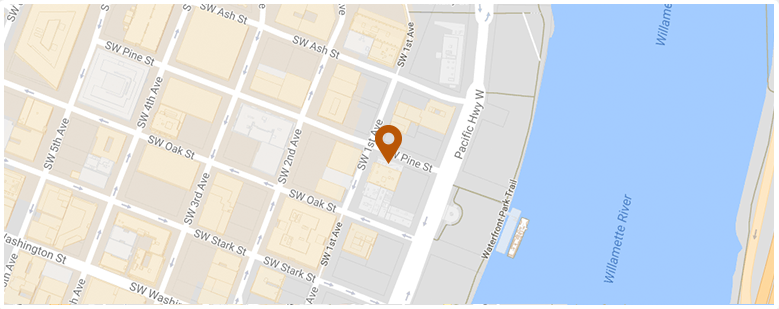
50 SW Pine St 3rd Floor Portland, OR 97204 Telephone: (503) 226-3844 Fax: (503) 943-6670 Email: matthew@mdkaplanlaw.com
map image
Contact Information