"I got into an accident and was nervous about finding a personal injury attorney after hearing so many awful stories, but from the start, I felt confident with my choice in Kaplan Law, LLC." Read More - Ben
"Matt and Gillian took great care of me during a stressful time of my life. Very caring and knowledgeable group. I would definitely recommend Kaplan Law!" Read More - Kayleigh
"Incredible service and results! Matthew Kaplan and his paralegal Gillian did an amazing job for me. Not only did they resolve my case beyond my satisfaction, they also were very caring and supportive thru my recovery. I couldn't ask for a better attorney." Read More - Jamal
Matthew D. Kaplan

The Oregon Department of Transportation says that there were more bicycle deaths that occurred in the city of Bend last year than in any other city in the state. Of the 7 Oregon bicycle fatalities that happened, 2 of them occurred in this Deschutes County city. Bend, however, did not hold the record as the city with the most number of bicycle accident-related injuries for the year. The city was number five with its rate of crashes per capita, while Corvallis, Eugene, and Portland, Oregon were ranked number one, two, and three.

Between 2006 and 2008, there were reportedly 65 Bend, Oregon bicycle accidents resulting injuries. 40 of these bicycle accidents involved drivers or bicyclists who did not yield the right of way. Approximately half a dozen bicycle accidents involved one party failing to stop when there was a flashing red light or a stop sign. Speeding, distracted driving, and following closely were among the other common causes of Bend, Oregon bicycle accidents.

The number of Bend injury crashes went up from 16 auto crashes in 2007 to 23 motor vehicle accidents last year. In 2009, there have already been more than a dozen Bend bicycle accidents. Just last month, James Gardner died when his gas powered bicycle was involved in an Oregon traffic crash with a motorcycle. The 54-year-old bicyclist was not wearing a helmet.

With so many people riding bicycles in Oregon, it is important for drivers and bicyclists to make sure they remember that they share the roads with one another. Injuries sustained during an Oregon bicycle accident can be extremely serious. Obtaining personal injury recovery from a negligent party can be one way to compensate you for your pain and suffering, while provide you with the financial resources to cover your medical expenses and associated losses.

Bicycle fatalities: Bend leads Ore. cities, KATU, August 12, 2009
Bicycle Accident in Bend Claims A Life, KOHD, July 14, 2009
Related Web Resources:
Oregon Department of Transportation

Bend, Oregon

Continue reading

The family of a 75-year-old nursing home resident is suing Pheasant Pointe Retirement and Assisted Living Residence and Spectrum Retirement Communities of Oregon for her wrongful death. Ruby Larson wandered away from the Molalla nursing home on July 23, 2007. She was never to be seen again. Last year, a judge declared the Alzheimer’s patient legally dead.

The Oregon wrongful death lawsuit, filed on behalf of one of the elderly woman’s sons, contends that Larson had wandered off on more than one occasion yet staff members failed to prevent the final incident from happening. The plaintiff is seeking $2 million.

Oregon Nursing Home Negligence
Elderly and sick persons stay at Oregon nursing homes because they need help taking care of themselves. Some residents, because they suffer from dementia, Alzheimer’s, or another kind of ailment that impairs their memory, have a tendency to wander off and then forget where they are.

It is important that an Oregon assisted facility properly supervises all residents, while paying special attention to patients who are an elopement risk. A nursing home should also make sure that the facility and premises are properly secured so that residents aren’t able to just leave without anyone’s knowledge by walking out front or side doors or jumping out of windows (this can cause injury, especially if the window is located above the ground floor).

Nursing home residents that wander off a premise could end up getting hit by a car, freezing to death, getting hurt in a slip and fall accident, or becoming the victim of a violent crime. Injuries sustained from wandering off may even result in Oregon wrongful death.

Reports of nursing home patients attempting to wander off is not uncommon and Portland, Oregon nursing homes and other assisted living facilities must make sure that this doesn’t keep happening.

Family of missing Ore. patient files suit, 2news.tv/AP, August 4, 2009
Alzheimer’s: Understand and control wandering, MayoClinic.com
Related Web Resources:
Preventing Elopement, Repertoiremag.com
Nursing Homes in Oregon

Continue reading

A man who says he was acting compassionately when he shot his wife to death because she had an incurable disease has been convicted of murdering her. John Roberts killed his wife while she slept on February 2, 2008. He is also the defendant in an Oregon wrongful death complaint that was brought by her family.

According to Gresham police, Roberts says he shot Virginia because she asked to die. His 51-year-old wife had Lou Gehrig’s disease (myotrophic lateral) and he claims she no longer wanted to live.

Prosecutors, however, say that Virginia was never diagnosed with ALS, no proof exists that she wanted him to murder her, and that Roberts had spent their life savings. They disputed his claim that the shooting was an assisted suicide—state law considers this action manslaughter when a doctor isn’t involved.

The Virginia Tech Transportation Institute has issued new findings reporting that truckers who text message while driving their trucks increase their chances of getting involved in a truck crash or a near-truck accident by 23 times. The study also notes that while car drivers place themselves most at risk when dialing cellular phones while driving, a cell phone dialing truck driver is 5.9 times as likely to get into a truck crash—compared to a car driver, who is 2.8 times more likely to get involved in a car accident while dialing a phone.

Even just reaching for an electronic device increases the traffic accident risks for both truck drivers and car drivers. The trucker’s chances of crashing becomes 6.7 times greater, compared to a car driver, whose chances increase by 1.4 times.

The study used research conducted between 2004 to 2007. According to Rich Hanowski, the transportation institute’s Center for Truck and Bus Safety director, the greatest risk that text messaging poses for truckers and other drivers is that the motorists are looking at their phones or electronic devices and not the roads.

Hanowski says that studies show that drivers have been known to spend nearly five seconds with their eyes off the road when checking their phones or electronic devices—and while this amount of time may not sound very long, it is enough time for a catastrophic accident to happen. Just think, in 4.6 seconds a vehicle traveling at 55mph while have traveled an entire football field’s length—imagine how many vehicles the driver may fail to see while checking a text message.

Some 200 truck drivers from seven trucking fleets took part in two studies. One study was conducted in 2004. The second one was concluded in 2007. Most of the texting data came from the second study. 21 crashes and 197 near accidents occurred. Software was used to identify these incidents. Software identified 37 near collisions that occurred while the truck drivers were texting.

Truck drivers cannot afford to text message or talk on a cell phone while driving. If you were injured in an Oregon truck crash because the trucker was distracted, you need to speak with a Portland, Oregon personal injury lawyer as soon as possible.

How the Driving Tests Were Conducted, New York Times, July 27, 2009
More Details About the Findings (PDF)

Related Web Resources:
Virginia Tech Transportation Institute

Center for Truck and Bus Safety

Continue reading

The hope that using hands-free cell phones while driving is safer than talking on a hand-held phone while operating a motor vehicle went out the window after news surfaced that the National Highway Traffic Safety Administration withheld research as far back as 2003 showing that use of any kind of cell phone when driving is dangerous. Researchers even went so far as to draft a letter expressing concern that laws banning hand-held cell phones would not be enough to eliminate the safety risk.

Just talking on the phone is a form of distracted driving—it doesn’t matter whether you are holding the phone or using a headset. Talking on a cell phone slows a motorist’s reaction time and takes his or her attention off the road and away from driving and can cause a motor vehicle crash.

Apparently, NHTSA researchers knew as far back as 2002 that cell phone use while driving caused 240,000 traffic accidents and almost 1,000 motor vehicle deaths that year. Yet a former NHTSA head says he was encouraged to hold back the information so as not to anger Congress. The agency was warned to focus on gathering facts, rather than lobbying states to come up with tougher driving laws regarding wireless devices.

If only this information was made available to the public back then, talking on the phone and text messaging while driving may not have become unsafe driving habits that have grown to such epidemic proportion that some states have passed laws restricting cell phone use while driving. Now, even though motorists finally know how dangerous talking on a cell phone and texting while driving can be, many of them are finding it hard to stop.

How many lives could have been saved if this information had come to the surface six years ago? The traffic accident toll from cell phone use—currently about 2,600 fatalities, 636,000 traffic accidents, and 330,000 a year—has almost doubled in less than a decade. Even now, not all US states have laws banning hand-held cell phones. In Oregon, HB2377 was recently passed by legislators seeking to ban hand-held phones while driving. Hands-free cell phones, however, would still be allowed.

Each day, in many US states, hundreds of thousands of drivers continue to talk on hands-free cell phones while driving because they think that they are actually practicing safe driving habits. Meantime, one study from University of Utah psychologists equates cell phone use while driving to drunk driving.

Talking on any kind of cell phone while driving is considered a form of distracted driving that can cause Portland, Oregon car crashes, truck accidents, bus collisions, and pedestrian injuries.

Withheld research confirms driving danger of cell phone use, DelawareOnline.com, July 24, 2009
NY Times: Federal agency withheld warnings about distracted driving risks, Bikeportland.org, July 21, 2009
Related Web Resources:
US Wireless Communication Devices While Driving, NY Times, July 2003
Drivers on Cell Phones are as Bad as Drunks, University of Utah

Continue reading

In Oregon, Portland residents Teresa and Jack Daggett are suing a Washington State clinic for their daughter’s overdose death. Their Multnomah County wrongful death lawsuit is seeking $1.3 million from Payette Clinic.

The couple’s 18-year-old daughter, Rachel Daggett, died last December after she smoked a synthetic narcotic pill. Oregon police traced the pill to two Troutdale brothers. One of the brothers, Ronald Zaloznik, says he became addicted to oxycodone after a nurse practitioner gave him a prescription. The younger brother, 18-year-old Tyler, says that he also used pills and opiates.

In their Oregon wrongful death complaint, the Daggetts are accusing the clinic of consciously disregarding the risks when it prescribed oxycodone to Ronald. The two brothers and Rachel’s friend, Shane Douglas Gill, pleaded guilty to possession and delivery of controlled substances.

The National Highway Traffic Safety Administration is reporting that there were 416 Oregon traffic deaths. This fatality figure is slightly lower than the 455 Oregon traffic deaths that occurred in 2007.

More 2008 Oregon Traffic Facts:
• 290 passenger vehicle occupant deaths
• 91 of the victims were unrestrained
• Alcohol was a factor in 136 traffic deaths
• 128 speeding-related deaths
• 48 Oregon motorcycle deaths
• 51 Oregon pedestrian deaths
Nationally, there was also a decline in US traffic fatalities, with 37,261 deaths last year compared to 41,259 traffic deaths that occurred in 2007.

More 2008 US Traffic Accident Facts:
• 11,733 drunk driver-related deaths
• 716 pedalcyclist deaths
• 4,378 pedestrian fatalities
• 5,290 motorcycle deaths
• 677 large truck fatalities
• 25,351 passenger vehicle deaths
• 2,346 traffic injuries
• 2,072,000 people injured in passenger vehicles
• 23,000 large truck deaths
• 96,000 motorcycle injuries
• 69,000 pedestrian injuries
• 52,000 pedalcyclist injuries (compared to 43,000 injuries the year before)

While there was a decline most kinds of traffic fatalities between 2008 and 2007, there was an increase in motorcycle fatalities—from 5,174 deaths in 2007—and pedalcyclist fatalities—from 701 deaths.

Common causes of 2008 Oregon motor vehicle crashes included:
• Drunk driving
• Drowsy driving
• Speeding
• Cell phone use
• Text messaging
• Driver inexperience
• Poor road conditions
• Defective autos
While the overall declines in Oregon and US traffic deaths are positive, there is always more that can be done to decrease the number of injuries and deaths that occur in the state and throughout the United States. One way to decrease the number of Oregon car crashes is for drivers and truckers and motorcyclists to drive responsibly and refrain from negligent conduct. Motorist negligence can be grounds for a Portland, Oregon personal injury claim.

U.S. Transportation Secretary Ray LaHood: Overall Traffic Fatalities Reach Record Low, NHTSA, July 2, 2009
2008 Traffic Safety Annual Assessment – Highlights, June 2009 (PDF)

Related Web Resources:
State Traffic Safety Information for Year 2008

Early Estimate of Motor Vehicle Traffic Fatalities for the First Quarter of 2009, June 2009 (PDF)

Continue reading

The parents of a 3-year-old boy that died after surgery have agreed on a $200,000 Portland, Oregon wrongful death settlement with the doctor that performed the procedure. Ian McClellan died from septic shock 8 days after Dr. Jayant Patel perforated the 3-year-old’s bowel while trying to insert a feeding tube inside him. The surgical malpractice incident took place on February 5, 1999.

This is not the first Oregon medical malpractice lawsuit naming Patel as a defendant. Also, in 2000 the Oregon Board of Medical Examiners barred the surgeon from working again in the state. He eventually moved to Australia where he kept performing surgeries. He has been charged with manslaughter in that country over the deaths of three patients. Patel has been called “Dr. Death.”

Per Matthew and Anna Maria McClellan’s Oregon medical malpractice involving fatal injuries to minors lawsuit that they filed in Multnomah County Circuit Court, Patel discovered the perforation the day after the surgery when he opened up their son again. They say that Patel and the hospitals told them that Ian died because he developed a postoperative infection. It wasn’t until April 15, 2005 when the Oregonian began publishing a number of articles about Patel’s work that they discovered the real reason their son died. The McClellans had originally sued Patel and the hospitals for $1.55 million.

Last December, our Portland, Oregon personal injury law firm blog post about a wrongful death case filed against the city of Sandy and a number of individuals over the police shooting death of a Gresham man. This week, an announcement was made that the family of 27-year-old Fouad Kaady has reached a $1 million settlement with the Oregon city and former police officer William J. Bergin.

Kaady was burned, naked, and bleeding when Officer Bergin and Clackamas County sheriff’s Deputy David E. Willard approached him on September 8, 2005. Kaady reportedly was behaving erratically and would not cooperate with police. He had also just rear-ended three motor vehicles and damaged the vehicle he was driving. According to witnesses, Kaady, who has a history of mental illness, was making wolf-like sounds.

To apprehend Kaady, police at first used a stun gun and shocked him several times. They then shot him seven times after he jumped on top of a police car.

A Portland bicyclist and the insurance company of the driver that struck him have reached a $100,000 Oregon bicycle accident settlement for injuries and costs. Bicyclist Ben Ramsdell was injured almost two years ago when he was hit by motorist Johnny Eschweiler, 49, after the two of them engaged in a verbal exchange of words.

Witnesses say they saw the motorist deliberately hit Ramsdell and Timothy Mastne, another bicyclist, in August 2007. Ramsdell had to get 30 stitches on his face. He also broke his finger and his nose. Mastne sustained bruises and cuts.

In April, Multnomah County Circuit Court Judge Michael McShane ruled that Eschweiler was guilty of assault but insane. When he was 19, he used a fork to stab a coworker in the face. Surgeons had to take out part of his brain when he was 23.

Eschweiler was not ordered to serve jail time for causing the Portland, Oregon bicycle accident, but he was committed to house arrest for 15 years and state psychiatrists are closely monitoring him. The state of Oregon has permanently taken away his driver’s license.

Because the Oregon bicycle accident was considered “intentional” and not “accidental,” Farmer’s was initially absolved of making a payout. However, the insanity ruling raised the question of whether the motorist even knew that hitting bicyclists was his car was intentional or accidental.

The $100,000 is the maximum that the insurance company’s motorist policy allows.

Bicycle Accident Injuries
It is rare for a motor vehicle driver to intentionally run down an Oregon bicyclist. Most bicycle accidents that are caused by motorists are accidental. The driver never meant to seriously injure or kill the victim.

Regardless of whether or not a motorist meant to intentionally hurt or kill a bicyclist, however, any negligence on the driver’s part can be grounds for an Oregon bicycle accident claim or lawsuit.

Bicyclists are at a disadvantage anytime they are injured in a collision with a car, a truck, a motorcycle, an SUV, a van, a bus, or a train. The impact of the bicycle-vehicle crash alone can prove fatal.

Bicyclist hit by insane driver reaches settlement, KGW, June 17, 2009
Rage victim says he’s taking it “day by day,” BikePortland, August 18, 2007
Related Web Resources:
Bicycle and Pedestrian Program

Bicycle Safe

Continue reading

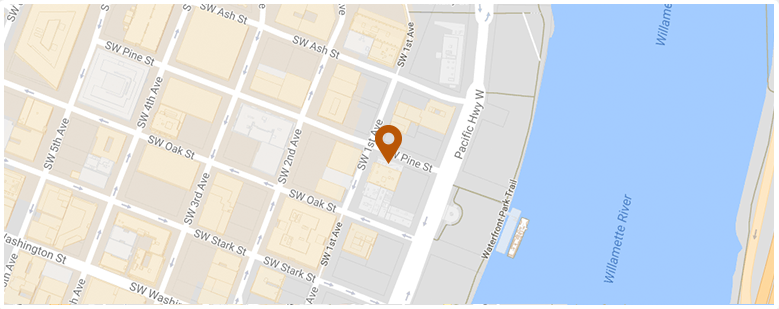
50 SW Pine St 3rd Floor Portland, OR 97204 Telephone: (503) 226-3844 Fax: (503) 943-6670 Email: matthew@mdkaplanlaw.com
map image