"I got into an accident and was nervous about finding a personal injury attorney after hearing so many awful stories, but from the start, I felt confident with my choice in Kaplan Law, LLC." Read More - Ben
"Matt and Gillian took great care of me during a stressful time of my life. Very caring and knowledgeable group. I would definitely recommend Kaplan Law!" Read More - Kayleigh
"Incredible service and results! Matthew Kaplan and his paralegal Gillian did an amazing job for me. Not only did they resolve my case beyond my satisfaction, they also were very caring and supportive thru my recovery. I couldn't ask for a better attorney." Read More - Jamal
Matthew D. Kaplan

An update on an issue I wrote about last month (click here to see the original post from November 21): as part of the last minute maneuvering to round up 60 votes for health care reform legislation in the US Senate, the measure ending the health insurance and medical malpractice insurance companies’ exemption from anti-trust law was dropped from the bill.

The measure was originally proposed by Senator Patrick Leahy (D-Vermont) and supported by Oregon’s Attorney General. It would have made the legal situation surrounding Oregon medical malpractice more favorable to patients by ending an exemption from anti-trust law that health insurance companies and medical malpractice insurance companies have enjoyed since the 1940s. The exemption makes it much harder for Oregonians who have been injured through medical malpractice to sue insurance companies or for families to sue in the event of a loved-one’s death.

Leahy, backed by a number of state attorneys general, proposed repeal of the exemption when the Senate began its debate on the health care reform bill last month. Retaining the exemption, however, was one of the conditions that Senator Ben Nelson (D-Nebraska) extracted from party leaders as a condition of his vote to end a Republican filibuster against the bill.

The step-Grandmother of a 16-year-old Eugene girl who died after alleged torture and abuse by her mother and stepfather says she made repeated efforts to warn state child welfare officials of the situation, according to a recent article in The Oregonian. This tragic, and extreme, case of Oregon child injury reminds us all of the importance of accountability whenever the safety of children is in question.

Eugene teenager Jeanette Maples died last week after what court papers describe as “intentional maiming and torturing.” As criminal charges against her mother and stepfather moved forward, the head of Oregon’s Department of Human Services ordered an investigation of the conduct of the caseworkers involved with Maples and her family.

The charges from Maples’ step-grandmother emerged into the media shortly thereafter. Lynn McAnulty says she told child services officials on several occasions over the last few months that she was concerned for Jeanette’s welfare, fearing that the Oregon child’s injuries had been caused by other members of her family.

On January 1 Oregon joins the ranks of states banning texting while driving as well as the use of a hand-held cellphone. A recent blog and accompanying discussion on the New York Times website, however, asks an intriguing question for Oregon distracted drivers: are you willing to acknowledge that your own behavior behind the wheel is a problem?

The Times cites a recent survey conducted by the AAA Foundation. As the paper paraphrases the results: “essentially, many people believe, ‘I can do it safely, but you’re a menace.’” This attitude, of course, is hardly confined to the question of telephone use. How many people do you know who are actually willing to say ‘I’m a bad driver’?

Examining this attitude is especially timely. Though the new Oregon distracted driving law allows for primary enforcement (i.e. the police can pull you over just for talking on a cellphone – they will not need to look for some other initial violation, such as speeding or driving recklessly) the fine for violating the law will be relatively low ($90). Moreover, in most states that already have these laws few people, in practice, get ticketed just for using a phone.

Lawyers acting on behalf of a brother and sister who were abused and starved while in foster care are suing Oregon’s Department of Human Services for $32 million. The Oregon child injury case is a reminder that civil as well as criminal legal remedies exist for Oregon child injuries.

An 8 year old girl and her 6 year old brother were removed from their biological mother’s care in 2002 because of drug use, according to an article in yesterday’s Oregonian. By 2004, however, the children (then aged 10 and 8) were being beaten regularly and starved by their foster parents in Clackamas County, a situation DHS failed to pick-up on despite several attempts by the children to alert case workers. Eventually the children had to be evacuated to a hospital – the girl with a broken skull.

The lawsuit filed on their behalf seeks $3.3 million in damages for the boy. The remainder is for the girl, who suffered brain damage and will need lifetime physical and mental care. Both children have since been adopted.

One driver is hospitalized in Portland with serious injuries after an Oregon truck crash involving two fully-loaded log trucks, according to local media reports.

The accident took place late Wednesday morning on Highway 226 between Lyons and Scio, southeast of Salem. An eastbound log truck tipped over as it tried to make a right-hand turn, according to The Oregonian. As it turned over, the eastbound truck crashed into another log truck heading west on the same road. The driver of the eastbound truck was flown by helicopter to a Portland hospital, where he is listed in serious condition.

The accident reportedly closed the highway for several hours while police investigated.

Police in Gresham, just east of Portland, have arrested a suspect in a hit-and-run Portland auto accident that injured four people, three of them from the same family. According to a report in The Oregonian, a 26-year-old Gresham man has been charged with two counts of felony hit-and-run, one count of reckless driving, four counts of reckless endangering, three counts of criminal mischief and with driving without a license. The paper quotes Gresham police saying the man has confessed to the crime.

The Portland injury crash took place at the corner of SE Stark and 181st St last Friday. According to the Salem News, the suspect rear-ended a vehicle carrying a family of three that was stopped at a traffic light, forcing that car into the one in front of it. All three people in the first car as well as the driver of car it was shoved into had to be transported to area hospitals for treatment. The driver of the pick-up fled, but police arrested him later that evening.

After an accident like this prompt consultation with a Portland traffic accident lawyer should be a top priority. The criminal charges filed against the alleged driver of the pick-up truck are separate from, and do not address, civil liability. Put another way: in a situation like this the criminal charges may take a reckless driver off the road, but they will not pay the victims’ hospital bills or compensate them for lost wages or pain and suffering.

An Oregon traffic accident near Gladstone took the life of a 60-year-old pedestrian over Thanksgiving weekend. Police issued no citations at the site of the accident on McLoughlin Boulevard, but are still investigating.

The Portland fatal pedestrian accident took place Friday evening. According to local media reports, Maria Isabel Cervantes-Gutierrez of Milwaukie, Oregon was attempting to cross State Route 99E Friday evening when she was struck by a van in the southbound lane. The driver remained on the scene and has reportedly been cooperating with police. Cervantes-Gutierrez was taken to a hospital in Portland where she later died of her injuries. Police closed the southbound portion of McLoughlin for about two hours as they worked to reconstruct the Portland pedestrian accident scene.

If you or a loved one have been involved in an Oregon pedestrian accident of this type it is important to contact a Portland pedestrian accident attorney as soon as possible. Oregon pedestrian accidents can create civil as well as criminal liability. Consultation with a Portland traffic accident lawyer can help you sort out the issues involved.

A fascinating article in The Oregonian last week spotlights an oft-overlooked Portland premises liability issue. The article details how a local non-profit group, Southwest Trails, has spent years creating walking trails throughout the Portland area. Most of the time these trails run along streets. In a few cases, however, they cut through city owned easements behind houses.

When the trails go through an easement they are not supposed to be improved (by, for example, adding a staircase) without both a city building permit and the permission of the adjacent property owners. Property owners could, according to the paper, incur Oregon property liability for accidents on a staircase or path abutting their homes. As the article details, however, it has recently emerged that Southwest Trails often failed to obtain the necessary clearances for its work – and that until recently the city never enforced the requirement for permits.

The issue is an especially serious one because of the liability issues to which property owners might be exposed. When someone is injured on public property, or on a public easement, a Portland premises liability attorney should be consulted immediately to see whether a case exists under Oregon personal injury law.

A timely reminder for this holiday weekend comes from USA Today travel columnist Bill McGee. His headline says it all: “Distracted While Driving? Pull Over!” The law, as he notes, is only part of the issue. Oregon is among the growing number of states that have banned texting and use of hand-held cellphones while driving. But it is worth remembering that aside from endangering yourself, your passengers and everyone else on the road distracted driving can leave you open to a significant Oregon personal injury judgment if a court finds you liable for an Oregon personal injury accident. As I’ve noted elsewhere on this blog, such a finding can take place even if the police do not issue a citation at the scene of the accident.

McGee cites some sobering statistics from the National Highway Traffic Safety Administration, such as the fact that “distraction was a factor in 12% of all fatal crashes in 2004, but rose to 16% in 2008.”

The good news is that recognition of the problem is widespread. An Insurance Information Institute survey last summer found that 80% of respondents supported a ban on texting while driving. For handheld cellphone use the figure was 67%. Even allowing for the fact that an insurance industry survey might be tilted toward a ban (texting leads to more crashes; more crashes lead to more claims), the logic behind the data is hard to argue with.

The New York Times reports today that the two doctors leading the NFL’s study of concussions and other head injuries have quit following charges that they do not take evidence of mounting long-term brain injuries among professional football players sufficiently seriously. It is a development with resonance for those battling Oregon traumatic brain injuries.

As the paper notes, one of the doctors, Ira Casson, has been a member of the league’s committee on brain injuries since 1994 and has co-chaired the committee since 2007. According to the paper, “Casson has been the league’s primary voice discrediting all evidence linking football players with subsequent dementia.” He has recently been criticized both by the families of former NFL players and by members of Congress.

At issue, and of interest to those of us outside the world of professional football, is whether the accumulation of repeated, more minor, head injuries can add up to a traumatic brain injury over time. One need not take the sort of punishment football players endure every week to be in a situation where the sum of many concussions is greater than the damage done by the individual parts.

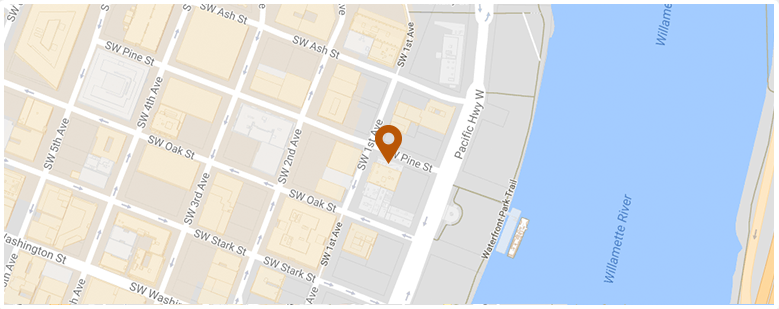
50 SW Pine St 3rd Floor Portland, OR 97204 Telephone: (503) 226-3844 Fax: (503) 943-6670 Email: matthew@mdkaplanlaw.com
map image
Contact Information