"I got into an accident and was nervous about finding a personal injury attorney after hearing so many awful stories, but from the start, I felt confident with my choice in Kaplan Law, LLC." Read More - Ben
"Matt and Gillian took great care of me during a stressful time of my life. Very caring and knowledgeable group. I would definitely recommend Kaplan Law!" Read More - Kayleigh
"Incredible service and results! Matthew Kaplan and his paralegal Gillian did an amazing job for me. Not only did they resolve my case beyond my satisfaction, they also were very caring and supportive thru my recovery. I couldn't ask for a better attorney." Read More - Jamal
Matthew D. Kaplan

A fascinating column in the November issue of Consumer Reports magazine offered a frank call for more openness in medicine. Dr. John Santa, an internist who also directs the magazine’s Health Ratings Center, wrote: “Until our health care system gets its act together, patients and their families will have to be constructively assertive to get to the bottom of any mishaps.”

The reason for this, Dr. Santa writes, is that American medicine has developed a professional culture that is very reluctant to acknowledge error. Doctors and nurses fear professional consequences. Administrators, in turn, fear that publicizing mistakes will make medical professionals even more reluctant to report them. Ultimately, the real losers, he writes, are patients, who “deserve to know what happened and that the doctor or hospital is trying to rectify the situation.”

Dr. Santa also offers a series of helpful, common sense suggestions for patients, among them: “Enlist family members to keep track of your care” and “Know what medicine you’re taking and tell your doctor or nurse if you don’t recognize what you’re given.”

Few things can be as mysterious to the outsider as the methods insurance companies use to value damage to a vehicle, especially when the car or truck has been totaled. A new Oregon law attempts to make that process a bit clearer – and fairer – for consumers.

The new law, which went took effect January 1, requires insurers to provide consumers with a written explanation of how the value of their totaled vehicle was determined. If there is a dispute over the amount of the insurance payment the law also requires the insurance company to pay the portion of the claim that is not in dispute while the two sides continue to argue over the remainder. Insurance companies must also reimburse “reasonable appraisal costs” to customers when an independent appraisal results in a higher valuation than what the insurer had offered as a final settlement (provided that the policy contains an appraisal provision in the first place).

As with any new law these measures are likely to be subject to some degree of interpretation by courts, especially in the coming months. They do, however, provide you and your Portland auto accident lawyer with powerful new tools to hold insurance companies to account. Getting an insurance company to pay what you are owed is often a difficult and contentious process. With the help of these new laws, however, an Oregon traffic accident lawyer with expertise in totaled vehicles can fight to get you the settlement you deserve.

Cars and cellphones have been the media’s main focus when discussing Oregon’s new laws, but the distracted driving bill was not the only significant piece of legislation which came into force on January 1, 2010. Several new measures change state insurance regulations in ways that stand to benefit consumers in significant ways.

Among the most important is a new law raising the ceiling on income replacement benefits from $1250 to $3000 per month. These are benefits paid by your insurer if you are unable to return to work because of an injury. It goes without saying that for many people the old monthly rate of $1250 – essentially a minimum wage salary – fell far short of actually replacing lost income.

The same bill also increased the required level of motor vehicle liability insurance for damage to others from $10,000 to $20,000 (that increase, in turn, bumps up the minimum level of optional uninsured motorist coverage for property damage that companies must offer their customers. This level also goes from $10,000 to $20,000).

With the stroke of midnight and the beginning of 2010 Oregon joined the growing list of states restricting the use of cellphones by people driving cars. In Oregon and around the country distracted driving has emerged over the last two or three years as a serious issue of public concern. The interesting question may, in fact, be why it took so long for this to happen. As the New York Times link below indicates, concern about the issue is not particularly new. AAA issued its first warning that drivers ought to pull over before picking up the phone in 1984 (yes, 1984).

Oregon’s new distracted driving law requires drivers to use a hands-free device, such as a Bluetooth headset, when making and receiving calls. Telephone use by drivers under the age of 18 is banned entirely. Also banned (for drivers of all ages) is texting while behind the wheel. More details about the new law can be found here.

While there have been a number of media reports during the last few weeks of brisk headset sales around Oregon, it will probably take some time before the real impact of the Oregon distracted driving law becomes clear. Anecdotal evidence from other states with distracted driving laws indicates that enforcement regimes vary widely (for example: New York, one of the first states to enact a distracted driving law, has a reputation for relatively relaxed enforcement while Washington DC is said to be unusually strict).

Oregon state police are urging Drivers to slow down and exercise caution this holiday weekend after a state trooper was injured in an Oregon auto accident. The trooper’s patrol car was struck by an SUV that was driving too fast in bad weather near the Columbia River Gorge, according to a report in the Gresham Outlook.

The accident took place on I-84 near the town of Hood River. The paper reports that State Police Sergeant Pat Shortt was slowing down so that he could pull over to assist a disabled motorist when he was struck from behind by an SUV that, in addition to its driver, was carrying four children. Sgt. Shortt was treated at a local hospital for minor injuries and later released. The SUV’s driver was cited for reckless driving.

In the wake of the Hood River injury auto incident the state police are reminding drivers to use extra caution on snowy and icy roads during this winter driving season.

The new Oregon distracted driving law that comes into effect Friday has been getting a lot of attention over the last week. This weekend, however, the state’s leading newspaper raised serious questions about whether the law already contains a fatal flaw.

An editorial in the Portland newspaper The Oregonian points out that the Oregon distracted driving law requiring drivers to use a hands-free device if they are talking on the phone while behind the wheel contains an exception for people “operating a motor vehicle in the scope of a person’s employment if operation of the motor vehicle is necessary for the person’s job.” The paper says the language was inserted at the insistence of business lobbyists, but worries that “necessary for a person’s job” is not defined anywhere in the legislation.

The loophole, the paper notes, “may well be big enough for real estate agents, contractors, FedEx drivers and just about anyone who needs a car for work.” Interpretation of the provision will lie with Oregon’s courts, and it may take some time for legal judgments under the new law to offer Oregon distracted driving attorneys guidance on what “necessary for the person’s job” means in practice.

The City of Portland has hired an outside audit and investigative group to look into the police department’s handling of the 2006 death in custody of James P. Chasse Jr, according to a recent article in The Oregonian.

Chasse died of what the newspaper describes as “broad-based blunt-force trauma to the chest”, including 26 breaks to his ribs. An initial investigation by Portland’s police chief found that only one officer had violated department policy in relation to Chasse. A later investigation by the police commissioner ordered a two-week suspension for two officers. Last October, however, the city auditor ordered a further investigation. The city will now hire a California firm that specializes in cases like this to review all aspects of the department’s conduct relating to Chasse and his death.

Cases like Chasse’s raise the issue of Portland wrongful death. The mere fact that someone has been taken into police custody does not give law enforcement officials the right to mistreat them, or to sweep Oregon mistreatment under the rug if it occurs.

A three vehicle Oregon car crash on Route 20 between Corvallis and Albany injured nine people Christmas Eve, according to an article in The Oregonian. Quoting State Police, the newspaper reports that a pick-up truck driven by a 19 year old Salem man drifted out of the westbound lane and over the center line at about 6:30pm striking two oncoming vehicles.

The pick-up’s driver was taken to an Albany hospital with what were described as minor injuries. His three passengers, among then a baby and a toddler, also sustained minor injuries. The driver of one of the other vehicles and two of his passengers were transported to a hospital in Corvallis, all with serious injuries. Two other passengers from that car sustained minor injuries. The four people in the other vehicle were uninjured.

This tragic Christmas Eve accident is a tragic reminder of the need for special caution when driving in the dark in the wintertime.

In a tragic, yet timely, reminder of the need for safe driving this Holiday Season, KATU television reports that a teenager is in critical condition after an Oregon injury car accident near Salem earlier this week. The car was reportedly carrying five people when it crashed into a power pole and flipped over. Three other people inside the vehicle were also reportedly injured in the Salem auto accident. One person escaped injury.

KATU quotes police deputies saying alcohol was involved in the Oregon one car crash. All five people in the vehicle were in their late teens or early 20s, and the station reports that they became loud and abusive when firefighters arrived on the scene to rescue them.

The roadways are always more deadly around major holidays. Increased numbers of people are traveling whenever a holiday comes around, and anecdotal evidence suggests alcohol may also be more likely to be involved in a crash at this time of year.

The Oregon truck death of a driver who had stopped to put on chains is a timely, if tragic, reminder of the need to use extra caution in the coming months as winter settles in throughout the Northwest.

According to local media reports, truck driver Milton Melton of Colville, Washington was killed and a fellow driver injured last week when they were hit by another truck as they worked to ‘chain up’ on I-84 near Ontario, on the Oregon-Idaho border. The Idaho Press-Tribune quotes local law enforcement officials saying they believe a semi-trailer struck both men. Melton’s colleague was taken to hospital with what were described as “non-life threatening injuries”.

As anyone who has had to do it can tell you, chaining up along the roadside can be a nerve-wracking experience, even in daylight hours. The Ontario, Oregon fatal truck accident reportedly took place around 8am at a time when heavy snowfall had significantly reduced visibility. The Press-Tribune reports that the driver of the truck that caused the Oregon truck collision left the scene, but was later taken into custody at a nearby truck stop.

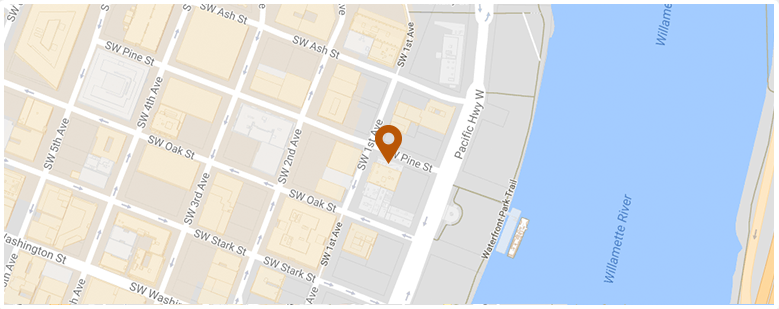
50 SW Pine St 3rd Floor Portland, OR 97204 Telephone: (503) 226-3844 Fax: (503) 943-6670 Email: matthew@mdkaplanlaw.com
map image
Contact Information