"I got into an accident and was nervous about finding a personal injury attorney after hearing so many awful stories, but from the start, I felt confident with my choice in Kaplan Law, LLC." Read More - Ben
"Matt and Gillian took great care of me during a stressful time of my life. Very caring and knowledgeable group. I would definitely recommend Kaplan Law!" Read More - Kayleigh
"Incredible service and results! Matthew Kaplan and his paralegal Gillian did an amazing job for me. Not only did they resolve my case beyond my satisfaction, they also were very caring and supportive thru my recovery. I couldn't ask for a better attorney." Read More - Jamal
Matthew D. Kaplan

A recent report from NPR highlights how social media usage can become a factor in reckless and negligent driving cases. According to a report on the radio network’s website, “an 18-year-old California man stands accused of murder after law enforcement officials upgraded charges against him based on tweets and driving history.”

The accident at the center of this story took place in early June in northern California. The man was allegedly driving at more than 80 miles per hour in a 40 mph zone when he lost control of the car and hit a middle-aged couple who were riding in a marked “bike lane alongside Foothill Road, police say, in an area that is marked by a golf course and by large houses with swimming pools.” In other words: a residential area rather than a highway. The woman in the couple was killed in the accident and her husband was injured.

Citing reporting by the San Francisco Chronicle, NPR reports that the suspect stopped at the scene and “spoke with police” though he declined to give a formal statement. Last month he was arrested “on felony charges of vehicular manslaughter and reckless driving” but this was upgraded to murder, and the suspect’s bail revoked, after police took a closer look at his driving habits.

It is one of those things every parent fears: a child suffering and injured after having been locked in a hot car. It is something few of us can dream of doing, and that even fewer could stand by and watch.

Yet here in Oregon it happened once again, just this week. According to Portland TV station KGW a man in Tigard has been cited by local police “after leaving his small child in a hot car in the parking lot of a Tigard home improvement store. A store employee broke the window of the car when he saw that a baby had been left inside.”

The employee who rescued the 10 or 11 month old child is quoted as saying that the boy appeared to have been alone in the car for approximately 20 minutes. The father identified his baby as the rescuer and other bystanders were working to cool the child down inside the store. Police were called. The TV station reports that they did not cite the man at the scene of the incident, but that “investigators later charged the father with second-degree child neglect, a misdemeanor.”

It’s a cliché: safety is everyone’s responsibility. It is also, however, true, and that fact was reinforced last week by Washington State’s Supreme Court. According to an Associated Press dispatch, republished by The Oregonian, the court held that “cities, counties and utility companies can be liable when faulty road design leads to injuries in car crashes – even when the driver is drunk.

According to the news agency the case focused on a crash near Anacortes. “Two people who had been drinking were injured when their car ran off the road and struck a utility pole that was reportedly closer to the roadway than guidelines dictated.” In overturning a lower court ruling the state Supreme Court held that “government entities owe a duty to ensure roads are reasonably safe for public travel, no matter whether the driver is at fault,” according to the AP.

Obviously this is not, and ought not to be taken as, an excuse of or license for drunk driving. Indeed, in legal terms it is important to remember that DUI is a crime regardless of whether one gets involved in an accident or not. In this instance, however, the court was addressing a bigger issue: whether a driver’s physical condition at the time of a particular accident can be used as an excuse by government or a utility company to escape responsibility for its own negligence. The court held that government and public utilities both have a broader responsibility to provide a safe environment for all users of public roadways. The bad behavior of individual drivers does not absolve the city or county from their responsibility to provide a roadway that is safe for everyone – regardless of the irresponsible behavior of some individual drivers.

A report published this week in The Oregonian notes that a 39-year-old Portland garbage truck driver has been cited for careless driving. What makes this news item especially noteworthy, however, is the fact that additional penalties have been imposed on the truck driver under Oregon’s “vulnerable road user” law as a result of a July accident that left a bicyclist seriously injured. Though it has been on the books for nearly six years, the “vulnerable road user” provision is an essential protection for cyclists and pedestrians with which many Oregonians are still unfamiliar, so it merits our attention today.

First, the details of the Portland bicycle crash. As reported by The Oregonian, on July 12 the garbage truck driver hit the bike rider as the truck “turned left from Southeast 17th Avenue onto southbound McLoughlin Boulevard… Police said (the victim) was riding his bike southbound on 17th Avenue on the east side of the street and was crossing McLoughlin when the collision occurred.”

The bike rider “suffered traumatic injuries and was hospitalized. He has since been released from OHSU Hospital.” The driver cooperated with police in their investigation.

Relatives of a Bend man who died in 2010 while using an inversion therapy table have filed a lawsuit in federal court in Eugene against the Washington-based manufacturer of the table, according to a recent article in The Oregonian.

According to the newspaper, the lawsuit alleges that the 64-year-old Oregon man “was using the table when he became trapped in the inverted position and was unable to return to the upright position or to remove himself from the machine.” The manufacturer “promotes the product on TV and online as a way to relieve back pain, improve joint health and build muscle tone,” the paper reports.

The Oregonian cites a representative from the Oregon Medical Examiner’s Office reporting that the man died from asphyxia. The coroner ruled the death accidental, but this suit raises important product safety issues. The suit alleges that the victim was unable to get himself back into the upright position despite “effort over a prolonged period” to do so.

An Oregon motorcycle crash that also involved a pickup truck left a Monmouth man dead over the weekend, according to a report in this morning’s Oregonian. The newspaper reports that the man “died Sunday morning in a collision between a pickup truck and a motorcycle on Oregon 51 north of Independence.”

The victim, age 22 according to the newspaper, “struck the right front side of the truck and crashed through (its) windshield” when the driver of the truck, a 77-year-old man, “attempted to turn his truck left into a driveway.” The paper also reports that witnesses say neither the motorcycle nor the truck appeared to be speeding at the time of the Oregon motorcycle accident. Although an investigation of the fatal crash is still underway, the newspaper cites police sources saying they believe alcohol was not involved in the Sunday morning accident. Both men were airlifted to Salem Memorial Hospital, according to The Oregonian, where the motorcycle rider was pronounced dead and the driver of the truck remains in critical condition.

Based on these details, what we appear to see here is a straightforward case of poor driving, the sort of accident that happens every day in every American city, and which is all the more tragic because it is so easily avoidable.

This blog often highlights things that go wrong – instances of negligence and irresponsibility at the end of which someone gets hurt and our legal system is called upon to offer justice, and some measure of solace, to victims and their families. An article that appeared in The Oregonian this week, however, is a reminder that the opposite of recklessness and negligence lies in proper training, having proper equipment and displaying professional responsibility.

The story that brought all this to mind concerns a Southeast Portland man whose life was saved on board an airplane last April when he suffered a heart attack while on a flight from Portland to Dallas. According to the newspaper the man’s wife became worried when she found him suddenly looking gray and acting unresponsive in the seat next to her. The woman’s “distress got the attention of those around her” the paper reports. Within moments a doctor and nurse, both from the Oregon Health and Science University Hospital but who were traveling separately, sprang to the man’s aid as flight attendants rushed to get the portable defibrillator that is now standard equipment on most commercial aircraft.

The doctor managed to revive the patient using hands-only CPR, the paper reports, with the patient showing signs of life just as the defibrillator was being activated. The doctor sent word to the pilots that the plane needed to land as soon as possible, leading to an emergency stop a short time later in Salt Lake City. As paramedics removed the man from the aircraft fellow passengers applauded.

The case of a 15-year-old Vancouver boy who drowned last year while attending a church-run summer camp may soon be headed to court. Today’s Oregonian reports that the victim’s estate has filed a $13 million lawsuit against the camp and its organizers.

According to the paper, the boy died just over a year ago when he fell while walking behind the waterfall at White River Falls, near Maupin. A 26-year old counselor also drowned in the incident when he dove into the water in an attempt to save the boy.

Looking at this incident from a legal perspective a number of negligence issues arise and significant questions of responsibility. It is worth remembering that 15-year-olds are still children and require trained adult supervision when in an environment like a summer camp. The reports that the boy had been encouraged by the camp organizers to walk behind the waterfall are potentially very serious, and, if confirmed, they could be evidence of highly irresponsible behavior on the part of the camp’s organizers. At a very basic level, the fact that, based on the media reports, no one on the outing seems to have been wearing a life preserver or to have had any other life-saving gear on hand is deeply troubling.

Late last week The Oregonian carried a report about an industrial accident in Canby that raises serious Oregon employer liability law questions. According to the newspaper a 55-year old Silverton man died “after a 1,600-pound steel plate fell from a clamp” and landed on him.

Colleagues rushed to help the stricken man, lifting the plate and administering CPR, according to the newspaper. First responders initially called for an air ambulance “just minutes later, however, firefighters cancelled the helicopter and called for a medical examiner.” The state’s Occupational Safety and Health Division has opened an investigation into the incident, but one of its most worrisome aspects, based on what we currently know, is the fact that the steel-fabrication plant in question had been cited “for three ‘serious’ violations in the last few years. This trend is particularly troubling because it is relatively new. The plant in question has operated since the 1960s, but all three of its safety citations have come in the last five years.

This raises a number of potential Oregon employer liability law issues. Oregon Revised Statutes, section 654.010, requires employers to “furnish employment and a place of employment which are safe and healthful for employees.” To achieve this employers are required to “adopt and use such practices, means, methods, operations and processes as are reasonably necessary to render such employment and place of employment safe and healthful.” Simply put, this requires employers to do everything they reasonably can to keep a workplace safe, even for workers in potentially high-risk jobs.

A report this week in The Oregonian is a welcome example of our legal system at work. The account of the conviction of a reckless Oregon hit and run driver who caused a two-vehicle crash in Tualatin is a reminder that the justice system can and does work for victims and our broader society alike.

According to the newspaper the 24-year-old man was arrested for causing the crash in a parking lot adjacent to Martinazzi Avenue in Tualatin last January. “Witnesses told police a man in a pick-up was driving erratically and struck another vehicle,” The Oregonian writes. “The suspect’s vehicle then hopped a curb near the roundabout at Southwest Avery Avenue and 86th Street and struck a road sign. Witnesses also said the driver didn’t stop for a red light” and that while doing all of this he narrowly missed a pedestrian.

Once arrested the suspect was charged with DUII, hit-and-run and reckless driving. Now, five and a half months later, he has been convicted, and will serve time in jail, pay a fine and lose his driving license for three years. The man was initially eligible for a diversion program but lost that status, according to the newspaper, when he was arrested again in February.

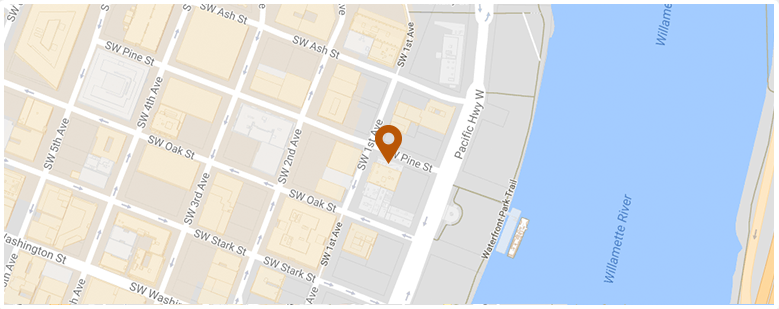
50 SW Pine St 3rd Floor Portland, OR 97204 Telephone: (503) 226-3844 Fax: (503) 943-6670 Email: matthew@mdkaplanlaw.com
map image
Contact Information