"I got into an accident and was nervous about finding a personal injury attorney after hearing so many awful stories, but from the start, I felt confident with my choice in Kaplan Law, LLC." Read More - Ben
"Matt and Gillian took great care of me during a stressful time of my life. Very caring and knowledgeable group. I would definitely recommend Kaplan Law!" Read More - Kayleigh
"Incredible service and results! Matthew Kaplan and his paralegal Gillian did an amazing job for me. Not only did they resolve my case beyond my satisfaction, they also were very caring and supportive thru my recovery. I couldn't ask for a better attorney." Read More - Jamal
Matthew D. Kaplan

An Associated Press report republished by the Salem Statesman-Journal this month is distressing. According to the news agency, a 3-year-old girl was critically injured in Oregon City when the child “fell into a crawl space.”

This was not, however, an at-home accident. The crawl space was in a house that the girl’s mother was viewing along with a real estate agent. In fact, there is some evidence that the accident could have been worse. “Clackamas County fire officials say the girl was playing with her brother beneath stairs near the hatch to the crawl space” at the time of the accident, according to the news agency.

While controlling one’s children is ultimately a parent’s responsibility, the details of this Oregon child injury accident raise a number of unsettling questions related to Oregon premises liability. A homeowner who places a house on the market for sale has a responsibility to ensure that it is safe – or that potential buyers are warned well in advance that they are visiting an unsafe property. Responsibility for conveying this information to buyers and other potential visitors, in turn, passes to a real estate agent when that agent brings someone onto a property to view it. Parents viewing a potential family home should not be confronted with a safety problem of this seriousness when they are merely visiting the property for a look.

A recent Oregon car crash story in The Oregonian is relatively straightforward, and it is because of that tragic simplicity that it holds such stark lessons.

According to the newspaper four people including a child were injured last week when a driver who was allegedly following too closely behind another vehicle “slammed on the brakes of his Jeep to avoid a rear-end collision, swerved into the opposite lane of traffic and crashed into an RV towing a minivan. The jeep then struck a tree off the highway and rolled, and the RV came to a stop on top of it.”

It is worth adding that all of this took place in broad daylight – at 2:30 pm on Highway 47 near Forest Grove.

A recent article in The Oregonian offered details of an Oregon bicycle accident on North Interstate Avenue that appears to be a hit-and-run. The newspaper, citing the Portland police, reports that a 59-year-old North Portland man “was rushed to a local hospital after he was struck by a vehicle in the northbound lanes, just north of Greeley Avenue.”

The newspaper goes on to note that: “a witness described seeing a white Ford pick-up, possibly late 1970s model, driving erratically before the crash. The car did not stop after the crash… (the victim) remains in critical condition at a Portland hospital, police said.”

Incidents like this are a reminder for all of us who care about cycling that Portland’s reputation as one of the most bike-friendly cities in America is no guarantee against the irresponsibility and negligence of others. The reports that the vehicle that struck the cyclist was driving “erratically” add an additional element to this story, hinting at the possibility that this Portland bike and car accident may also be a Portland drunk driving accident. None of us can control what others do, so it is especially important that we be careful when behind the wheel and alert when on our bikes.

We all know that lobbyists carry a lot of weight in Washington, Salem and other state capitals nationwide, but the lack of political will currently on display in Salem is especially hard to watch.

At issue is House Bill 3160. According to a recent article in The Oregonian, this modification to Oregon’s Unlawful Trade Practices Act would allow “Oregonians to sue companies for not paying claims promptly, denying coverage for losses or medical bills, and other reasons.” It would, in short, end the inexcusable exemption the insurance industry has long enjoyed from public accountability for its worst excesses.

The newspaper notes that “unlike similar laws in other states, House Bill 3160 would also allow third-party defendants to sue. For instance, an auto body shop would be able to sue a customer’s car insurance company even if it wasn’t the policyholder.” Put another way: by allowing third parties who have been wronged by insurers to sue the legislation would make it harder for large insurance companies to push ordinary Oregonians around. Protections like these are absolutely necessary after the many, many excesses of the insurance industry. The Oregonian notes that similar legislation was passed at the federal level in 2007, though that law specifically exempts health insurance companies.

Perhaps we should have seen this coming. Even as consumer groups and public awareness campaigns have worked to raise awareness of distracted driving here in Oregon and elsewhere, the distractions in our cars have evolved.

That conclusion comes from a study released today by researchers at the University of Utah and reported in the Salt Lake City Tribune. As the newspaper reports, the study concludes that “these latest ‘infotainment’ features may be more fun than safe… (and) talking to your car while driving may be more distracting than chatting on a cellphone.”

According to the Tribune, the study involved monitoring the brainwaves of volunteers as they attempted a series of tasks “ranging from listening to the radio to solving a math problem to operating a speech-to-text device while staring at a cross on a blank computer screen.” Later stages of the study involved asking the same volunteers to perform the same tasks in both an auto simulator and while driving a real car. The results challenge the idea that in-car distractions are not a big problem so long as the driver can keep his or her hands on the steering wheel.

Last week I wrote about the shocking and indefensible position of some car companies and car dealers that rental vehicles should be allowed to remain on the road, and even resold, while they are subject to recall notices but not yet repaired. This week has brought more surprising and disappointing auto recall news for all of us who care about consumer safety.

According to Bloomberg News, Chrysler has taken the highly “unusual decision to buck what would be one of the largest US auto recalls.” The company rejected a request by the National Highway Traffic Safety Administration (NHTSA) “to recall 2.7 million Jeep Grand Cherokee and Liberty sport-utility vehicles made over 15 model years.” NHSTA has linked the vehicles, reported by Autoweek as the 1993-2004 Grand Cherokee and the 2002-07 Liberty, to “51 deaths in fires after rear-end collisions,” according to Bloomberg.

Chrysler’s move is an unsettling reminder of something that is often forgotten when recalls are discussed: while the government does have the authority to order product recalls in the name of consumer safety is almost never uses it. Virtually all recalls, whether of vehicles through the NHSTA or of consumer products via the Consumer Product Safety Commission, are, legally speaking, voluntary in nature and are negotiated by the government with manufacturers.

It would be fair to say that when renting a car most of us assume the car is safe. Car rental companies make you sign a document acknowledging any visible damage to the vehicle and are known to check returned vehicles carefully before sending them back out with new renters.

Did you know, however, that if the car or truck you’re renting is subject to a recall notice no law prevents a rental company from sending you out on the road in that vehicle? As a basic measure of consumer protection it sounds amazing, but, according to a recent article in the trade publication Automotive News, it is true.

Not only that, but major figures in the industry are fighting to retain their right to send customers out in unsafe vehicles. Automotive News reports that earlier this month “major automakers and auto dealers told a Senate panel… that they remain opposed to legislation that would prohibit rental car companies from renting or selling vehicles that are subject to a federal safety recall.” (car rental companies generally sell their vehicles after a year or two of use)

Here in Oregon the Memorial Day holiday weekend began with an incident that is a sad reminder of one of summer’s perils: Oregon injuries to children resulting from window falls. According to The Oregonian “a four-year-old Oregon City girl was transported to the hospital with non-life threatening injuries on Saturday after falling out of a third story window.”

Citing Clackamas fire district officials the newspaper reports that the girl is in good condition, but with the weather warming up this is a sad reminder of the danger window falls can pose to children during the summer months. Regular readers will recall that the Portland area experienced a spate of window falls last year during late June and early July. Hopefully this summer will not see a repeat of these easily preventable accidents.

As a Portland child injury attorney I have long supported, and used this blog to help publicize, SafeKids Oregon’s “Stop at 4” campaign (see link below or this post from last April). As SafeKids Oregon notes, nationwide approximately 3300 children under the age of six fall from windows every year. Many of these falls are from the second or third floor and while we can all be relieved that the Oregon City girl is now described as being in good condition it is also useful to take a moment to remember some of the key facts connected to window falls.

Two new studies receiving media attention this month indicate that the problem of distracted driving in Oregon and elsewhere around the country may be even worse than many people think.

According to the Associated Press the first study, released earlier this month by the safety-advocacy group the National Safety Council found that “crash deaths in cases where drivers were on the phone were seriously underreported… The underreporting makes the problem of distracted driving appear less significant than it actually is and impedes efforts to win passage of tougher laws.” The group examined car crash data for 2009 through 2011.

Perhaps the most surprising finding of the study was that “even when drivers admitted to authorities that they were using a phone during an accident in which someone was killed, about half the cases weren’t recorded that way in the database, the council said” referring to the highway safety database maintained by the federal government’s National Highway Traffic Safety Administration.

Even as police investigate the death last week of a 33-year-old man outside a Northeast Portland strip club the circumstances surrounding the incident have raised serious questions about how well the club was handling its security arrangements – questions that could eventually expose the club to an Oregon wrongful death claim.

As The Oregonian reported last week, the man “collapsed on the sidewalk outside the club and died from a single gunshot wound to the head.” A 21-year-old woman was also injured in the Portland shooting incident and was treated at an area hospital.

“The homicide marked the second fatal shooting at the location in two years. An inspector from the Oregon Liquor Control Commission has launched an investigation with Portland police to see if alcohol service played any role in the shooting,” the newspaper notes, citing a spokeswoman for the commission.

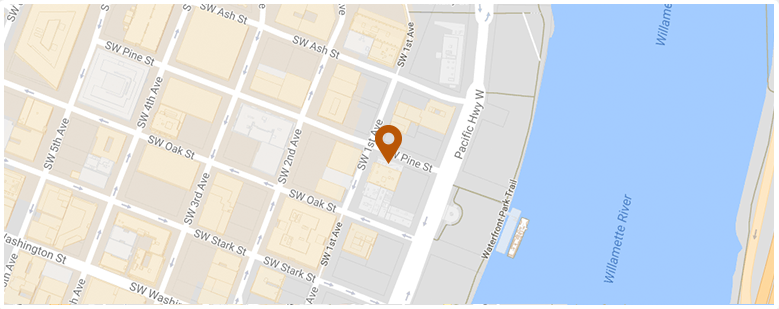
50 SW Pine St 3rd Floor Portland, OR 97204 Telephone: (503) 226-3844 Fax: (503) 943-6670 Email: matthew@mdkaplanlaw.com
map image
Contact Information