Articles Posted in Wrongful Death

It is an election year, so between now and November we can expect to hear many politicians at the national, state and local levels complain about trial lawyers and call for “tort reform.” As an article published this week in Slate outlines, however, an often disingenuous campaign designed to ‘protect’ big business frequently has an even more shocking effect – protecting child abusers and other people who injure children.

The article begins with the story of an Ohio pastor who was convicted of raping a 15-year-old girl in 2008. In addition to his criminal trial the man was sued by the girl and her family in civil court. As I have written in this space on many occasions, this right alone is important and worth defending. Access to courts for victims and their families is essential if justice is going to be served. As the article notes, quoting a legal scholar at New York University, often “the civil justice system is the only way for a perpetrator to be held directly accountable to the victim.”

A court awarded the victim $3.6 million in damages, but because of award caps required under Ohio’s tort reform laws she was only able to collect $350,000 – less than one-tenth of what the jury decided was her due. The girl and her family are now suing to have those caps declared unconstitutional on the grounds that they are “arbitrary and unreasonable, and thus a denial of due process.” Specifically, there is a strong argument to be made that damage caps violate the US Constitution’s guarantee of a trial by jury. An inherent part of that right is letting the jury decide what is fair – something that the tort reform movement seeks to stifle.

A California family has filed a wrongful death lawsuit in response to a vehicle fire caused by a rear-end collision. The accident claimed the life of the family’s father early last year.

According to CBS Los Angeles the fatal accident took place in Ontario, California, east of LA, in January of 2015. The man was traveling in “a model year 2000 Jeep Grand Cherokee.” Within seconds of a rear-end collision “the Jeep burst into flames,” according to the TV station’s report.

At the heart of the case are questions about dangerous products and their design flaws. The model year of the vehicle is one of the most important elements of this tragic case. As the TV station reports, “in June of 2013 the National Highway Traffic Safety Administration asked Chrysler to recall earlier model years, specifically Grand Cherokees built between 1993 and 1998 due to concerns about gas tanks catching on fire. But there were no recalls for later model years between 1999 and 2004.” This is significant because those years include models in which the gas tank is positioned directly behind the rear axle – a location that significantly increases the chances of a vehicle fire in the event of even a minor rear-end collision.

A harrowing story in the magazine Pacific Standard highlights how loosely regulated midwife-supervised births often are, and the tragic consequences that can result. As the article’s sub-head notes: “in 30 states, Certified Professional Midwives are licensed to practice medicine with virtually no medical training.” This, in turn, can lead to serious injuries to children and even, as in this case, to deaths.

The article focuses on the experience of a Nevada couple whose baby died a few minutes after being born. As it lays out in detail, the warning signs about this particular pregnancy were clear for any trained professional to see. The problem was that by hiring a midwife in a state with particularly lax regulation the parents were left getting advice from someone fundamentally unqualified. “Had (the baby) been born in a hospital under the care of a nurse-midwife or physician, he almost certainly would have lived,” the magazine concludes.

The article goes on to note that it was only after matters had gone too far that the parents discovered that the ‘supervising physician’ listed by the midwife had never met her, and that the woman in question had moved to Nevada to evade a license suspension in California.

A groundbreaking three-part series published last week by the New York Times has drawn much-needed attention to a problem threatening almost everyone in America despite the fact that many people are not even aware that it impacts them directly.

As the paper reports in part one of the series: “Over the past few years it has becomes increasingly difficult to apply for a credit card, use a cellphone, get cable or Internet service, or shop online without agreeing to private arbitration. The same applies to getting a job, renting a car or placing a relative in a nursing home.” As the series goes on to detail, while arbitration may originally have been conceived as a way for businesses to resolve disputes among themselves more quickly and cheaply than by using our courts it has become a more-or-less routine way for corporations to tilt the field in their favor in any dispute with their customers. The newspaper quotes a federal judge in Boston who aptly describes this development as “among the most profound shifts in our legal history… Ominously, business has a good chance of opting out of the legal system altogether and misbehaving without reproach.”

What makes the new realities outlined in the Times so scary is how widespread they have become in the years since 2011 when a Supreme Court ruling opened the way for wider use of arbitration clauses and made filing class action lawsuits more difficult. The system is particularly lopsided because the growing class of professional arbitrators who administer it generally rely on large corporations to bring them repeat business (an arbitrator must be approved by both sides to a dispute, but large companies have far more knowledge of who they are agreeing to, and can make it clear they will not pick a given individual again if he or she rules against the company) – a conflict of interest that the Times examines at length and which strips away even the thin façade of impartiality that surrounds the arbitration process.

An article published recently by The Oregonian on workplace deaths makes sober reading on this Labor Day Monday. It notes that “altogether 41 men and 5 women died from workplace accidents and injuries” in our state last year. “The number includes both Oregon and out-of-state residents who perished within the state’s borders, but excludes at least 28 others who died on the job from suicide, heart attack, stroke or other natural causes unrelated to their work.”

As the newspaper notes, the rate of workplace deaths both in Oregon and in the country as a whole has declined dramatically over the last three decades. Moreover, while Oregon’s workplace death rate of 2.9 per 100,000 workers is lower than the national average of 3.3 per 100,000 it is noticeably higher than the rates in neighboring California (2.4) and Washington State (1.7).

One can speculate why this might be the case. As I have often documented on this blog, Oregon has an unusually large number of people who work in relatively dangerous occupations – such as logging and truck driving. Whatever its cause, the fact that our state’s workplace fatality rate is unusually high by regional standards is a clear cause for concern.

A summer marked by low gas prices has led to a jump in the number of miles Americans are driving. Unfortunately, it also appears to be leading to a significant increase in traffic deaths, according to a recent Yahoo! News article.

“The National Safety Council reported this week that traffic deaths and serious injuries in the US are on a pace to rise for the first time in nearly a decade. If the trend for the first six months of this year continues, the NSC says traffic fatalities in the nation will exceed 40,000 for the first time since 2007 and deaths per 100 million vehicle miles traveled will also increase,” the news service reports. The key lies in the last part of that sentence – indicating that the number of on-road deaths is not merely a function of the greater number of miles being driven. The article notes that when compared to 2007 the number of mile Americans drive has increased by 3.4% but in the first six months of 2015 alone the number of traffic fatalities has jumped by 14%.

According to the article a number of factors contribute to this – such as higher speed limits – but one might also think that the steadily improving safety gear in modern cars and trucks would, at least to some extent, mitigate that. The big thing that has changed for the worse, according to the study, is the steady rise in distracted driving in general and cellphone use in particular despite laws and educational campaigns here in Oregon and elsewhere designed to curb the practice. From a legal perspective this is especially significant since it, in turn, means that an increasingly large number of drivers are placing themselves at risk of wrongful death charges in the event of an accident.

Today the federal government is announcing a partnership with Google aimed at preventing accidents at railroad crossings, according to the New York Times. The newspaper reports that the Federal Railroad Administration will work with the tech giant “to provide the locations of all grade crossings” and make them available on Google’s maps.

The initiative follows “a sharp increase in the number of rail crossing accidents last year,” according to the Times. “Last year, 270 people died in highway-rail collisions, up from 232 the previous year, and 843 people were injured, according to federal safety statistics… Grade crossing accidents are the second-highest cause of rail fatalities after trespassing accidents, which killed 533 people last year.”

The scope of the project, however, is vast, which may be part of the reason why there is no target date for its completion. According to the Times there are well over 200,000 grade crossings nationwide. By pinpointing those locations in the mapping software that runs phones, GPS units and car navigation systems the company hopes, initially, to make it clearer where the danger spots lie. Over time it should eventually be possible to include information warning about oncoming trains in real time. According to the Times the FRA is also reaching out to Apple, MapQuest, TomTom and Garmin with proposals for similar programs.

On the eve of a US Senate hearing focused on the Takata airbag recall, Senate Democrats have issued “a 45-page report into the nation’s largest-ever recall of about 34 million vehicles by 11 automakers for air bags that can explode and send shrapnel flying,” according to the Detroit News. The paper notes that it was only last Friday that the airbag manufacturer acknowledged an eighth documented death linked to its defective safety equipment.

According to the newspaper, the Senate report found that more than a decade after engineers first became aware of the problem “no one can identify a root cause for the ruptures.” The defect in the Takata airbags causes the gas canisters used to inflate the bags to explode, sending potentially lethal shrapnel flying into the faces and bodies of people riding in the car.

As company executives prepare to face Congress another fact reported by the Detroit News is even more shocking. According to the Senate document, even the replacement parts Takata is providing to millions of families here in Oregon and around the country are not necessarily safe. “Takata is currently producing hundreds of thousands of replacement inflators each month that may or may not completely eliminate the risk of air bag rupture,” the report says. The idea that the company is replacing defective and potentially fatal air bag inflators with parts that may themselves also be defective is difficult to comprehend.

Reports late last week that Blue Bell, the troubled Texas-based ice cream company, “will lay off more than a third of its workforce following a series of listeria illnesses linked to its ice cream,” according to the Associated Press, are the latest example of a company putting its profits ahead of responsibility to its workers or to society at large.

As the news agency reports “the 108-year old company’s production plants in Texas, Oklahoma and Alabama have been closed since Blue Bell issued a full recall in April. The company’s ice cream has been linked to listeria illnesses in four states, including three deaths in Kansas.” Though the article quotes the company’s CEO saying “our employees are part of our family” it is difficult to balance that statement against revelations by the Houston Chronicle that the company knew it was distributing unsafe products two years ago, but kept the matter secret and continued with business as usual.

“Blue Bell Creameries found strong evidence of listeria in its Broken Arrow, Oklahoma plant as early as 2013 but failed to improve its sanitation programs, according to findings released… by the U.S. Food and Drug Administration,” the newspaper reported last week.

A recent Associated Press article republished by The Oregonian reported that Oregon’s Occupational Safety and Health Division has fined a Salem company and the Oregon Department of Transportation for separate incidents that led to worker deaths. The deaths raise both possible Oregon wrongful death and employment liability law issues but, more immediately, leave open questions about the effectiveness of OSHA’s fines themselves.

According to the news agency, citing the East Oregonian newspaper, OSHA fined a Salem-based concrete company “$840 for not ensuring safe work conditions, which led to the death” of a 64-year old man employed by the company. “The company was installing rumble strips at the paving project on Interstate 84 west of Boardman when (he) was run over by a pickup towing equipment operated by another employee.”

The agency also fined the state transportation agency $3500 over the death of a highway maintenance crew member who was “paving Highway 320 when a dump truck backed up and ran over him.”

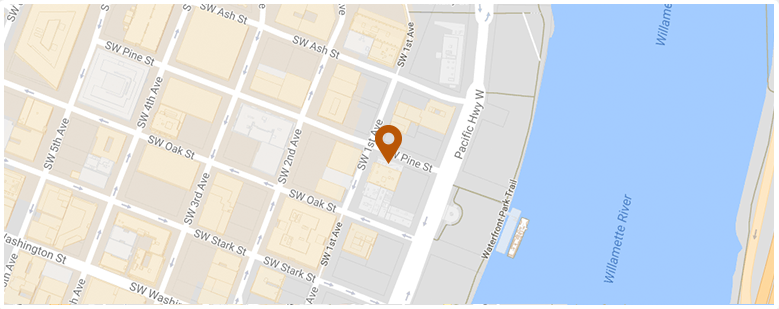
50 SW Pine St 3rd Floor Portland, OR 97204 Telephone: (503) 226-3844 Fax: (503) 943-6670 Email: matthew@mdkaplanlaw.com
map image