Articles Posted in Motor Vehicle Accidents

According to AAA, the drop in gas prices is expected to inspire about 32.4 million Americans to travel by motor vehicle over the Memorial Day weekend. That’s a 1.5% increase in travel over the holiday weekend. Compare that to the 9.6% drop in road travel over the 2007 Memorial Day weekend when gasoline prices rose had risen to almost $4/gallon. Retail gas prices are currently averaging about $2.25/gallon.

101 Deadly Days on the Road
In 2004, Drive for Life, a public purpose initiative, said that poll findings caused it to declare the 101 days between Memorial Day weekend and Labor Day weekend as the 101 days when Americans are most at risk of becoming involved in a US auto accident because so many adults and children—particularly with the summer holidays coming—tend to travel by motor vehicle.

Among Statistics Cited by Drive for Life:
• Americans have been known to travel over 1 trillion miles over the 101 days. (2001, Bureau of Transportation)

• This figure is 10.5 million more miles a month each of the other months that make up the rest of the year. (2001, Bureau of Transportation).

• More people are killed in US auto accidents during the summer months than the other times of the year. Children and teens that would normally be at school are especially susceptible to fatal injuries from a motor vehicle crash. (NHTSA)

Common Causes of US auto accidents during the 101 Deadly Days:
• Drunk driving
• Improper use of safety belts and child safety seats
• Driver fatigue
• Speeding
• Inadequate auto maintenance
• Distracted driving
AAA says 83% of Memorial Day travelers are expected to ride in motor vehicles on US highways, while another 10% are likely to travel by bus, train, or another mode of transportation. The remaining 7% of holiday travelers are expected to fly by plane.

As a Portland, Oregon car accident victim, there are steps you can take to make sure that you are fully compensated for any injuries you sustained that were caused by another driver’s negligent behavior.

More Americans expected to travel for Memorial Day, AAA says, Palm Beach post, May 12, 2009
The 101 Deadliest Days on the Road and How to Survive Them

Related Web Resources:
Tips for Memorial Day road tripping, ConsumerReports.org
Memorial Day Weekend, Summer Travelers Can Cut Gasoline Costs in Tough Economy with Drive $marter Challenge Interactive Website, Money-Saving Tips, Resources, Alliance to Save Energy/PR Newswire

Continue reading

The US Department of Transportation is developing a new consumer program that will involve car manufacturers recommending specific child safety seats for each of their cars. Not every child car seat is necessarily the right fit for a specific car—even if the seat is highly rated or reviewed as one of the best or most expensive products in the market. A variety of recommendations will be made to meet different parents’ budgets that can hopefully help them pick the safest seats for their kids.

The US DOT also is ordering the National Highway Traffic Safety Administration to develop a new child safety seat standard for side impact safety. 1/3rd of all highway fatalities involving children younger than age 13 occur during side impact auto collisions.

While the current standard requiring child seats to withstand forces stronger than 99.5% of real collisions is good, US Transportation Secretary Ray LaHood believes that more can be done to improve child safety during auto accidents. He also noted that in order for a properly working child safety seat to do its job, parents and other adults must make sure that kids use them. According to statistics, 50% of kids under 8 years of age that died in auto accidents were not using child safety seats.

That said, it is the job of child safety seat manufacturers to make sure that their seats are free from defects. Parents and guardians rely on child safety seats to keep their kids and babies safe during auto collisions. While a properly working child safety seat can save lives, a defective seat can prove catastrophic.

Examples of defects that can render a child safety seat ineffective:

• Improper padding on the seat
• Defective seat buckle that can unlock at the wrong time, failing to properly secure the child in the seat
• Defective child seat clip
• Improperly designed harness
• Insufficient or hard to understand installation instructions
There is nothing more devastating for a parent than for his or her child to get hurt. If your son or daughter sustained serious or fatal injuries in a Portland, Oregon car accident that were partially caused by a defective child car seat, you may be entitled to recover Oregon personal injury or wrongful death compensation.

U.S. DOT Announces New Consumer Program for Child Safety Seats, NHTSA, April 24, 2009
Related Web Resources:
Consumer Product Safety Commission

Child Passenger Safety, NHTSA
Car Safety Seats: A Guide for Families 2009, American Academy of Pediatrics

Continue reading

A number of recent, unrelated Oregon motor vehicle accidents have resulted in catastrophic injuries and deaths. On Sunday, a 62-year-old Roseburg motorcyclist’s leg became severed below the knee when he became involved in a hit and run accident near Fair Oaks.

On Monday, police arrested Oakland resident Billy Whitehead for felony hit and run, driving while suspended, and reckless driving. Motorcyclist John R. Granholm sustained his catastrophic injuries when his motorcycle and Whitehead’s Toyota Corolla collided. Granholm flew off his bike, crashed into the car windshield, and landed on the pavement. As of yesterday morning, Granholm, who was admitted to Oregon Health & Science University Hospital in Portland, was listed in critical condition.

Near Sandy, an Eagle Creek mother and daughter were killed on Saturday in a motor vehicle collision on Highway 26. Oregon State Police say 42-year-old Pamela Benson and 11-year-old Clarice Marie Benson were pronounced dead at the Oregon crash site.

Preliminary evidence indicates that Benson’s Toyota Corolla was struck on the driver’s side by a 1987 Toyota R Runner. Boring and Sandy fire department workers had to extricate the SUV driver, 18-year-old Estacada resident Daniel Ingle, from his vehicle.

Last week, a 40-year-old Grants Pass man died on Monday after he was hit by at least one motor vehicle on Interstate 5 close to Merlin. Police are investigating the Oregon pedestrian death.

If you were involved in an Oregon traffic accident with an insured motorist, an injured driver, a drunk driver, a hit and run driver, a distracted driver who was talking on his cell phone or text messaging, or any other kind of negligent driver, you should contact an experienced Portland car accident attorney today. Having an Oregon personal injury law firm that is on your side can make a huge difference in terms of how much financially recovery you can obtain from all liable parties.

Hit-and-run deaths near Merlin spur OSP probe, Mail Tribune, April 28, 2009
Hit-and-run crash severs man’s leg, NRToday.com, April 27, 2009
Identities released in Sandy double-fatal accident, Oregon Live, April 26, 2009
Related Web Resources:
Oregon Department of Transportation

National Highway Traffic Safety Administration

Continue reading

The Oregon Bicycle and Pedestrian Advisory Committee (OBPAC) has written a letter to the Oregon Transportation Commission (OTC) calling on it to push for a ban on cell phone use while driving and increase its efforts to notify the public about the dangers of distracted driving. The OBPAC not only wants the OTC to support the National Safety Council’s call that all cell phone while operating a motor vehicle be barred, but it wants details about the hazards of distracted driving to be added to Oregon’s DMV manual.

Oregon doesn’t have any laws regarding adults and cell phone use while operating a motor vehicle. The state, however, does currently ban drivers younger than 18 from text messaging or talking on a cell phone while driving.

Next week, the House Transportation Committee will hear House Bill 2377, which bans the use of “mobile communication devices” when people are driving their motor vehicles. The bill makes talking or texting on a cell phone illegal—albeit only a secondary offense, which means an Oregon police officer has to catch the offender committing another offense first. However, the law doesn’t apply to hands-free devices.

According to a 2006 University of Utah study, people who talk on cell phones while driving exhibit behavior similar to that of motorists who are drunk driving. Among the study’s findings:

• Hands-free and handheld held cell phones impair driving to an equal degree.
• Drivers who talk on cell phones tend to drive slower and step on the brakes slower than drivers who aren’t using cell phones.
• Motorists who talked on cell phones while driving exhibited 24% more variation in following distance and were 19% slower when it came to accelerating back to normal speed after braking than drivers who weren’t talking on cell phones.
• Drunk drivers tended to drive slowly but more aggressively than sober drivers. They were also slower to brake and did so with 23% more force.

If you were injured in an Oregon car accident because another motorist was driving drunk, talking or texting on a cell phone, fell asleep behind the wheel, or was impaired, distracted, or negligent in any other way, you may have grounds for filing an Oregon personal injury lawsuit.

Oregon bike/ped committee urges state to ban cell phones while driving, BikePortland.org, April 17, 2009
Drivers on Cell Phones are as bad as drunks, U News Center, June 29, 2006
Related Web Resources:
Oregon Bicycle & Pedestrian Advisory Committee, Oregon.gov
National Safety Council

Continue reading

The parents of 15-year-old Austin Miller have reached an Oregon wrongful death settlement with TriMet over their son’s bicycle accident death. Austin died on February 11, 2008 when he was struck by a bus while riding a bicycle. Under the terms of the agreement, TriMet will pay Michael and Stephanie Miller $200,000 with an additional $175,000 pending adjudication.

TriMet has argued that the Oregon Tort Claims Act caps its liability at $200,000 and that is the maximum they should owe for Austin’s death. Personal injury attorneys for the Millers, however, have pointed out that the state’s current tort claims cap is now $400,000.

The Miller family’s Oregon wrongful death complaint accuses a TriMet bus driver of acting negligently when driving into the bike lane where Austin was riding his bicycle. Their wrongful death lawyer has said that the bus driver can be overheard in an audio recording telling TriMet’s dispatch that she thought she gave Austin enough space.

According to the US Department of Transportation’s National Highway Traffic Safety Administration, about 37,313 people died in US traffic accidents last year. This annual estimated death toll is the lowest in 47 years when in 1961, 36,285 died. Last year’s fatality rate was also the lowest ever recorded at 1.28 deaths per 100 million vehicle miles traveled.

The decrease in overall traffic accidents last year was clearly reflected in the Oregon city of Portland, where its Bureau of Transportation is reporting that 20 people died in traffic accidents last year—15 motor vehicle occupants and 5 pedestrians—and there were no bicyclist deaths. In the past, there have only been three other years—in 2000, 2006, and 2007—when the number of Portland traffic crash deaths was below 30.

Total number of traffic deaths in Portland were particularly high in the 1930’s and 1940’s before neighborhood speed limits, traffic signals, and sidewalk extenders existed. Now, the city has over 1,000 speed bumps—boasting more than any US city. It also has red light cameras, photo radar vans, and over 350 miles of designated trails, bike lanes, and boulevards. The NHTSA lists Oregon (at 96.3%) as one of the 16 US states where seat belt use is 90% or more.

According to traffic safety specialist Greg Raisman, the fact that more people are biking and walking makes them more cautious when they do get behind the wheel of a motor vehicle. This is another reason why there were less Portland motor vehicle deaths last year.

Despite these improvements, there are still some areas that are considered dangerous corridors for potentially deadly Portland traffic accidents:

• Burnside Street (beginning from Southeast 20th Avenue to Northwest Cornwall Road)
• Southeast Foster Road (from 52nd to 92nd Avenues)
• 82nd Avenue (stretching from Northeast Columbia Blvd to Southeast Clatsop Street)
• North Lombard Street (from Williams Ave to the St. Johns Bridge)
• Southeast Division Street (from 82nd Avenue to 148th Street)

The decrease in Portland motor vehicle deaths, is of course, excellent, but Oregon car crashes and injuries and fatalities still happen and can be grounds for a personal injury or wrongful death claim if there are any injuries or fatalities.

Accident fatalities in 2008 lowest in Portland history, TheOutlookOnline.com, April 2, 2009
U.S. Transportation Secretary LaHood Announces Record Low Traffic Deaths, Improved State Seat Belt Use, NHTSA, April 6, 2009
Seat Belt Use in 2008—Use Rates in the States and Territories (PDF)

Related Web Resources:
City of Portland, Office of Transportation
US Department of Transportation

—–

Continue reading

The Cambridge Health Alliance is recommending that truck drivers be tested for obstructive sleep apnea. The condition, which makes individuals prone to exhaustion and falling asleep during the daytime, can be deadly in the trucker line of work.

Drivers are already on the road for hours at a time and may be exhausted from working such long shifts or irregular hours. Compounding their fatigue with a greater chance of dozing off behind the wheel of a semi-truck, a tractor-trailer, or an 18-wheeler truck does not bode well for the truck driver or the motorists or pedestrians around him or her and can result in catastrophic truck collisions.

About 2.4 million to 3.9 million commercial truckers in the United States have OSA. Some experts, however, believe that this estimate may be rather low—especially as many truck drivers don’t even know that they are suffering from sleep apnea.

A trucker afflicted with sleep apnea has a seven fold greater chance of becoming involved in a traffic accident. According to the Divided Attention Driving Test, a person who has sleep apnea may exhibit driving behaviors similar to someone who is driving drunk—meaning that their ability to drive responsibly and safely can become severely impaired.

The Cambridge Health Alliance is also reporting a noticeable connection between obesity and obstructive sleep apnea. Findings of their study, which confirms that obesity-driven test strategies can help identify the truck drivers that are at risk of having OSA, can be found in the March 2009 issue of the Journal of Occupational and Environmental Medicine.

The study recommends making OSA screenings mandatory for commercially licensed truck drivers. Meantime, the Federal Motor Carrier Safety Administration is considering whether to require all obese truckers to undergo sleep apnea screenings.

In 2006, an article in the American Journal of Respiratory and Critical Care Medicine reported that many of the approximately 5,600 commercial truck crash-related deaths that occur in the US every year happen because a trucker fell asleep behind the wheel. Identifying the truck drivers that are more prone to drift off behind the wheel because they have OSA could save lives.

Obesity Linked To Dangerous Sleep Apnea In Truck Drivers, Science Daily, March 12, 2009
Many Commercial Drivers Have Impaired Performance Due To Lack Of Sleep, Science Daily, August 16, 2006
A Study of Prevalence of Sleep Apnea Among Commercial Truck Drivers, FMCSA
Related Web Resources:
Obstructive Sleep Apnea, Sleep Disorder Channel
Sleep Apnea, National Institute of Health

Continue reading

In Albany, Oregon, five people were hurt in a Linn County multi-vehicle crash on Friday when a driver in a stolen Jeep Cherokee ran a red light while fleeing from police. The suspect, 22-year-old Portland resident Kyle Holder, ran a red light before colliding with an Eagle Summit, a Toyota pickup, and a Nissan Sentra. Holder then fled the scene on foot but was later apprehended by police.

Oregon car crash victims who were injured include John Dinnis, 63, and Candice Dinnis, 56, who are both from Monmouth, John Carreira, 46, Robert Foss 49, and Scott Foss, 19, who are all from Albany.

Holder faces five counts of third-degree assault charges in Linn County and he is wanted in Multnomah County for assault, robbery, attempted strangulation, harassment, theft, burglary, and interfering with the making of a police report.

Running a Red Light
According to the Insurance Institute for Highway Safety, about 260,000 motor vehicles accidents occur every year because a driver ran a red light. For example, 206,000 US traffic accidents occurred because of red light running in 2003—934 people died and 176,000 got hurt as a result.

A few common reasons why people run red lights:
• To avoid having to wait for the light to turn green again.
• To avoid law enforcement officers who might be pursuing them.
• Driver distraction causes them to not realize they are about to run a red light.

Running a red light can lead to serious auto injury accidents. The driver responsible for causing a traffic accident because he or she ran a red light can also be held liable for Oregon personal injury or wrongful death.

For motorists wishing to protect themselves against red light runners, the Allstate Web site recommends:
• Make sure that when the light at the intersection in front of you turns green that you check to make sure there are no vehicles on all sides of you that are about to run a red light.
• Drive carefully into an intersection in case a motorist decides to run a red light.
• Pay extra attention when turning at intersections.

Man caught in Albany chases faces more charges in Portland, OregonLive.com, March 24, 2009
5 injured in 4-car crash as driver flees police, KVAL.com, March 23, 2009
Running red lights, Allstate
Related Web Resources:
Oregon DMV

State Traffic and Speed Laws, MIT.edu

Continue reading

In Oregon, the family of Tracey Sparling is suing a cement truck driver and his employer for her wrongful death. Sparling, 19, sustained fatal crush injuries on October 11, 2007 after her bicycle was struck by the large truck. The deadly Portland truck accident occurred at the intersection of Burnside and Southwest 14th Avenue.

Both Sparling and truck driver Timothy Wiles were stopped at a red light. Sparling was stopped in a bike lane located on the right side of the road in an area that Wiles couldn’t see.

When the light turned green, the trucker turned right. Sparling was crushed under the truck’s back wheels. The cement truck, which weighed 40,000 pounds, belonged to Rinker Materials, which was purchased by Cemex Corp.

In Oregon, lawmakers are considering revising the current state drunk driving laws so that they include all substances that could impair someone’s ability to safely drive a motor vehicle. The current Oregon DUI laws cover alcohol and controlled drugs. A person apprehended or who causes an Oregon motor vehicle accident because he or she was abusing medication or overmedicated, however, cannot currently be prosecuted for drunk driving because state law regarding driving under the influence of intoxicants does not define these substances as intoxicants.

Those who oppose changing the law, however, say adding prescription drugs and over-the-counter drugs to the list of intoxicants under Oregon’s drunk driving laws would place motorists who actually need to take the medication for their health at a huge disadvantage.

Impaired Driving Caused by Medication
Catastrophic Oregon motor vehicle crashes have been known to occur because a motorist was under the influence of strong medication. For example, one teen driver drank two bottles of Robitussin cough medicine right before becoming involved in an Oregon rollover accident. Although Portland police charged him with Oregon DUI, the criminal charge was eventually dropped.

Medication and Driving
Medication, depending on the kind of drug and the dose taken, can lead to drowsiness, dizziness, difficulties focusing, nausea, vision difficulties, delayed reflexes, and unconsciousness. These are not the kind of side effects you want to have when operating a motor vehicle anywhere in the United States.

While many medications are prescribed by doctors to maintain a patient’s health, especially someone who is suffering from depression, heart problems, diabetes, Parkinson’s disease, high blood pressure, schizophrenia, and other conditions, it is the responsibility of the person taking the drugs to make sure that he or she doesn’t drive while under the influence of such medicines.

Any kind of impaired driving is dangerous driving. Too many lives are lost every day in drunk driving accidents because someone was driving under the influence of alcohol, drugs, or medication.

Oregon ponders new drunken driving law, SeattlePINews.com, March 9, 2009
Related Web Resources:
Impaired Driving, CDC
Driving Under the Influence of Intoxicants, Oregon State Legslature

Continue reading

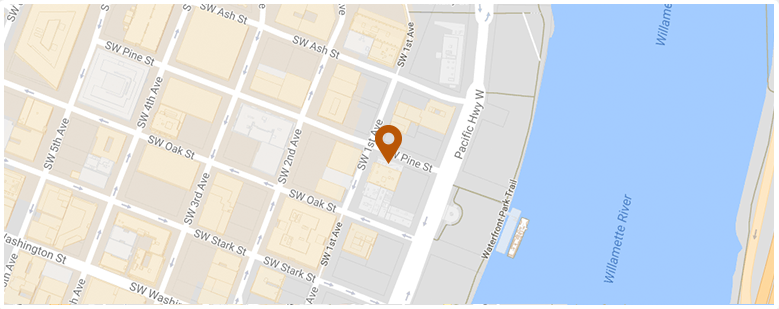
50 SW Pine St 3rd Floor Portland, OR 97204 Telephone: (503) 226-3844 Fax: (503) 943-6670 Email: matthew@mdkaplanlaw.com
map image