Articles Posted in Motor Vehicle Accidents

A recent article in The Oregonian offered details of an Oregon bicycle accident on North Interstate Avenue that appears to be a hit-and-run. The newspaper, citing the Portland police, reports that a 59-year-old North Portland man “was rushed to a local hospital after he was struck by a vehicle in the northbound lanes, just north of Greeley Avenue.”

The newspaper goes on to note that: “a witness described seeing a white Ford pick-up, possibly late 1970s model, driving erratically before the crash. The car did not stop after the crash… (the victim) remains in critical condition at a Portland hospital, police said.”

Incidents like this are a reminder for all of us who care about cycling that Portland’s reputation as one of the most bike-friendly cities in America is no guarantee against the irresponsibility and negligence of others. The reports that the vehicle that struck the cyclist was driving “erratically” add an additional element to this story, hinting at the possibility that this Portland bike and car accident may also be a Portland drunk driving accident. None of us can control what others do, so it is especially important that we be careful when behind the wheel and alert when on our bikes.

Perhaps we should have seen this coming. Even as consumer groups and public awareness campaigns have worked to raise awareness of distracted driving here in Oregon and elsewhere, the distractions in our cars have evolved.

That conclusion comes from a study released today by researchers at the University of Utah and reported in the Salt Lake City Tribune. As the newspaper reports, the study concludes that “these latest ‘infotainment’ features may be more fun than safe… (and) talking to your car while driving may be more distracting than chatting on a cellphone.”

According to the Tribune, the study involved monitoring the brainwaves of volunteers as they attempted a series of tasks “ranging from listening to the radio to solving a math problem to operating a speech-to-text device while staring at a cross on a blank computer screen.” Later stages of the study involved asking the same volunteers to perform the same tasks in both an auto simulator and while driving a real car. The results challenge the idea that in-car distractions are not a big problem so long as the driver can keep his or her hands on the steering wheel.

Two new studies receiving media attention this month indicate that the problem of distracted driving in Oregon and elsewhere around the country may be even worse than many people think.

According to the Associated Press the first study, released earlier this month by the safety-advocacy group the National Safety Council found that “crash deaths in cases where drivers were on the phone were seriously underreported… The underreporting makes the problem of distracted driving appear less significant than it actually is and impedes efforts to win passage of tougher laws.” The group examined car crash data for 2009 through 2011.

Perhaps the most surprising finding of the study was that “even when drivers admitted to authorities that they were using a phone during an accident in which someone was killed, about half the cases weren’t recorded that way in the database, the council said” referring to the highway safety database maintained by the federal government’s National Highway Traffic Safety Administration.

It has been just over three months since an Oregon bus crash in the Cabbage Hill area in the east of the state killed nine people and injured 38. As official investigations and a search for answers move forward, The Oregonian reports that lawsuits accusing the state Department of Transportation of negligence have now been filed by the loved ones of three of the Oregon bus crash victims, as well as by at least one of the accident’s survivors.

As the Associated Press reports, and as I blogged at the time, the deadly Oregon Bus Crash last December took place when a tour bus “slid on ice east of Pendleton, crashed through a guardrail and rolled down a steep hill.” Pictures published at the time showed a gruesome scene of wreckage on the snow-covered mountain pass.

According to the newspaper, relatives of the victims “are seeking at least $10 million in punitive damages, injuries and wrongful death… The suit claims ODOT was negligent for failing to equip the stretch of Interstate 84 with barriers strong enough to prevent the bus from leaving the roadway; not adequately plowing and sanding the freeway; failing to warn motorists of unsafe conditions; and failing to require commercial vehicles to take an alternative route.” The Canadian company that owned the vehicle, along with the bus driver, are also named as defendants in the suit, according to The Oregonian.

Two articles published in recent days by the New York Times illustrate both the continuing challenge we all face in attempting to curb distracted driving and the paradox of technology – the cause of so many Oregon distracted driving problems –sometimes offering solutions to the very problems it helps create.

One Times article begins with a dramatic statistic: “at any moment during daylight hours, according to a new government study, 660,000 Americans are using cellphones or other electronic devices while driving.” The study cited by the newspaper concluded that years of anti-distracted driving campaigns have succeeded in raising public awareness but have been less successful in convincing individual Americans that their own behavior behind the wheel – as opposed to everyone else’s – is potentially part of the problem.

“Almost half of those surveyed, 48 percent, said they answered their cellphones while driving at least some of the time, and 58 percent said they continued to drive after picking up the phone. Fourteen percent said they still text or email while driving,” the Times reports. Those numbers were up significantly from last year’s NHTSA survey, in which they were 40 percent and ten percent respectively. Perhaps ironically, the survey also showed that “most drivers… support a ban on cellphone use and texting while driving, and 76 percent said they would likely say something if they were a passenger alongside a driver who was sending a text.”

A New York Times report this weekend about a terrible multi-vehicle crash in Nevada is a reminder of the importance of issues Portland’s own mayor has spent the last few weeks spotlighting.

A Reuters news agency dispatch, republished by the Times, cites local law enforcement, reporting that “five members of a California family were killed in Nevada when their van was struck from behind by a teenage driver who was arrested on suspicion of driving under the influence.” The 18-year-old driver suffered minor injuries in the crash which reportedly happened when he rear-ended the van. In addition to the five people who died two other members of the same family were also riding in the van and were treated in area hospitals following the DUII accident. The crash took place on Interstate-15 about 80 miles north of Las Vegas.

The accident comes as Portland mayor Charlie Hales has worked to spotlight an increase in DUII incidents in our city. As a recent report in The Oregonian noted, “five of the 11 people killed in Portland traffic crashes since Jan. 1 involved people driving under the influence.” Hales has sought to use the media to publicize a situation he views with “alarm” and to remind Oregonians: “Drive sober to save lives. Doing otherwise is illegal and reckless,” the paper notes, adding that the current pace of DUII-related fatalities in Portland is well ahead of last year’s.

A ruling last week by the Oregon Supreme Court, as reported by The Oregonian, leaves justice unfulfilled for one Beaverton woman, though a chance remains that a federal court will view the case differently.

According to the newspaper, the state’s highest court ruled 4-3 that because of a legal technicality the city of Beaverton does not have to pay the victim of one of its police officers’ negligence the $507,500 ordered by a trial court. A jury ordered the money paid to a woman who was left disabled after she was hit by a Beaverton police car while crossing at an unmarked crosswalk in 2007.

The half-million dollar figure for damages in the Oregon car and pedestrian accident case is, itself, a significant reduction of the original verdict. According to the newspaper the jury originally decided on more than $1 million in damages but also found that the victim “and the former Beaverton police officer who had been driving the car… were equally at fault” which led to the cash being cut by half. The city appealed to have its share further reduced to $200,000 citing a state law that caps the liability of municipalities. The federal court hearing the appeal asked the Oregon Supreme Court, the paper reports, to rule on two questions: first, whether the state constitution protects the victim’s “right to a remedy and, if so, whether” $200,000 would be enough. “The court answered yes to both questions” despite the fact that the victim’s documented “medical bills totaled at least $500,000” as reported by The Oregonian.

See the link below for an interesting story from yesterday’s Oregonian on a new study focusing on teen driving fatalities nationwide. The good news: Oregon and Washington “are among the nation’s safest states for 16- and 17-year-old drivers, according to a new report by the Governors Highway Safety Association (GHSA).” The bad news: nationwide, teen driving deaths rose significantly during the first half of 2012.

In an effort to tackle popular misconceptions, the newspaper notes that: “Among road users, aging drivers are often thought to be the biggest hazard. But teen motorists are less experienced and (are) on the road more frequently, experts say.”

Oregon recorded just one teen driving fatality during the first six months of 2012 (the period covered by the study), compared with none during the comparable period in 2011. In Washington the year-to-year difference was dramatic: no fatalities among 16 and 17-year-olds from January through June of 2012 compared to 16 in 2011. Nationally, 240 16- and 17-year-olds died in crashes during the first half of 2012, compared with 202 the year before, a 19 percent increase.

An Associated Press story published yesterday on The Oregonian’s website should grab the attention of many Oregon motorists concerned about both Oregon traffic safety and Oregon defective products issues. According to the news agency, the federal government’s National Highway Traffic Safety Administration “says it will investigate problems with stalling or surging engines in nearly 725,000 Ford cars and SUVs.”

According to the article the investigation covers 2009, 2010 and 2011 models and applies to the following vehicles:

➢ Ford Escape SUV

Last month I wrote about the growing controversy over work rules for Tri-Met bus and train drivers and concerns that public safety could be affected when drivers log excessively long shifts. In January, the union representing Tri-Met’s drivers rejected proposed work rules saying that, as written, they posed a threat to both drivers themselves and the public at large.

According to a report in yesterday’s Oregonian the union and Tri-Met now “have officially signed an agreement requiring bus drivers to take off a minimum number of hours between shifts.” The paper reports that both Tri-Met and the union “promised that the agreement will fix a system that has allowed several drivers to pad their paychecks by working as many as 22 hours in a 24-hour period.” (the link to the Oregonian, below, contains, in turn, a link to the full text of the work agreement)

Until now, as The Oregonian notes, loopholes in the federal government’s system of oversight for drivers and passenger haulers mean that federal rules preventing excessive shifts or hours do not apply to Tri-Met’s bus operators but do apply to the transit system’s train operators. The result was a system that has long had real potential to endanger the drivers themselves, their passengers and cyclists and pedestrians who share the road with Tri-Met’s buses and trains, as a number of tragic Oregon traffic accidents have demonstrated in recent years.

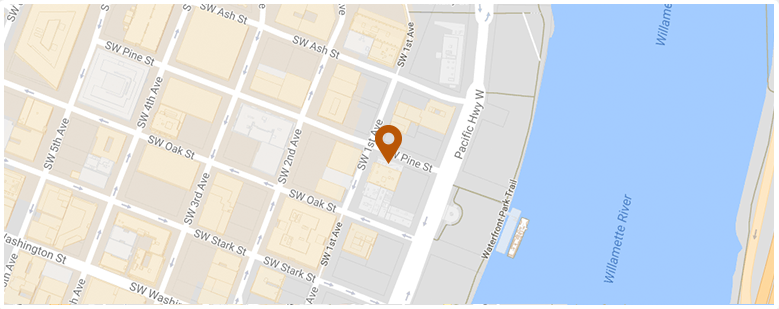
50 SW Pine St 3rd Floor Portland, OR 97204 Telephone: (503) 226-3844 Fax: (503) 943-6670 Email: matthew@mdkaplanlaw.com
map image