Articles Posted in Motor Vehicle Accidents

As we head into another long holiday weekend this is a good moment to remember the importance of road and traffic safety. This year caution is especially important because 2016 is already shaping up as an unusually deadly year both here in Oregon and nationwide.

As a recent article in The Columbian noted, “traffic fatalities were up 9 percent in the first six months of this year compared with the same period last year.” More alarmingly, however, Oregon was second in the nation (trailing only Vermont) in the extent to which traffic deaths have increased since 2014. Two years ago the state recorded 128 traffic fatalities during the first half of the year. This year the figure was 217 – a stunning 70 percent increase. Those numbers are all the more worrying when they are combined with the just-released estimate from the National Safety Council that some 438 people will lose their lives in traffic accidents nationwide over the holiday weekend (defined as 6pm local time on Friday through 11:59pm on Monday). In addition the Council estimates that the holiday period will see 50,300 people injured seriously enough that they will need to consult a doctor or another medical professional. Historically Labor Day sees more traffic accidents than most other holiday periods, the council’s news release notes.

There are, of course, many causes for traffic deaths, but on weekends like Labor Day attention inevitably focuses on drunk driving. A news release from the Oregon State Police warns motorists both to expect “heavy traffic volumes” and to “get a designated driver (plan ahead) if you plan on consuming intoxicating substances.”

Today is back to school day here in Portland and that means that in many neighborhoods the streets and sidewalks are going to filled with kids headed to school in the morning and home or to after-school activities each afternoon. Coming one week after a 15-year-old was killed while crossing a city street this is a time to reflect on what we can all do to help keep kids safe.

According to a report by TV station KATU, the fatal crosswalk accident took place earlier this month at the corner of Southeast Hawthorne and 43rd. The 15-year-old girl was hit by a 20-year-old driver who “was passing other cars, reaching upwards of 60 mph” before the fatal accident. The girl’s friends and family came together last Friday for a memorial bike ride in her honor that began on Salmon Street, stopped at City Hall and ended at the accident site. “The protestors, specifically, have taken issue with Vision Zero, Portland’s initiative to reduce and eventually eliminate traffic deaths,” KATU wrote about the memorial ride. “Critics argue the initiative hasn’t done much except outline a goal.”

With the accident freshly in mind The Oregonian offered some useful reminders concerning back-to-school safety. The newspaper notes that there are no statewide regulations requiring school zones to be identified in a consistent manner. That creates a special responsibility for drivers to be aware of their surroundings, since it isn’t always immediately clear that one is around a school, especially when in an unfamiliar neighborhood or city. The paper notes that only 30 percent of kids arrive at school in a family car and 22 percent ride a school bus. That leaves about one-third of all students walking to school while another 10 percent ride bikes.

As the Portland Tribune noted last month, our city recently hosted a major media event in which “a fleet of high-tech electric vehicles were road-tested in downtown Portland by more than a dozen automotive journalists.”

The Tribune reported that “all of the drives went smoothly, with cars easily weaving through midday traffic, even over the Hawthorne Bridge with its notoriously slippery steel grating and the Morrison Bridge with its deteriorating decking.” The test event comes at a moment when self-driving technology is still far from mainstream, but is clearly moving in that direction. Tesla (which, the Tribune reports, did not participate in the Portland event) and Google have both received huge amounts of publicity for the self-driving cars they are working to develop.

That fact, however, makes it all the more important that we use this moment to begin a serious conversation about the legal issues that self-driving cars will inevitably raise. The question is especially timely because it was barely two months ago that “the driver of an all-electric Tesla car was killed in a crash while driving on the manufacturer’s ‘Autopilot’ system.” As the Tribune goes on to note: “”(T)he ‘Autopilot’ name gave the impression the systems – which have never been approved by the federal government – could drive the cars safely by themselves.”

The death over the holiday weekend of a well-known figure in Brooklyn’s cycling community is being investigated by police as a possible intentional hit-and-run, according to the local website Gothamist. The death is focusing attention once again on the dangers the cycling community faces even in cities that strive to be bike-friendly.

The website, citing law enforcement sources and a local television station, reports “that the driver of a black Chevy Camero intentionally crashed into (the victim) around 2:20am Saturday” on a Brooklyn street as he was riding home from his job as a bartender in Manhattan. Video of the incident was captured by a security camera at a restaurant near the scene of the fatal bike and car crash.

It is especially important to note that the victim was riding in a bike lane at the time of the incident. “Investigators believe the driver pulled alongside… slowed down and moved the car partially into the bike lane, where the victim was riding… the driver then hit (the bicycle’s) rear tire and as the victim fell off his bike the driver slammed into him again, running over him and dragging him about 20 to 30 feet.”

It is a sad, if well-established, fact that an improving economy and lower gas prices tend also to lead to increased traffic deaths throughout the United States. A recent Associated Press article, republished by The Oregonian, documented how true this statistical trend remains.

“Traffic deaths surged last year as drivers racked up more miles behind the wheel than ever,” the news agency writes. “Fatalities rose 7.7 percent to 35,200 in 2015, said the National Highway Traffic Safety Administration. Last year was the deadliest driving year since 2008, when 37,423 people were killed. It was also the year in which Americans drove 3.1 trillion miles. More than ever before.” What is striking, however, is the revelation that “the Northwest region, including Oregon, Washington, Idaho, Montana and Alaska, saw the nation’s biggest increase in fatalities with a 20 percent jump.” The article also notes that motorcycle-related fatalities “are a bigger and bigger percentage of deaths each year.”

Analysts have debated for years why traffic deaths go up during better economic times. The article quotes a spokesman for the Insurance Institute, an industry research and lobbying group, saying: “it’s not just that Americans drive more miles when the economy improves, it’s the kind of miles they drive… what comes back after a recession is the optional driving that’s riskier, like going out on the weekends or taking long trips.”

An illegal pass attempted by the driver of a semi-truck near Burns last week left the driver of an oncoming car dead and her passenger hospitalized in critical condition, according to The Oregonian.

The newspaper writes that the Oregon truck crash took place on US-20, near milepost 156. First responders arriving on the scene found the semi-truck “tangled with a Ford Focus to the side of the road.” Citing law enforcement sources, the paper reports that the truck “was towing a flatbed trailer westbound on the highway when (the driver) attempted to pass a slower motorhome in a no-passing area with double yellow lines.” The driver of the Focus, which was traveling in the eastbound lane “attempted to avoid the collision by swerving into a ditch, but (the truck) attempted the same maneuver… they crashed near the edge of the highway.”

The driver of the car died at the scene of the head-on semi-truck crash. Her passenger was flown to a Portland hospital with life-threatening injuries. The truck driver “was taken to the Harney County Hospital, where he was treated for minor injuries,” the newspaper reports.

Controversy over a $1.45 million settlement between the state and the families of two state employees who died in an Oregon highway crash in 2014 has caused some to lose sight of the real importance of the case. As The Oregonian reported over the weekend, the settlement was relatively large by Oregon standards, but, as lawyers consulted by the newspaper noted, that may be because “the (victims’) estates had a strong case against the state.”

According to the newspaper the couple, both employees of the Oregon State Hospital, died in the fall of 2014 “when a pickup veered across I-5 and hit… (their) 1993 Nissan Sentra head-on. From a legal perspective there were two especially important points to note about this Oregon wrongful death case. The first is something relatively rare – a successful lawsuit focused mainly on faulty road design. The second is the way that this incident demonstrates the careful weighing of responsibility our courts are called on to make in cases like this.

As The Oregonian writes, the argument that the man and woman’s deaths were the result mainly of faulty road design was particularly strong. “In the month after their deaths, an investigation by The Oregonian found that the Oregon Department of Transportation had delayed the installation of a median cable barrier on that 5-mile stretch of freeway despite public recognition of the need for it dating back to 1996.” Had a proper cable barrier been in place there is a strong possibility that the pickup would never have been able to cross all the way into the opposite lane.

A newly published report from SafeKids, an organization which regular readers know I have long supported, takes many unsettling facts about teens and cars out of the realm of hearsay. The best way to prevent teen car-related deaths and injuries is to know how and why they occur in the first place. That makes this report essential reading for every Oregon parent.

The report summary begins with an uncomfortable figure: 2138… the number of teens killed in car crashes in 2014 (the most recent year for which full data is available). On the positive side, it notes that “from 1994 to 2013, the rate of teen drivers killed actually decreased by 61 percent” adding that this two decades of progress “demonstrates the effectiveness of prevention efforts by government, industry, the medical community and nonprofits in passing graduated licensing laws, engineering safer cars and raising public awareness about risky behaviors.”

The report goes on to state that “2014, however, saw the death rate begin to increase again and early estimates for 2015 suggest that may continue.” Its main prescription is more of the kind of education and public outreach that has been so effective over time. We have all heard the public information campaigns, but it still needs to be said, and repeated often: avoid distracted driving, don’t overload the car, don’t speed and, perhaps most importantly: always buckle up and never drink and drive.

A recent article in The Oregonian recounts the story of a 13-year-old Gresham girl severely injured late last month while she and a friend were crossing the street on their way home from school. According to the newspaper the seventh grader and a friend were using a marked crosswalk when a 44-year-old Gresham woman “ran a red light and hit the girls” with her delivery van.

One of the girls “suffered a significant brain injury and several fractures.” The eventual extent of her recovery remains uncertain. The other child was less seriously injured and has been released from the hospital.

The newspaper reports that friends of the severely injured girl’s family have set up a crowdfunding page to help them cope with what are likely to be years of significant expenses in the wake of this Oregon reckless driving crash involving injuries to two children (The Oregonian’s story below includes a link to the GoFundMe page).

A single-car crash last weekend near Arlington is drawing attention to the laws and legal issues surrounding seat belt use here in Oregon.

According to a report in The Oregonian the Interstate-84 fatal Oregon car crash took place in the early hours of Sunday morning, near milepost 132 when a 1999 Chevrolet SUV traveling in the westbound lane “for unknown reasons… left the roadway and crashed through the guardrail on the north side of the freeway.” The vehicle’s driver “was taken by Life Flight to Kadlec Regional Medical Center in Richland, Washington, and he died on the way, according to state police.”

The vehicle also was carrying a passenger, a 23-year-old Portland man. According to the newspaper he was taken the OHSU hospital where he was admitted in critical condition.

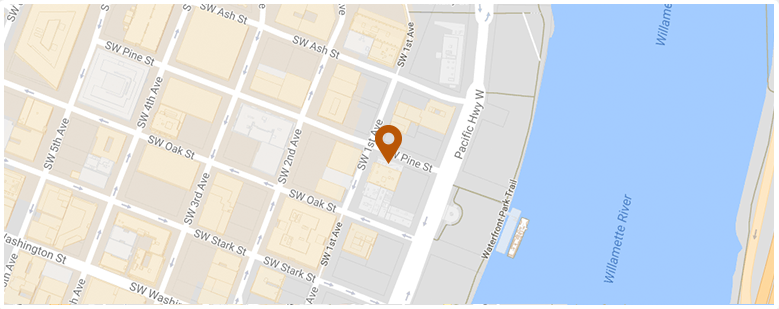
50 SW Pine St 3rd Floor Portland, OR 97204 Telephone: (503) 226-3844 Fax: (503) 943-6670 Email: matthew@mdkaplanlaw.com
map image
Contact Information