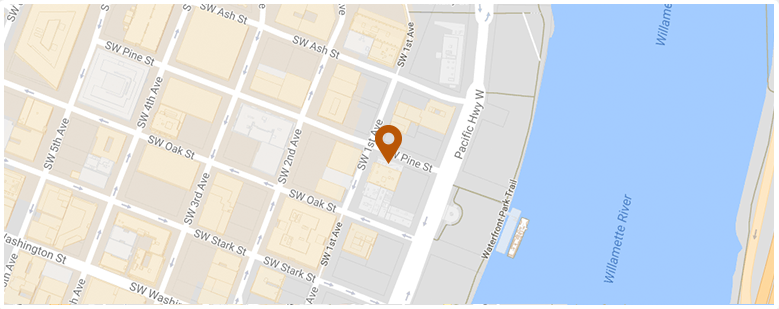
Portland Wrongful Death Issues Emerge in Niteclub Shooting

May 17, 2013

Even as police investigate the death last week of a 33-year-old man outside a Northeast Portland strip club the circumstances surrounding the incident have raised serious questions about how well the club was handling its security arrangements – questions that could eventually expose the club to an Oregon wrongful death claim.

As The Oregonian reported last week, the man “collapsed on the sidewalk outside the club and died from a single gunshot wound to the head.” A 21-year-old woman was also injured in the Portland shooting incident and was treated at an area hospital.

“The homicide marked the second fatal shooting at the location in two years. An inspector from the Oregon Liquor Control Commission has launched an investigation with Portland police to see if alcohol service played any role in the shooting,” the newspaper notes, citing a spokeswoman for the commission.

At the most basic level it is essential that a niteclub – or any other place of business – offer its customers a safe environment. This applies to security in and around the facility as much as it does to ensuring that customers do not slip and fall while walking across a restaurant’s dining room. However, when the business in question serves alcohol and is a strip club – an environment known to attract sometimes unsavory patrons – that duty to protect the clientele increases significantly.

From a legal standpoint, it is especially important to note that while the fatal shooting took place outside the club, it was the final act in a series of events that began inside. “The shooting stemmed from an argument that began inside the club,” The Oregonian reports, “and then continued outside after a bouncer asked the group to leave… once the dispute moved outside around 2:25 a.m., some punches were thrown and the man pulled out a gun.” Police are still searching for a suspect in the shooting.

Oregon’s dram shop laws require businesses dealing in alcohol to be aware of who they are selling to and holds them potentially responsible for damage done with alcohol purchased from their business. While we usually think of dram shop actions in the context of drunk driving, the same principle is also potentially at work here, pending the outcome of the Liquor Commission’s investigation into what role alcohol may have played in the Portland man’s death.

Similarly, the club’s previous history as the site of a shooting incident should have served as a reminder to the owners that they have an obligation to keep their customers safe around the business as well as inside it. From a Portland wrongful death attorney’s perspective, the fact that the bouncer got the troublemakers out the front door does not end the club’s potential involvement with, and responsibility for, the incident, particularly in light of the earlier shooting incident. Along these lines it could be significant in terms of the club’s responsibility that witnesses quoted by the newspaper say the bouncer was outside at the time of the shooting. This leads us to ask whether he had the ability to do anything to stop the shooting as it unfolded moments after he ejected the group of troublemakers from the club.


The Oregonian: 33-year-old father of 5 killed in shooting outside Northeast Portland strip club

Oregon Product Recall: BMW acknowledges air bag issues

May 9, 2013

The really surprising thing about the BMW recall announced this week is not the fact that some older models in the German carmaker’s line had what USA Today describes as “potentially shrapnel-producing airbags.” Rather, it is that the recall has taken this long to be initiated granted everything else we know about the airbags in question. According to the newspaper, in the recalled vehicles “the passenger airbag could explode too forcefully and send metal or plastic shrapnel flying at the passenger.”

As the newspaper reported on Tuesday, BMW has recalled its 2002 and 2003 3-Series cars because of the airbag issue. The recall order is thought to effect about 42,000 vehicles here in the United States and 220,000 worldwide. According to USA Today the air bags and related assemblies for these vehicles “were supplied by Takata, which also supplied potentially shrapnel-producing passenger bags that forced Toyota, Honda, Nissan, Mazda and General Motors to recall some 3.4 million vehicles worldwide last month.” This raises a basic question: if five other automakers using the same company’s products recalled them for this issue why did BMW – or any other manufacturer who may have used the air bags in question – wait at all to participate in the recall?

Even more troublingly, as the newspaper makes clear, this critical unsafe products issue has been on the auto industry’s radar screen for quite some time. According to USA Today, Takata air bags “were blamed for two deaths in Hondas in 2009.” Moreover, the paper reports: “Takata has had problems going back to the 1990s. It supplied faulty safety belts that triggered a recall of more than 9 million vehicles in the U.S. in 1995, a near-record at the time.”

For a Portland unsafe products attorney, however, the details of the recall as it was announced this week raise some even more basic questions. Why, for example, has it taken more than a decade for both Takata (which issued statement approving of the recall) and BMW to recognize and acknowledge such a critical safety issue? Granted the reported problems with Takata’s safety record going back to the 90s, why was BMW (a company whose public image is built, in part, on safety and reliability) doing business with them in the first place? Why, for that matter, were so many other automakers? These are crucial questions that will need to be explored further in the weeks and months to come.


USA Today: BMW recalls older 3s for Takata air bag ‘shrapnel’

Police Search for Oregon Hit-and-Run Driver

May 6, 2013

An Associated Press dispatch republished this morning in The Oregonian recounts a Salem hit-and-run car accident last night that that left a tow-truck driver injured.

According to the news agency a tow truck was parked Sunday evening on a Salem street where “police say the driver was loading (his) vehicle and had emergency lights activated when he was knocked down. Medics took him to Salem Hospital with injuries described as non-life-threatening.” If the news agency report is accurate the driver is potentially in big trouble: under Oregon law a hit-and-run that involves an injury is a felony.

The driver of the car that allegedly caused this Oregon injury car accident is still at large, but the AP reports that police have a significant piece of evidence in hand: one of the hit-and-run driver’s outside mirrors. “The passenger-side mirror broke off, and police believe the car likely has scrapes and possible body damage on the right side,” the news agency notes.

It is good to read that the victim’s injuries are not life-threatening, but this incident is a powerful reminder of the importance of caution whenever any of us are driving our cars near service vehicles. Few Oregon auto crashes are more easily preventable than those involving parked tow trucks, police cars, rescue vehicles and road construction crews. Oregon traffic law requires all drivers to operate their vehicles with an appropriate level of caution for whatever traffic situation they encounter. If, for example, safety flares, reflective triangles, flashing hazard lights or other indicators of a potentially dangerous roadside area can be seen then it is the driver’s responsibility to slow down and exercise appropriate caution and awareness when passing the area in question.

As a Portland car crash injury attorney these are the sort of cases one never likes to see. Justice, of course, needs to be done in the wake of something like this, but it is difficult not to ask why people cannot simply operate their cars and trucks in a safer, more sensible manner. Attorneys and courts are here to help victims obtain justice in the wake of other people’s negligence, but it would be far, far better for everyone if drivers in general were more responsible and took appropriate care every time they sat down behind the wheel.


AP via The Oregonian: Hit-and-run driver injures tow-truck operator in Salem

Potentially Unsafe Conditions At Meat Plant Cause Fatal Oregon Industrial Accident

May 1, 2013

Late Friday night a Southeast Portland man working as a cleaner at a meat processing plant in Clackamas died after falling into a piece of machinery, according to The Oregonian. The details of this Oregon Industrial Accident case are disturbing and will merit close scrutiny in the months to come.

According to the newspaper, paramedics and the Clackamas County sheriff’s office were called just before midnight on Friday and arrived at the facility to find the victim “entangled in a blender, which regulates the fat content of ground meat. The following day firefighters returned to help dismantle the machinery” and to remove the 41-yesr-old man’s body.

From a legal perspective there are two key elements to this sad story. First, the long and unsettling safety record of the factory in question. The Oregonian reports that this facility “was the target of a consumer alert in 2007, when potentially deadly E. Coli bacteria was traced” to ground beef processed at the plant. More recently – last October, to be precise – the plant was cited by the Oregon Occupational Safety and Health Division after inspectors found “that machinery in the meat-grinding room wasn’t properly locked down during cleaning. (The) inspector said an ‘unexpected start-up of the machine ‘ could cause injuries.” Oregon Occupational Safety and Health regulations are both clear and strict where situations like this are concerned. State regulations require what are known as “Lockout/Tagout” procedures around dangerous machinery to insure worker safety. According to an OSHA document “the standard requires that physical lockout be utilized for equipment or machines which have energy isolating devices capable of being locked out, except when the employer can demonstrate that utilization of a physical tagout system provides full employee protection.” In plain English: the potentially dangerous machine must either be locked-up in a manner that keeps workers from getting to it, or the workers have to be working in teams that allow them to keep track of one another. It will be up to investigators and the courts to decide whether the employer met that standard in this case.

The second important legal detail of this incident concerns the job status of the deceased cleaner. The Southeast Portland man was not employed directly by the meat processing plant or its parent company, the Oregonian notes, but rather by a sanitation service contracted to perform janitorial work at the plant. In legal terms that means any claim related to the death must be treated as an Oregon employment liability law case rather than as an Oregon workman’s compensation issue.

From a Portland industrial accident attorney’s perspective this fact is especially noteworthy. Oregon law requires employers to provide a safe work environment for their employees. This duty extends to contractors as well as to regular employees. Moreover, if the contracting company did not take reasonable precautions to ensure that their employee would be safe at his jobsite they, too, could bear some legal responsibility for this tragedy. The Oregonian reports that the official investigation into Friday’s death could take six months or more. This case is worth watching not only in the months to come as the investigation moves forward but also later if, as seems possible, it moves beyond the investigation stage and becomes a matter for Oregon’s courts.


The Oregonian: Portland man, 41, falls into meat blender, dies at Clackamas processor

Oregon Occupational Safety and Health Administration Website

Fertilizer Plant Explosion Leaves Behind Many Unanswered Questions

April 27, 2013

Last week’s huge explosion at a fertilizer plant in the small town of West, Texas killed 14 people and devastated a huge area. As a lengthy account in The New York Times earlier this week shows, it also raises serious questions about corporate responsibility, government oversight and the safety standards at dangerous facilities throughout the United States.

As the Times reports, the explosion at the plant “was so powerful it leveled homes and left a crater 93 feet wide and 10 feet deep.” The paper said the explosion appeared to have been more powerful than the 1995 bombing at the Oklahoma City Federal Building. The Oklahoma blast provides a useful point of comparison because the bomb involved used the same chemical – ammonium nitrate - that was being manufactured and stored in the Texas plant.

The paper reports that while some state and local groups in both the private and public sectors received an annual report on ammonium nitrate and other chemicals being manufactured and stored in the plant others did not. The reporting requirements are designed to help local, state and federal authorities plan for exactly this sort of emergency, but the building’s owners apparently had not filed a report with the Department of Homeland Security. A federal law passed in the wake of the 9/11 attacks mandates that “plants that use or store explosives or high-risk chemicals” file a federal report if they exceed certain limits. For ammonium nitrate a report is required if stocks exceed 400 pounds. According to the Times a 2012 report filed with the state listed the plant having 540,000 pounds of ammonium nitrate on hand.

As a result of this reporting negligence, the Times notes, “some of the volunteer firefighters and first responders who rushed to the scene appeared to have known that there were tons of dangerously combustible ammonium nitrate inside, but others did not.” Surely there can be no excuse for so large, and potentially vulnerable, a facility failing to take every required safety precaution. The result was that efforts to deal with the blast may have been hampered, possibly leading to wrongful deaths that could easily have been prevented. As an Oregon wrongful death attorney it pains me to think that this tragedy may have been made worse by casual attitudes toward safety at the plant itself, combined with a failure of governments at several levels to exercise their oversight duties.

As the newspaper reports, it remains unclear “who was aware of the chemical at the plant, and who was not, both at the site and in Washington.” This, in turn, highlights “the patchwork regulatory world the plant operated in and the ways in which it slipped through the bureaucratic cracks at the federal, state and local levels.” In particular, the paper notes that local decisions regarding the building of schools and homes were made, in part, on the basis of inadequate information about the plant and the potential danger it posed to the surrounding community. Laws designed to protect us all only work when they are enforced, preferably by responsible authorities before something goes wrong. Our courts exist, in part, to restore balance to the system when tragedy strikes and justice is needed, but it is far better for safety to be uppermost in everyone’s minds every day with the goal of not having to invoke the justice system after the fact.


New York Times: Texas fertilizer plant fell through regulatory cracks

Oregon Cabbage Hill Bus Crash Lawsuit Targets State

April 21, 2013

It has been just over three months since an Oregon bus crash in the Cabbage Hill area in the east of the state killed nine people and injured 38. As official investigations and a search for answers move forward, The Oregonian reports that lawsuits accusing the state Department of Transportation of negligence have now been filed by the loved ones of three of the Oregon bus crash victims, as well as by at least one of the accident’s survivors.

As the Associated Press reports, and as I blogged at the time, the deadly Oregon Bus Crash last December took place when a tour bus “slid on ice east of Pendleton, crashed through a guardrail and rolled down a steep hill.” Pictures published at the time showed a gruesome scene of wreckage on the snow-covered mountain pass.

According to the newspaper, relatives of the victims “are seeking at least $10 million in punitive damages, injuries and wrongful death… The suit claims ODOT was negligent for failing to equip the stretch of Interstate 84 with barriers strong enough to prevent the bus from leaving the roadway; not adequately plowing and sanding the freeway; failing to warn motorists of unsafe conditions; and failing to require commercial vehicles to take an alternative route.” The Canadian company that owned the vehicle, along with the bus driver, are also named as defendants in the suit, according to The Oregonian.

As I noted in an earlier post, the accident, coming just before New Year’s Eve, raised many questions concerning safety on Cabbage Hill, which has long been regarded as one of the most dangerous stretches of road in the Western United States.

The accident also raised questions about safety regulations and their enforcement for tour buses. The lawsuit claims that the bus’ owner “was negligent for numerous reasons, including not equipping the bus with tire chains; allowing the driver to operate the bus an excessive number of hours without rest; and speeding” according to The Oregonian.The crash and its aftermath have raised a number of legal issues that are likely to take some time to resolve. As an Oregon motor vehicle accident attorney it concerns me that that victims and their families should have to resort to the court system to get the sort of assurances over safety that all of us ought to be able to take for granted in 21st century America.


The Oregonian: ODOT named in suit filed in connection with tour bus crash last December

AP via ABC News: Oregon Agency Sued Over Deadly I-84 Tour Bus Crash

Oregon Distracted Driving: New Challenges, New Opportunities

April 17, 2013

Two articles published in recent days by the New York Times illustrate both the continuing challenge we all face in attempting to curb distracted driving and the paradox of technology – the cause of so many Oregon distracted driving problems –sometimes offering solutions to the very problems it helps create.

One Times article begins with a dramatic statistic: “at any moment during daylight hours, according to a new government study, 660,000 Americans are using cellphones or other electronic devices while driving.” The study cited by the newspaper concluded that years of anti-distracted driving campaigns have succeeded in raising public awareness but have been less successful in convincing individual Americans that their own behavior behind the wheel – as opposed to everyone else’s – is potentially part of the problem.

“Almost half of those surveyed, 48 percent, said they answered their cellphones while driving at least some of the time, and 58 percent said they continued to drive after picking up the phone. Fourteen percent said they still text or email while driving,” the Times reports. Those numbers were up significantly from last year’s NHTSA survey, in which they were 40 percent and ten percent respectively. Perhaps ironically, the survey also showed that “most drivers… support a ban on cellphone use and texting while driving, and 76 percent said they would likely say something if they were a passenger alongside a driver who was sending a text.”

So, people recognize the presence of a problem, but (perhaps unsurprisingly) are reluctant to acknowledge that they might be a part of it.

Enter technology, with the goal or solving problems created by… technology. As another Times story published a few days earlier noted, app designers are working to integrate smartphone technology into cars with a dual goal. First, if a driver’s eyes must be drawn away from the road then it is better to have them drawn toward a large-ish screen integrated into the vehicle’s dashboard as opposed to a much smaller screen held in a driver’s hand (a hand that, at a minimum, ought to be on the steering wheel). Second, and more importantly, to the extent that car makers can focus a driver’s attention on technology that is part of the car they have a greater ability to control his/her use of that technology.

For example, one app profiled in the article allows users to share their location with others via social media. Plugging a smartphone into the car – and therefore controlling the app via the car’s user interface rather than the phone’s – makes the data shared with friends more precise, but also allows the car to exercise some safety-minded control over the sharing. The software integrating the app and the car’s onboard computer, the Times writes, “was conceived partly as a way to make it unnecessary for people to text others about their locations.” As a Portland distracted driving lawyer this strikes me as a far from ideal solution (obviously it would be better if people just didn’t do this stuff while driving) but, still, a step in the right direction. I’ve written in the past about the challenges of technology in our cars. There is no foolproof way to prevent people from doing dangerous things behind the wheel. It is nice, however, to know that technology can at least mitigate some of the problems it helps to create.


New York Times: Drivers are still distracted, study finds

New York Times: Bits; Dashboard apps aim to overcome distracted driving

Resource:
National Highway Traffic Safety Administration

Medical Device Lawsuits and Liability Protection

April 11, 2013

State and federal lawsuits filed last week in California are seeking to change current legal thinking and make it harder for medical device makers to avoid responsibility for defective products. According to an analysis published in the Wall Street Journal the suits “could challenge the broad liability protection that medical device makers have enjoyed since a key Supreme Court ruling in 2008.”

The target of the suits is St. Jude Medical, the maker of the Riata line of defibrillators. According to the Journal, the plaintiffs in the suit claim “that problems with the manufacturing and oversight of Riata defibrillator ‘leads’ injured or killed more than 30 patients. Faulty leads, which connect the heart to defibrillators that zap irregular heart rhythms back to normal, caused the devices to fail or needlessly deliver blasts of electricity, the suits allege.”

It might seem obvious that here in Oregon, in Washington or anywhere else in the country companies have an obligation to ensure that the products they sell are safe and function properly, but manufacturers of unsafe medical devices gained unprecedented liability protection via the Supreme Court’s 2008 Riegel v Medtronic case. That ruling, as the Journal reports, granted medical device makers immunity from state unsafe product liability laws on the grounds that medical device safety is a federal issue.

Medical device makers argue both that federal standards trump state ones and that a single national standard is necessary for them to be able to market their products. This, of course, ignores the fact that there are separate federal and (often higher) state standards for many other products and that the manufacturers of those products still manage to find buyers from Florida to Oregon, Washington and the rest of the Pacific Northwest. Cars, for example are subject to different, stricter, emissions standards in California than they are elsewhere in the country.

As the Journal notes, the belief that the Riegel case has been read too broadly and that it does not give medical device manufacturers a free pass where state unsafe product laws are concerned has many backers. The broad interpretation of unsafe product liability immunity has been successfully challenged in some other courts. The fact that in this instance St. Jude is alleged to have broken federal rules by failing to report flaws in its products to the FDA in a timely manner gives the case added strength. As an Oregon and Washington consumer safety advocate I’ll be watching both the federal and state suits closely in the weeks and months to come. Regulatory approval at the federal level for complex products like medical devices was never intended to provide the makers of those devices with a license to sell defective and unsafe products here in Oregon or anywhere else.


Wall Street Journal: Cases Challenge Liability Protection Enjoyed by Device Makers (requires subscription)

Barron’s: St. Jude, Medtronic Drop After Lawsuits Filed

National Window Safety Week Highlights Child Safety

April 7, 2013

Today marks the start of National Window Safety Week (April 7-13). With the seasons changing, and warmer weather settling in, that makes this an especially opportune moment to remind parents of simple but important ways to avoid tragic Oregon injuries to children during the coming months.

Here in Portland this is not an abstract issue. As a recent article in The Oregonian noted, “during one terrible week last June, four children in the Portland area were injured when they plunged through windows to the ground.” I wrote about several of these incidents at the time – see here and here – and salute the work SafeKids Oregon (where I serve as a member of the Advisory Board), the Oregon Public Health Division and Randall Children’s Hospital are doing to raise public awareness of this issue all the year round, but during this week in particular.

The centerpiece of the Window Safety Week campaign is the ‘Stop at 4 inches’ initiative which reminds parents of the importance of keeping small children out of danger by using window stops. As part of the awareness activities taking place this week Randall Children’s Hospital is making window stops and other home child safety gear available through its Hospital Safety Center. On the Washington side of the Columbia River the video blog Vancouver Side has produced a set of helpful videos on window safety to mark this week. You can see them here.

As a recent article in The Oregonian notes, state data indicates that throughout Oregon “rates of children’s window falls decreased 46 percent from 2009 to 2011.” Last summer’s rash of window falls, however, were a reminder for all of us of the ongoing need for awareness campaigns like Window Safety Week. Even one window fall involving a child is one too many, particularly when the steps needed to keep kids safe are so simple. For example, it is always a good idea to keep windows closed and locked when no adult is present in a room, even if the windows in question are fitted with stops. It is also important to remember that screen windows do little or nothing to prevent children’s falls. Parents should not rely on them for safety.

Finally, and most importantly, every parent needs to teach their children to play safely: avoiding windows and screens whenever possible. As a Portland child injury attorney, helping families cope with the aftermath of an Oregon window accident is one of my saddest tasks. Anything that can reduce the number of Oregon children injured in window falls this summer is to be welcomed.


The Oregonian: Window safety week aims to educate parents, kids about fall dangers

Resources:
National Safety Council: Window Safety Week homepage

SafeKids Oregon

Mayor, Headlines Turn Spotlight on DUII

March 31, 2013

A New York Times report this weekend about a terrible multi-vehicle crash in Nevada is a reminder of the importance of issues Portland’s own mayor has spent the last few weeks spotlighting.

A Reuters news agency dispatch, republished by the Times, cites local law enforcement, reporting that “five members of a California family were killed in Nevada when their van was struck from behind by a teenage driver who was arrested on suspicion of driving under the influence.” The 18-year-old driver suffered minor injuries in the crash which reportedly happened when he rear-ended the van. In addition to the five people who died two other members of the same family were also riding in the van and were treated in area hospitals following the DUII accident. The crash took place on Interstate-15 about 80 miles north of Las Vegas.

The accident comes as Portland mayor Charlie Hales has worked to spotlight an increase in DUII incidents in our city. As a recent report in The Oregonian noted, “five of the 11 people killed in Portland traffic crashes since Jan. 1 involved people driving under the influence.” Hales has sought to use the media to publicize a situation he views with “alarm” and to remind Oregonians: “Drive sober to save lives. Doing otherwise is illegal and reckless,” the paper notes, adding that the current pace of DUII-related fatalities in Portland is well ahead of last year’s.

The Oregonian notes that the Portland Bureau of Transportation has been organizing neighborhood meetings to solicit input on ways to improve Portland traffic safety. The next such meeting is scheduled to be held April 8 in the Powellhurst-Gilbert area.

As a Portland attorney experienced in helping DUII victims and their families it is heartening to see attention being paid to DUII, a problem that sometimes seems to defy the best efforts to end it. We can only make progress on this score through a combination of education – through the media, blogs, our schools and public officials – and through efforts at accountability through out court system. People should not need to be reminded either that drinking and driving is wrong or that failing to heed that warning could open them up to significant legal issues. Unfortunately the reminders are necessary, as is the justice offered by courts when our fellow citizens fail to do what it right.


Reuters via The New York Times: Five Family Members Die in Nevada Crash, Teen Charged With Drunken Driving

The Oregonian: Portland Mayor Hales ‘alarmed’ by surge in DUII traffic deaths

KATU: Mayor: Spike in deadly Portland crashes ‘unacceptable’

Bill Aims to Make Insurance Fairer for Ordinary Oregonians

March 27, 2013

A bill currently pending before Oregon’s legislature seeks to give consumers new protections and close a significant legal loophole. As reported recently by the Salem Statesman-Journal, both houses of the Oregon legislature are considering legislation that would end the insurance industry’s exemption from Oregon’s Unlawful Trade Practices Act. This important legislation promises important new protections for Oregon consumers by holding insurance companies accountable for the damage they do when they delay, or refuse, payment on legitimate claims.

As detailed by The Lund Report, a health policy blog, the legislation (HB 3160 and SB 686) will “allow consumers to recover economic and non-economic damages in court when insurers commit unlawful insurance practices.” Put another way, it will allow ordinary Oregonians to level the playing field against companies that refuse to play by the rules.

As the Statesman-Journal reports under existing law, insurance companies are not covered by the Unlawful Trade Practices Act. That exemption, in practice, allows them to mistreat customers by denying them the coverage they have paid for. The Lund Report quotes one of the bills’ sponsors, Sen. Chip Shields (D) of Portland, noting that “insurance is the only business that is exempt from this law.” That exemption makes it much easier or insurance companies to put their own financial interests ahead of the health and welfare of ordinary Oregonians.

As The Lund Report notes, Economic Fairness Oregon, a consumer advocacy group, is supporting the legislation because it “is designed not to increase lawsuits but encourage insurers to settle honest claims more expeditiously and fairly so consumers can avoid the courts.”

That is an important point, and one that bears restating. The goal here is to help Oregonians get the justice they deserve, and the coverage they pay for. No one should lose their house or their business because an insurer, thinking about its own bottom line, delayed paying a claim. Courts are not designed to be our first recourse when confronted by injustice, but rather our final firewall against it. Giving citizens the ability to use the courts to defend their rights is not an attack on business – because responsible businesses will rarely find themselves in court – but a way of protecting everyone from the excesses of a few. As a Portland consumer protection lawyer I know how important it is to ensure that everyone has the right – and the ability – to demand the equal treatment we all deserve. Insurance companies should not be exempt from the requirements to deal fairly with their customers that apply to the rest of our state’s business community.


The Lund Report: Shields and Holvey want Unlawful Trade Act to Cover Insurers

Salem Statesman-Journal: Bill would let state sue insurance companies for fraud

Oregon Supreme Court ruling Leaves justice Undone for Beaverton Woman

March 21, 2013

A ruling last week by the Oregon Supreme Court, as reported by The Oregonian, leaves justice unfulfilled for one Beaverton woman, though a chance remains that a federal court will view the case differently.

According to the newspaper, the state’s highest court ruled 4-3 that because of a legal technicality the city of Beaverton does not have to pay the victim of one of its police officers’ negligence the $507,500 ordered by a trial court. A jury ordered the money paid to a woman who was left disabled after she was hit by a Beaverton police car while crossing at an unmarked crosswalk in 2007.

The half-million dollar figure for damages in the Oregon car and pedestrian accident case is, itself, a significant reduction of the original verdict. According to the newspaper the jury originally decided on more than $1 million in damages but also found that the victim “and the former Beaverton police officer who had been driving the car… were equally at fault” which led to the cash being cut by half. The city appealed to have its share further reduced to $200,000 citing a state law that caps the liability of municipalities. The federal court hearing the appeal asked the Oregon Supreme Court, the paper reports, to rule on two questions: first, whether the state constitution protects the victim’s “right to a remedy and, if so, whether” $200,000 would be enough. “The court answered yes to both questions” despite the fact that the victim’s documented “medical bills totaled at least $500,000” as reported by The Oregonian.

The case, however, is not yet over. Now that the Oregon Supreme Court has answered the federal court’s questions the issue returns there, to the Ninth Circuit Court of Appeals, for a final decision. The Ninth Circuit is not bound by the Oregon Supreme Court’s ruling.

As an Oregon car accident attorney I can’t help but find this case deeply troubling. The law limiting Beaverton’s liability, the Oregon Tort Claims Act, has been significantly revised in recent years. Were the accident that disabled the victim to take place today, Beaverton’s liability would be capped not at $200,000 for a single victim but at $600,000. In addition, the law sets a different standard for negligence by state versus local officials – had the victim been struck by a state trooper, rather than a local police car, under current law damages would be capped at $1.8 million. The distinction is illogical, even inhumane. Worse, however, is the fact that in neither instance does the law allow for the most basic provision of fairness: an exception in cases, like this one, where real medical damages exceed the cap. The Ninth Circuit has a chance here to offer justice to a victim unfairly denied it by the technicalities of the law.


The Oregonian: Oregon Supreme Court rules Beaverton can cap award to woman hit by police car

Oregon Courts website: Oregon Tort Claims Act