"I got into an accident and was nervous about finding a personal injury attorney after hearing so many awful stories, but from the start, I felt confident with my choice in Kaplan Law, LLC." Read More - Ben
"Matt and Gillian took great care of me during a stressful time of my life. Very caring and knowledgeable group. I would definitely recommend Kaplan Law!" Read More - Kayleigh
"Incredible service and results! Matthew Kaplan and his paralegal Gillian did an amazing job for me. Not only did they resolve my case beyond my satisfaction, they also were very caring and supportive thru my recovery. I couldn't ask for a better attorney." Read More - Jamal
Matthew D. Kaplan

Oregon State Police are working with officials from the Marion County Medical Examiner’s office to investigate an Oregon accidental death in Silver Falls State Park, near Silverton and Salem.

According to the Salem-News, a 22 year old man died last week when he “fell Saturday afternoon from an edge overlooking the Drake Falls area” of the park. The paper quotes the OSP saying state troopers and EMTs were summoned to the park immediately after the accident, but the victim was pronounced dead at the scene. Police are also looking for what the paper describes as “an unknown hiker” who may have witnessed the Oregon fatal accident.

Any Oregon fatal accident raises questions about liability. Just because a death is an accident does not mean that, as a matter of law, no one is legally responsible. Indeed, seeking legal advice is always a good idea in the wake of a Portland accidental death. An Oregon personal injury lawyer can advise accident victims and their families on the details of Oregon’s wrongful death laws, and help determine whether a particular accident leaves justice waiting to be served.

The New York Times reported recently on efforts by the federal Department of Transportation to tighten rules governing distracted driving in Oregon and elsewhere in the nation. According to the newspaper, the department wants to make a temporary ban on texting by long-haul truckers permanent. Safety advocates, however, say those rules do not go far enough.

According to the Times, the real concern among highway safety groups focuses on the in-cab computers that have become standard equipment in much of the nation’s trucking fleet. “We want the department to continue down this road of looking at the devices that are highly distracting and take action to curb those as well,” the paper quoted Judith Stone, president of Advocates for Highway Safety, saying.

The department is currently gearing up to take public comments about making the texting rule permanent, but is reported to be receptive to input on a broader ban. Onboard computers are a common sight in the cabs of large trucks. These often combine the features of commercial GPS units with links to dispatchers at a trucking or shipping company’s headquarters.

An appropriate piece of news with which to wrap up National Traumatic Brain Injury Awareness Month: with a speed few observers expected the National Hockey League has instituted new rules against hits to the head. The NHL Players Association, the final official body that needed to sign off on the rule change, gave its approval late last week. That accomplished, the changes taking effect immediately. The measure, which I wrote about earlier this month, is specifically designed to reduce the risk of traumatic brain injuries, and comes in the wake of several high profile incidents involving serious head injuries to players.

NCAA hockey has long banned hits to the head. Such a rule has been discussed on-and-off in the NHL for years, but had never seemed to gain much momentum (there was, in particular, a strong traditionalist faction in the League which opposed any move to lessen the sport’s roughness). Impetus for the new move appears to have come from a combination of two things. First, the Olympics – where hits to the head have long been banned. The Games may have shifted the conversation because they displayed, for fans and League officials alike, a consistently high level of rough play despite the ban on hits to the head. Second, immediately after the games the NHL was shocked by a rash of high-profile head injuries in the space of a few weeks.

All this month I have worked to highlight the dangers of Oregon traumatic brain injuries and the dire consequences that can follow for victims and their loved ones alike. While the media have recently emphasized the dangers of sports-related traumatic brain injuries, it is worth remembering that auto accidents are, by far, the most common causes of traumatic brain injuries in Oregon and nationwide.

Police say a suspected drunk driver in Tigard, near Portland, caused a three-vehicle Oregon car accident late last week that injured four people, one of them seriously. According to The Oregonian, the accident occurred “on the Pacific Highway overpass, just north of Johnson Street” late at night, and closed the effected roadway throughout the following morning.

Local media, quoting police and Oregon DOT investigators, say a southbound vehicle crossed the highway’s center line and hit a north-bound pick-up truck. A north-bound SUV was also caught up in the unfolding Oregon auto accident. All three drivers, as well as a passenger in the SUV, were injured in the incident, according to The Oregonian, with the driver of the pick-up being listed in the most serious condition of the four.

Oregon auto accidents, especially those involving Portland or Beaverton drunk drivers, can be costly and emotionally traumatic for months or years after the fact. The government is well-positioned to punish Oregon drunk drivers with criminal sanctions, but these do little or nothing to address the pain and suffering of Oregon drunk driving car accident victims.

Junction City, midway between Eugene and Salem, was the site of a serious Oregon truck crash last week, one that left a 20 year old father and his infant son both critically injured. According to the Eugene Register-Guard, Cory Jackson and his 9 month old son Eli were driving in the family’s Volkswagen Jetta when their car was struck by a truck. Both father and son were transported to area hospitals.

Police told the Register-Guard that Jackson “drove into the path of the truck.” In the immediate aftermath of the accident, however, they were unable to provide many further details. The accident took place at the intersection of Highway 99 and Milliron Road in Junction City. A portion of Highway 99 was closed for about four hours as police investigators and an accident reconstruction team worked on the accident site, according to TV station KMTR.

Oregon truck accidents can take an horrific toll on ordinary passenger cars. When the crash leads to a Eugene child injury accident the results are especially tragic. In such instances, contacting an Oregon car crash attorney as quickly as possible following the accident can be one of the most important moves you or your loved ones make.

Clackamas County officials have reached a settlement in the Sandy wrongful death suit filed by the family of Fouad Kaady, who was shot by Clackamas County police in 2005 while “unarmed, naked, burned and bleeding” according to The Oregonian.

According to the newspaper, settlement of the high profile Oregon wrongful death case involved no admission of wrongdoing on the part of police. County officials are quoted describing their decision to settle as “a purely business decision made by the insurance carrier”. Local media reports indicate Kaady’s family settled out-of-court for $1 million in an effort to spare themselves the trauma of a trial.

The events leading to Kaady’s September 2005 death began when a gas can exploded in his car, causing him to suffer severe burns over much of his body. He may also have sustained a traumatic head injury as a result of the car accident tied to the gas can’s explosion. Officers responding to reports of a naked man in the Sandy area tried to subdue Kaady when they found him. They are reported to have hit him with two taser blasts to little effect. He was shot seven times after climbing onto the roof of a police car. Witnesses described him as unarmed and non-life threatening, but police and county officials have steadfastly defended their actions.

In the wake of raised awareness of the seriousness of traumatic brain injuries, the military has become the latest institution to adjust its rules in a bid to lessen traumatic brain injuries and their consequences.

The Defense Department announced earlier this month that it will “launch a new policy in the coming months that will make head-injury evaluations mandatory for all troops who suffer possible concussions.” As a recent article in the San Bernardino Sun noted, the concern is with secondary injuries.

“A second injury as the brain is recuperating from the first can cause brain cells to die, resulting in a permanent loss of function – or even death,” the newspaper reports.

An Oregon wrongful death lawsuit filed by a mother from Keizer earlier this year looks more timely than ever now that the Consumer Product Safety Commission has warned consumers to avoid baby slings. The Keizer wrongful death lawsuit was reported by The Oregonian.

According to CBS News the CPSC issued its baby sling warning after examining 20 years of data on the safety of baby slings. “The CPSC identified and is investigating at least 14 deaths associated with sling-style carriers, including three in 2009,” according to the network. The Keizer incident, which occurred last year, is presumably one of those referenced in the study.

As CBS notes, baby slings are very popular with new parents and the market for the products has been growing in recent years. The CPSC, however, has concluded that “slings can pose two different types of suffocation hazards for babies.” They can press against an infant’s nose and mouth “suffocating a baby within a minute or two,” the agency says. Alternately, “where a sling keeps the infant in a curled position bending the chin toward the chest, the airways can be restricted, limiting the oxygen supply. The baby will not be able to cry for help and can slowly suffocate,” a CPSC news release states.

Following-up a story I blogged about last week, news reports today indicate that the NHL is seriously considering an immediate change to its rules that would lessen the risk of traumatic brain injuries by banning hits to the head. Though there have been several serious traumatic head injuries and concussions this season, the league’s public view as recently as 48 hours ago was that any move to revise the rules should wait for the offseason. League officials had cited the difficulties of briefing players and officials in mid-season as their reason for putting the issue off until the summer.

According to the Associated Press, however, thinking at the NHL’s Toronto headquarters has changed, and a proposed rule change tentatively approved by general managers last week may be implemented before the current regular season ends next month and before the Stanley Cup playoffs begin. The NHL’s board of governors will have the final say on the matter, but AP reports that a DVD presentation that “will illustrate what would, and wouldn’t, be allowed under the proposed rule change” has been prepared for circulation to all 30 NHL teams, as well as referees and League officials.

The move seems particularly apt since March is National Brain Injury Awareness Month. It comes at a time when awareness of the seriousness of traumatic brain injuries is rising throughout the sports world, in part because of the direct effect such injuries have on players and, in part, as an acknowledgement of the example professionals set for their younger fans in Oregon and throughout the nation.

The videos on The Oregonian’s website are arresting: a table saw stopping abruptly as it comes into contact with a hot dog (standing in for a human finger as part of a demonstration), leaving the hot dog barely nicked. The technology, called “Saw Stop”, was developed by a Portland lawyer (with a PhD in Physics) whose Tualatin-based company now manufactures its own table saws after failing to sell industry leaders on the technology. It represents a dramatic leap forward in safety: something that could decrease the number of Oregon amputations significantly were it to come into wider use.

The lawyer/inventor/physicist, Stephen Glass, designed a technology that allows the saw to distinguish flesh from things it ought to be cutting (such as wood or metal). When the blade senses it is in contact with flesh it stops and retracts, Glass claims, 10 times faster than an airbag deploys in an Oregon auto crash. Glass and his partners set up their own company to sell saws using their technology after the country’s leading tool manufacturers refused to license it, deciding, Glass said, that “safety doesn’t sell.” This, he says, despite an estimated 60,000 table saw injuries each year in the United States, about 3000 of which lead to amputations.

What may change this equation is a recent Massachusetts jury decision against Roybi, a large table saw manufacturer, awarding $1.5 million to a man who mangled his hand while working with one of the company’s table saws. The Oregonian reports that 60 similar cases have already been filed nationwide. Since Glass believes the tool companies were uninterested in his technology because they had not previously been held liable for the injuries their products can cause, the evolving legal landscape may lead to a change in the business environment.

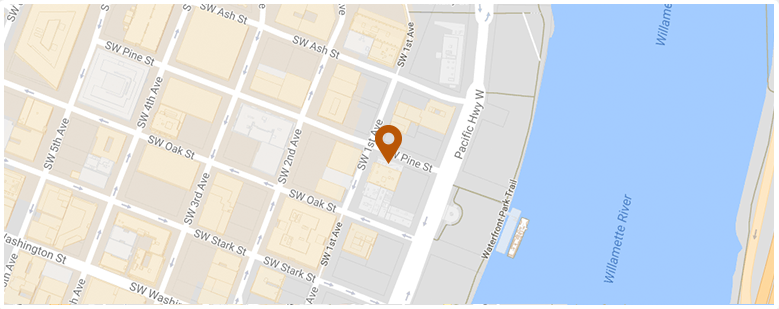
50 SW Pine St 3rd Floor Portland, OR 97204 Telephone: (503) 226-3844 Fax: (503) 943-6670 Email: matthew@mdkaplanlaw.com
map image