"I got into an accident and was nervous about finding a personal injury attorney after hearing so many awful stories, but from the start, I felt confident with my choice in Kaplan Law, LLC." Read More - Ben
"Matt and Gillian took great care of me during a stressful time of my life. Very caring and knowledgeable group. I would definitely recommend Kaplan Law!" Read More - Kayleigh
"Incredible service and results! Matthew Kaplan and his paralegal Gillian did an amazing job for me. Not only did they resolve my case beyond my satisfaction, they also were very caring and supportive thru my recovery. I couldn't ask for a better attorney." Read More - Jamal
Matthew D. Kaplan

The shocking case of a Portland doctor who, according to The Oregonian, faces “manslaughter and reckless endangerment charges in connection with two after-hours tummy-tuck operations she gave to employees in 2010” is a reminder that all of us need to keep Oregon patient safety in our thoughts when considering medical procedures.

According to the newspaper the doctor, whose medical license has now been suspended, allegedly performed solo surgery on two of her employees in a back room at her office after the day’s work was done. One of the two employees subsequently died from complications stemming from the tummy-tuck while the other “complained of dizziness and a rapid heartbeat afterward.”

All of us place great faith in doctors and we have the right to expect, in return, that our doctors will perform their duties in a manner that keeps patients’ well-being first and foremost in their minds. Of course, this is exactly what the vast majority of doctors do every day.

The family of a New York teenager who disappeared on a trip to Hawaii and is presumed dead has filed a wrongful death lawsuit in federal court in Hawaii, claiming that the guides on their son’s tour made an “outrageously reckless and irresponsible decision” in taking a group of high school students into a “treacherous lava rock area,” according to accounts by the Associated Press and a local Honolulu TV station.

The 15-year-old boy from White Plains, New York was visiting Hawaii with a teen tour group. Both the umbrella group and its local contractors were named in the suit, the news agency reports. According to the AP, while hiking on July 4 the group “stopped to rest at a tide pool, authorities said. The teens were led to an area that’s out of a state-permitted area despite dangerous surf warnings, according to the suit.”

When large waves came into the tide pool the children scrambled for cover but the victim was swept out to sea. The guides and their employers contend that the adults on the scene did all they could to search for and save the victim, but he has been missing ever since and is now presumed dead.

A recent op-ed piece in The Oregonian raises significant questions about transportation funding and Portland’s streets. Its arguments – whether one agrees with them or not – bear consideration even in a time of tight budgets and, often, cutbacks.

The author, Stephanie Routh, executive director of the Willamette Pedestrian Coalition, argues that the transportation bill passed by Congress earlier this summer falls far short of what is needed to fund improvements to “Portland’s most dangerous streets.”

“Congress didn’t improve on the situation with its new federal funding bill, dramatically reducing dedicated funds for walking and biking safety improvements,” she writes. “The lack of relief for known safety problems may result in preventable deaths of people walking, biking, driving or taking transit for years to come.”

A case that reached a resolution last week in Maryland offers a cautionary tale about dealing with insurance companies, as well as a lesson in the important role media sometimes play in helping victims obtain justice.

According to both Yahoo! News and CNN the story begins in June 2010 when a 24-year-old Maryland woman died in a car accident caused by another driver’s failure to stop at a red light. The driver who caused the crash was either uninsured or underinsured (media accounts vary on this point), but that ought not to have been a problem, since the victim carried uninsured motorist’s coverage as part of her auto insurance package with Progressive, one of the country’s best known car insurance companies.

Under Maryland law a trial was required to establish responsibility for the crash. To the fury of the victim’s family, Progressive’s attorneys helped the driver who caused the crash throughout the proceeding in an effort to establish that the victim was partly at fault – a circumstance that would have allowed the company to refuse to pay on its policy. The company has issued a statement pointing out that it did not formally represent the defendant, but the victim’s brother, quoted by Yahoo! News, said that the insurer’s lawyers repeatedly conferred with and assisted the defendant during the trial. They also made a closing statement claiming that his sister was at fault for the accident. “I am comfortable characterizing this as a legal defense,” he wrote last week, according to Yahoo! News.

A Washington child safety lawsuit filed against the Bremerton school district, near Seattle, offers a stark reminder of the importance of ensuring that our children are safe in school.

According to an Associated Press report posted on the New York Times website, the victim was an 8-year old girl who suffered serious injuries “when a gun in a classmate’s backpack went off.” The news agency notes that the family is suing the school district alleging that “it failed to heed clues the boy was dangerous.”

The AP reports that the law suit claims “that the boy who brought the gun to school was acting out and fighting. It also says the boy had told several other children his intention to bring a gun to school.” The victim “required numerous surgeries and suffered lifelong injuries when the bullet pierced her internal organs and lodged in her spine.”

A recent announcement by the Consumer Product Safety Commission that Burlington Coat Factory has agreed to a civil penalty totaling $1.5 million is a victory for everyone concerned about injuries to Oregon children.

According to a CPSC news release: “The settlement resolves CPSC staff allegations that from 2003 to 2010, Burlington knowingly failed to report immediately to CPSC, as required by federal law, that it had sold many different children’s sweatshirts and jackets with drawstrings at the neck.” It adds that drawstrings at neck level can cause strangulation “that can result in serious injury or death.” The government has recommended against them for many years and they have been formally banned since 2006.

Even more disturbingly, the CPSC alleges that between 2008 and 2012 Burlington “knowingly sold or had in its store inventories many of these garments after they had been recalled.” The resulting $1.5 million civil penalty is the largest that the commission has ever assessed for a violation of this type.

A lawsuit recently filed in Salem charges both doctors and prison officials with the Oregon wrongful death of a Salem man in 2010. The suit was filed by the alleged victim’s mother, according to a report in the Salem Statesman-Journal.

According to the newspaper, her son, Robert Haws, was a pre-trial detainee two years ago this month “when he got into an argument with another inmate.” The other inmate attacked Haws “hitting his head on concrete and knocking him unconscious. He died at the hospital after undergoing brain surgery and lingering for days on life support.”

At issue are “the hours following the fight and the lengthy delay in treatment for Haws’ injuries,” according to the Statesman-Journal. Haws’ mother believes that the jail staff did not give her son the attention he needed in the minutes and hours immediately after the fight. It also alleges that once Haws reached the hospital doctors treated him as if he were a patient coming down from a drug overdose despite significant evidence that he needed urgent treatment for an Oregon head trauma.

The death of a six month old baby eight years ago, and another closely-averted tragedy two years later, set in motion a chain of events leading to the recall this month of hundreds of thousands of potentially dangerous strollers, according to a report by the Associated Press.

The strollers were finally recalled a few days ago “because children can become trapped and strangled between trays on them,” the news agency reports. The manufacturer, Peg Perego USA, issued a recall effecting “approximately 223,000 strollers, which include Venezia and Pliko-P3 strollers in various colors, made between January 2004 and September 2007.” The recall affects strollers with “a child tray and one cup holder.” Models with differing designs are not subject to the recall.

The article also notes the announcement of a much smaller recall (5,600 units) of strollers from another manufacturer: Kolcraft Enterprises. These are being pulled off of the market “due to potential falling and choking hazards,” the AP reports. The action stemmed from six reports of broken front caster wheels “and two reports of the basket’s support screws and nuts detaching.”

A recent article in the New York Times highlighted innovative ways that cyclists are putting technology to use to improve safety. The piece focuses on small cameras that can be mounted on a rider’s helmet. The newspaper describes these as “the cycling equivalent of the black box on an airplane… providing high-tech evidence in what is sometimes an ugly contest between people who ride the roads on two wheels and those who use four.”

Though originally designed for recreational use (the cameras have long been popular with snowboarders and mountain bikers seeking to capture memories of their rides) they are proving useful in urban environments as a way for bike riders to help police pursue and prosecute reckless drivers and to enforce the law in the wake of cycling accidents involving cars. The newspaper notes that use of the cameras has increased markedly as the cost of the cameras has dropped. A good helmet camera can now be purchased for under $200.

“Video from these cameras has begun to play an invaluable role in police investigations of a small number of hit-and-runs and other incidents around the country,” the paper notes, citing local law enforcement. It profiles one New York City rider who was able to help police track down a hit-and-run using video from his helmet camera which captured an image of the driver’s license plate.

The death of a highway worker in Canby last week turns a spotlight both on the dangers roadside workers ensure and, once again, on the problem of Oregon drunk driving.

According to The Oregonian, a 48-year-old man who was “placing warning signs about road construction near South New Era Road near South Haines Road” died last week after he was hit by a car believed to have been driven by a drunk driver. The paper reports that the driver was taken into police custody and an investigation is under way.

This incident is a sad reminder of the importance of exercising caution around highway workers. All too often, too many drivers fail to heed warnings to slow down in construction zones or other places where road workers are present. Many drivers also fail to give roadside workers a sufficiently wide berth when passing them.

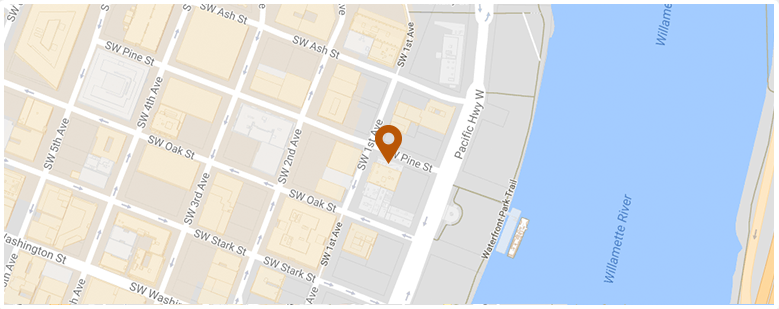
50 SW Pine St 3rd Floor Portland, OR 97204 Telephone: (503) 226-3844 Fax: (503) 943-6670 Email: matthew@mdkaplanlaw.com
map image
Contact Information