"I got into an accident and was nervous about finding a personal injury attorney after hearing so many awful stories, but from the start, I felt confident with my choice in Kaplan Law, LLC." Read More - Ben
"Matt and Gillian took great care of me during a stressful time of my life. Very caring and knowledgeable group. I would definitely recommend Kaplan Law!" Read More - Kayleigh
"Incredible service and results! Matthew Kaplan and his paralegal Gillian did an amazing job for me. Not only did they resolve my case beyond my satisfaction, they also were very caring and supportive thru my recovery. I couldn't ask for a better attorney." Read More - Jamal
Matthew D. Kaplan

A lengthy article published this week in Washington’s Kitsap Sun looks at the issue of traumatic brain injuries – particularly concussions – among young athletes. As the paper notes, “the U.S. Centers for Disease Control and Prevention estimates more than 3.5 million concussions – defined as traumatic brain injuries – occur each year on ball fields and (in) sports venues across the country.”

The article focuses on the Zackery Lystedt law, a measure enacted in Washington in 2009 that prevents high school age and younger athletes “with suspected concussions from returning to the playing field without authorization from a licensed health care provider.” The law is named after a junior-high football player who suffered permanent brain damage and disability as a result of a 2006 game. The paper notes that “return-to-play legislation modeled after the Lystedt Law has since been adopted in 39 other states.”

According to SafeKids.org, Oregon’s own youth sports-focused TBI legislation, enacted about the same time as the Washington Law, offers some key safeguards but does not go nearly as far. A important difference is that Washington teens must be pulled from a game or practice if there is reason to believe that they may have suffered a concussion. Here in Oregon removing the athlete from competition or practice only becomes mandatory once they exhibit symptoms of a possible traumatic brain injury. Once an athlete has been pulled from the field both states require written clearance from a medical professional before the player can return to practices or competitions.

Television station KOIN, citing the Oregon State Police, reports on a two-vehicle head-on Oregon car crash over the weekend near Rainier, Oregon on the Columbia River, north of Portland.

The station reports that at about 10:30pm last Friday a pick-up truck traveling “southbound on Highway 30 near milepost 44” collided in a head-on motor vehicle accident with a northbound passenger car. The Oregon crash took place as the truck moved over into the left lane to pass another vehicle. The driver and four of the five people traveling in the car were injured, KOIN reports.

Where this becomes an important lesson for all drivers is when we look more closely at the injuries. The driver of the pick-up truck, a 37-year-old St. Helens man, is reported to have been taken to a Portland-area hospital in critical condition. In the car, the driver, a woman from Longview, Washington, was also injured along with three of her four passengers. Unlike the man in the pick-up truck, however, the injuries to the people in the car are described as “non-life threatening.” In fact, one of the car’s passengers – a two-year-old – was not hurt at all.

One of the things that distinguishes Portland from less bicycle-friendly metropolises is our bike boxes. These large green-painted areas at key intersections give riders a designated place to wait for the light to change, and serve as a constant remainder to drivers of their obligation to share the road. According to an article published this week in the Portland Mercury, however, newly released data indicates that in some parts of the city the bike boxes may not be helping – and might actually be making matters worse at some intersections.

The Mercury’s article focuses specifically on so-called “right hook” crashes – Portland bike and car accidents in which a cyclist crossing an intersection is struck by a car or truck making a right turn. The paper notes that the boxes have been painted onto the street “at 11 problem intersections” since 2008, and that they are widely believed to “make cyclists and drivers feel safer at the intersections.”

A study of accident data at those intersections, however, found that “in the four years since their installation, the intersections had 32 right hook crashes involving bikes.” This is double the number of such Oregon car accidents at those same intersections in the four years since the boxes were added to the roadway.

The recent death of an 11-year-old girl who was accidently thrown from a Portland party bus, as outlined in The Oregonian, is raising many disturbing questions about this often under-regulated industry and about the conduct of the adults involved. According to the newspaper, the child died when she “tumbled out of an emergency window when the bus turned a corner.” This Portland fatal child injury accident would be bad enough by itself, but the details surrounding it are truly shocking.

The Oregonian reports that the victim was part of a large group of children who were board the party bus with no adult supervision. The vehicle’s 61-year old driver was the only grown-up on board the bus. Moreover, the driver himself “wasn’t permitted to operate a party bus carrying about 20. The bus didn’t have a permit from the city of Portland, either” the newspaper adds.

The amount of irresponsibility on display here is really quite stunning. Why did the company let a driver lacking the proper license operate any of its vehicles, let alone one carrying children? Why would it even allow a party bus filled with children out on the road without any adult supervision? Even if the driver were properly qualified to operate the vehicle, a bus driver who is doing his job cannot do so safely while also supervising nearly two dozen children.

This week, a story from the other side of the continent turned a harsh light on an issue of great concern to us here in Oregon: propane explosions and the potential they have, as industrial accidents, to cause great damage.

According to an article from the Pennsylvania newspaper The Intelligencer, republished on the website Phillyburbs.com, the incident took place when a truck carrying a full load of 2000 gallons of propane collided with another vehicle in Tinicum, about 40 miles north of Philadelphia. Quoting local officials, the paper reports that two people were injured in the accident, a major roadway was closed and nearby residents were ordered to evacuate their homes.

“Hundreds of volunteer first responders and police set up a one-mile radius around the… propane truck, which caught fire shortly after the accident,” the paper reports.

An opinion piece published earlier this month in the Wall Street Journal is an impassioned plea for greater accountability among physicians and greater engagement by patients all in the name of dramatically improving medical care and patient safety.

The piece by Dr. Marty Makary, a surgeon at Johns Hopkins, begins with a striking assertion: “medical mistakes kill enough people each week to fill four jumbo jets,” he writes. “But these mistakes go largely unnoticed by the world at large, and the medical community rarely learns from them.”

Makary’s solution? Better professional practice combined with a more attentive and engaged public.

A recent New York Times article highlights a high-profile opponent of distracted driving here in Oregon and around the nation whose job might raise some eyebrows: he is the chairman and CEO of AT&T. As the newspaper notes, Randall Stephenson began his remarks at an investors’ conference last week with a plea to everyone in the audience not to text and drive.

“He’s been saying it a lot lately,” the paper continues, “at investor conferences, the annual shareholder meeting in April, town halls, civic club meetings, and in conversations with chief executives of other major companies.”

AT&T is not unique among cellphone companies in taking on this issue but, as the Times reports, Stephenson’s emphasis on it stands out both for its seriousness of purpose and for the personal nature of his story. “Mr. Stephenson said in an interview that a few years ago someone close to him caused an accident while texting,” the paper reports. The result has been a high profile anti-texting campaign by the company, one that the paper says has impressed even organizers focused on the broader issue of distracted driving as an advocacy and policy issue.

A recent op-ed published by The Oregonian calls for parents to take more care, and schools to take more responsibility, when it comes to preventing concussions and traumatic brain injuries among student athletes, especially younger athletes still in high school.

The column was written by James Chesnutt. He is identified in the article’s footer as a doctor and the “medical director of the OHSU sports medicine program.”

In the article he says that he is writing to encourage “all Oregon high schools to agree to a management protocol to help their student athletes deal with concussions.” He writes: “The protocol calls for schools to establish a plan to help a student recover.” This, he adds, could include time off from school following a head injury.

This week – from now until Saturday September 22 – is National Child Passenger Safety Week. It is an excellent time to remind ourselves of the importance of preventing injuries to children in Oregon auto accidents.

Here in Oregon the public awareness events for National Child Passenger Safety Week are being led by SafeKids Oregon. The SafeKids webpage devoted to the week and its related activities opens with some stark statistics that put the problem into perspective:

“Motor vehicle traffic crashes,” it notes, “remain the leading cause of death for children ages 1 through 12 years old.” It also notes that fully 75% of children riding in American cars “are not as secure as they should be because their car seats are not being used correctly.”

A recent account in TDN.com, a Longview, Washington-based news site, lays out the horrible tale of a 5-year-old boy attacked by a pitbull and police efforts to find the animal. The dog attack took place as “the victim was riding his bike on the sidewalk when the dog, tethered to a 15-foot rope outside a duplex” bit him. The newspaper reports that there were no witness to the initial attack “but neighbors heard the boy screaming and pulled the dog off the boy.”

The victim needed 40 stitches and may eventually require further medical attention, such as a skin graft.

Despite being tethered at the time of the attack the animal is still at large because, TDN reports, “when animal control authorities arrived… the 3-year-old pitbull named Lexi was gone. Lexi’s owner (said) her son had taken off with the dog and she did not know where he was.” According to the newspaper local authorities are especially concerned about finding the pitbull so that they can ensure it has been properly vaccinated against rabies, after it was discovered that “employees at the Oregon animal hospital listed on the (rabies) certificate said the veterinarian who allegedly signed it had never worked at the clinic” and that the animal had never been treated there.

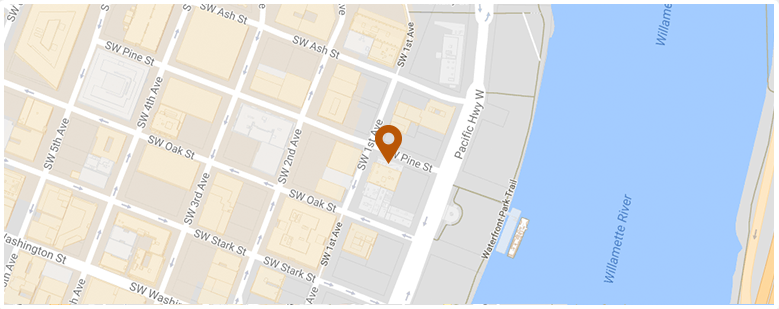
50 SW Pine St 3rd Floor Portland, OR 97204 Telephone: (503) 226-3844 Fax: (503) 943-6670 Email: matthew@mdkaplanlaw.com
map image
Contact Information