"I got into an accident and was nervous about finding a personal injury attorney after hearing so many awful stories, but from the start, I felt confident with my choice in Kaplan Law, LLC." Read More - Ben
"Matt and Gillian took great care of me during a stressful time of my life. Very caring and knowledgeable group. I would definitely recommend Kaplan Law!" Read More - Kayleigh
"Incredible service and results! Matthew Kaplan and his paralegal Gillian did an amazing job for me. Not only did they resolve my case beyond my satisfaction, they also were very caring and supportive thru my recovery. I couldn't ask for a better attorney." Read More - Jamal
Matthew D. Kaplan

Late Friday night a Southeast Portland man working as a cleaner at a meat processing plant in Clackamas died after falling into a piece of machinery, according to The Oregonian. The details of this Oregon Industrial Accident case are disturbing and will merit close scrutiny in the months to come.

According to the newspaper, paramedics and the Clackamas County sheriff’s office were called just before midnight on Friday and arrived at the facility to find the victim “entangled in a blender, which regulates the fat content of ground meat. The following day firefighters returned to help dismantle the machinery” and to remove the 41-yesr-old man’s body.

From a legal perspective there are two key elements to this sad story. First, the long and unsettling safety record of the factory in question. The Oregonian reports that this facility “was the target of a consumer alert in 2007, when potentially deadly E. Coli bacteria was traced” to ground beef processed at the plant. More recently – last October, to be precise – the plant was cited by the Oregon Occupational Safety and Health Division after inspectors found “that machinery in the meat-grinding room wasn’t properly locked down during cleaning. (The) inspector said an ‘unexpected start-up of the machine ‘ could cause injuries.” Oregon Occupational Safety and Health regulations are both clear and strict where situations like this are concerned. State regulations require what are known as “Lockout/Tagout” procedures around dangerous machinery to insure worker safety. According to an OSHA document “the standard requires that physical lockout be utilized for equipment or machines which have energy isolating devices capable of being locked out, except when the employer can demonstrate that utilization of a physical tagout system provides full employee protection.” In plain English: the potentially dangerous machine must either be locked-up in a manner that keeps workers from getting to it, or the workers have to be working in teams that allow them to keep track of one another. It will be up to investigators and the courts to decide whether the employer met that standard in this case.
Last week’s huge explosion at a fertilizer plant in the small town of West, Texas killed 14 people and devastated a huge area. As a lengthy account in The New York Times earlier this week shows, it also raises serious questions about corporate responsibility, government oversight and the safety standards at dangerous facilities throughout the United States.

As the Times reports, the explosion at the plant “was so powerful it leveled homes and left a crater 93 feet wide and 10 feet deep.” The paper said the explosion appeared to have been more powerful than the 1995 bombing at the Oklahoma City Federal Building. The Oklahoma blast provides a useful point of comparison because the bomb involved used the same chemical – ammonium nitrate – that was being manufactured and stored in the Texas plant.

The paper reports that while some state and local groups in both the private and public sectors received an annual report on ammonium nitrate and other chemicals being manufactured and stored in the plant others did not. The reporting requirements are designed to help local, state and federal authorities plan for exactly this sort of emergency, but the building’s owners apparently had not filed a report with the Department of Homeland Security. A federal law passed in the wake of the 9/11 attacks mandates that “plants that use or store explosives or high-risk chemicals” file a federal report if they exceed certain limits. For ammonium nitrate a report is required if stocks exceed 400 pounds. According to the Times a 2012 report filed with the state listed the plant having 540,000 pounds of ammonium nitrate on hand.

It has been just over three months since an Oregon bus crash in the Cabbage Hill area in the east of the state killed nine people and injured 38. As official investigations and a search for answers move forward, The Oregonian reports that lawsuits accusing the state Department of Transportation of negligence have now been filed by the loved ones of three of the Oregon bus crash victims, as well as by at least one of the accident’s survivors.

As the Associated Press reports, and as I blogged at the time, the deadly Oregon Bus Crash last December took place when a tour bus “slid on ice east of Pendleton, crashed through a guardrail and rolled down a steep hill.” Pictures published at the time showed a gruesome scene of wreckage on the snow-covered mountain pass.

According to the newspaper, relatives of the victims “are seeking at least $10 million in punitive damages, injuries and wrongful death… The suit claims ODOT was negligent for failing to equip the stretch of Interstate 84 with barriers strong enough to prevent the bus from leaving the roadway; not adequately plowing and sanding the freeway; failing to warn motorists of unsafe conditions; and failing to require commercial vehicles to take an alternative route.” The Canadian company that owned the vehicle, along with the bus driver, are also named as defendants in the suit, according to The Oregonian.

Two articles published in recent days by the New York Times illustrate both the continuing challenge we all face in attempting to curb distracted driving and the paradox of technology – the cause of so many Oregon distracted driving problems –sometimes offering solutions to the very problems it helps create.

One Times article begins with a dramatic statistic: “at any moment during daylight hours, according to a new government study, 660,000 Americans are using cellphones or other electronic devices while driving.” The study cited by the newspaper concluded that years of anti-distracted driving campaigns have succeeded in raising public awareness but have been less successful in convincing individual Americans that their own behavior behind the wheel – as opposed to everyone else’s – is potentially part of the problem.

“Almost half of those surveyed, 48 percent, said they answered their cellphones while driving at least some of the time, and 58 percent said they continued to drive after picking up the phone. Fourteen percent said they still text or email while driving,” the Times reports. Those numbers were up significantly from last year’s NHTSA survey, in which they were 40 percent and ten percent respectively. Perhaps ironically, the survey also showed that “most drivers… support a ban on cellphone use and texting while driving, and 76 percent said they would likely say something if they were a passenger alongside a driver who was sending a text.”

State and federal lawsuits filed last week in California are seeking to change current legal thinking and make it harder for medical device makers to avoid responsibility for defective products. According to an analysis published in the Wall Street Journal the suits “could challenge the broad liability protection that medical device makers have enjoyed since a key Supreme Court ruling in 2008.”

The target of the suits is St. Jude Medical, the maker of the Riata line of defibrillators. According to the Journal, the plaintiffs in the suit claim “that problems with the manufacturing and oversight of Riata defibrillator ‘leads’ injured or killed more than 30 patients. Faulty leads, which connect the heart to defibrillators that zap irregular heart rhythms back to normal, caused the devices to fail or needlessly deliver blasts of electricity, the suits allege.”

It might seem obvious that here in Oregon, in Washington or anywhere else in the country companies have an obligation to ensure that the products they sell are safe and function properly, but manufacturers of unsafe medical devices gained unprecedented liability protection via the Supreme Court’s 2008 Riegel v Medtronic case. That ruling, as the Journal reports, granted medical device makers immunity from state unsafe product liability laws on the grounds that medical device safety is a federal issue.

Today marks the start of National Window Safety Week (April 7-13). With the seasons changing, and warmer weather settling in, that makes this an especially opportune moment to remind parents of simple but important ways to avoid tragic Oregon injuries to children during the coming months.

Here in Portland this is not an abstract issue. As a recent article in The Oregonian noted, “during one terrible week last June, four children in the Portland area were injured when they plunged through windows to the ground.” I wrote about several of these incidents at the time – see here and here – and salute the work SafeKids Oregon (where I serve as a member of the Advisory Board), the Oregon Public Health Division and Randall Children’s Hospital are doing to raise public awareness of this issue all the year round, but during this week in particular.

The centerpiece of the Window Safety Week campaign is the ‘Stop at 4 inches’ initiative which reminds parents of the importance of keeping small children out of danger by using window stops. As part of the awareness activities taking place this week Randall Children’s Hospital is making window stops and other home child safety gear available through its Hospital Safety Center. On the Washington side of the Columbia River the video blog Vancouver Side has produced a set of helpful videos on window safety to mark this week. You can see them here.

A New York Times report this weekend about a terrible multi-vehicle crash in Nevada is a reminder of the importance of issues Portland’s own mayor has spent the last few weeks spotlighting.

A Reuters news agency dispatch, republished by the Times, cites local law enforcement, reporting that “five members of a California family were killed in Nevada when their van was struck from behind by a teenage driver who was arrested on suspicion of driving under the influence.” The 18-year-old driver suffered minor injuries in the crash which reportedly happened when he rear-ended the van. In addition to the five people who died two other members of the same family were also riding in the van and were treated in area hospitals following the DUII accident. The crash took place on Interstate-15 about 80 miles north of Las Vegas.

The accident comes as Portland mayor Charlie Hales has worked to spotlight an increase in DUII incidents in our city. As a recent report in The Oregonian noted, “five of the 11 people killed in Portland traffic crashes since Jan. 1 involved people driving under the influence.” Hales has sought to use the media to publicize a situation he views with “alarm” and to remind Oregonians: “Drive sober to save lives. Doing otherwise is illegal and reckless,” the paper notes, adding that the current pace of DUII-related fatalities in Portland is well ahead of last year’s.

A bill currently pending before Oregon’s legislature seeks to give consumers new protections and close a significant legal loophole. As reported recently by the Salem Statesman-Journal, both houses of the Oregon legislature are considering legislation that would end the insurance industry’s exemption from Oregon’s Unlawful Trade Practices Act. This important legislation promises important new protections for Oregon consumers by holding insurance companies accountable for the damage they do when they delay, or refuse, payment on legitimate claims.

As detailed by The Lund Report, a health policy blog, the legislation (HB 3160 and SB 686) will “allow consumers to recover economic and non-economic damages in court when insurers commit unlawful insurance practices.” Put another way, it will allow ordinary Oregonians to level the playing field against companies that refuse to play by the rules.

As the Statesman-Journal reports under existing law, insurance companies are not covered by the Unlawful Trade Practices Act. That exemption, in practice, allows them to mistreat customers by denying them the coverage they have paid for. The Lund Report quotes one of the bills’ sponsors, Sen. Chip Shields (D) of Portland, noting that “insurance is the only business that is exempt from this law.” That exemption makes it much easier or insurance companies to put their own financial interests ahead of the health and welfare of ordinary Oregonians.

A ruling last week by the Oregon Supreme Court, as reported by The Oregonian, leaves justice unfulfilled for one Beaverton woman, though a chance remains that a federal court will view the case differently.

According to the newspaper, the state’s highest court ruled 4-3 that because of a legal technicality the city of Beaverton does not have to pay the victim of one of its police officers’ negligence the $507,500 ordered by a trial court. A jury ordered the money paid to a woman who was left disabled after she was hit by a Beaverton police car while crossing at an unmarked crosswalk in 2007.

The half-million dollar figure for damages in the Oregon car and pedestrian accident case is, itself, a significant reduction of the original verdict. According to the newspaper the jury originally decided on more than $1 million in damages but also found that the victim “and the former Beaverton police officer who had been driving the car… were equally at fault” which led to the cash being cut by half. The city appealed to have its share further reduced to $200,000 citing a state law that caps the liability of municipalities. The federal court hearing the appeal asked the Oregon Supreme Court, the paper reports, to rule on two questions: first, whether the state constitution protects the victim’s “right to a remedy and, if so, whether” $200,000 would be enough. “The court answered yes to both questions” despite the fact that the victim’s documented “medical bills totaled at least $500,000” as reported by The Oregonian.

On Tuesday the Oregon Senate passed by a wide margin a bill that would allow children of any age to ride motorcycles, dirt bikes and other off-road ATVs. Let me be frank, it is hard to see how any responsible parent would allow a child that young to ride a motorized vehicle, but we all know that some will. Though presented during debate as a matter of personal freedom, this is truly a case in which society’s interest in protecting children has to be balanced against a conception of ‘freedom’ so individualistic that it comes to pose a threat to everyone else.

As reported in The Oregonian, Senate Bill 238 passed the Oregon Senate 22-7 with support from 12 Republicans and 10 Democrats. All but one of the seven ‘no’ votes came from Democrats. Supporters tout the measure “as a way to improve safety for young and off-road riders because it requires anyone under 16 to meet minimum size requirements, known as a “rider fit” test” before they can be certified to operate ATVs and other off-road vehicles. The paper notes, however, that another provision of the bill repeals the existing prohibition on children under age seven riding such vehicles. In other words, SB 238 would allow children at the ages of six, five or even four – children who might not yet have the balance to ride a bicycle – to sit atop a powerful quad-ATV and ride not only on their family’s property but also on public lands throughout the state.

It seems contradictory to toughen basic safety requirements for children in general while removing a common sense ban designed to protect small children – children whose cognitive ability, motor skills and general perception of danger are not sufficiently developed to operate a motor vehicle, even under parental supervision. Ironically, this bill passed the senate even as Oregon and the rest of the country are marking national brain injury awareness month, a time designed to focus attention on the dangers traumatic brain injuries pose to kids here and elsewhere.

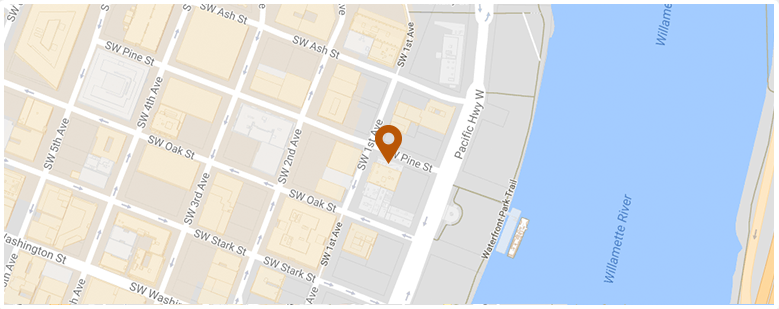
50 SW Pine St 3rd Floor Portland, OR 97204 Telephone: (503) 226-3844 Fax: (503) 943-6670 Email: matthew@mdkaplanlaw.com
map image