"I got into an accident and was nervous about finding a personal injury attorney after hearing so many awful stories, but from the start, I felt confident with my choice in Kaplan Law, LLC." Read More - Ben
"Matt and Gillian took great care of me during a stressful time of my life. Very caring and knowledgeable group. I would definitely recommend Kaplan Law!" Read More - Kayleigh
"Incredible service and results! Matthew Kaplan and his paralegal Gillian did an amazing job for me. Not only did they resolve my case beyond my satisfaction, they also were very caring and supportive thru my recovery. I couldn't ask for a better attorney." Read More - Jamal
Matthew D. Kaplan

It would be fair to say that when renting a car most of us assume the car is safe. Car rental companies make you sign a document acknowledging any visible damage to the vehicle and are known to check returned vehicles carefully before sending them back out with new renters.

Did you know, however, that if the car or truck you’re renting is subject to a recall notice no law prevents a rental company from sending you out on the road in that vehicle? As a basic measure of consumer protection it sounds amazing, but, according to a recent article in the trade publication Automotive News, it is true.

Not only that, but major figures in the industry are fighting to retain their right to send customers out in unsafe vehicles. Automotive News reports that earlier this month “major automakers and auto dealers told a Senate panel… that they remain opposed to legislation that would prohibit rental car companies from renting or selling vehicles that are subject to a federal safety recall.” (car rental companies generally sell their vehicles after a year or two of use)

Here in Oregon the Memorial Day holiday weekend began with an incident that is a sad reminder of one of summer’s perils: Oregon injuries to children resulting from window falls. According to The Oregonian “a four-year-old Oregon City girl was transported to the hospital with non-life threatening injuries on Saturday after falling out of a third story window.”

Citing Clackamas fire district officials the newspaper reports that the girl is in good condition, but with the weather warming up this is a sad reminder of the danger window falls can pose to children during the summer months. Regular readers will recall that the Portland area experienced a spate of window falls last year during late June and early July. Hopefully this summer will not see a repeat of these easily preventable accidents.

As a Portland child injury attorney I have long supported, and used this blog to help publicize, SafeKids Oregon’s “Stop at 4” campaign (see link below or this post from last April). As SafeKids Oregon notes, nationwide approximately 3300 children under the age of six fall from windows every year. Many of these falls are from the second or third floor and while we can all be relieved that the Oregon City girl is now described as being in good condition it is also useful to take a moment to remember some of the key facts connected to window falls.

Two new studies receiving media attention this month indicate that the problem of distracted driving in Oregon and elsewhere around the country may be even worse than many people think.

According to the Associated Press the first study, released earlier this month by the safety-advocacy group the National Safety Council found that “crash deaths in cases where drivers were on the phone were seriously underreported… The underreporting makes the problem of distracted driving appear less significant than it actually is and impedes efforts to win passage of tougher laws.” The group examined car crash data for 2009 through 2011.

Perhaps the most surprising finding of the study was that “even when drivers admitted to authorities that they were using a phone during an accident in which someone was killed, about half the cases weren’t recorded that way in the database, the council said” referring to the highway safety database maintained by the federal government’s National Highway Traffic Safety Administration.

Even as police investigate the death last week of a 33-year-old man outside a Northeast Portland strip club the circumstances surrounding the incident have raised serious questions about how well the club was handling its security arrangements – questions that could eventually expose the club to an Oregon wrongful death claim.

As The Oregonian reported last week, the man “collapsed on the sidewalk outside the club and died from a single gunshot wound to the head.” A 21-year-old woman was also injured in the Portland shooting incident and was treated at an area hospital.

“The homicide marked the second fatal shooting at the location in two years. An inspector from the Oregon Liquor Control Commission has launched an investigation with Portland police to see if alcohol service played any role in the shooting,” the newspaper notes, citing a spokeswoman for the commission.

The really surprising thing about the BMW recall announced this week is not the fact that some older models in the German carmaker’s line had what USA Today describes as “potentially shrapnel-producing airbags.” Rather, it is that the recall has taken this long to be initiated granted everything else we know about the airbags in question. According to the newspaper, in the recalled vehicles “the passenger airbag could explode too forcefully and send metal or plastic shrapnel flying at the passenger.”

As the newspaper reported on Tuesday, BMW has recalled its 2002 and 2003 3-Series cars because of the airbag issue. The recall order is thought to effect about 42,000 vehicles here in the United States and 220,000 worldwide. According to USA Today the air bags and related assemblies for these vehicles “were supplied by Takata, which also supplied potentially shrapnel-producing passenger bags that forced Toyota, Honda, Nissan, Mazda and General Motors to recall some 3.4 million vehicles worldwide last month.” This raises a basic question: if five other automakers using the same company’s products recalled them for this issue why did BMW – or any other manufacturer who may have used the air bags in question – wait at all to participate in the recall?

Even more troublingly, as the newspaper makes clear, this critical unsafe products issue has been on the auto industry’s radar screen for quite some time. According to USA Today, Takata air bags “were blamed for two deaths in Hondas in 2009.” Moreover, the paper reports: “Takata has had problems going back to the 1990s. It supplied faulty safety belts that triggered a recall of more than 9 million vehicles in the U.S. in 1995, a near-record at the time.”

An Associated Press dispatch republished this morning in The Oregonian recounts a Salem hit-and-run car accident last night that that left a tow-truck driver injured.

According to the news agency a tow truck was parked Sunday evening on a Salem street where “police say the driver was loading (his) vehicle and had emergency lights activated when he was knocked down. Medics took him to Salem Hospital with injuries described as non-life-threatening.” If the news agency report is accurate the driver is potentially in big trouble: under Oregon law a hit-and-run that involves an injury is a felony.

The driver of the car that allegedly caused this Oregon injury car accident is still at large, but the AP reports that police have a significant piece of evidence in hand: one of the hit-and-run driver’s outside mirrors. “The passenger-side mirror broke off, and police believe the car likely has scrapes and possible body damage on the right side,” the news agency notes.

Late Friday night a Southeast Portland man working as a cleaner at a meat processing plant in Clackamas died after falling into a piece of machinery, according to The Oregonian. The details of this Oregon Industrial Accident case are disturbing and will merit close scrutiny in the months to come.

According to the newspaper, paramedics and the Clackamas County sheriff’s office were called just before midnight on Friday and arrived at the facility to find the victim “entangled in a blender, which regulates the fat content of ground meat. The following day firefighters returned to help dismantle the machinery” and to remove the 41-yesr-old man’s body.

From a legal perspective there are two key elements to this sad story. First, the long and unsettling safety record of the factory in question. The Oregonian reports that this facility “was the target of a consumer alert in 2007, when potentially deadly E. Coli bacteria was traced” to ground beef processed at the plant. More recently – last October, to be precise – the plant was cited by the Oregon Occupational Safety and Health Division after inspectors found “that machinery in the meat-grinding room wasn’t properly locked down during cleaning. (The) inspector said an ‘unexpected start-up of the machine ‘ could cause injuries.” Oregon Occupational Safety and Health regulations are both clear and strict where situations like this are concerned. State regulations require what are known as “Lockout/Tagout” procedures around dangerous machinery to insure worker safety. According to an OSHA document “the standard requires that physical lockout be utilized for equipment or machines which have energy isolating devices capable of being locked out, except when the employer can demonstrate that utilization of a physical tagout system provides full employee protection.” In plain English: the potentially dangerous machine must either be locked-up in a manner that keeps workers from getting to it, or the workers have to be working in teams that allow them to keep track of one another. It will be up to investigators and the courts to decide whether the employer met that standard in this case.

Last week’s huge explosion at a fertilizer plant in the small town of West, Texas killed 14 people and devastated a huge area. As a lengthy account in The New York Times earlier this week shows, it also raises serious questions about corporate responsibility, government oversight and the safety standards at dangerous facilities throughout the United States.

As the Times reports, the explosion at the plant “was so powerful it leveled homes and left a crater 93 feet wide and 10 feet deep.” The paper said the explosion appeared to have been more powerful than the 1995 bombing at the Oklahoma City Federal Building. The Oklahoma blast provides a useful point of comparison because the bomb involved used the same chemical – ammonium nitrate – that was being manufactured and stored in the Texas plant.

The paper reports that while some state and local groups in both the private and public sectors received an annual report on ammonium nitrate and other chemicals being manufactured and stored in the plant others did not. The reporting requirements are designed to help local, state and federal authorities plan for exactly this sort of emergency, but the building’s owners apparently had not filed a report with the Department of Homeland Security. A federal law passed in the wake of the 9/11 attacks mandates that “plants that use or store explosives or high-risk chemicals” file a federal report if they exceed certain limits. For ammonium nitrate a report is required if stocks exceed 400 pounds. According to the Times a 2012 report filed with the state listed the plant having 540,000 pounds of ammonium nitrate on hand.

It has been just over three months since an Oregon bus crash in the Cabbage Hill area in the east of the state killed nine people and injured 38. As official investigations and a search for answers move forward, The Oregonian reports that lawsuits accusing the state Department of Transportation of negligence have now been filed by the loved ones of three of the Oregon bus crash victims, as well as by at least one of the accident’s survivors.

As the Associated Press reports, and as I blogged at the time, the deadly Oregon Bus Crash last December took place when a tour bus “slid on ice east of Pendleton, crashed through a guardrail and rolled down a steep hill.” Pictures published at the time showed a gruesome scene of wreckage on the snow-covered mountain pass.

According to the newspaper, relatives of the victims “are seeking at least $10 million in punitive damages, injuries and wrongful death… The suit claims ODOT was negligent for failing to equip the stretch of Interstate 84 with barriers strong enough to prevent the bus from leaving the roadway; not adequately plowing and sanding the freeway; failing to warn motorists of unsafe conditions; and failing to require commercial vehicles to take an alternative route.” The Canadian company that owned the vehicle, along with the bus driver, are also named as defendants in the suit, according to The Oregonian.

Two articles published in recent days by the New York Times illustrate both the continuing challenge we all face in attempting to curb distracted driving and the paradox of technology – the cause of so many Oregon distracted driving problems –sometimes offering solutions to the very problems it helps create.

One Times article begins with a dramatic statistic: “at any moment during daylight hours, according to a new government study, 660,000 Americans are using cellphones or other electronic devices while driving.” The study cited by the newspaper concluded that years of anti-distracted driving campaigns have succeeded in raising public awareness but have been less successful in convincing individual Americans that their own behavior behind the wheel – as opposed to everyone else’s – is potentially part of the problem.

“Almost half of those surveyed, 48 percent, said they answered their cellphones while driving at least some of the time, and 58 percent said they continued to drive after picking up the phone. Fourteen percent said they still text or email while driving,” the Times reports. Those numbers were up significantly from last year’s NHTSA survey, in which they were 40 percent and ten percent respectively. Perhaps ironically, the survey also showed that “most drivers… support a ban on cellphone use and texting while driving, and 76 percent said they would likely say something if they were a passenger alongside a driver who was sending a text.”

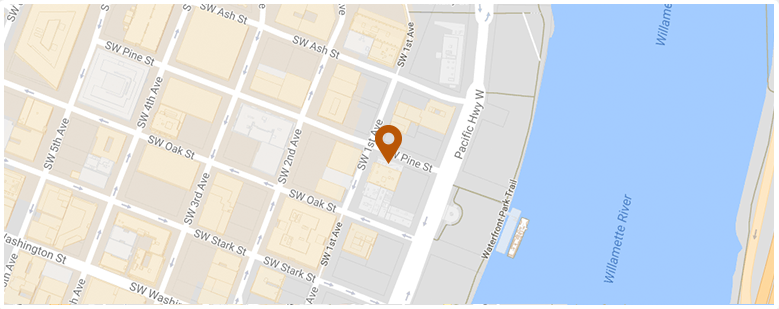
50 SW Pine St 3rd Floor Portland, OR 97204 Telephone: (503) 226-3844 Fax: (503) 943-6670 Email: matthew@mdkaplanlaw.com
map image