"I got into an accident and was nervous about finding a personal injury attorney after hearing so many awful stories, but from the start, I felt confident with my choice in Kaplan Law, LLC." Read More - Ben
"Matt and Gillian took great care of me during a stressful time of my life. Very caring and knowledgeable group. I would definitely recommend Kaplan Law!" Read More - Kayleigh
"Incredible service and results! Matthew Kaplan and his paralegal Gillian did an amazing job for me. Not only did they resolve my case beyond my satisfaction, they also were very caring and supportive thru my recovery. I couldn't ask for a better attorney." Read More - Jamal
Matthew D. Kaplan

The 2009 death of an Oregon-bound family on a California freeway led this week to an important wrongful death ruling by a court in our neighbor to the south. As reported by the Los Angeles Times a 13-year-old girl is now the only survivor of her family’s SUV accident. The family car hit the rear of an illegally parked truck near La Crescenta, California while on its way to Oregon for a Thanksgiving vacation.

According to the newspaper the truck’s driver was parked “in an area designated for emergencies only without his trailer lights or emergency reflectors on… (the driver’s) attorney argued at trial that his client had pulled over to the side of the road to take medication for a severe headache, which constituted an emergency.” The victim’s attorney, however, pointed out that the driver had given conflicting versions of the incident at different times, “including stopping to urinate and pulling over to sleep,” the Times reports.

When the family SUV burst into flames the teenage girl and her elder brother managed to reach safety but their parents and another brother were not able to get away from the burning car. The newspaper notes that the surviving brother “committed suicide in June, four days before his mother’s birthday,” a fact that highlights in the worst way imaginable the intense psychological trauma these two children have gone through.

A mini-documentary and accompanying article posted on the New York Times’ website last week are a timely reminder of the importance of both accurate reporting and of the role our courts play in helping ordinary Americans get the justice they deserve, even when facing off against large, deep-pocketed corporations.

The piece, part of the Times’ “Retro Report” series examining older stories people may only half-remember, focuses on the famous McDonald’s coffee case from the early 1990s. Note that I wrote “famous” not “well known”, because, as the documentary outlines, most of what people think they know about this case is wrong.

In the popular imagination the McDonald’s case is evidence of a personal injury law system run amok: an elderly woman collecting a lottery-sized settlement from McDonald’s after spilling coffee on herself. In many popular versions of the tale she suffered the burns while also driving the car with the coffee cup between her legs. As the documentary outlines the car was parked, the victim was in the passenger’s seat and her burns were severe enough to be life-threatening. The large settlement awarded in the initial trial was reduced by more than 80 percent on appeal. Perhaps most shocking, as the newspaper notes, “she was not one isolated case of scalding, there were hundreds – which amazingly did not move McDonald’s to change their policy on the temperature at which to keep the coffee.”

Regular readers know that I am a strong supporter of SafeKids Oregon, so I’m pleased to share the fact that SafeKids Oregon has joined with other SafeKids organizations across America and overseas to promote Teen Driver Safety Week.

As SafeKids Oregon announces on their website (see link below), “although SafeKids primarily focuses on children ages 0 – 14, we believe that teaching safety to pre-drivers will help all children and youth be safer now and in the future.” This week’s activities are focused on social media as a way of making young soon-to-be drivers aware of the importance of safety and the responsibility that comes whenever they, or anyone else, sits down behind the wheel.

A key component of the Safety Week initiative is Teen Driver Source, an information-sharing program run by the Children’s Hospital of Philadelphia. As the SafeKids website outlines, the initiative brings together “a team of researchers, educators and communicators from the Center for Injury Research and Prevention. The Teen Driver Safety Research Team takes a multidisciplinary approach to study the causes of teen driver-related crashes and then provides information, tools and other resources to help prevent these crashes.” Put another way, it offers tools that allow the lessons learned across the United States to be applied everywhere, rather than in just a particular city or state.

With barely two weeks to go until election day voters in Washington won a victory this week even before they go to the polls to decide the fate of Initiative 522. According to an article published Friday in The Oregonian a major opponent of the GMO-labeling initiative bowed to pressure from the Washington State attorney general and agreed to disclose the names and contributions of major donors to an anti-522 campaign.

Washington State Initiative 522 would require the labeling of foods produced using genetically modified organisms, also known as GMOs. A similar ballot initiative in California failed in 2012 after a strong ‘vote no’ campaign funded by the food industry. With Washington voters scheduled to go to the polls on November 5 the Grocery Manufacturers Association, a trade group, “agreed to make public a long list of donors to its anti-labeling campaign after being sued this week by Washington Attorney General Bob Ferguson. He charged that the Association violated the state’s disclosure laws by setting up an internal fund that solicited money from its members to fight the initiative,” the newspaper reports.

According to The Oregonian, the GMA has put over $7 million into the anti-522 campaign, with almost half of that coming just from Coca-Cola, Pepsi and Nestle.

The death of a Portland bike rider on Barbur Boulevard last August has given new urgency to proposals to change the balance of cars and bikes along this important commuting artery.

As a recent article in The Oregonian outlines, an advocacy group, the Bicycle Transportation Alliance, is urging the ODOT “to put a harrowing section of the high-speed boulevard on a “road diet.” Essentially the group wants a northbound auto lane removed to make space for about two miles of buffered bike lanes and pedestrian paths in both directions of the critical north-south corridor.”

As one might expect many drivers are unhappy with this plan, citing the fact that, according to The Oregonian, ODOT relies on Barbur to relieve rush-hour traffic pressure on I-5. What is different about this dispute is the fact that commuting has emerged as the focus for both sides in this debate. Unusually for these sort of debates, the question is not one of balancing roadways against recreational bikeways but, rather, of balancing the needs of different types of commuters in a city that prides itself on its bike-friendly attitude. The paper reports that “nearly 800 bicycle commuters a day” travel along the route. For the cycling community Barbur is especially important as it offers a relatively flat route through hilly Southwest Portland.

Amid all the discussion surrounding this week’s government shutdown a lot of attention has been paid both to large budget issues and to the daily inconveniences – and, in some cases serious troubles – the suspension of government services involves for many Americans.

One of the most potentially hazardous areas of the shut down may prove to be consumer safety. As an article this week at Boston.com (the website of the Boston Globe) explains, as part of the broader shut down the Consumer Product Safety Commission “is only announcing recalls that pose an imminent risk to the public.”

As though to demonstrate what exactly that might mean, on Thursday the CPSC recalled “some 15 million surge protectors sold for a decade at some of the nation’s largest retailers… after more than 700 reports of the strips overheating.” It is, of course, very good to see the CPSC still at work, even in a much diminished form, but one also must ask whether this is the bar that product recalls must cross for as long as the current government funding crisis continues.

News reports from the east of the state indicate that a five-year-old died this weekend after being attacked by a pit bull. According to area TV station KTVB the child was with a babysitter in a family friend’s home when the attack took place.

An Associated Press article republished in The Daily Journal on Monday adds that the dog responsible for the attack has been impounded and is expected to be put down.

I have written before about the dangers of Oregon dog attacks, and the special dangers that some breeds, such as pit bulls, pose for children. Children have even fewer ways to protect themselves from a violent dog than an adult or teen and are, therefore, at special risk around these animals. Indeed, the argument could be made that granted the long history of pit bull attacks on humans no child should be around an unmuzzled pit bull and, at the very least, that children – especially smaller children – should never be left along with the animals.

This month SafeKids Oregon, an organization that regular readers know I have long supported and been associated with, is launching an important public education initiative. “Buckle Up: Every Ride, Every Time” aims to eliminate some of the myths surrounding kids and seat belt use.

The report begins by acknowledging that the United States has “made tremendous progress in child passenger safety over the last 30 years.” It notes that “the number of children dying in car crashes has declined 58 percent since 1987.” Despite this progress, however, a study commissioned by SafeKids Worldwide found that “one in four respondents admitted to having driven without their child buckled up in a car seat or booster seat.”

Even more surprising were the study’s findings related to age, income and education. Simply put, the data show many popular preconceptions to be myths. According to SafeKids, affluent parents (defined as those with a household income of $100,000 or more) were more than twice as likely to “say it is acceptable to leave their child unrestrained if they are not driving a far distance” compared to parents making less than $35,000 per year. This belief is especially worrying since about 60 percent of car accidents take place within 10 minutes of home.

Almost a generation ago New York became the first state to ban the use of handheld cellphones by people driving cars. Such bans are now common, if far from universal. As I have repeatedly written in the years since Oregon’s own distracted driving law went into effect, however, laws against distracted driving are good but are only a first step. Eliminating this practice takes enforcement, but it also takes education and, as New York is now demonstrating, innovative approaches to the problem.

Standing in front of large signs reading “It Can Wait – Text Stop 5 Miles” and “Text Stop: Parking Area 1 Mile” New York Governor Andrew Cuomo announced a new initiative this week to highlight places where drivers can easily stop to focus on their electronics.

According to New York public radio station WNYC “as part of the state’s effort to combat distracted driving, nearly 300 new signs are going up along New York roadways, highlighting 91 ‘texting zone’ locations – highway rest stops and other parking locations.” The station explained that the initiative involves only signage – no new rest stops are being constructed – but it aims to make progress simply by informing people that a safe opportunity to take care of their texts and phone calls exists only a short distance up the road.

A fatal car and bicycle accident in New Hampshire this weekend left two people dead and serves as a tragic reminder of the caution cyclists, unfortunately, must always take when riding on public roads.

According to reports by CBS News and the Associated Press, republished by Boston television station WBZ, police say a car “plowed into a group of bikers taking part in the annual Granite State Wheelmen” ride early Saturday morning. The 100-mile ride, known as a “century” in cycling argot, has been staged annually for 40 years and involved hundreds of riders according to the media reports, all of whom “were encouraged to follow the rules of the road as they encountered narrow colonial New England roads, steel decked bridges and weekend traffic.” Such events typically involve a significant amount of coordination with local law enforcement agencies to ensure that things go smoothly and that riders are able to travel safely.

In this instance, however, a south-bound vehicle driven by a 20-year-old man from nearby Seabrook NH “crossed over into the north-bound lane” hitting four cyclists, according to police sources cited by the news agency. The accident took place around 8:30 am on Saturday.

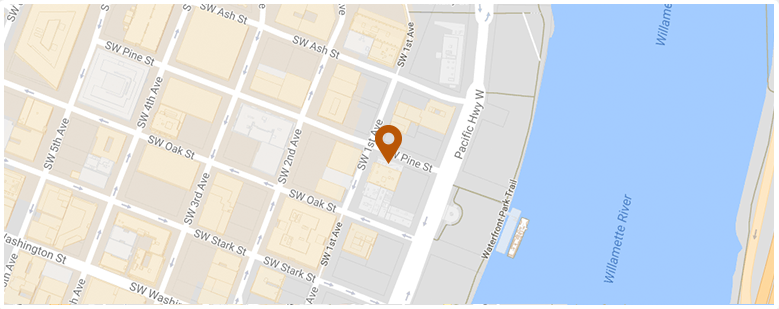
50 SW Pine St 3rd Floor Portland, OR 97204 Telephone: (503) 226-3844 Fax: (503) 943-6670 Email: matthew@mdkaplanlaw.com
map image