"I got into an accident and was nervous about finding a personal injury attorney after hearing so many awful stories, but from the start, I felt confident with my choice in Kaplan Law, LLC." Read More - Ben
"Matt and Gillian took great care of me during a stressful time of my life. Very caring and knowledgeable group. I would definitely recommend Kaplan Law!" Read More - Kayleigh
"Incredible service and results! Matthew Kaplan and his paralegal Gillian did an amazing job for me. Not only did they resolve my case beyond my satisfaction, they also were very caring and supportive thru my recovery. I couldn't ask for a better attorney." Read More - Jamal
Matthew D. Kaplan

Pedestrian deaths around the country rose sharply last year, according to data compiled by the Governors Highway Safety Association and recently published by CityLab, a blog that is part of The Atlantic magazine. The news is troubling, and perhaps even a little counter-intuitive and should prompt officials at every level to look more closely with how we design our roads and streets.

The group “estimates that the number of pedestrians killed in traffic increased 10 percent from 2014 to 2015 in the US. That number, based on preliminary data reported by all 50 states and the District of Columbia, is in line with a longer-term trend: From 2009 to 2014, pedestrian fatalities increased by 19 percent, even as total traffic deaths declined over that same period.”

According to the GHSA the highest pedestrian fatality rate is 3.55 per 100,000 people in New Mexico. Minnesota is the safest state for pedestrians with only 0.27 fatalities per 100,000. Oregon, at 1.44, comes in a little better than the national average of 1.53 while Washington State is significantly better at 1.06. (all figures are for 2014)

A recent article in the Salem Statesman-Journal highlighted a popular hiking area near the town of Pacific City that has become increasingly dangerous. The newspaper solicited feedback from readers about the best way to make the area around Cape Kiwanda safer.

According to the newspaper, “seven people have died in the popular Oregon coast destination… since 2009, including five during the past eight months. The tragedies have been almost entirely experienced by teenagers, with the average age of victims at 19 years. Most of the time the victims hiked up a sand dune, disregarded fencing and signs, climbed onto a hazardous sandstone bluff and fell into the ocean.”

The article notes that state and county officials are searching for new ways to deal with the problem of drowning in the area. The paper published photos of the existing signs at the Cape, which read simply “Danger: Do not go beyond this point,” and contrasted them with a sign on a different part of the trail which takes a much more forceful approach. That posting reads: “Danger!! Several fatalities have occurred in and around these waters. STAY ON THE TRAIL”

Last Friday the Oregon Senate unanimously approved “a bill aimed at ensuring that sexual assault evidence is submitted for lab testing in a timely manner and not left untouched on police evidence shelves,” according to a report in The Oregonian. The bill is named for a teenage Northeast Portland girl who was raped and murdered across the street from her home in 2001.

Melissa’s Bill, as it is known, focuses on untested sexual assault kits because of the discovery that “sexual assault kits from at least two other young teens raped by the girl’s killer four years earlier sat on the Portland Police Bureau’s evidence shelves” and were not tested until a connection was drawn between them and the 2001 case. According to the newspaper the girl’s parents hoped that their child’s death would at least lead to a change in police procedures, and to more timely testing of rape and assault kits. When a newspaper investigation revealed that despite the passage of more than a decade little had changed Melissa’s parents went to the legislature.

As described by the paper the bill will require that, beginning next January 1, “each police agency in Oregon shall adopt written policies and procedures concerning the collection, submission for testing and retention of the kits. Under the bill police must pick up the kits within seven days after a hospital alerts them about a kit’s existence and submit them to the state crime lab for testing within 14 days of receipt. All kits must be stored for 60 years.”

A California family has filed a wrongful death lawsuit in response to a vehicle fire caused by a rear-end collision. The accident claimed the life of the family’s father early last year.

According to CBS Los Angeles the fatal accident took place in Ontario, California, east of LA, in January of 2015. The man was traveling in “a model year 2000 Jeep Grand Cherokee.” Within seconds of a rear-end collision “the Jeep burst into flames,” according to the TV station’s report.

At the heart of the case are questions about dangerous products and their design flaws. The model year of the vehicle is one of the most important elements of this tragic case. As the TV station reports, “in June of 2013 the National Highway Traffic Safety Administration asked Chrysler to recall earlier model years, specifically Grand Cherokees built between 1993 and 1998 due to concerns about gas tanks catching on fire. But there were no recalls for later model years between 1999 and 2004.” This is significant because those years include models in which the gas tank is positioned directly behind the rear axle – a location that significantly increases the chances of a vehicle fire in the event of even a minor rear-end collision.

Is there any example of a hot consumer product becoming toxic quite as quickly as the hoverboard? The Oregonian reported this week that retailing giant Amazon “recently pulled the item from its marketplaces” barely three months after hoverboards were the ‘must-have’ gift of the holiday season.

The reason for the change of heart is well-known. As dangerous products go it is hard to imagine any recent consumer item whose fortunes have reversed quite so quickly. Over the course of 2015 the gyroscope-powered toys went from a rare curiosity to a pop-culture phenomenon. Then, just as sales were hitting stratospheric heights, reports – and dramatic videos – emerged of the devices spontaneously bursting into flames (this, as The Oregonian notes, is in addition to “other risks to the public as evidenced from plenty of video compilations prominently featuring people falling off of them.”).

Now, only weeks later, “the obscenely popular holiday gadget was silently and unceremoniously dropped from all Amazon’s electronics pages… the U.S. government recently declared the gadgets an “imminent hazard” and… locally, the University of Oregon banned hoverboards in January, going so far as to supply students with fireproof storage for any of the errant gadgets.”

A recent announcement that two Portland glass factories may have contaminated their surrounding area is a pointed reminder of how Oregon industrial accidents need not be dramatic and violent. Sometimes a problem can develop slowly over time and be just as potentially deadly.

According to a recent article in The Oregonian, state public health officials warned earlier this month that “vegetables grown close to Bullseye Glass in Southeast Portland and Uroboros Glass in North Portland could contain harmful levels of chromium, arsenic and cadmium. They asked physicians to advise patients not to eat them until more is known.” The advice extends to homes and gardens within a half-mile of both factories. The paper notes that state environmental officials are currently conducting tests in the area around both factories. These include both the collection of soil samples in the affected area and taking urine samples from people who live in the area.

The first priority is clearly the health of the people who live near these factories, but as the investigation moves forward officials can and should look closely at how the alleged contamination was able to happen in the first place. Distressingly, the newspaper reports that the test results will “only cover cancer cases over a five year period. The factories have been there for 40.” It is important that the investigation not stop there.

A story in The Oregonian this week is especially timely as the legislature considers changes to the ways in which legal recreational marijuana and its derivatives are treated in our state, and serious issues these, in turn, raise concerning injuries to children.

The newspaper recounts how an eight-year-old Klamath Falls boy became sick after eating a marijuana-infused cookie that he found on the ground. The boy’s mother told the paper that after returning from a family trip to a local quarry. “He pulled his chest and made motions that suggested he was choking. He had trouble keeping his eyes open,” the paper reports. It then quotes the mother saying “he said everything looked like a cartoon… He said he was vibrating all over.” A trip to the ER followed, along with five hours of treatment and observations. The boy is now fine.

The broader fallout from this incident may continue for some time, however, and is likely to resonate in the halls of the Oregon legislature in Salem. As The Oregonian notes, “the incident comes as Oregon public health officials and marijuana industry representatives debate the appropriate serving size for marijuana edibles.” Regulators have proposed serving size and concentration levels that are only half of what is allowed by Colorado and Washington “in part to protect novices and children who accidently eat the products.” This particular instance is a case in point: a single cookie contained two adult-size portions of marijuana’s active ingredient, a chemical compound known as THC. Many people unfamiliar with pot cookies or brownies may not be aware that unlike the ordinary versions of the same product one is not supposed to eat the entire thing.

Last week’s announcement that OHSU’s children’s hospital has acquired a state-of-the-art MRI unit for use during operations is excellent news for Oregon families that may someday be faced with traumatic brain injuries or other injuries to children requiring sensitive surgery.

According to a recent account in The Oregonian the $2 million machine and its accompanying $19 million surgical suite are significant because this type of MRI can be used during operations in the operating theater itself, in contrast to traditional MRI units which are housed separately and can only be used before or after surgery. “The MRI travels overhead on rails and then retracts after the pictures are taken, allowing surgeons to see what’s going on while they’re operating,” the paper reports. The machine is scheduled to go into service next month.

This is significant because, as OHSU’s head of neurological surgery tells the paper: “Brain surgery often succeeds or fails by a millimeter, but during surgery the brain can shift by 10 times that much.”

Following up my blog last month about the scandal and abuses at the Give Us This Day foster care center I am pleased to report that the Oregon legislature is making progress to address the important issue of injuries to children in Oregon’s foster care system.

As reported recently by The Oregonian, the Senate’s Human Services Committee has unanimously approved SB 1515 under which “Oregon’s foster care officials would have to produce public reports listing confirmed findings of abuse and neglect every three months.” The drive for this legislation was spurred by the scandal at the now-shuttered Give Us This Day facility which, the newspaper writes, is accused of misusing more than $2 million of public funds even as it “tolerated more than a decade of child abuse.”

The key thing to remember is that this scandal is not about one particular center, but, rather, about the entire way foster care is handled by the government here in Oregon and how much insight the public ought to be able to have into both the state’s actions and the providers with whom it works.

The scandal surrounding defective auto airbags manufactured by the Japanese company Takata got worse this week. According to a story just published by the New York Times “Honda Motor Co. said Friday that it would recall 5.7 million cars worldwide in the latest round of recalls involving Takata Corp. air bag inflators that can explode and hurl shrapnel into the vehicle.”

The paper reports that about 2.2 million of those vehicles are here in the United States. That’s on top of the 24 million units from Honda and other companies that were already on the recall list in the United States alone – and tens of millions more worldwide. It is a scandal that has only grown over the last year. According to the Times 11 deaths and at least 139 injuries have been inked to the shrapnel-laden airbags..

The latest recall notices came just days after senators Edward Markey of Massachusetts and Richard Blumenthal of Connecticut “called on the Obama administration in a letter to force the recall of every Takata airbag that uses a propellant that contains a compound called ammonium nitrate, which can degrade over time and become unstable,” according to a separate Times article published earlier in the week.

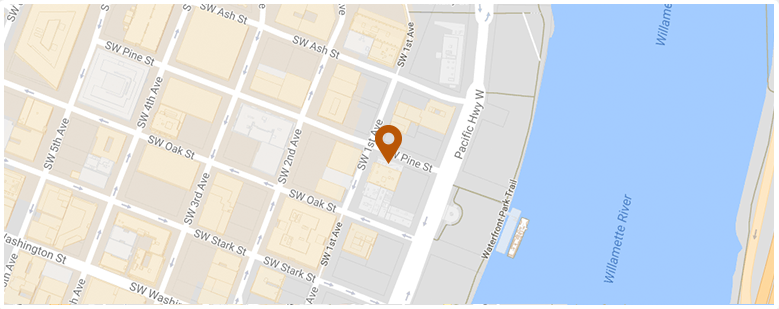
50 SW Pine St 3rd Floor Portland, OR 97204 Telephone: (503) 226-3844 Fax: (503) 943-6670 Email: matthew@mdkaplanlaw.com
map image