Articles Posted in Wrongful Death

An article that appeared this week in the New York Times detailed the legal struggles of some of the victims of General Motors’ corporate negligence – struggles made worse by misguided laws designed to protect corporate bottom lines at the expense of public health and safety.

As I have written about many times this year, the giant auto maker is in serious legal trouble as evidence has emerged that it knew for years about defects in its cars’ ignition switches but did little to fix them. As the Times notes, “Today, at least 42 people are known to have died in crashes linked to the defective ignition switch, and both GM and federal safety regulators have come under fire for allowing the danger to linger for more than a decade.”

What could make a situation like this even worse? A legal system that limits the damages a bereaved family can collect. The Times article details the struggle of two Wisconsin families. Both lost loved ones to the GM defect, but neither was able to get any Wisconsin attorney to take their case because of a state law capping damage awards at $350,000. Every law firm approached by both families eventually decided that the limit on potential damages made it impossible for them to fight a huge company like GM without ultimately losing money.

The death of a patient at the Oregon State Hospital one year ago next week has led to the filing of a lawsuit, according to a recent article in the Salem Statesman-Journal. The case raises noteworthy Oregon wrongful death issues, and is worth exploring here.

According to the newspaper, the man’s family alleges that his “death was the direct result of hospital staff retaliating when he alerted police and the media to patient sexual abuse in the hospital.” The 48-year-old man died last January “after telling friends and family he feared for his life.”

The newspaper reports that in August 2013 the man had alerted hospital officials to an alleged case of sexual abuse involving a nurse and a patient. When the man felt the hospital did not react appropriately he “told the Oregon State Police, the Statesman-Journal and The Oregonian.” Shortly afterwards the man was allegedly moved to a different ward, put under round-the-clock watch by the hospital staff and given medications that “put him in a state of near-constant sedation.” The lawsuit filed by his family alleges that all of this was unnecessary and significantly contributed to the man’s death.

Investigators from Oregon’s Occupational Safety and Health Administration are looking into a possible Oregon industrial accident that claimed the life of a Scappoose woman on Thanksgiving Day.

According to a report in The Oregonian the 43-year-old woman “died Thursday afternoon in an explosion that investigators believe was started by sparks from a metal grinder at an industrial work site.” The fact that, according to the local sheriff’s office, the site of the accident was being leased by a trucking company from a third party may prove to be significant in determining whether this incident meets the legal definition of an Oregon industrial accident.

Third-party liability is often overlooked in reporting on incidents like this, but is important nonetheless. Under Oregon law a company or a property owner’s duty to provide a safe workplace extends to sub-contractors as well as its employees. While we obviously cannot draw any firm conclusions based solely on the short piece in The Oregonian, it will be important for OOSHA investigators and, in turn, the courts to consider where ultimate responsibility for this fatal accident may lie.

A recent story in the Salem Statesman-Journal highlighted some critical changes the ODOT is now beginning to implement in the name of traffic safety, but did an equally good job of drawing attention to how those changes get approved.

The article focused on the September 24 death of a well-known Salem-area psychiatrist in a fatal Oregon car crash on I-5. According to the newspaper the accident took place when a vehicle traveling the interstate highway in the other direction crossed the median. The psychiatrist died at the scene. A colleague who was travelling with him died at an area hospital a few days later from injuries suffered in the crash.

The circumstances of the accident raise longer-term questions about Oregon wrongful death, and whether the fatal crash may prompt a legal action. More immediately, what made the reaction to this accident different was the outpouring of emotion from the Salem community, an outpouring which only increased when the Statesman-Journal revealed “that in the previous 10 years there had been 20 crashes along I-5 in Salem that involved vehicles crossing the center median into oncoming traffic.” The paper noted that the ODOT has plans to install simple cable-like barriers along that stretch of the highway. Cable barriers have been shown to be a relatively inexpensive way to prevent crossover crashes. The paper also discovered, however, that bureaucracy and political infighting had led to progress implementing the plan to install the barriers moving slowly at best. Indeed, a low-bidder to carry out the work was not scheduled to be selected until next February, even though, the paper reported, a decision in principle to move forward had been reached some time ago.

An article published in Friday’s New York Times brings the issue of General Motors and its massive recalls sharply back into focus. It tells the story of a 27-year-old Virginia woman who died in a car crash only days after receiving a recall notice on her 2006 Saturn. That notice concerned the ignition switch issue that has received so much media attention this year. It is also noteworthy that it was the third issue for which her car had been recalled. It is useful to be reminded that the GM recall story is far from over – but several details buried deep inside the article are points of special concern.

The victim in the crash highlighted by the article died earlier this year. That fact is significant, because even though the defects in GM cars stretch back many years the fatal crashes associated with them have been seen by most people as something that happened several years ago and is only now traceable to the company’s negligence. The article notes that as of this week the mediator administering a fund to compensate victims “had determined that 21 deaths were eligible, raising GM’s longstanding death tally of 13 by more than 50 percent.”

Equally disturbing (though, admittedly, not a new development for anyone who has followed this issue closely) is the paper’s reporting that “during months of outcry over GM’s handling of the (ignition) switch issue, as investigations and lawsuits mounted, the company has fought any effort to get the recalled cars off the road until they are repaired… To date, hundreds of thousands of cars remain on the road, and the automaker continues to maintain that they are safe.”

The death this week of a 33-year-old Mill City man is being investigated by the sheriff’s office in Linn County but, based on a report in the Salem Statesman-Journal, there are strong indications that it fits the definition of an Oregon industrial accident.

As I wrote in this space just a few days ago, the lumber industry has one of the highest rates of workplace fatalities here in a state where workplace deaths rose last year, even as they declined nationwide. According to the Statesman-Journal this particular accident took place on Wednesday in Mill City. The victim is reported to have been at work in a lumber mill “repairing a wood press when it activated and crushed him.”

“Police are investigating the situation along with the Oregon Occupational Safety and Health Administration, or OSHA,” according to the newspaper. One of the things they will surely look at is whether this fatality should be classified as an Oregon industrial accident. Oregon law requires that machinery, particularly potentially dangerous machinery, be serviced properly and that workers operating and maintaining it have proper training. It is disturbing to read that a wood press activated at a point when it should not have been connected to a power supply at all. In lumber mills and other potentially dangerous workplaces proper “Lockout/Tagout” procedures, like those outlined by the US Department of Labor (see this link) are essential. Rules like this do not represent onerous government regulation but, rather, are essential safety measures designed to protect workers from employers who might be tempted to cut corners to put a few extra dollars onto the bottom line.

A ruling last week by the Oregon Court of Appeals broadens the traditional interpretation of our state’s dram shop laws and merits closer examination. According to an account published in The Oregonian the decision in a wrongful death lawsuit established that “party hosts whose invitees bring their own alcohol can still be held liable if drunken guests hurt themselves or others.”

The case is formally known as Baker v Croslin. As detailed by the newspaper, the facts of this important case are as follows: a man died in a 2010 shooting incident “after a night of extensive drinking and gunplay at a house party in Northeast Portland.” The party host “was convicted of criminally negligent homicide” but the victim’s widow also filed an Oregon wrongful death lawsuit.

“Under Oregon law, a party host can be held liable for damages caused by intoxicated guests if the host provided the alcohol to a visibly intoxicated guest, and if the host ‘substantially contributed to the intoxication of the guest,’” the newspaper notes. This is a succinct description of Oregon dram shop law – something about which I have written on this blog on numerous occasions. The Dram Shop Law is designed to encourage responsibility on the part of people serving or selling alcohol. We often talk about it in the context of drunk driving, though the details of this case are a powerful reminder that the consequences of reckless alcohol use extend far beyond cars and roads.

On Friday General Motors announced yet another expansion of the widening recall of its small cars. According to the New York Times, the company “is expanding its ignition-switch recall to include an additional 971,000 small cars worldwide, including 824,000 in the United States, that may have been previously repaired with defective switches.”

As I noted in a post earlier this month, well before today’s announcement GM had already recalled more than a million cars built since the 2003 model year because of a defect that may lead the ignition switch to cut off. That, in turn, could mean that air bags fail to deploy in the event of a crash. As the latest developments indicate it is now clear that many cars had the faulty switches added to them when they went in for repairs.

More disturbing, however, are the continuing revelations about the way in which GM has handled this scandal. In a move that may yet lead to wrongful death lawsuits, company documents have shown that GM misled grieving families for years, telling those who had lost loved-one in crashes linked to the flaw “that it did not have enough evidence of any defect in their cars, interviews letters and legal documents show.” This happened even as the company was internally debating the best way to fix the problem, the newspaper reports.

Yesterday’s announcement that Toyota has reached a settlement with the Justice Department was striking on several accounts. First there is the settlement’s sheer size. “Toyota will pay a $1.2 billion penalty to settle the criminal probe into its handling of unintended acceleration problems that led to recalls of 8.1 million vehicles beginning in 2009,” according to an account in USA Today.

The paper adds: “the federal criminal probe… was independent of federal safety regulator and congressional probes of the Toyota sudden-acceleration recalls. It looked at whether Toyota provided false or incomplete statements to the National Highway Transportation Safety Administration in the events leading to recalls for floor mats that could trap gas pedals and gas pedals that could stick… Toyota already paid two federal fines of $16.375 million in 2010 for delays in reporting the floor mat and pedal defects, and another $17.35 million in 2012 related to an additional mat recall.”

As the paper goes on to report, the problem first came to public attention in 2009 “with a rash of runaway car reports.” Five deaths have been directly linked to the problem, but the larger issue – and the one that Toyota must continue to deal with – is evidence that the company knew about these problems but covered them up.

A disturbing article published this week in the New York Times outlines a series of failures by both corporate America and the federal government. Its focus is General Motors’ recent recall notices involving well over a million vehicles manufactured since the 2003 model year (click here for GM’s latest news release with full details of models and years effected). The vehicles have a defect in the air bag system that in some instances means the air bags will not deploy during a crash because the ignition switch has been cut off.

According to the Times, GM now acknowledges that at least 13 deaths can be tied to the defect. What is disturbing is the paper’s report that the automaker’s engineers were aware of the issue in 2004 – more than a year before the first of those 13 documented deaths. Equally bad is the record of federal regulators from the National Highway Traffic Safety Administration. According to the paper, “after two of the (Chevy) Cobalt crashes, the regulators took a close look at the cause, each time raising the possibility of a defect. They also met with GM about the issue. But despite the red flags, they never opened a broader investigation into whether the car was defective.”

As the paper goes on to report, a number of lawsuits related to the documented deaths have already made their way through the court system. Class action law was created precisely to enable ordinary Americans to defend their rights in cases of this sort of willful and negligent misconduct, especially when it results in wrongful deaths. The recall notices are still new and are still sinking in for many people (the initial recall was issued on February 19 and was later extended to hundreds of thousands of other vehicles) so it is also important to note that the full impact of the situation is not yet clear. It is clear that the court system will probably hear much more about these vehicles in the months and years to come.

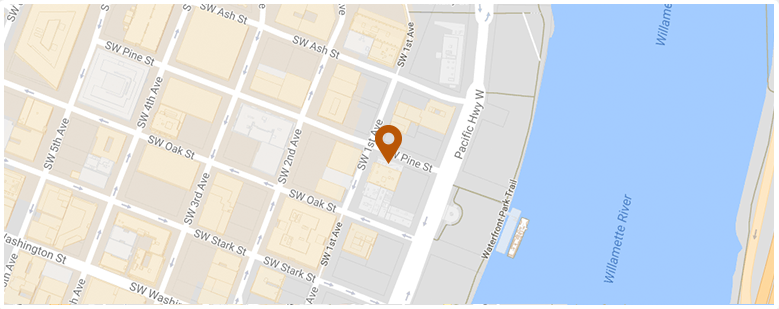
50 SW Pine St 3rd Floor Portland, OR 97204 Telephone: (503) 226-3844 Fax: (503) 943-6670 Email: matthew@mdkaplanlaw.com
map image