Articles Posted in Wrongful Death

An article published in Friday’s New York Times brings the issue of General Motors and its massive recalls sharply back into focus. It tells the story of a 27-year-old Virginia woman who died in a car crash only days after receiving a recall notice on her 2006 Saturn. That notice concerned the ignition switch issue that has received so much media attention this year. It is also noteworthy that it was the third issue for which her car had been recalled. It is useful to be reminded that the GM recall story is far from over – but several details buried deep inside the article are points of special concern.

The victim in the crash highlighted by the article died earlier this year. That fact is significant, because even though the defects in GM cars stretch back many years the fatal crashes associated with them have been seen by most people as something that happened several years ago and is only now traceable to the company’s negligence. The article notes that as of this week the mediator administering a fund to compensate victims “had determined that 21 deaths were eligible, raising GM’s longstanding death tally of 13 by more than 50 percent.”

Equally disturbing (though, admittedly, not a new development for anyone who has followed this issue closely) is the paper’s reporting that “during months of outcry over GM’s handling of the (ignition) switch issue, as investigations and lawsuits mounted, the company has fought any effort to get the recalled cars off the road until they are repaired… To date, hundreds of thousands of cars remain on the road, and the automaker continues to maintain that they are safe.”

The death this week of a 33-year-old Mill City man is being investigated by the sheriff’s office in Linn County but, based on a report in the Salem Statesman-Journal, there are strong indications that it fits the definition of an Oregon industrial accident.

As I wrote in this space just a few days ago, the lumber industry has one of the highest rates of workplace fatalities here in a state where workplace deaths rose last year, even as they declined nationwide. According to the Statesman-Journal this particular accident took place on Wednesday in Mill City. The victim is reported to have been at work in a lumber mill “repairing a wood press when it activated and crushed him.”

“Police are investigating the situation along with the Oregon Occupational Safety and Health Administration, or OSHA,” according to the newspaper. One of the things they will surely look at is whether this fatality should be classified as an Oregon industrial accident. Oregon law requires that machinery, particularly potentially dangerous machinery, be serviced properly and that workers operating and maintaining it have proper training. It is disturbing to read that a wood press activated at a point when it should not have been connected to a power supply at all. In lumber mills and other potentially dangerous workplaces proper “Lockout/Tagout” procedures, like those outlined by the US Department of Labor (see this link) are essential. Rules like this do not represent onerous government regulation but, rather, are essential safety measures designed to protect workers from employers who might be tempted to cut corners to put a few extra dollars onto the bottom line.

A ruling last week by the Oregon Court of Appeals broadens the traditional interpretation of our state’s dram shop laws and merits closer examination. According to an account published in The Oregonian the decision in a wrongful death lawsuit established that “party hosts whose invitees bring their own alcohol can still be held liable if drunken guests hurt themselves or others.”

The case is formally known as Baker v Croslin. As detailed by the newspaper, the facts of this important case are as follows: a man died in a 2010 shooting incident “after a night of extensive drinking and gunplay at a house party in Northeast Portland.” The party host “was convicted of criminally negligent homicide” but the victim’s widow also filed an Oregon wrongful death lawsuit.

“Under Oregon law, a party host can be held liable for damages caused by intoxicated guests if the host provided the alcohol to a visibly intoxicated guest, and if the host ‘substantially contributed to the intoxication of the guest,’” the newspaper notes. This is a succinct description of Oregon dram shop law – something about which I have written on this blog on numerous occasions. The Dram Shop Law is designed to encourage responsibility on the part of people serving or selling alcohol. We often talk about it in the context of drunk driving, though the details of this case are a powerful reminder that the consequences of reckless alcohol use extend far beyond cars and roads.

On Friday General Motors announced yet another expansion of the widening recall of its small cars. According to the New York Times, the company “is expanding its ignition-switch recall to include an additional 971,000 small cars worldwide, including 824,000 in the United States, that may have been previously repaired with defective switches.”

As I noted in a post earlier this month, well before today’s announcement GM had already recalled more than a million cars built since the 2003 model year because of a defect that may lead the ignition switch to cut off. That, in turn, could mean that air bags fail to deploy in the event of a crash. As the latest developments indicate it is now clear that many cars had the faulty switches added to them when they went in for repairs.

More disturbing, however, are the continuing revelations about the way in which GM has handled this scandal. In a move that may yet lead to wrongful death lawsuits, company documents have shown that GM misled grieving families for years, telling those who had lost loved-one in crashes linked to the flaw “that it did not have enough evidence of any defect in their cars, interviews letters and legal documents show.” This happened even as the company was internally debating the best way to fix the problem, the newspaper reports.

Yesterday’s announcement that Toyota has reached a settlement with the Justice Department was striking on several accounts. First there is the settlement’s sheer size. “Toyota will pay a $1.2 billion penalty to settle the criminal probe into its handling of unintended acceleration problems that led to recalls of 8.1 million vehicles beginning in 2009,” according to an account in USA Today.

The paper adds: “the federal criminal probe… was independent of federal safety regulator and congressional probes of the Toyota sudden-acceleration recalls. It looked at whether Toyota provided false or incomplete statements to the National Highway Transportation Safety Administration in the events leading to recalls for floor mats that could trap gas pedals and gas pedals that could stick… Toyota already paid two federal fines of $16.375 million in 2010 for delays in reporting the floor mat and pedal defects, and another $17.35 million in 2012 related to an additional mat recall.”

As the paper goes on to report, the problem first came to public attention in 2009 “with a rash of runaway car reports.” Five deaths have been directly linked to the problem, but the larger issue – and the one that Toyota must continue to deal with – is evidence that the company knew about these problems but covered them up.

A disturbing article published this week in the New York Times outlines a series of failures by both corporate America and the federal government. Its focus is General Motors’ recent recall notices involving well over a million vehicles manufactured since the 2003 model year (click here for GM’s latest news release with full details of models and years effected). The vehicles have a defect in the air bag system that in some instances means the air bags will not deploy during a crash because the ignition switch has been cut off.

According to the Times, GM now acknowledges that at least 13 deaths can be tied to the defect. What is disturbing is the paper’s report that the automaker’s engineers were aware of the issue in 2004 – more than a year before the first of those 13 documented deaths. Equally bad is the record of federal regulators from the National Highway Traffic Safety Administration. According to the paper, “after two of the (Chevy) Cobalt crashes, the regulators took a close look at the cause, each time raising the possibility of a defect. They also met with GM about the issue. But despite the red flags, they never opened a broader investigation into whether the car was defective.”

As the paper goes on to report, a number of lawsuits related to the documented deaths have already made their way through the court system. Class action law was created precisely to enable ordinary Americans to defend their rights in cases of this sort of willful and negligent misconduct, especially when it results in wrongful deaths. The recall notices are still new and are still sinking in for many people (the initial recall was issued on February 19 and was later extended to hundreds of thousands of other vehicles) so it is also important to note that the full impact of the situation is not yet clear. It is clear that the court system will probably hear much more about these vehicles in the months and years to come.

Following up a story I wrote about earlier this month, the Associated Press reports that Washington State officials “are revoking the operating license of a Washington retirement facility after an 88-year-old woman froze to death in its courtyard earlier this month.”

In the weeks since the incident new details have emerged regarding this tragedy, none of which reflect well on the retirement home and care center and all of which reinforce the idea that what happened may qualify, legally speaking, as a wrongful death under Washington law. This terrible state of affairs is made worse by the emotional harm to the victim’s family the retirement home reportedly caused by issuing misleading information to them in the hours after the woman’s body was discovered (the family was initially told only that she died of a heart attack and the role of exposure in her death was not mentioned, according to the reports cited in my earlier post).

We now know, according to AP, that the victim’s body “was found in an enclosed, open-air courtyard after staff missed a required hourly bed check at midnight. The news agency cites officials from the Washington State Department of Social and Health Services saying that “staff mistakes and ineffective security measures… are to blame” for the death. With its license now revoked the center “can continue to care for its current 57 residents while an appeal takes place, but it can’t accept new patients,” AP reports. It adds: “officials said some safety hazards remained uncorrected three days after” the woman died.

The death of an 88-year-old Longview woman last week has raised Washington wrongful death questions and serves as a tragic reminder of the high level of responsibility we rightly expect when placing loved ones in a professional care facility.

According to the (Longview) Daily News, the elderly woman “froze to death in the outdoor courtyard of her Alzheimer’s care center.” The paper quotes the woman’s daughter saying that the doors to the facility’s courtyard were unlocked late at night, despite the obvious danger this posed to patients. Washington State’s Department of Health and Human Services is reported to be investigating the incident.

The paper reports that a spokesperson for the facility “could not comment on policies… regarding access to the enclosed courtyard at night or in cold weather.” It is notable, however, that the victim’s daughter says her mother “had fallen out in the courtyard twice before and also was known to move around a lot at night.” Equally troubling are claims that the family was initially led about the cause of the woman’s death – being told she died of a heart attack without her exposure to the cold weather being mentioned.

Northwest Cable News reported earlier this month on a tragic Washington dog attack story. “A week after she was attacked by pit bulls, a 65-year-old woman has died at a local hospital,” according to the cable news channel. The victim’s husband told the station he believes “the injuries from the attack triggered an underlying heart condition.”

According to NWCN, citing a report from Seattle TV station KING, the woman was attacked by two pit bulls while taking a walk near her home. The channel reports that bystanders helped pull the dogs off her and called for medical care. The animals were later destroyed.

Though the Pierce County, Washington Medical Examiner lists the cause of the woman’s death as “heart attack, injuries to the body and dog bites” the woman’s husband may be correct in believing that the dog attack was the key event triggering her subsequent heart attack. In my opinion, as a Washington and Oregon wrongful death attorney, legal questions surrounding this incident are likely to turn on the professional opinions of the doctors who treated the victim.

The 2009 death of an Oregon-bound family on a California freeway led this week to an important wrongful death ruling by a court in our neighbor to the south. As reported by the Los Angeles Times a 13-year-old girl is now the only survivor of her family’s SUV accident. The family car hit the rear of an illegally parked truck near La Crescenta, California while on its way to Oregon for a Thanksgiving vacation.

According to the newspaper the truck’s driver was parked “in an area designated for emergencies only without his trailer lights or emergency reflectors on… (the driver’s) attorney argued at trial that his client had pulled over to the side of the road to take medication for a severe headache, which constituted an emergency.” The victim’s attorney, however, pointed out that the driver had given conflicting versions of the incident at different times, “including stopping to urinate and pulling over to sleep,” the Times reports.

When the family SUV burst into flames the teenage girl and her elder brother managed to reach safety but their parents and another brother were not able to get away from the burning car. The newspaper notes that the surviving brother “committed suicide in June, four days before his mother’s birthday,” a fact that highlights in the worst way imaginable the intense psychological trauma these two children have gone through.

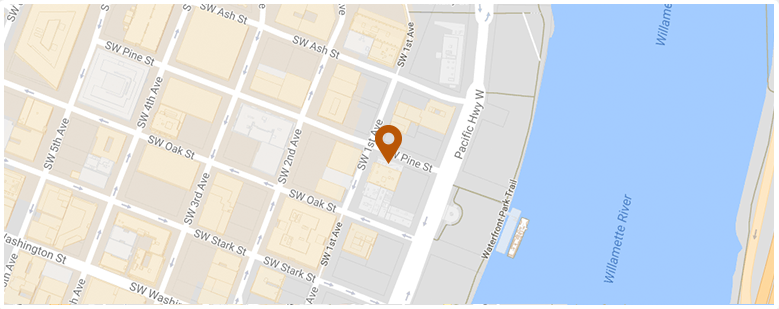
50 SW Pine St 3rd Floor Portland, OR 97204 Telephone: (503) 226-3844 Fax: (503) 943-6670 Email: matthew@mdkaplanlaw.com
map image
Contact Information