Articles Posted in Wrongful Death

The case of a 15-year-old Vancouver boy who drowned last year while attending a church-run summer camp may soon be headed to court. Today’s Oregonian reports that the victim’s estate has filed a $13 million lawsuit against the camp and its organizers.

According to the paper, the boy died just over a year ago when he fell while walking behind the waterfall at White River Falls, near Maupin. A 26-year old counselor also drowned in the incident when he dove into the water in an attempt to save the boy.

Looking at this incident from a legal perspective a number of negligence issues arise and significant questions of responsibility. It is worth remembering that 15-year-olds are still children and require trained adult supervision when in an environment like a summer camp. The reports that the boy had been encouraged by the camp organizers to walk behind the waterfall are potentially very serious, and, if confirmed, they could be evidence of highly irresponsible behavior on the part of the camp’s organizers. At a very basic level, the fact that, based on the media reports, no one on the outing seems to have been wearing a life preserver or to have had any other life-saving gear on hand is deeply troubling.

Even as police investigate the death last week of a 33-year-old man outside a Northeast Portland strip club the circumstances surrounding the incident have raised serious questions about how well the club was handling its security arrangements – questions that could eventually expose the club to an Oregon wrongful death claim.

As The Oregonian reported last week, the man “collapsed on the sidewalk outside the club and died from a single gunshot wound to the head.” A 21-year-old woman was also injured in the Portland shooting incident and was treated at an area hospital.

“The homicide marked the second fatal shooting at the location in two years. An inspector from the Oregon Liquor Control Commission has launched an investigation with Portland police to see if alcohol service played any role in the shooting,” the newspaper notes, citing a spokeswoman for the commission.

Late Friday night a Southeast Portland man working as a cleaner at a meat processing plant in Clackamas died after falling into a piece of machinery, according to The Oregonian. The details of this Oregon Industrial Accident case are disturbing and will merit close scrutiny in the months to come.

According to the newspaper, paramedics and the Clackamas County sheriff’s office were called just before midnight on Friday and arrived at the facility to find the victim “entangled in a blender, which regulates the fat content of ground meat. The following day firefighters returned to help dismantle the machinery” and to remove the 41-yesr-old man’s body.

From a legal perspective there are two key elements to this sad story. First, the long and unsettling safety record of the factory in question. The Oregonian reports that this facility “was the target of a consumer alert in 2007, when potentially deadly E. Coli bacteria was traced” to ground beef processed at the plant. More recently – last October, to be precise – the plant was cited by the Oregon Occupational Safety and Health Division after inspectors found “that machinery in the meat-grinding room wasn’t properly locked down during cleaning. (The) inspector said an ‘unexpected start-up of the machine ‘ could cause injuries.” Oregon Occupational Safety and Health regulations are both clear and strict where situations like this are concerned. State regulations require what are known as “Lockout/Tagout” procedures around dangerous machinery to insure worker safety. According to an OSHA document “the standard requires that physical lockout be utilized for equipment or machines which have energy isolating devices capable of being locked out, except when the employer can demonstrate that utilization of a physical tagout system provides full employee protection.” In plain English: the potentially dangerous machine must either be locked-up in a manner that keeps workers from getting to it, or the workers have to be working in teams that allow them to keep track of one another. It will be up to investigators and the courts to decide whether the employer met that standard in this case.

Last week’s huge explosion at a fertilizer plant in the small town of West, Texas killed 14 people and devastated a huge area. As a lengthy account in The New York Times earlier this week shows, it also raises serious questions about corporate responsibility, government oversight and the safety standards at dangerous facilities throughout the United States.

As the Times reports, the explosion at the plant “was so powerful it leveled homes and left a crater 93 feet wide and 10 feet deep.” The paper said the explosion appeared to have been more powerful than the 1995 bombing at the Oklahoma City Federal Building. The Oklahoma blast provides a useful point of comparison because the bomb involved used the same chemical – ammonium nitrate – that was being manufactured and stored in the Texas plant.

The paper reports that while some state and local groups in both the private and public sectors received an annual report on ammonium nitrate and other chemicals being manufactured and stored in the plant others did not. The reporting requirements are designed to help local, state and federal authorities plan for exactly this sort of emergency, but the building’s owners apparently had not filed a report with the Department of Homeland Security. A federal law passed in the wake of the 9/11 attacks mandates that “plants that use or store explosives or high-risk chemicals” file a federal report if they exceed certain limits. For ammonium nitrate a report is required if stocks exceed 400 pounds. According to the Times a 2012 report filed with the state listed the plant having 540,000 pounds of ammonium nitrate on hand.

It has been just over three months since an Oregon bus crash in the Cabbage Hill area in the east of the state killed nine people and injured 38. As official investigations and a search for answers move forward, The Oregonian reports that lawsuits accusing the state Department of Transportation of negligence have now been filed by the loved ones of three of the Oregon bus crash victims, as well as by at least one of the accident’s survivors.

As the Associated Press reports, and as I blogged at the time, the deadly Oregon Bus Crash last December took place when a tour bus “slid on ice east of Pendleton, crashed through a guardrail and rolled down a steep hill.” Pictures published at the time showed a gruesome scene of wreckage on the snow-covered mountain pass.

According to the newspaper, relatives of the victims “are seeking at least $10 million in punitive damages, injuries and wrongful death… The suit claims ODOT was negligent for failing to equip the stretch of Interstate 84 with barriers strong enough to prevent the bus from leaving the roadway; not adequately plowing and sanding the freeway; failing to warn motorists of unsafe conditions; and failing to require commercial vehicles to take an alternative route.” The Canadian company that owned the vehicle, along with the bus driver, are also named as defendants in the suit, according to The Oregonian.

Investigations of a 2008 helicopter crash that killed nine and injured four in Northern California have resulted in criminal charges for two Oregon men and also raise both Oregon wrongful death and, potentially, industrial accident issues. The details of the tragedy were outlined last week by The Oregonian.

All of the crash victims were involved in fighting wildfires in California at the time of the incident. All but one were Oregonians, as are the two men who, the paper reports, now face fraud charges in relation to the crash. The criminal complaint “accuses the two men of falsifying the weight and takeoff power of the helicopter that crashed and other helicopters that were part of a ‘call-when-needed’ contract worth up to $20 million” The Oregonian reports. Both men have been suspended by the Grant’s Pass company that employed them, owned the helicopter and had contracted it to the US Forest Service for firefighting duty in California.

The criminal charges carry potential 20-year sentences, but they also raise civil liability issues that ought to be considered. If the allegations against the defendants are true their actions could also warrant the filing of wrongful death charges by loved ones of those killed in the crash. Ordinarily, the statute of limitations for Oregon wrongful death claims is three years. The law does, however, allow for exceptions if the negligent act was not discovered within that time frame, a situation that may apply in this case since criminal charges have only just been filed. Whether such a suit would be directed at the men currently facing criminal charges, at their employer (the helicopter’s owner) or both is an issue requiring further legal analysis.

A three-vehicle Polk County, Oregon car accident over the weekend left one man dead and five people hospitalized, according to a report in The Oregonian.

The Oregon auto accident took place in the town of Dallas, about 60 miles southwest of Portland. The newspaper, quoting the Oregon State Police, reports that the sequence of events began Saturday evening when a van driven by a man from Woodburn “was heading west when it traveled across the center line and collided” with a vehicle headed in the opposite direction on State Route 22.

The driver of the eastbound vehicle was a 69-year-old Silverton man. He was pronounced dead by paramedics responding to the accident. Two other people in the car were taken to a Salem hospital with what The Oregonian describes as “critical” injuries. The driver of the van was not seriously injured in the initial crash, but was struck by a third vehicle, a westbound pickup truck, when he stopped to assess the initial accident. He was taken to the same Salem hospital as the victims in the car and is reported to be suffering from “serious injuries.” The two people in the third vehicle were treated in McMinnville for minor injuries.

The union representing Tri-Met workers has rejected proposed work rules that would have allowed bus and other transit drivers in the Portland area to work 14-hour shifts, according to a report published in The Oregonian.

The paper reports that “the union representing operators, mechanics and support staff quickly rejected the plan on Monday, saying it didn’t go far enough to address the growing problem with exhaustion.” The paper quotes a union leader saying “No human being, especially one transporting passengers through city traffic, can safely operate a bus over a 14-hour workday, day-after-day.”

The proposed work rules would “limit” drivers to a 14-hour workday and require at 10 hours off between shifts. According to the paper the proposed work plan would have applied to drivers of both buses and light-rail trains. The paper notes that “the current policy, based on service days, makes it easy for a driver to finagle extra overtime by working marathon runs.”

Following up on a story I first blogged about last week, The Oregonian reports that federal authorities have ordered the bus company involved in the New Year’s weekend crash on Deadman’s Pass section of Cabbage Hill, east of Pendleton, to cease operations in the United States. According to the newspaper, the Federal Motor Carrier Safety Administration announced on this week that the Canadian company operating the tour bus had let the driver work “well beyond” the 70 hours per 8 days maximum allowed by US law.

As the paper notes, “nine people died in late December when (the) bus… ran through a guardrail and rolled down a steep embankment along Interstate 84.” A further 39 people were injured in the fatal Oregon bus crash, an accident which, as I noted last week, raises significant wrongful death questions.

The action taken by federal officials raises several issues. Obviously, rules designed to prevent driver fatigue need to be rigorously enforced in the interest of public safety, but enforcing those rules on a foreign company is likely to involve significant technical and logistical issues. It is especially worrisome that, as The Oregonian reports, the order requiring the company to cease US operations “specifically cites the company for failure to test the driver for drugs and alcohol prior to the crash, failure to properly maintain driver qualification requirements and failure to operate a motor vehicle in a safe manner.” To be fair, it is difficult to imagine that Canadian national or British Columbian provincial law (the bus company is headquartered in Vancouver, B.C.) does not also address most if not all of these issues – but assuming that it does, one has to wonder why two governments as closely tied as ours and Canada’s are not able to exchange information that might go a long way toward protecting public safety.

By now most Oregonians will have read or heard about the terrible New Year’s weekend bus crash on Deadman’s Pass in the east of the state. According to The Oregonian, nine people died and dozens were injured last weekend when a tour bus “skidded off Interstate 84 east of Pendleton and rolled 200 feet down a mountain canyon.”

The newspaper quotes an Oregon state police spokesman saying that 39 injured people were taken to hospitals across three states. A total of 49 people were aboard the bus at the time of the accident, meaning that only one person avoided injury in this Oregon bus crash. The newspaper reports that the passengers ranged in age from seven to 73 years old. Most were Americans and Canadians of Korean ancestry.

The bus was reportedly returning from an excursion to Las Vegas at the time of the accident, which occurred on a dangerous stretch of the Cabbage Hill section of I-84. “Oregon state police investigators will look into the possibility that (the) bus driver… was driving too fast for the slippery conditions on the notorious mountain pass,” according to the paper. “Investigators will also determine if driver fatigue was a factor,” The Oregonian reports.

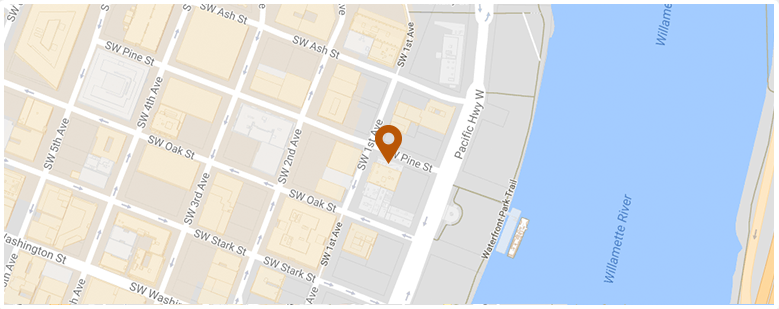
50 SW Pine St 3rd Floor Portland, OR 97204 Telephone: (503) 226-3844 Fax: (503) 943-6670 Email: matthew@mdkaplanlaw.com
map image
Contact Information