Articles Posted in Wrongful Death

An Oregon wrongful death lawsuit filed recently in Chiloquin raises new questions about the conduct of an area children’s center that has had a rocky relationship with state and local authorities.

According to the Klamath Falls Herald & News, the Oregon wrongful death suit against Kleos Children’s Community and the Klamath County Department of Human Services alleges that “a wheelchair-bound 14-year-old placed at Kleos under the directive of DHS died as a result of complications from two bilateral fractures to both femurs” as a result of a November 2010 accident.

The paper and local television station KOBI report that the suit claims that DHS was negligent in placing the child at a facility that, it says, could not properly address his “medical and physical needs.” The newspaper reports that the suit claims that Kleos was negligent in its treatment of the boy – both in initiating the actions that resulted in the accident, and, later, in its treatment of him following the incident. The boy died a day after suffering the two broken legs “when two employees of Kleos dropped him while trying to move him from his wheelchair to a new location.”

The family of a New York teenager who disappeared on a trip to Hawaii and is presumed dead has filed a wrongful death lawsuit in federal court in Hawaii, claiming that the guides on their son’s tour made an “outrageously reckless and irresponsible decision” in taking a group of high school students into a “treacherous lava rock area,” according to accounts by the Associated Press and a local Honolulu TV station.

The 15-year-old boy from White Plains, New York was visiting Hawaii with a teen tour group. Both the umbrella group and its local contractors were named in the suit, the news agency reports. According to the AP, while hiking on July 4 the group “stopped to rest at a tide pool, authorities said. The teens were led to an area that’s out of a state-permitted area despite dangerous surf warnings, according to the suit.”

When large waves came into the tide pool the children scrambled for cover but the victim was swept out to sea. The guides and their employers contend that the adults on the scene did all they could to search for and save the victim, but he has been missing ever since and is now presumed dead.

A lawsuit recently filed in Salem charges both doctors and prison officials with the Oregon wrongful death of a Salem man in 2010. The suit was filed by the alleged victim’s mother, according to a report in the Salem Statesman-Journal.

According to the newspaper, her son, Robert Haws, was a pre-trial detainee two years ago this month “when he got into an argument with another inmate.” The other inmate attacked Haws “hitting his head on concrete and knocking him unconscious. He died at the hospital after undergoing brain surgery and lingering for days on life support.”

At issue are “the hours following the fight and the lengthy delay in treatment for Haws’ injuries,” according to the Statesman-Journal. Haws’ mother believes that the jail staff did not give her son the attention he needed in the minutes and hours immediately after the fight. It also alleges that once Haws reached the hospital doctors treated him as if he were a patient coming down from a drug overdose despite significant evidence that he needed urgent treatment for an Oregon head trauma.

Earlier this month news broke of a head-spinningly large fraud settlement involving the pharmaceutical giant GlaxoSmithKline. According to ABC News the company “agreed to an unprecedented $3 billion settlement with the US government over allegations that the company advertised drugs for uses not approved by the Food and Drug Administration.”

Over the years we have all become a bit numb to horror stories about the health care industry. One of the few things both sides in the debate surrounding the Affordable Care Act appear to agree on is that the US healthcare system is in need of significant reform (exactly what sort of reform is a subject of far more debate).

Cases like this are the sort of thing that not only give an entire industry a bad name, but make reasonable people wonder how much deeper, and broader, corporate fraud is in the health care and pharmaceutical industry. To what extent are other companies putting their own profits ahead of patient and consumer safety?

I have written in the past about the importance of window safety. Too many people forget at this time of year that screens are designed to keep bugs out, not to keep children in, and fail to take essential precautions.

This reminder is prompted by a recent report in The Oregonian about a Cedar Mill toddler who “was taken to a local hospital after she punched through a screen and fell from a second-storey window.” Even more frighteningly: “the girl reportedly fell from the window and first landed on a slanted roof. She then rolled off the roof and hit a mix of pavement and bark dust” the paper adds citing local Tualatin Valley first responders.

The child was taken to an area hospital and her injuries are reported not to be life-threatening.

A lawsuit filed in Alaska by the grieving families of five fishermen targets an Oregon company for alleged wrongful death according to a report published yesterday in the Anchorage Daily News. Two of the five victims were also from Oregon, according to the newspaper.

The newspaper, quoting Alaska state troopers, reports that the five men drowned earlier this month when their “overloaded skiff swamped… in rough seas” near Cook Inlet, Alaska. The men were harvesting clams for the company. The suit says that the company “failed to train the men to pilot their aluminum skiff and neglected to provide proper safety equipment such as survival suits and two-way radios.” Notably, the newspaper says that when the men’s bodies were recovered only one of the five was wearing a life jacket. It adds that “the wrongful death suit claims the workers needed survival suits, not life vests, to survive in the Inlet,” referring to the cold seas off Alaska’s coast.

Tellingly, the paper reports that another worker told investigating troopers that he believed the boat was overloaded, particularly granted the windy conditions prevalent in the area, and refused to get aboard. Among the charges made in the suit is the claim that Clackamas-based Pacific Seafood did not give its workers sufficient training in “water-safety rules, emergency life-saving lessons or how many pounds of clams the skiff could safely carry.”

I could not let this week come to an end without taking note of the fact that it has been National Poison Prevention Week. The March 18-24 period was marked by events here in Oregon and across the country designed to raise awareness of the dangers poisons pose to children. Safe Kids Oregon and the Oregon Poison Center were the main organizers here in the state. 2012 marks the 50th anniversary of National Poison Prevention Week, which was first designated by Congress in the early 1960s.

The issues we consider during this time are important. As a news release from Safe Kids Oregon notes, “more than 90% of poisonings happen in people’s homes.” Adding that each year around 100 children aged 14 or under die from unintentional poisoning. More alarmingly, the release states that “approximately one-half of all poison-related calls to the Oregon Poison Center have to do with children ages 5 and under.”

Even more worrying is the revelation that “the greatest portion of these calls involve drugs like pain relievers.” This is noteworthy because many of us, when we think of children and accidental poisoning in the home, think of cleaning or pest control products. It is useful to be reminded that common medications can be just as deadly, especially where small children are concerned.

The revelation by The Oregonian last week that Oregon’s Occupational Safety and Health Agency has levied over $26,000 in fines against Precision Castparts was a reminder of the importance of Oregon workplace safety, and of the need for both regulatory and legal vigilance as we all struggle to prevent Oregon industrial accidents.

According to the newspaper, the company was cited for “32 violations at its large parts campus in Milwaukie and Southeast Portland, raising significant safety concerns for the third time since 2008.” Citing an Oregon OSHA spokeswoman, the paper notes that some of the violations “were repeats.” The overall list of infractions focused mainly on “cleaning operations in the two plants.” The company manufacturers parts for airplane engines and industrial gas turbines. It also does work for the military.

It is good to read that none of the safety violations cited by OSHA were deemed to be “willful” on the company’s part – the most serious category. Still, the newspaper reports, “28 were serious, with nine having the potential to cause death.”

The Oregon Occupational Safety and Health Division is investigating the circumstances of a fatal Oregon workplace industrial accident late last month involving a man who fell into a chemical holding tank aboard a barge on the Willamette River, according to local TV station KOIN.

According to The Oregonian, the Portland Fire Department’s hazmat rescue team was called to the barge near Swan Island after workers realized one of their colleagues was missing and that he had last been seen standing near an open hatch aboard what the newspaper describes as “a 40-feet-by-50-feet barge filled with a toxic and corrosive chemical liquid called lignin amine…. (which) is often used to spray fruit trees.”

When rescue crews arrived they found the hatch leading to one of the barge’s tanks open and the man’s body at the bottom, the newspaper reports. The Oregonian quotes a member of the Portland Fire & Rescue team describing the tank as a “double hazard,” noting both the extremely confined space inside the tank and the hazardous materials it contained. According to the paper, the atmosphere at the bottom of the tank contained only 1% oxygen, guaranteeing that the victim would have perished within minutes of falling in. While standard safety procedures would have required wearing a life vest, the paper says it is unclear whether the victim was doing so – though granted the lack of air inside the tank it is not likely that a vest would have saved him.

An opinion column published in Eugene’s Register-Guard newspaper earlier this month raises a number of important questions about a staple of agricultural life: aerial spraying. While crop dusting is viewed as an essential component of agriculture by many farmers, it has its detractors as well (the op-ed’s author is identified as a “farmer and forestland owner”) and there is no question that without proper safeguards and appropriate caution by pilots the practice may lead to Oregon wrongful death or to less severe – but nonetheless serious – medical consequences.

The op-ed criticizes the state bodies charged with regulating aerial spraying for what the author calls their “utter failure” to protect the public. Its harshest criticism, however, is reserved for Oregon regulations and legal opinions that leave those involved in aerial spraying “immune from liability for off-target drift, unless the poison causes organ failure or death.”

Clearly such a development, leading to a Eugene or Salem wrongful death, would be the most serious consequence imaginable. This is not, however, merely a health issue. Issues of commerce and people’s livelihoods are also involved. For example, with the growing popularity of organic products, the drift of pesticides from one farmer’s land to another has become a serious issue being addressed by legislatures in many parts of the country. Obviously the possibility of drift is far greater when the pesticide is applied from the air. Leaving aside entirely any potential health concerns, many organic farmers around the country fear the loss of high-value crops should someone else’s ill-applied pesticide drift across onto their land.

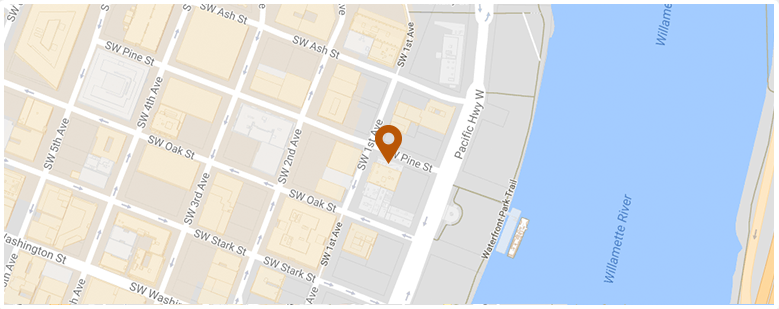
50 SW Pine St 3rd Floor Portland, OR 97204 Telephone: (503) 226-3844 Fax: (503) 943-6670 Email: matthew@mdkaplanlaw.com
map image
Contact Information