Articles Posted in Wrongful Death

An Idaho mine operator says it plans to contest citations and fines totaling $1 million levied by the federal government in the wake of a miner’s death earlier this year, the Associated Press reports in an article reprinted in The Oregonian. The violations that led to the citations, in turn, raise wrongful death questions and are a reminder for us here in Oregon that mine operators and other employers in hazardous industries have, at all times, both a legal and a moral obligation to do everything they can to keep employees safe.

The 53-year-old victim, a 12-year veteran of the mine according to AP, died last April after a cave-in at the place where he and his brother were working, approximately one mile underground. The two “had just finished watering down blasted-out rock and ore in the mine in the Idaho Panhandle before the collapse,” the news agency writes.

The miner’s job involved “drilling holes in a rock face, blasting it to rubble, then carting the debris to the surface to be processed into silver, lead and zinc.”

A ruling earlier this month by the Ninth Circuit Court of Appeals has opened the way for the parents of a teenager shot dead by police officers in Washington County to move ahead with an Oregon wrongful death lawsuit, according to a recent article in The Oregonian.

The case stems from the 2006 death of an 18-year old near Tigard, in Washington County, Oregon. The teenager was threatening to kill himself with a pocketknife when police officers arrived at the site of the incident. Within four minutes the officers had fired 11 shots, killing the teen, despite pleas from his family and friends that the boy posed a threat to no one but himself. The family has long claimed that the law enforcement officers overreacted and made little effort to assess the situation before using deadly force.

After the Washington County sheriff’s office issued an investigative report absolving the officers from any improper conduct the teen’s family “brought suit against the officers and the county in (an Oregon) wrongful death claim, alleging an unconstitutional use of force,” according to the newspaper. A federal district court issued a summary judgment in favor of the officers and the county, but the circuit court has now reversed that ruling and sent the case back to the lower court.

When five Beaverton families and Mattel Corporation settled Oregon wrongful death lawsuits related to contaminated water near one of the company’s former plants earlier this year issues related to cancer rates and carcinogens were not closed. According to a recent article in The Oregonian a new study conducted by a Beaverton resident, combined with a reassessment of the toxicity of the chemical at issue – trichloroethylene, also known as TCE – are potentially bringing the question of Oregon wrongful death claims back into the public arena.

The newspaper’s article focuses on a long-running Beaverton wrongful death case involving a plant that was originally owned by View-Master and later passed through several other corporate hands before being closed by Mattel in 2001.

In 1998, the paper reports, “TCE was found in concentrations 320 times the federal standard in a private well that supplied drinking water” for the plant. “Many former workers, who sipped the tainted water later suffered from cancers, according to an unofficial health study.” In May, Mattel settled Oregon wrongful death claims with five families. Now, however, the paper reports that a new health study funded by the Oregon Community Foundation “may strengthen the case for other workers who wish to file lawsuits.” The study “suggests a strong connection between TCE exposure and certain cancers,” the paper quotes its author, Amanda Evans-Healy saying. Evans-Healy was one of the successful defendants in the earlier set of Beaverton wrongful death actions.

The federal government’s Food and Drug Administration announced recently that Beaverton-based King International has agreed to recall its ShoulderFlex Massager. The Oregon product recall was ordered after evidence emerged that ShoulderFlex use can lead to serious injuries or even a product liability-related Oregon wrongful death.

“One death and one near-strangulation have been reported after a necklace and piece of clothing became caught in a rotating component of the device. In other cases the FDA says people’s hair became caught in the ShoulderFlex,” Portland television station KATU reports.

The station notes that all 12,000 of the massagers the company has sold nationwide since 2003 are being recalled. It adds that efforts to obtain a comment from the Beaverton-based company were unsuccessful.

The family of a Salem firefighter who killed himself after being offered the choice of resignation or being fired from the department have filed an Oregon wrongful death suit against the city, according to a recent report in the Salem Statesman-Journal. The paper says that his family believes Craig Warren, a 20-year veteran of the city fire department, was neither properly treated by the department’s medical personnel when he began manifesting signs of mental illness, nor was he humanely treated by the department when it decided to discipline and, later, fire him.

“It’s our opinion that the way the city conducted the investigation of Mr. Warren, especially when they became aware that he was having some emotional difficulties, was very cruel,” the paper quotes the family’s attorney as saying. It also quotes city officials declining comment on the grounds that they were still examining the particulars of the Oregon wrongful death lawsuit.

According to the Statesman-Journal, the path to this Salem wrongful death case began when Warren was interviewed three times in 2009 by his departmental commanders and ordered to utilize the department’s employee assistance program, after they noticed that “he was disturbed,” had begun making “inappropriate comments” to colleagues and exhibited a high level of anxiety. At about the same time, the department underwent “a switch in psychiatrists (which) resulted in a medication mistake and Warren was not fully treated,” the paper reports.

It is one of the things we all most fear – and over which we have the least control – when entering the hospital: preventable errors. Recently, Portland’s main newspaper has been reporting on an equally disturbing problem related to preventable errors and Oregon medical malpractice: the fact that because some of the reporting hospitals do regarding their mistakes seems to be coming up short. As a result, there is not as much data available to doctors and medical administrators as there should be. That, in turn, may mean that some hospital errors are going unaddressed because word of them is not making its way through the state health system.

The issue was brought to light by a recent article in The Oregonian. The paper noted that “at least 34 patients died as a result of preventable mistakes in Oregon hospitals last year.” The real issue, however, is that fully one-third of Oregon’s hospitals “chose not to report a single error in 2010.” As the paper notes, “this strains credulity.”

Hospital reporting is an issue I’ve addressed before – and one that should command a lot more public attention than it does. It is, of course, natural that few people like to acknowledge error, but when reporting data could lead to better procedures and, eventually, a drop in Oregon hospital deaths we have entered a realm where pride has no place.

Earlier this week Notre Dame University wrapped-up its investigation of an accident last October in which a 20-year-old student was killed when the mobile lift from which he was filming football practice toppled over amidst high winds. In a news conference the school’s president announced, in effect, that because everyone involved was partly to blame for Declan Sullivan’s death no one in particular was actually responsible, according to an account by sports columnist Mike McGovern.

The idea that universal blame for this tragedy means no one is individually responsible is disturbing – especially since, in many respects, it clashes with the findings of Indiana’s Occupational Health and Safety Administration. That organization fined the university for a list of workplace safety violations related to the accident. According to McGovern: “Notre Dame was cited for failure to properly train the students, failure to have the lift serviced and inspected as required, failure to have an operator’s manual on the lift and failure to have warning labels displayed.” IOHSA has levied over $77,000 in fines for these violations, which the university is contesting.

At a more basic level, however, someone made the decision to send Sullivan up an unsafe lift “in known adverse conditions.” Someone decided that videotaping football practice overrode legitimate concerns about a student’s safety.

The US Supreme Court heard arguments this week in a case that raises important issues about personal privacy, patients relationships with their doctors and what some see as corporate America’s right to see people’s personal data because doing so may aid their marketing efforts.

According to the Burlington Free Press, the case turns on “a Vermont law that restricts the use of doctors’ prescription records for marketing purposes.” Pharmaceutical companies have challenged the law, arguing that they need to know which doctors are prescribing generic as opposed to brand-name drugs so that they can target their marketing to doctors who, they feel, should opt for generic medicines less often. The Free Press reports that 35 states, the District of Columbia, the US Justice Department and “organizations representing more than 100,000 physicians” back the law, while “numerous business and research groups, including the US Chamber of Commerce” oppose it. The measure went into effect last year. A Federal District judge upheld it, but was reversed by the 2nd US Circuit Court of Appeals.

From a patients’ perspective challenges to this law raise several potentially disturbing issues. As patients we presume our conversations with out doctors are private. It is unclear from the court arguments whether personally identifiable information is being shared with drug companies. Also, should patients have some right to know whether their doctor’s prescribing decisions were effected by a marketing hard-sell from drug manufacturers? Considering the number of scandals in recent years surrounding medical marketing these are very legitimate questions for patients to ask.

Oregon parents of a 12-year old boy killed in a go-kart accident in Washington state have filed a Washington wrongful death suit against Benton County, the city of Richland (where the accident occurred) “and several other people and organizations whose negligence (the parents) claim contributed to their son’s death,” the Tacoma News-Tribune reports.

Kenneth McKinster died in 2008 “when his kart slid off the track while he was trying to navigate a hairpin turn during a weekend racing event,” the paper reports. His parents believe the kart itself was poorly designed, and was later improperly maintained by the Tri-City Kart Club and by the city and county which, at the time, owned the track itself. According to area TV station KEVW the case is expected to be heard in court before the end of the year.

Go-karts are motorized vehicles capable of traveling at fairly high speeds but including very few of the safety devices we all take for granted in ordinary cars. That places a special responsibility on the owners and operators of go-karts and similar vehicles when it comes to safety. Injuries to children here in Oregon and Washington can easily occur, as this case tragically demonstrates.

Following up a story I wrote about in February, The Oregonian reports that federal regulators have cleared Portland Adventist Medical Center of wrongdoing in a high-profile case in which a man died of a heart attack in the hospital’s parking lot.

As regular readers will recall, 61-year-old Birgilio Marin-Fuentes suffered a heart attack as he drove into Adventist’s parking facility on February 10. He crashed his car into a wall, but lay in the vehicle unnoticed for more than 20 minutes despite the presence of surveillance cameras in the facility and the fact that the emergency room door was only a short distance away.

Police eventually arrived to help the stricken man. There is some dispute over how the hospital acted at this point. Some accounts say a police officer who ran to the emergency room was rebuffed by desk staff there and told the emergency needed to be telephoned in before hospital staff could respond – despite the emergency being on their own property. Hospital spokespersons have rejected that version of events. Martin-Fuentes died shortly after being moved inside the hospital building.

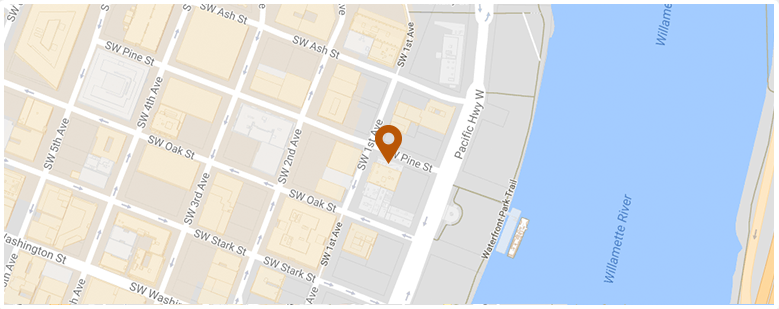
50 SW Pine St 3rd Floor Portland, OR 97204 Telephone: (503) 226-3844 Fax: (503) 943-6670 Email: matthew@mdkaplanlaw.com
map image
Contact Information