Articles Posted in Motor Vehicle Accidents

The US Transportation Department is reporting an increase in the number of women arrested for drunk driving. Although there are still more males arrested for drunk driving than women—626,371 men were arrested for DUI in 2007 and only 162,493 women—from 1998 to 2007, there was a 28.8% jump in the number of female drunk driver arrests and a 7.5% drop in the number of men arrested for DUI.

US Transportation Secretary Ray LaHood says he is surprised at the rise in DUIs involving women. Mothers Against Drunk Driving (MADD) President Laura Dean Moody says that although the reason is unclear why more women are being arrested for drunk driving now than 10 years ago, she believes that it may be because females are facing greater pressures these days, such as having to be the breadwinner while their husbands are unemployed. Moody also noted that there are television programs that portray stay-at-home moms who drink as cool.

The NHTSA also is providing a breakdown of how many women and men were arrested for DUI over the last two years while they were involved in deadly Oregon traffic accidents.

The Oregon Department of Transportation says that there were more bicycle deaths that occurred in the city of Bend last year than in any other city in the state. Of the 7 Oregon bicycle fatalities that happened, 2 of them occurred in this Deschutes County city. Bend, however, did not hold the record as the city with the most number of bicycle accident-related injuries for the year. The city was number five with its rate of crashes per capita, while Corvallis, Eugene, and Portland, Oregon were ranked number one, two, and three.

Between 2006 and 2008, there were reportedly 65 Bend, Oregon bicycle accidents resulting injuries. 40 of these bicycle accidents involved drivers or bicyclists who did not yield the right of way. Approximately half a dozen bicycle accidents involved one party failing to stop when there was a flashing red light or a stop sign. Speeding, distracted driving, and following closely were among the other common causes of Bend, Oregon bicycle accidents.

The number of Bend injury crashes went up from 16 auto crashes in 2007 to 23 motor vehicle accidents last year. In 2009, there have already been more than a dozen Bend bicycle accidents. Just last month, James Gardner died when his gas powered bicycle was involved in an Oregon traffic crash with a motorcycle. The 54-year-old bicyclist was not wearing a helmet.

With so many people riding bicycles in Oregon, it is important for drivers and bicyclists to make sure they remember that they share the roads with one another. Injuries sustained during an Oregon bicycle accident can be extremely serious. Obtaining personal injury recovery from a negligent party can be one way to compensate you for your pain and suffering, while provide you with the financial resources to cover your medical expenses and associated losses.

Bicycle fatalities: Bend leads Ore. cities, KATU, August 12, 2009
Bicycle Accident in Bend Claims A Life, KOHD, July 14, 2009
Related Web Resources:
Oregon Department of Transportation

Bend, Oregon

Continue reading

The Virginia Tech Transportation Institute has issued new findings reporting that truckers who text message while driving their trucks increase their chances of getting involved in a truck crash or a near-truck accident by 23 times. The study also notes that while car drivers place themselves most at risk when dialing cellular phones while driving, a cell phone dialing truck driver is 5.9 times as likely to get into a truck crash—compared to a car driver, who is 2.8 times more likely to get involved in a car accident while dialing a phone.

Even just reaching for an electronic device increases the traffic accident risks for both truck drivers and car drivers. The trucker’s chances of crashing becomes 6.7 times greater, compared to a car driver, whose chances increase by 1.4 times.

The study used research conducted between 2004 to 2007. According to Rich Hanowski, the transportation institute’s Center for Truck and Bus Safety director, the greatest risk that text messaging poses for truckers and other drivers is that the motorists are looking at their phones or electronic devices and not the roads.

Hanowski says that studies show that drivers have been known to spend nearly five seconds with their eyes off the road when checking their phones or electronic devices—and while this amount of time may not sound very long, it is enough time for a catastrophic accident to happen. Just think, in 4.6 seconds a vehicle traveling at 55mph while have traveled an entire football field’s length—imagine how many vehicles the driver may fail to see while checking a text message.

Some 200 truck drivers from seven trucking fleets took part in two studies. One study was conducted in 2004. The second one was concluded in 2007. Most of the texting data came from the second study. 21 crashes and 197 near accidents occurred. Software was used to identify these incidents. Software identified 37 near collisions that occurred while the truck drivers were texting.

Truck drivers cannot afford to text message or talk on a cell phone while driving. If you were injured in an Oregon truck crash because the trucker was distracted, you need to speak with a Portland, Oregon personal injury lawyer as soon as possible.

How the Driving Tests Were Conducted, New York Times, July 27, 2009
More Details About the Findings (PDF)

Related Web Resources:
Virginia Tech Transportation Institute

Center for Truck and Bus Safety

Continue reading

The hope that using hands-free cell phones while driving is safer than talking on a hand-held phone while operating a motor vehicle went out the window after news surfaced that the National Highway Traffic Safety Administration withheld research as far back as 2003 showing that use of any kind of cell phone when driving is dangerous. Researchers even went so far as to draft a letter expressing concern that laws banning hand-held cell phones would not be enough to eliminate the safety risk.

Just talking on the phone is a form of distracted driving—it doesn’t matter whether you are holding the phone or using a headset. Talking on a cell phone slows a motorist’s reaction time and takes his or her attention off the road and away from driving and can cause a motor vehicle crash.

Apparently, NHTSA researchers knew as far back as 2002 that cell phone use while driving caused 240,000 traffic accidents and almost 1,000 motor vehicle deaths that year. Yet a former NHTSA head says he was encouraged to hold back the information so as not to anger Congress. The agency was warned to focus on gathering facts, rather than lobbying states to come up with tougher driving laws regarding wireless devices.

If only this information was made available to the public back then, talking on the phone and text messaging while driving may not have become unsafe driving habits that have grown to such epidemic proportion that some states have passed laws restricting cell phone use while driving. Now, even though motorists finally know how dangerous talking on a cell phone and texting while driving can be, many of them are finding it hard to stop.

How many lives could have been saved if this information had come to the surface six years ago? The traffic accident toll from cell phone use—currently about 2,600 fatalities, 636,000 traffic accidents, and 330,000 a year—has almost doubled in less than a decade. Even now, not all US states have laws banning hand-held cell phones. In Oregon, HB2377 was recently passed by legislators seeking to ban hand-held phones while driving. Hands-free cell phones, however, would still be allowed.

Each day, in many US states, hundreds of thousands of drivers continue to talk on hands-free cell phones while driving because they think that they are actually practicing safe driving habits. Meantime, one study from University of Utah psychologists equates cell phone use while driving to drunk driving.

Talking on any kind of cell phone while driving is considered a form of distracted driving that can cause Portland, Oregon car crashes, truck accidents, bus collisions, and pedestrian injuries.

Withheld research confirms driving danger of cell phone use, DelawareOnline.com, July 24, 2009
NY Times: Federal agency withheld warnings about distracted driving risks, Bikeportland.org, July 21, 2009
Related Web Resources:
US Wireless Communication Devices While Driving, NY Times, July 2003
Drivers on Cell Phones are as Bad as Drunks, University of Utah

Continue reading

The National Highway Traffic Safety Administration is reporting that there were 416 Oregon traffic deaths. This fatality figure is slightly lower than the 455 Oregon traffic deaths that occurred in 2007.

More 2008 Oregon Traffic Facts:
• 290 passenger vehicle occupant deaths
• 91 of the victims were unrestrained
• Alcohol was a factor in 136 traffic deaths
• 128 speeding-related deaths
• 48 Oregon motorcycle deaths
• 51 Oregon pedestrian deaths
Nationally, there was also a decline in US traffic fatalities, with 37,261 deaths last year compared to 41,259 traffic deaths that occurred in 2007.

More 2008 US Traffic Accident Facts:
• 11,733 drunk driver-related deaths
• 716 pedalcyclist deaths
• 4,378 pedestrian fatalities
• 5,290 motorcycle deaths
• 677 large truck fatalities
• 25,351 passenger vehicle deaths
• 2,346 traffic injuries
• 2,072,000 people injured in passenger vehicles
• 23,000 large truck deaths
• 96,000 motorcycle injuries
• 69,000 pedestrian injuries
• 52,000 pedalcyclist injuries (compared to 43,000 injuries the year before)

While there was a decline most kinds of traffic fatalities between 2008 and 2007, there was an increase in motorcycle fatalities—from 5,174 deaths in 2007—and pedalcyclist fatalities—from 701 deaths.

Common causes of 2008 Oregon motor vehicle crashes included:
• Drunk driving
• Drowsy driving
• Speeding
• Cell phone use
• Text messaging
• Driver inexperience
• Poor road conditions
• Defective autos
While the overall declines in Oregon and US traffic deaths are positive, there is always more that can be done to decrease the number of injuries and deaths that occur in the state and throughout the United States. One way to decrease the number of Oregon car crashes is for drivers and truckers and motorcyclists to drive responsibly and refrain from negligent conduct. Motorist negligence can be grounds for a Portland, Oregon personal injury claim.

U.S. Transportation Secretary Ray LaHood: Overall Traffic Fatalities Reach Record Low, NHTSA, July 2, 2009
2008 Traffic Safety Annual Assessment – Highlights, June 2009 (PDF)

Related Web Resources:
State Traffic Safety Information for Year 2008

Early Estimate of Motor Vehicle Traffic Fatalities for the First Quarter of 2009, June 2009 (PDF)

Continue reading

A Portland bicyclist and the insurance company of the driver that struck him have reached a $100,000 Oregon bicycle accident settlement for injuries and costs. Bicyclist Ben Ramsdell was injured almost two years ago when he was hit by motorist Johnny Eschweiler, 49, after the two of them engaged in a verbal exchange of words.

Witnesses say they saw the motorist deliberately hit Ramsdell and Timothy Mastne, another bicyclist, in August 2007. Ramsdell had to get 30 stitches on his face. He also broke his finger and his nose. Mastne sustained bruises and cuts.

In April, Multnomah County Circuit Court Judge Michael McShane ruled that Eschweiler was guilty of assault but insane. When he was 19, he used a fork to stab a coworker in the face. Surgeons had to take out part of his brain when he was 23.

Eschweiler was not ordered to serve jail time for causing the Portland, Oregon bicycle accident, but he was committed to house arrest for 15 years and state psychiatrists are closely monitoring him. The state of Oregon has permanently taken away his driver’s license.

Because the Oregon bicycle accident was considered “intentional” and not “accidental,” Farmer’s was initially absolved of making a payout. However, the insanity ruling raised the question of whether the motorist even knew that hitting bicyclists was his car was intentional or accidental.

The $100,000 is the maximum that the insurance company’s motorist policy allows.

Bicycle Accident Injuries
It is rare for a motor vehicle driver to intentionally run down an Oregon bicyclist. Most bicycle accidents that are caused by motorists are accidental. The driver never meant to seriously injure or kill the victim.

Regardless of whether or not a motorist meant to intentionally hurt or kill a bicyclist, however, any negligence on the driver’s part can be grounds for an Oregon bicycle accident claim or lawsuit.

Bicyclists are at a disadvantage anytime they are injured in a collision with a car, a truck, a motorcycle, an SUV, a van, a bus, or a train. The impact of the bicycle-vehicle crash alone can prove fatal.

Bicyclist hit by insane driver reaches settlement, KGW, June 17, 2009
Rage victim says he’s taking it “day by day,” BikePortland, August 18, 2007
Related Web Resources:
Bicycle and Pedestrian Program

Bicycle Safe

Continue reading

Near Corvallis Highway 34, rescuers had to use the Jaws of Life on Monday to extricate the victims of an Oregon car accident. Two people were transported to the hospital for treatment of their injuries.

According to Oregon State Police, a 1999 Toyota Corolla was headed eastbound on Highway 34 when the vehicle crossed the center turn lane, sideswiped a guardrail, and drove head-on into a 1990 Ford Bronco II. The driver of the Toyota, Portland resident Matthew Alexander, and the driver of the Ford, Lebanon resident Janet Smallman, were taken to Corvallis Hospital.

While Alexander, 25, was treated for minor injuries and later released, Smallman was seriously injured. Alexander received citations for reckless endangerment, reckless driving, third-degree assault, driving while suspended, and second-degree criminal mischief. Police think Alexander was fatigued at the time of the Oregon motor vehicle collision.

The Dangers of Drowsy Driving
According to the National Highway Traffic Safety Administration, some 100,000 police-reported auto accidents a year are caused by driver fatigue. Drowsy driving accidents cause about 71,000 injuries and 1,500 fatalities each year. Many experts, however, believe that these figures do not convey the full scope of this problem.

A drowsy driver is not as alert as a driver that is wide awake, and his or her senses, reflexes, and ability to react to emergencies in a timely manner may be impaired. Certain studies indicate that people that haven’t slept for 24 hours have cognitive-psychomotor abilities that are as impaired as that of someone with a blood alcohol content of 0.10%. The legal driving limit in the US is a BAC of .08%.

A driver that is tired or sleepy may even fall asleep at the wheel, which could cause his or her vehicle to become involved in a head-on crash with another car, a wall, or a tree. This can be especially catastrophic if the driver falls asleep while operating a car or large truck at full speed.

Police: Sleepy driver causes head-on crash, KVAL.com, June 22, 2009
Two Injured in Head-On Crash Near Corvallis, Salem-News, June 22, 2009
Drowsy Driving, AAA
Related Web Resources:
NHTSA

National Safety Council

—–

Continue reading

We all know that it’s dangerous to drive drunk. But do you know that it can also be dangerous to drive the day after when you’re suffering from a hangover?

The National Safety Commission recently published an alert discussing the effects that a hangover can have on a person’s driving ability. The findings come from a study by Brunel University in England. When test subjects that were sober and those with hangovers were monitored while using driving simulators to drive a five-mile course:

• Drivers that were hungover drove an average of 10mph faster than sober drivers.
• Sober drivers tended to drive about 32.6 mph, while hungover drivers drove at a speed of about 41.7 mph.
• While sober drivers had a tendency to drive above the speed limit just 6.3% of the time, hungover drivers did so about 26% of the time.
• Hungover drivers drove outside their lanes four times more than sober drivers did.
• Hungover drivers had two times as many traffic violations, including those involving red light running.

Once a person’s BAC drops to zero, a hangover can go last anywhere from 8 to 24 hours. Hangovers can cause headaches, lethargy, lightheadedness, a decrease in attention and concentration, fatigue, sleep deprivation, stomach irritation, and sensitivity to light.

With these side effects, it is obvious that hungover drivers are often not the most attentive drivers, which could make them more prone to getting involved in or causing a deadly Oregon car accident.

While “Don’t drink and drive” is advice that we’ve heard often, motorists that are hungover may want to think twice before getting behind the steering wheel of a car the morning after a night spent drinking too much. In addition to possibly getting involved in or causing a Portland, Oregon car crash, the hungover driver risks hurting pedestrians and other motorists.

The Hazards of Driving with a Hangover, The National Safety Commission, June 5, 2009
A Few Too Many?, The New Yorker, May 26, 2009
Related Web Resources:
Drowsy & Distracted Driving, NHTSA
Distracted Driving, NSC.org

Continue reading

While the number of 15-passenger van deaths has gone down since 2001, the number of 15-passenger van occupant deaths did increase by almost 205 between 2006 and 2007. 45 of the 2007 15-passenger van fatalities occurred in rollover accidents—73% more than from the year before.

According to statistics, 31% of deadly 15-passenger van rollover accidents occur during the summer travel season, with June – August considered the deadliest period for 15-passsenger van riders.

More NHTSA 15-Passenger Van Accident Facts:

• A van that is fully loaded with passengers and luggage has a greater chance of becoming involved in a rollover accident.
• More than half of the 15-passenger van occupants that have died were not using seat belts.
• Other common causes of 15-passenger van accidents include driver inexperience and poor tire condition.

CBS reported in 2004 that there are approximately 500,000 15-passenger vans on US roads, with millions of people riding them to and from the airport, school and church activities, and on trips involving large groups.

One reason 15-passenger vans are a high-risk vehicle for becoming involved in a rollover crash is the way the vehicle is designed. Most 15-passenger van models have an extended back, which means that its backside tends to get very heavy when the vehicle is fully loaded. 15-passenger vans also are made with a high gravity center, which means the more weight riding in the car, the more top heavy the vehicle.

While there is nothing that 15-passenger van occupants can do about the way the vehicle is designed, there are steps that the van driver can take to prevent 15-passenger van accidents from happening:

• Don’t drive unless you have the experience to properly operate and control a 15-passenger van.
• Don’t text message or talk on the cell phone or engage in any other form of distracted driving while operating a 15-passenger van.
• Make sure that all of the van passengers are wearing safety belts.
• Make sure the tires are properly inflated and they show no signs of extreme wear or aging.

Consumer Advisory: Federal Government Restates Rollover Warning for 15-Passenger Vans Users, NHTSA, May 20, 2009
Nation’s Top Vehicle Safety Official Urges 15-Passenger Van Users to Drive with Caution this Summer, NHTSA, May 12, 2009
Related Web Resources:
Safercar.gov

Fatalities to Occupants of 15-Passenger Vans, 1997-2006, NHTSA, May 2008 (PDF)

—–

Continue reading

The month of May is Motorcycle Safety Awareness month. Throughout the US, federal, state, and local law enforcement and safety officials are banning together to remind the drivers of cars, trucks, and buses that they share the road with motorcyclists so that they can take precautions to prevent motorcycle accidents from happening.

Staying aware that there are motorcycles on the road is especially important during this time of year. As spring turns to summer and the weather gets warmer, more riders will be donning their helmets as they get on roads and highways in Portland, the rest of Oregon, and elsewhere in the United States. 51 motorcycle riders died in Oregon in 2007, which is a definite increase from the 44 Oregon motorcycle deaths in 2006 and the state’s 48 motorcycle fatalities in 2005.

There’s no getting around the fact that not having a vehicle around their bodies to protect them when they are on the road places motorcycle riders at high risk of sustaining catastrophic injuries any time they are in an Oregon traffic crash.

Late last month, a motorcycle rider’s leg was severed in an Oregon traffic accident with a motor vehicle that occurred near Fair Oaks. The driver of the Toyota involved in the auto crash was later arrested and charged with hit and run, driving while suspended, and reckless driving.

To mark Motorcycle Safety Awareness Month, the Oregon Department of Transportation and Governor Ted Kulongoski are offering motorists a number of suggestions for how they can help keep motorcyclists safe on Oregon roads, including:

• Check your mirrors and blind spots when leaving or entering a lane or an intersection to see whether there are motorcycles in the vicinity.

• Don’t try to share a lane while riding next to a motorcycle.

• Remember to signal any time you merge into traffic or switch lanes.

• Make sure that you allow 3 to 4 seconds more following distance when you are riding behind a motorcycle so that the rider has space to move or stop during an emergency.

• Never tailgate a motorcycle.

The National Highway Traffic Safety Administration, the Oregon Department of Transportation, and other federal, state, and local safety and transportation agencies want people to remember to share the road safely not just with motorcyclists but with the drivers of other motor vehicles as well as pedestrians.

Personal injuries and wrongful deaths can result when negligent driving leads to Portland, Oregon, motorcycle accidents.

Governor proclaims Motorcycle Safety Month, Oregon.gov, April 29, 2009
Hit-and-run crash severs man’s leg, NRToday.com, April 27, 2009
Related Web Resources:
Motorcycle Safety Awareness, NHTSA
Motorcycle Safety Foundation

Continue reading

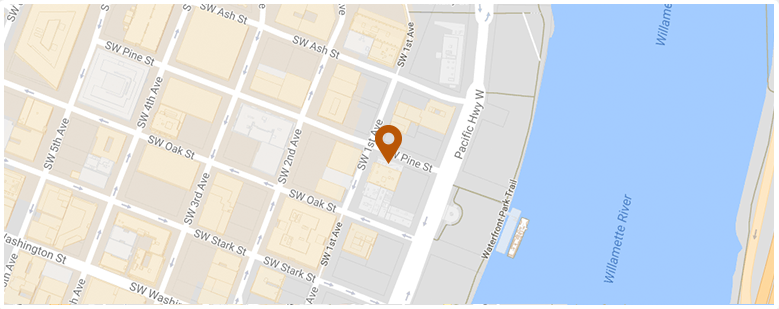
50 SW Pine St 3rd Floor Portland, OR 97204 Telephone: (503) 226-3844 Fax: (503) 943-6670 Email: matthew@mdkaplanlaw.com
map image