
Articles Posted in Motor Vehicle Accidents

Following up a story I originally wrote about last month, there are new developments in the death of an 11-year-old Portland girl in a September accident involving a party bus.

According to The Oregonian the girl died when her skull was crushed as she “tumbled out of an emergency window on the bus when it careened around a corner… at Southwest First Avenue and Harrison Street.” She is reported to have been sitting atop a horseshoe-shaped couch in the back of the bus at the time of the fatal Portland bus accident. “The bus was full of kids on their way to a birthday party but no adults were in the back,” the newspaper reports.

As troubling as this lack of adult supervision is the revelation that the bus itself lacked the proper safety inspection permit and was being operated by a man who was not licensed to drive this type of vehicle, according to The Oregonian. This image of a company putting immediate profits ahead of safety is chilling not only for any parent considering whether to let a child attend a party involving this sort of bus but, frankly, for any adult who might be thinking of hiring a party bus for a special celebration. The fact that a window that was supposed to function as an emergency exit flew open so easily is a reminder of how essential the required government safety inspections are.
Figures published recently in The Oregonian paint a distressing picture of the safety situation for pedestrians here in Oregon. Citing data compiled by the Oregon Department of Transportation the paper reports that “pedestrian deaths in Oregon are up 23 percent over last year.”

With the death in late October of a 58-year-old man on the Hawthorne Bridge the total number of Oregon pedestrian deaths for 2012 reached 48. “That matches the total for all of 2011,” the paper reports, citing an ODOT spokeswoman. The victim of this latest fatal Oregon car accident involving a pedestrian was struck by an eastbound car as he crossed from one side of the bridge to the other. He had been using the bridge to watch his wife compete in a rowing race.

The sharp rise in pedestrian fatalities is especially surprising since bicycle-related deaths have fallen over the same period. The Oregonian reports that bicycle deaths have dropped 41 percent: seven this year compared to 12 during the same period in 2011.

One of the things that distinguishes Portland from less bicycle-friendly metropolises is our bike boxes. These large green-painted areas at key intersections give riders a designated place to wait for the light to change, and serve as a constant remainder to drivers of their obligation to share the road. According to an article published this week in the Portland Mercury, however, newly released data indicates that in some parts of the city the bike boxes may not be helping – and might actually be making matters worse at some intersections.

The Mercury’s article focuses specifically on so-called “right hook” crashes – Portland bike and car accidents in which a cyclist crossing an intersection is struck by a car or truck making a right turn. The paper notes that the boxes have been painted onto the street “at 11 problem intersections” since 2008, and that they are widely believed to “make cyclists and drivers feel safer at the intersections.”

A study of accident data at those intersections, however, found that “in the four years since their installation, the intersections had 32 right hook crashes involving bikes.” This is double the number of such Oregon car accidents at those same intersections in the four years since the boxes were added to the roadway.

The recent death of an 11-year-old girl who was accidently thrown from a Portland party bus, as outlined in The Oregonian, is raising many disturbing questions about this often under-regulated industry and about the conduct of the adults involved. According to the newspaper, the child died when she “tumbled out of an emergency window when the bus turned a corner.” This Portland fatal child injury accident would be bad enough by itself, but the details surrounding it are truly shocking.

The Oregonian reports that the victim was part of a large group of children who were board the party bus with no adult supervision. The vehicle’s 61-year old driver was the only grown-up on board the bus. Moreover, the driver himself “wasn’t permitted to operate a party bus carrying about 20. The bus didn’t have a permit from the city of Portland, either” the newspaper adds.

The amount of irresponsibility on display here is really quite stunning. Why did the company let a driver lacking the proper license operate any of its vehicles, let alone one carrying children? Why would it even allow a party bus filled with children out on the road without any adult supervision? Even if the driver were properly qualified to operate the vehicle, a bus driver who is doing his job cannot do so safely while also supervising nearly two dozen children.

A recent New York Times article highlights a high-profile opponent of distracted driving here in Oregon and around the nation whose job might raise some eyebrows: he is the chairman and CEO of AT&T. As the newspaper notes, Randall Stephenson began his remarks at an investors’ conference last week with a plea to everyone in the audience not to text and drive.

“He’s been saying it a lot lately,” the paper continues, “at investor conferences, the annual shareholder meeting in April, town halls, civic club meetings, and in conversations with chief executives of other major companies.”

AT&T is not unique among cellphone companies in taking on this issue but, as the Times reports, Stephenson’s emphasis on it stands out both for its seriousness of purpose and for the personal nature of his story. “Mr. Stephenson said in an interview that a few years ago someone close to him caused an accident while texting,” the paper reports. The result has been a high profile anti-texting campaign by the company, one that the paper says has impressed even organizers focused on the broader issue of distracted driving as an advocacy and policy issue.

This week – from now until Saturday September 22 – is National Child Passenger Safety Week. It is an excellent time to remind ourselves of the importance of preventing injuries to children in Oregon auto accidents.

Here in Oregon the public awareness events for National Child Passenger Safety Week are being led by SafeKids Oregon. The SafeKids webpage devoted to the week and its related activities opens with some stark statistics that put the problem into perspective:

“Motor vehicle traffic crashes,” it notes, “remain the leading cause of death for children ages 1 through 12 years old.” It also notes that fully 75% of children riding in American cars “are not as secure as they should be because their car seats are not being used correctly.”

A recent op-ed piece in The Oregonian raises significant questions about transportation funding and Portland’s streets. Its arguments – whether one agrees with them or not – bear consideration even in a time of tight budgets and, often, cutbacks.

The author, Stephanie Routh, executive director of the Willamette Pedestrian Coalition, argues that the transportation bill passed by Congress earlier this summer falls far short of what is needed to fund improvements to “Portland’s most dangerous streets.”

“Congress didn’t improve on the situation with its new federal funding bill, dramatically reducing dedicated funds for walking and biking safety improvements,” she writes. “The lack of relief for known safety problems may result in preventable deaths of people walking, biking, driving or taking transit for years to come.”

A case that reached a resolution last week in Maryland offers a cautionary tale about dealing with insurance companies, as well as a lesson in the important role media sometimes play in helping victims obtain justice.

According to both Yahoo! News and CNN the story begins in June 2010 when a 24-year-old Maryland woman died in a car accident caused by another driver’s failure to stop at a red light. The driver who caused the crash was either uninsured or underinsured (media accounts vary on this point), but that ought not to have been a problem, since the victim carried uninsured motorist’s coverage as part of her auto insurance package with Progressive, one of the country’s best known car insurance companies.

Under Maryland law a trial was required to establish responsibility for the crash. To the fury of the victim’s family, Progressive’s attorneys helped the driver who caused the crash throughout the proceeding in an effort to establish that the victim was partly at fault – a circumstance that would have allowed the company to refuse to pay on its policy. The company has issued a statement pointing out that it did not formally represent the defendant, but the victim’s brother, quoted by Yahoo! News, said that the insurer’s lawyers repeatedly conferred with and assisted the defendant during the trial. They also made a closing statement claiming that his sister was at fault for the accident. “I am comfortable characterizing this as a legal defense,” he wrote last week, according to Yahoo! News.

A recent article in the New York Times highlighted innovative ways that cyclists are putting technology to use to improve safety. The piece focuses on small cameras that can be mounted on a rider’s helmet. The newspaper describes these as “the cycling equivalent of the black box on an airplane… providing high-tech evidence in what is sometimes an ugly contest between people who ride the roads on two wheels and those who use four.”

Though originally designed for recreational use (the cameras have long been popular with snowboarders and mountain bikers seeking to capture memories of their rides) they are proving useful in urban environments as a way for bike riders to help police pursue and prosecute reckless drivers and to enforce the law in the wake of cycling accidents involving cars. The newspaper notes that use of the cameras has increased markedly as the cost of the cameras has dropped. A good helmet camera can now be purchased for under $200.

“Video from these cameras has begun to play an invaluable role in police investigations of a small number of hit-and-runs and other incidents around the country,” the paper notes, citing local law enforcement. It profiles one New York City rider who was able to help police track down a hit-and-run using video from his helmet camera which captured an image of the driver’s license plate.

A recent announcement by the Hillsboro police department, as reported in The Oregonian, comes as a welcome addition to the summer: the department plans to “have designated officers focused on distracted driving throughout the summer.”

Hillsboro officers working specially designated overtime shifts (funded, the paper notes, by an outside grant) will focus their attention on a broad range of behind-the-wheel distractions. That means that in addition to enforcing violations of Oregon’s distracted driving law, they will also be on the lookout “for people who are distracted by other activities, such as eating and reading.”

“All distractions endanger the driver, passengers and bystanders,” the newspaper quotes a department spokesman saying. Officers, he said, will regularly conduct the extra enforcement patrols between now and September.

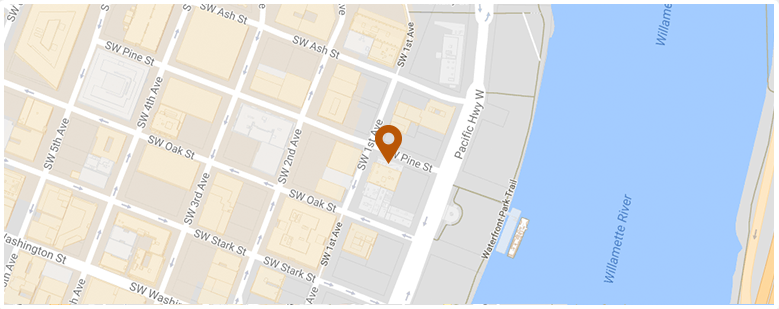
50 SW Pine St 3rd Floor Portland, OR 97204 Telephone: (503) 226-3844 Fax: (503) 943-6670 Email: matthew@mdkaplanlaw.com
map image