Articles Posted in Motor Vehicle Accidents

Last week the New York Times published a long article looking at a number of so-called ‘heads-up’ technologies making their way toward commercial use in the auto industry. All of the technologies described in the article involve projecting information onto a car’s windshield so that it appears to be ‘floating’ just ahead of the car. The companies designing these systems tout them as cutting-edge tools in the fight against distracted driving, but the article makes a strong case that for many drivers there is a high probability the heads-up technology will make things worse.

Accompanying the article is a screen shot from a video promoting one of the new companies. The still image shows the driver’s hands on the steering wheel as the car enters a sharp bend to the left. Projected into the driver’s line of sight are both an animated image of the car and the road, and a photo of the driver’s mother as he takes a phone call from her. The device allows the phone to be answered with a wave of the driver’s hand.

The idea that these devices will make driving safer boils down to the contention that by keeping drivers looking up and ahead they reduce the distraction of cellphones, in-dash navigation systems, and even the dashboard itself (since the devices can display things like speed and gas level). “The argument… boils down to a simple notion: Drivers are going to do it anyway, so why not minimize the riskiest kinds of multitasking, like looking down at the phone or handling it” according to the Times.

Last December I highlighted a stealthy move by the trucking industry to have its friends in Congress slip provisions into a stop-gap funding bill that were good for the industry but bad for Oregonians and the rest of America. Not content with that victory of profits over public safety the industry is now at it again, according to The New York Times.

An editorial published in the newspaper this week warned that “Republican lawmakers have attached a long industry wish list to an appropriations bill that will be voted on in the House in the coming weeks.” Last December’s measure suspended rules governing how much rest the drivers of large trucks need to get each week. The new measure, if it becomes law, will make it very difficult for President Obama or his successor to lift those ‘temporary’ rule suspensions.

Meanwhile, other parts of the bill “would allow trucks to carry longer trailers across the country, make it harder for the Department of Transportation to require drivers get more rest before they hit the road and forbid the department from raising the minimum insurance it requires trucks and buses to carry. The insurance levels have been in effect since 1985,” according to the paper.

May is National Bike Month and to mark the occasion the US Transportation Department’s Federal Highway Administration (FHWA) has released a new set of guidelines designed to promote bike safety in cities and towns across the country.

Formally titled the “Separated Bike Lane Planning and Design Guide” the 147-page document is seeks, according to the official FHWA blog, to outline “planning considerations and design options for this innovative bike facility. It provides information on one and two-way facilities, outlines different options for providing separation.” The report goes out of its way to address “midblock design considerations” – meaning situations in which vehicles need to be allowed to cut across the bike lane to gain curb access – as well as offering advice on how to handle intersections (something Portlanders, with our city’s mixed history of success with bike boxes, know is one of the more tricky elements of bike infrastructure design).

As the news release goes on to state: “The guide builds on our current policy to provide pedestrian and bicycle accommodations and on our support for design flexibility. It will inform the USDOT’s ‘Safer People, Safer Streets’ initiative as well as our efforts to improve access to opportunity for everyone.”

A single-vehicle Portland car accident that killed one person and injured two others spotlights both the dangers of reckless and drunk driving and its broader legal implications, even when a second car is not involved.

According to a report earlier this week in The Oregonian a 29 year old man who was riding in the back seat of an SUV died when he was thrown from the vehicle during “a fatal crash Sunday night off Northwest Skyline Boulevard.” The paper reports that “the SUV rolled down a steep embankment toward the 6600 block of Meridian Ridge Drive where it struck a house and caught fire. Neighbors were able to extinguish the fire and no one in the home was injured.” The newspaper, quoting police, says that the SUV’s 39-year-old driver remains in an area hospital in critical condition. The other passenger, a 30-year-old woman, “was treated for her injuries and released” from the hospital.

As the paper notes, “while the cause of the crash remains under investigation… (police) said it appears that alcohol and excessive speed were both contributing factors.”

A recent news release from Portland’s Bicycle Transportation Alliance announced a small but potentially very significant victory for bike safety in our city. “Thanks to coordinated advocacy work on the part of the Bicycle Transportation Alliance and Multnomah County’s Bicycle and Pedestrian Citizen Advisory Committee, fixes to heavy congestion and bike/pedestrian conflicts on Portland’s bridges may be on the horizon,” the BTA says.

The BTA reports that two important projects have been added to the county’s plans for infrastructure upgrades as part of the Willamette Bridge Capital Improvement Plan: a $1.4 million “planning study to identify bike/ped capacity improvements” and $32.6 million in overall design and construction improvements. Equally important, the BTA announced it had been formally informed by the county that these particular projects “have been moved to a timeline that better reflects their urgency” – meaning that cyclists may see progress within five years, as opposed to the six to ten year timetable originally anticipated.

The plan now goes to the Multnomah County commissioners for consideration next month. Sounding a cautionary note, however, the BTA warns that “if it is passed, the next challenge will be to identify funding that will pay for these two projects.”

A recently published Oregon State University study demonstrates dramatically that interactive efforts to educate teens about the dangers of distracted driving are far more successful than passive efforts. However, the study also showed that among younger drivers the problem is just as serious as anecdotal evidence would suggest, and that the focus on texting may be diluting the larger message about the risks of Oregon distracted driving.

According to a summary published by EurekAlert, a PR website, the OSU study found that “while many young drivers understand the risks of texting… they are much less aware of other concerns that can be real – eating, drinking, talking on a cell phone, smoking, adjusting the radio, changing a CD, using a digital map and other controls.” The article adds that in addition to a lack of experience behind the wheel “young drivers also have a higher risk tolerance, use seat belts less and choose higher speeds.”

These findings are, perhaps, unsurprising (though the finding that “27 percent of respondents changed clothes or shoes while driving” was a bit eyebrow-raising), but it is good to see data backing up what many people have long believed based on anecdotal observation. The highlight of the study is its conclusion that young drivers react best to safety training that is “interactive” – training that requires young people to do something rather than simply passively watching a film or listening to a lecture. Interactive training, the study found, was far more effective in reinforcing both the importance of safe driving habits and the bad habits which everyone should avoid.

An article last week in The Oregonian spotlighted efforts to improve pedestrian safety and prevent pedestrian and car accidents in the areas east of Interstate 205. According to the newspaper, in the last year the city has embarked on a $1.75 million program “to build 17 beacons at dangerous pedestrian safety crossings.”

The article quotes State Representative Shemia Fagan, who it describes as the driving force behind the project, calling the beacons an important safety improvement in a part of our city where news all too frequently is “sad, or scary or downright tragic.”

In the year since Fagan began pushing the issue only five of the planned 17 beacons have been installed (the first of the two links to The Oregonian provided below will also take you to a map which shows both where beacons have already been installed and locations where they are planned). The locations, which the newspaper describes as “problematic intersections”: “were identified and prioritized through the East Portland In Motion plan… a community process approved in 2012.” Funding for the project comes from the state.

A recent article in the Keizer Times highlighted the story of a local man who is struggling to recover after an Oregon bicycle accident involving a drunk driver. According to the newspaper the 59-year old “had plans to compete in some bicycle competitions this summer,” instead he is now working to recover from extensive injuries as he and his family look for a longer-term rehab facility.

The newspaper reports that the accident took place March 14 when the cyclist was riding “near Antelope in Central Oregon.” Citing a State Police report, the paper says a 56-year-old woman “was driving a 2007 Toyota Tundra and pulling a trailer westbound on Highway 218 in Wasco County when the right side of her pick-up hit” the bike rider. The driver left the scene of the accident and was later “arrested and charged with driving under the influence of intoxicants, failure to perform the duties of a driver, reckless driving and second-degree assault.”

The cyclist was initially taken to a local hospital and later moved to a different hospital in Bend. He suffered “four broken ribs on the left side, several breaks in his lower left leg, a broken left scapula (shoulder blade), a cut on the left side of his temple and a concussion,” according to the Keizer Times. A friend describes him as “recovering as well as can be expected.”

The Oregonian is reporting that an arrest has been made in one of the most egregious Oregon distracted driving cases in recent memory. According to the newspaper, a 23-year-old Gresham woman is now under arrest after “taking video on her cellphone when she drove into three teens in a crosswalk outside their high school.”

Further investigation showed that at the time of the Oregon pedestrian accident the driver did not have her hands on the steering wheel. Perhaps even more shocking is the revelation that the driver appears to have been taking a video of her own son at the time of the accident. “A 19-second-long clip… shows the 23-year-old with the device in her left hand and making gestures at her son in the back seat with her right hand just before she hits three girls outside Centennial High School on Jan. 15,” the paper reports.

According to the newspaper “the three injured girls, between 14 and 15-years-old, survived the crash” though all three were seriously injured. The accident took place in January and The Oregonian reports that the driver remained at the scene of the accident and cooperated with law enforcement. She has now been charged with “third-degree assault, reckless endangering and reckless driving.” Witnesses reported the driver was traveling at nearly 40 miles per hour when she struck the three pedestrians.

Last week Portland suffered yet another tragic and preventable crosswalk death. The fact that this fatal Oregon traffic accident also involved a truck making a turn merely highlights the ongoing issue of pedestrian safety that I have written about so frequently.

According to The Oregonian a 61-year-old man from Northeast Portland “was using his three-wheeled wheelchair scooter in a marked crosswalk when a turning truck struck him.” It quotes a Portland police spokesman confirming that as the victim “crossed with the ‘walk’ signal, an eastbound truck turned south onto Naito Parkway and struck him.” The newspaper reports that the man died the following day at Legacy Emanuel Medical Center. The truck driver is reported to be cooperating with police.

There are a number of potential legal issues raised by this Oregon traffic accident. As is often the case in a death under these circumstances the possibility of a wrongful death action exists. It is worth considering whether there is a product liability issue involved in this incident. Considering the sheer number of automotive product recalls over the last year it is worth exploring whether the truck involved in this fatal Oregon traffic accident may have been – or ought to be – subject to a recall.

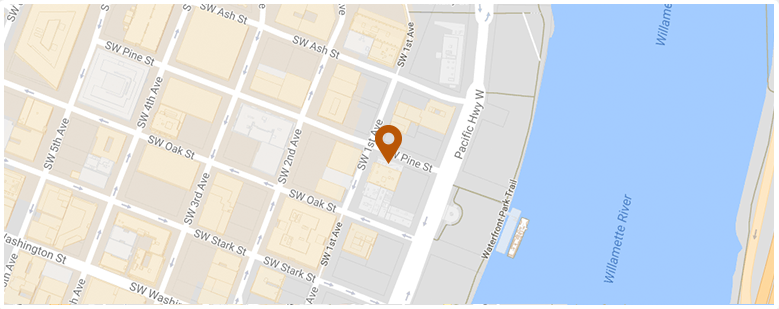
50 SW Pine St 3rd Floor Portland, OR 97204 Telephone: (503) 226-3844 Fax: (503) 943-6670 Email: matthew@mdkaplanlaw.com
map image
Contact Information