Articles Posted in Motor Vehicle Accidents

As 2015 winds down we can look forward to many things in the New Year. Among them: a new law that will be an enormous boon to ordinary Oregonians. SB 411, which Governor Kate Brown signed last March, is slated to take effect on January 1. As that day approaches it is useful to pause and remind ourselves why this measure is so important. I wrote about this law last spring when the governor was considering whether or not to sign it and am pleased to offer this follow-up on the eve of its coming into force.

As summarized by the healthcare newsletter “The Lund Report”, SB 411 “takes two actions to bring Oregon auto insurance law in line with other states – it allows an injured person to receive the full benefit both of their own policy and the injury protection of the driver who caused the accident. It also requires the at-fault motorists’ insurance to pay the injured party’s claims first, before paying back money the other motorist’s insurance paid out for personal injury protection.”

That may sound like a fairly common-sense decision, but as Lund outlines, right now Oregon, unlike many other states, operates under a quite different system. “Current law requires the liable motorists’ injury coverage to be deducted from the non-liable party’s coverage for underinsurance, so that if each party is insured against injuries for $25,000, only $25,000 will be available for the injured person.” This bill, in other words, replaces a system designed to protect the bottom lines of insurance companies with one focused on helping injured Oregonians get the help they deserve.

A study recently released by the Oregon Department of Transportation appears to show that careful and comprehensive education efforts can have a significant impact on distracted driving, according to a recent report by Bend TV station KTVZ. The station quotes an ODOT report finding that “a coordinated high-visibility campaign in Bend aimed at reducing distracted driving had a significant impact on raising awareness of the importance of not texting/talking while driving.”

According to the TV station, the study was co-sponsored by the ODOT, Portland State University and Bend’s police department. “The report shows, among other findings, that almost 12 percent of people who were exposed to the “U Drive, U Text, U Pay” message reduced their texting-while-driving activity,” KTVZ reports.

Considering that the tagline of the campaign focused on money – the fines drivers can receive if they violate Oregon’s distracted driving laws – it is especially noteworthy that the study found that “the most common reason for respondents decreasing their texting-while-driving was ‘increased awareness of safety.’” This reason was cited by 30 percent of the drivers studied. In other words: while the campaign slogan focuses on drivers’ wallets the program was successful because it helped convince Oregon drivers that safety issues come first.

An Oregon car accident near Amity on route 99W sent a highway worker to the hospital last week. According to The Oregonian, a ‘flagger’ employed by a private company was “taken to a Portland hospital with serious injuries” after being struck by a car in the early evening. The Oregon traffic accident occurred near milepost 47 on Route 99W and closed the road to traffic for what the newspaper describes as “an extended period of time.”

The paper reports that the driver remained on the scene and cooperated with police. It also, however, reports that investigators believe “alcohol or drugs may have been a factor” in the incident and that they are considering criminal charges against the driver.

On its surface this might seem like a fairly straightforward Oregon traffic accident case. The specifics, however, raise several interesting legal questions. We would normally suppose a highway worker injured on the job to be covered by workman’s comp, but the fact that the flagger was injured by a third party – the driver – changes the situation in some ways. Most notably, if drugs or alcohol were, indeed, involved in the accident that opens the possibility of a legal claim under Oregon’s social host and dram shop laws against not only the driver but also the individual, bar or liquor store that gave or sold the driver drugs or alcohol. Because Oregon requires training in the specifics of its dram shop laws for all bartenders this sort of liability can be especially difficult to avoid.

As an article in today’s Oregonian warns, Halloween has long been a night when pedestrians and drivers alike need to exercise particular caution. This year, however, the fact that October 31 is also the evening when we move from daylight saving time back to standard time makes tonight especially dangerous.

Halloween has always been a night when everyone should be especially aware of the possibility of injuries to children. In the twilight and early evening hours small children – many wearing dark costumes – are running around residential neighborhoods all over the country. The danger of a car accident rises significantly even for the most careful of drivers. The Oregonian reports that Halloween is traditionally the third-worst day of the year for pedestrian fatalities, surpassed only by New Year’s Day and December 23.

In recent decades, however, Halloween has also emerged as an adult party night with a reputation for drinking and driving that rivals New Year’s Eve. According to today’s article “in 2012 when 54 pedestrians died in car crashes on Halloween nationwide, nearly half of those deaths involved a drunk driver.”

The latest phase of the AAA Foundation for Traffic Safety’s long running investigation of distracted driving and its causes highlights some potentially disturbing issues, according to a recent article published by MyCentralOregon.com. As the website notes, “the results raise new and unexpected concerns regarding the use of phones and vehicle information systems while driving.”

Specifically, the study challenges the common assumption that switching to hands-free devices solves most distracted driving problems. According to the website, the study concluded that “potentially unsafe mental distractions can persist after a driver dials, changes music or sends a text using voice commands on a voice-activated system.” Especially interesting is the focus on things we do not usually think of when we use the term “distracted driving,” such as using a car’s music or navigation systems.

More critical, however, is the discovery that distracted problems go far beyond cellphones, and cannot be solved simply by switching to headsets, in part because the distraction these devices create lingers even after one’s attention returns to driving.

No one likes to believe that he or she is a bad driver. So it has to come as a surprise to many of us here in Portland that collectively we are some of the most collision-prone drivers in the country, according to a study by the Allstate Insurance Company recently analyzed by The Oregonian.

According to the newspaper “claims filed with the company found Portlanders are involved in a collision on average every 6.9 years – about 45 percent more than the national average of 10 years.” The paper adds: “That puts Portland squarely in the hall of shame, with a rank of 183 out of the 200 largest US cities.”

To make matters worse: “As recently as 2006, Portland stacked up reasonably… well, ranking at No. 89 on the list of 200 cities.” The newspaper adds that the news is a bit better for the metro area as a whole. Vancouver’s rating, while still below the national average, is significantly better than Portland’s with crashes coming, on average, every 8.8 years. Eugene, where drivers average 10.3 years between collisions, ranked No. 26 in the study.

A report released earlier this month by the Centers for Disease Control and Prevention highlights both the health benefits of cycling and the potential risks. As the report notes, “only about 1% of trips across all modes of transportation” are made by bicycle here in the United States, but the number of deaths associated with cycling remains disproportionately high – and in some places much higher than in others.

The report examines nearly 30,000 cyclist deaths on American roads over a 38 year period – 1975 to 2012 – and leads with some good news: “annual cyclist fatalities declined from a high of 955 in 1975 to 717 in 2012” with the proportion of cyclist deaths among all motor vehicle-involved fatalities dropping from 2.3 to 1.4 percent from 1975 to 2003. In the decade since, however, the figure has risen back to 2.2 percent – meaning that proportionately we are pretty much where we started 40 years ago.

A table accompanying the CDC news release shows that over the period measured by the study fatal Oregon bicycle and car accidents have fallen by 45.9% – a figure that places our state 35th among the 50 states and the District of Columbia. The greatest improvement was shown by Vermont, where fatalities dropped by more than 82%. Florida (9.7%) and Wyoming (6.7%) had the worst improvement rates.

The Oregonian this week reported on a guilty plea by a 24-year-old Gresham woman in an Oregon distracted driving case that encapsulates everything that is wrong with this growing problem.

According to the newspaper, the defendant admitted to “taking cellphone video of her child when she crashed into three teens outside their high school in January.” The three 14 and 15-year-old girls “sustained skull, pelvis and knee fractures” according to the paper, as well as “a broken nose, concussion and a lost tooth, and… a torn ACL and a concussion, court documents said.”

“Investigators found a 19-second clip on (the driver’s) phone that showed her hands off the wheel just before she plowed into the teens in the crosswalk, court documents said. She appeared to be holding the phone in her left hand and making gestures with her right hand at her son sitting in the back seat. Phone records show she had also been texting before the crash,” the Oregonian writes.

A summer marked by low gas prices has led to a jump in the number of miles Americans are driving. Unfortunately, it also appears to be leading to a significant increase in traffic deaths, according to a recent Yahoo! News article.

“The National Safety Council reported this week that traffic deaths and serious injuries in the US are on a pace to rise for the first time in nearly a decade. If the trend for the first six months of this year continues, the NSC says traffic fatalities in the nation will exceed 40,000 for the first time since 2007 and deaths per 100 million vehicle miles traveled will also increase,” the news service reports. The key lies in the last part of that sentence – indicating that the number of on-road deaths is not merely a function of the greater number of miles being driven. The article notes that when compared to 2007 the number of mile Americans drive has increased by 3.4% but in the first six months of 2015 alone the number of traffic fatalities has jumped by 14%.

According to the article a number of factors contribute to this – such as higher speed limits – but one might also think that the steadily improving safety gear in modern cars and trucks would, at least to some extent, mitigate that. The big thing that has changed for the worse, according to the study, is the steady rise in distracted driving in general and cellphone use in particular despite laws and educational campaigns here in Oregon and elsewhere designed to curb the practice. From a legal perspective this is especially significant since it, in turn, means that an increasingly large number of drivers are placing themselves at risk of wrongful death charges in the event of an accident.

As the Bend Bulletin notes in a recent article, two recent crashes near the Central Oregon city are drawing attention to safety issues on US-97. The newspaper notes that just on Tuesday of last week two Oregon car crashes took place on the same stretch of the road highlighting an area that “has long been considered perilous for its intersections and lack of median barriers.”

The paper reports that an elderly man visiting from the Midwest was involved in a head-on crash Tuesday morning when he “tried to turn north from a private driveway on the southbound side” of the road. No one suffered life-threatening injuries in that particular Oregon car crash, but later in the day a six-year-old girl was critically hurt and seven other people suffered less serious injuries “when a Redmond woman traveling southbound crossed into the northbound lanes” in the same area of Highway 97.

Both of these accidents involved cars, but the heavy presence of semi-trucks along this stretch of road is a reminder that even more serious accidents can and do take place when larger vehicles are involved.

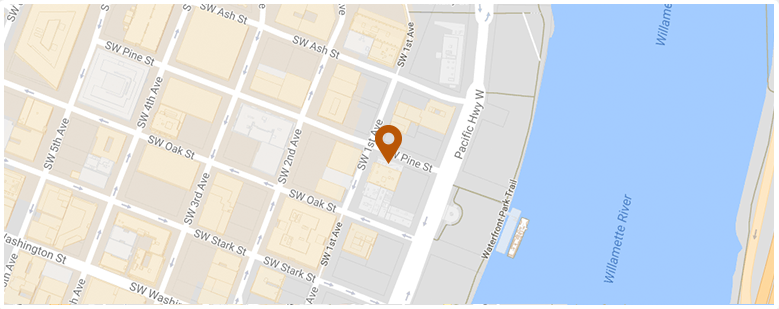
50 SW Pine St 3rd Floor Portland, OR 97204 Telephone: (503) 226-3844 Fax: (503) 943-6670 Email: matthew@mdkaplanlaw.com
map image
Contact Information