
Articles Posted in Car Accidents

The hope that using hands-free cell phones while driving is safer than talking on a hand-held phone while operating a motor vehicle went out the window after news surfaced that the National Highway Traffic Safety Administration withheld research as far back as 2003 showing that use of any kind of cell phone when driving is dangerous. Researchers even went so far as to draft a letter expressing concern that laws banning hand-held cell phones would not be enough to eliminate the safety risk.

Just talking on the phone is a form of distracted driving—it doesn’t matter whether you are holding the phone or using a headset. Talking on a cell phone slows a motorist’s reaction time and takes his or her attention off the road and away from driving and can cause a motor vehicle crash.

Apparently, NHTSA researchers knew as far back as 2002 that cell phone use while driving caused 240,000 traffic accidents and almost 1,000 motor vehicle deaths that year. Yet a former NHTSA head says he was encouraged to hold back the information so as not to anger Congress. The agency was warned to focus on gathering facts, rather than lobbying states to come up with tougher driving laws regarding wireless devices.

If only this information was made available to the public back then, talking on the phone and text messaging while driving may not have become unsafe driving habits that have grown to such epidemic proportion that some states have passed laws restricting cell phone use while driving. Now, even though motorists finally know how dangerous talking on a cell phone and texting while driving can be, many of them are finding it hard to stop.

How many lives could have been saved if this information had come to the surface six years ago? The traffic accident toll from cell phone use—currently about 2,600 fatalities, 636,000 traffic accidents, and 330,000 a year—has almost doubled in less than a decade. Even now, not all US states have laws banning hand-held cell phones. In Oregon, HB2377 was recently passed by legislators seeking to ban hand-held phones while driving. Hands-free cell phones, however, would still be allowed.

Each day, in many US states, hundreds of thousands of drivers continue to talk on hands-free cell phones while driving because they think that they are actually practicing safe driving habits. Meantime, one study from University of Utah psychologists equates cell phone use while driving to drunk driving.

Talking on any kind of cell phone while driving is considered a form of distracted driving that can cause Portland, Oregon car crashes, truck accidents, bus collisions, and pedestrian injuries.

Withheld research confirms driving danger of cell phone use, DelawareOnline.com, July 24, 2009
NY Times: Federal agency withheld warnings about distracted driving risks, Bikeportland.org, July 21, 2009
Related Web Resources:
US Wireless Communication Devices While Driving, NY Times, July 2003
Drivers on Cell Phones are as Bad as Drunks, University of Utah

Continue reading

The National Highway Traffic Safety Administration is reporting that there were 416 Oregon traffic deaths. This fatality figure is slightly lower than the 455 Oregon traffic deaths that occurred in 2007.

More 2008 Oregon Traffic Facts:
• 290 passenger vehicle occupant deaths
• 91 of the victims were unrestrained
• Alcohol was a factor in 136 traffic deaths
• 128 speeding-related deaths
• 48 Oregon motorcycle deaths
• 51 Oregon pedestrian deaths
Nationally, there was also a decline in US traffic fatalities, with 37,261 deaths last year compared to 41,259 traffic deaths that occurred in 2007.

More 2008 US Traffic Accident Facts:
• 11,733 drunk driver-related deaths
• 716 pedalcyclist deaths
• 4,378 pedestrian fatalities
• 5,290 motorcycle deaths
• 677 large truck fatalities
• 25,351 passenger vehicle deaths
• 2,346 traffic injuries
• 2,072,000 people injured in passenger vehicles
• 23,000 large truck deaths
• 96,000 motorcycle injuries
• 69,000 pedestrian injuries
• 52,000 pedalcyclist injuries (compared to 43,000 injuries the year before)

While there was a decline most kinds of traffic fatalities between 2008 and 2007, there was an increase in motorcycle fatalities—from 5,174 deaths in 2007—and pedalcyclist fatalities—from 701 deaths.

Common causes of 2008 Oregon motor vehicle crashes included:
• Drunk driving
• Drowsy driving
• Speeding
• Cell phone use
• Text messaging
• Driver inexperience
• Poor road conditions
• Defective autos
While the overall declines in Oregon and US traffic deaths are positive, there is always more that can be done to decrease the number of injuries and deaths that occur in the state and throughout the United States. One way to decrease the number of Oregon car crashes is for drivers and truckers and motorcyclists to drive responsibly and refrain from negligent conduct. Motorist negligence can be grounds for a Portland, Oregon personal injury claim.

U.S. Transportation Secretary Ray LaHood: Overall Traffic Fatalities Reach Record Low, NHTSA, July 2, 2009
2008 Traffic Safety Annual Assessment – Highlights, June 2009 (PDF)

Related Web Resources:
State Traffic Safety Information for Year 2008

Early Estimate of Motor Vehicle Traffic Fatalities for the First Quarter of 2009, June 2009 (PDF)

Continue reading

Near Corvallis Highway 34, rescuers had to use the Jaws of Life on Monday to extricate the victims of an Oregon car accident. Two people were transported to the hospital for treatment of their injuries.

According to Oregon State Police, a 1999 Toyota Corolla was headed eastbound on Highway 34 when the vehicle crossed the center turn lane, sideswiped a guardrail, and drove head-on into a 1990 Ford Bronco II. The driver of the Toyota, Portland resident Matthew Alexander, and the driver of the Ford, Lebanon resident Janet Smallman, were taken to Corvallis Hospital.

While Alexander, 25, was treated for minor injuries and later released, Smallman was seriously injured. Alexander received citations for reckless endangerment, reckless driving, third-degree assault, driving while suspended, and second-degree criminal mischief. Police think Alexander was fatigued at the time of the Oregon motor vehicle collision.

The Dangers of Drowsy Driving
According to the National Highway Traffic Safety Administration, some 100,000 police-reported auto accidents a year are caused by driver fatigue. Drowsy driving accidents cause about 71,000 injuries and 1,500 fatalities each year. Many experts, however, believe that these figures do not convey the full scope of this problem.

A drowsy driver is not as alert as a driver that is wide awake, and his or her senses, reflexes, and ability to react to emergencies in a timely manner may be impaired. Certain studies indicate that people that haven’t slept for 24 hours have cognitive-psychomotor abilities that are as impaired as that of someone with a blood alcohol content of 0.10%. The legal driving limit in the US is a BAC of .08%.

A driver that is tired or sleepy may even fall asleep at the wheel, which could cause his or her vehicle to become involved in a head-on crash with another car, a wall, or a tree. This can be especially catastrophic if the driver falls asleep while operating a car or large truck at full speed.

Police: Sleepy driver causes head-on crash, KVAL.com, June 22, 2009
Two Injured in Head-On Crash Near Corvallis, Salem-News, June 22, 2009
Drowsy Driving, AAA
Related Web Resources:
NHTSA

National Safety Council

—–

Continue reading

We all know that it’s dangerous to drive drunk. But do you know that it can also be dangerous to drive the day after when you’re suffering from a hangover?

The National Safety Commission recently published an alert discussing the effects that a hangover can have on a person’s driving ability. The findings come from a study by Brunel University in England. When test subjects that were sober and those with hangovers were monitored while using driving simulators to drive a five-mile course:

• Drivers that were hungover drove an average of 10mph faster than sober drivers.
• Sober drivers tended to drive about 32.6 mph, while hungover drivers drove at a speed of about 41.7 mph.
• While sober drivers had a tendency to drive above the speed limit just 6.3% of the time, hungover drivers did so about 26% of the time.
• Hungover drivers drove outside their lanes four times more than sober drivers did.
• Hungover drivers had two times as many traffic violations, including those involving red light running.

Once a person’s BAC drops to zero, a hangover can go last anywhere from 8 to 24 hours. Hangovers can cause headaches, lethargy, lightheadedness, a decrease in attention and concentration, fatigue, sleep deprivation, stomach irritation, and sensitivity to light.

With these side effects, it is obvious that hungover drivers are often not the most attentive drivers, which could make them more prone to getting involved in or causing a deadly Oregon car accident.

While “Don’t drink and drive” is advice that we’ve heard often, motorists that are hungover may want to think twice before getting behind the steering wheel of a car the morning after a night spent drinking too much. In addition to possibly getting involved in or causing a Portland, Oregon car crash, the hungover driver risks hurting pedestrians and other motorists.

The Hazards of Driving with a Hangover, The National Safety Commission, June 5, 2009
A Few Too Many?, The New Yorker, May 26, 2009
Related Web Resources:
Drowsy & Distracted Driving, NHTSA
Distracted Driving, NSC.org

Continue reading

According to AAA, the drop in gas prices is expected to inspire about 32.4 million Americans to travel by motor vehicle over the Memorial Day weekend. That’s a 1.5% increase in travel over the holiday weekend. Compare that to the 9.6% drop in road travel over the 2007 Memorial Day weekend when gasoline prices rose had risen to almost $4/gallon. Retail gas prices are currently averaging about $2.25/gallon.

101 Deadly Days on the Road
In 2004, Drive for Life, a public purpose initiative, said that poll findings caused it to declare the 101 days between Memorial Day weekend and Labor Day weekend as the 101 days when Americans are most at risk of becoming involved in a US auto accident because so many adults and children—particularly with the summer holidays coming—tend to travel by motor vehicle.

Among Statistics Cited by Drive for Life:
• Americans have been known to travel over 1 trillion miles over the 101 days. (2001, Bureau of Transportation)

• This figure is 10.5 million more miles a month each of the other months that make up the rest of the year. (2001, Bureau of Transportation).

• More people are killed in US auto accidents during the summer months than the other times of the year. Children and teens that would normally be at school are especially susceptible to fatal injuries from a motor vehicle crash. (NHTSA)

Common Causes of US auto accidents during the 101 Deadly Days:
• Drunk driving
• Improper use of safety belts and child safety seats
• Driver fatigue
• Speeding
• Inadequate auto maintenance
• Distracted driving
AAA says 83% of Memorial Day travelers are expected to ride in motor vehicles on US highways, while another 10% are likely to travel by bus, train, or another mode of transportation. The remaining 7% of holiday travelers are expected to fly by plane.

As a Portland, Oregon car accident victim, there are steps you can take to make sure that you are fully compensated for any injuries you sustained that were caused by another driver’s negligent behavior.

More Americans expected to travel for Memorial Day, AAA says, Palm Beach post, May 12, 2009
The 101 Deadliest Days on the Road and How to Survive Them

Related Web Resources:
Tips for Memorial Day road tripping, ConsumerReports.org
Memorial Day Weekend, Summer Travelers Can Cut Gasoline Costs in Tough Economy with Drive $marter Challenge Interactive Website, Money-Saving Tips, Resources, Alliance to Save Energy/PR Newswire

Continue reading

The US Department of Transportation is developing a new consumer program that will involve car manufacturers recommending specific child safety seats for each of their cars. Not every child car seat is necessarily the right fit for a specific car—even if the seat is highly rated or reviewed as one of the best or most expensive products in the market. A variety of recommendations will be made to meet different parents’ budgets that can hopefully help them pick the safest seats for their kids.

The US DOT also is ordering the National Highway Traffic Safety Administration to develop a new child safety seat standard for side impact safety. 1/3rd of all highway fatalities involving children younger than age 13 occur during side impact auto collisions.

While the current standard requiring child seats to withstand forces stronger than 99.5% of real collisions is good, US Transportation Secretary Ray LaHood believes that more can be done to improve child safety during auto accidents. He also noted that in order for a properly working child safety seat to do its job, parents and other adults must make sure that kids use them. According to statistics, 50% of kids under 8 years of age that died in auto accidents were not using child safety seats.

That said, it is the job of child safety seat manufacturers to make sure that their seats are free from defects. Parents and guardians rely on child safety seats to keep their kids and babies safe during auto collisions. While a properly working child safety seat can save lives, a defective seat can prove catastrophic.

Examples of defects that can render a child safety seat ineffective:

• Improper padding on the seat
• Defective seat buckle that can unlock at the wrong time, failing to properly secure the child in the seat
• Defective child seat clip
• Improperly designed harness
• Insufficient or hard to understand installation instructions
There is nothing more devastating for a parent than for his or her child to get hurt. If your son or daughter sustained serious or fatal injuries in a Portland, Oregon car accident that were partially caused by a defective child car seat, you may be entitled to recover Oregon personal injury or wrongful death compensation.

U.S. DOT Announces New Consumer Program for Child Safety Seats, NHTSA, April 24, 2009
Related Web Resources:
Consumer Product Safety Commission

Child Passenger Safety, NHTSA
Car Safety Seats: A Guide for Families 2009, American Academy of Pediatrics

Continue reading

A number of recent, unrelated Oregon motor vehicle accidents have resulted in catastrophic injuries and deaths. On Sunday, a 62-year-old Roseburg motorcyclist’s leg became severed below the knee when he became involved in a hit and run accident near Fair Oaks.

On Monday, police arrested Oakland resident Billy Whitehead for felony hit and run, driving while suspended, and reckless driving. Motorcyclist John R. Granholm sustained his catastrophic injuries when his motorcycle and Whitehead’s Toyota Corolla collided. Granholm flew off his bike, crashed into the car windshield, and landed on the pavement. As of yesterday morning, Granholm, who was admitted to Oregon Health & Science University Hospital in Portland, was listed in critical condition.

Near Sandy, an Eagle Creek mother and daughter were killed on Saturday in a motor vehicle collision on Highway 26. Oregon State Police say 42-year-old Pamela Benson and 11-year-old Clarice Marie Benson were pronounced dead at the Oregon crash site.

Preliminary evidence indicates that Benson’s Toyota Corolla was struck on the driver’s side by a 1987 Toyota R Runner. Boring and Sandy fire department workers had to extricate the SUV driver, 18-year-old Estacada resident Daniel Ingle, from his vehicle.

Last week, a 40-year-old Grants Pass man died on Monday after he was hit by at least one motor vehicle on Interstate 5 close to Merlin. Police are investigating the Oregon pedestrian death.

If you were involved in an Oregon traffic accident with an insured motorist, an injured driver, a drunk driver, a hit and run driver, a distracted driver who was talking on his cell phone or text messaging, or any other kind of negligent driver, you should contact an experienced Portland car accident attorney today. Having an Oregon personal injury law firm that is on your side can make a huge difference in terms of how much financially recovery you can obtain from all liable parties.

Hit-and-run deaths near Merlin spur OSP probe, Mail Tribune, April 28, 2009
Hit-and-run crash severs man’s leg, NRToday.com, April 27, 2009
Identities released in Sandy double-fatal accident, Oregon Live, April 26, 2009
Related Web Resources:
Oregon Department of Transportation
National Highway Traffic Safety Administration

Continue reading

The Oregon Bicycle and Pedestrian Advisory Committee (OBPAC) has written a letter to the Oregon Transportation Commission (OTC) calling on it to push for a ban on cell phone use while driving and increase its efforts to notify the public about the dangers of distracted driving. The OBPAC not only wants the OTC to support the National Safety Council’s call that all cell phone while operating a motor vehicle be barred, but it wants details about the hazards of distracted driving to be added to Oregon’s DMV manual.

Oregon doesn’t have any laws regarding adults and cell phone use while operating a motor vehicle. The state, however, does currently ban drivers younger than 18 from text messaging or talking on a cell phone while driving.

Next week, the House Transportation Committee will hear House Bill 2377, which bans the use of “mobile communication devices” when people are driving their motor vehicles. The bill makes talking or texting on a cell phone illegal—albeit only a secondary offense, which means an Oregon police officer has to catch the offender committing another offense first. However, the law doesn’t apply to hands-free devices.

According to a 2006 University of Utah study, people who talk on cell phones while driving exhibit behavior similar to that of motorists who are drunk driving. Among the study’s findings:

• Hands-free and handheld held cell phones impair driving to an equal degree.
• Drivers who talk on cell phones tend to drive slower and step on the brakes slower than drivers who aren’t using cell phones.
• Motorists who talked on cell phones while driving exhibited 24% more variation in following distance and were 19% slower when it came to accelerating back to normal speed after braking than drivers who weren’t talking on cell phones.
• Drunk drivers tended to drive slowly but more aggressively than sober drivers. They were also slower to brake and did so with 23% more force.

If you were injured in an Oregon car accident because another motorist was driving drunk, talking or texting on a cell phone, fell asleep behind the wheel, or was impaired, distracted, or negligent in any other way, you may have grounds for filing an Oregon personal injury lawsuit.

Oregon bike/ped committee urges state to ban cell phones while driving, BikePortland.org, April 17, 2009
Drivers on Cell Phones are as bad as drunks, U News Center, June 29, 2006
Related Web Resources:
Oregon Bicycle & Pedestrian Advisory Committee, Oregon.gov
National Safety Council

Continue reading

According to the US Department of Transportation’s National Highway Traffic Safety Administration, about 37,313 people died in US traffic accidents last year. This annual estimated death toll is the lowest in 47 years when in 1961, 36,285 died. Last year’s fatality rate was also the lowest ever recorded at 1.28 deaths per 100 million vehicle miles traveled.

The decrease in overall traffic accidents last year was clearly reflected in the Oregon city of Portland, where its Bureau of Transportation is reporting that 20 people died in traffic accidents last year—15 motor vehicle occupants and 5 pedestrians—and there were no bicyclist deaths. In the past, there have only been three other years—in 2000, 2006, and 2007—when the number of Portland traffic crash deaths was below 30.

Total number of traffic deaths in Portland were particularly high in the 1930’s and 1940’s before neighborhood speed limits, traffic signals, and sidewalk extenders existed. Now, the city has over 1,000 speed bumps—boasting more than any US city. It also has red light cameras, photo radar vans, and over 350 miles of designated trails, bike lanes, and boulevards. The NHTSA lists Oregon (at 96.3%) as one of the 16 US states where seat belt use is 90% or more.

According to traffic safety specialist Greg Raisman, the fact that more people are biking and walking makes them more cautious when they do get behind the wheel of a motor vehicle. This is another reason why there were less Portland motor vehicle deaths last year.

Despite these improvements, there are still some areas that are considered dangerous corridors for potentially deadly Portland traffic accidents:

• Burnside Street (beginning from Southeast 20th Avenue to Northwest Cornwall Road)
• Southeast Foster Road (from 52nd to 92nd Avenues)
• 82nd Avenue (stretching from Northeast Columbia Blvd to Southeast Clatsop Street)
• North Lombard Street (from Williams Ave to the St. Johns Bridge)
• Southeast Division Street (from 82nd Avenue to 148th Street)

The decrease in Portland motor vehicle deaths, is of course, excellent, but Oregon car crashes and injuries and fatalities still happen and can be grounds for a personal injury or wrongful death claim if there are any injuries or fatalities.

Accident fatalities in 2008 lowest in Portland history, TheOutlookOnline.com, April 2, 2009
U.S. Transportation Secretary LaHood Announces Record Low Traffic Deaths, Improved State Seat Belt Use, NHTSA, April 6, 2009
Seat Belt Use in 2008—Use Rates in the States and Territories (PDF)

Related Web Resources:
City of Portland, Office of Transportation
US Department of Transportation

—–

Continue reading

In Albany, Oregon, five people were hurt in a Linn County multi-vehicle crash on Friday when a driver in a stolen Jeep Cherokee ran a red light while fleeing from police. The suspect, 22-year-old Portland resident Kyle Holder, ran a red light before colliding with an Eagle Summit, a Toyota pickup, and a Nissan Sentra. Holder then fled the scene on foot but was later apprehended by police.

Oregon car crash victims who were injured include John Dinnis, 63, and Candice Dinnis, 56, who are both from Monmouth, John Carreira, 46, Robert Foss 49, and Scott Foss, 19, who are all from Albany.

Holder faces five counts of third-degree assault charges in Linn County and he is wanted in Multnomah County for assault, robbery, attempted strangulation, harassment, theft, burglary, and interfering with the making of a police report.

Running a Red Light
According to the Insurance Institute for Highway Safety, about 260,000 motor vehicles accidents occur every year because a driver ran a red light. For example, 206,000 US traffic accidents occurred because of red light running in 2003—934 people died and 176,000 got hurt as a result.

A few common reasons why people run red lights:
• To avoid having to wait for the light to turn green again.
• To avoid law enforcement officers who might be pursuing them.
• Driver distraction causes them to not realize they are about to run a red light.

Running a red light can lead to serious auto injury accidents. The driver responsible for causing a traffic accident because he or she ran a red light can also be held liable for Oregon personal injury or wrongful death.

For motorists wishing to protect themselves against red light runners, the Allstate Web site recommends:
• Make sure that when the light at the intersection in front of you turns green that you check to make sure there are no vehicles on all sides of you that are about to run a red light.
• Drive carefully into an intersection in case a motorist decides to run a red light.
• Pay extra attention when turning at intersections.

Man caught in Albany chases faces more charges in Portland, OregonLive.com, March 24, 2009
5 injured in 4-car crash as driver flees police, KVAL.com, March 23, 2009
Running red lights, Allstate
Related Web Resources:
Oregon DMV

State Traffic and Speed Laws, MIT.edu

Continue reading

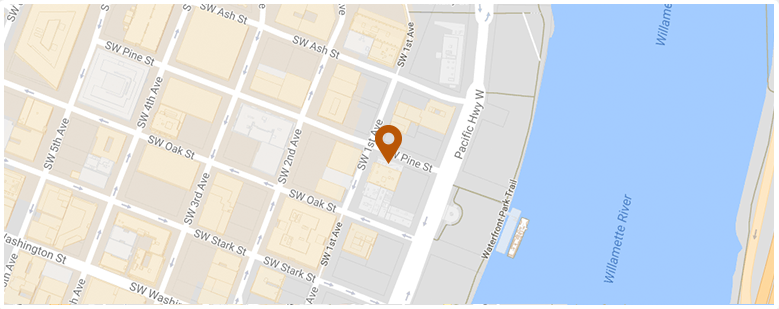
50 SW Pine St 3rd Floor Portland, OR 97204 Telephone: (503) 226-3844 Fax: (503) 943-6670 Email: matthew@mdkaplanlaw.com
map image
Contact Information