"I got into an accident and was nervous about finding a personal injury attorney after hearing so many awful stories, but from the start, I felt confident with my choice in Kaplan Law, LLC." Read More - Ben
"Matt and Gillian took great care of me during a stressful time of my life. Very caring and knowledgeable group. I would definitely recommend Kaplan Law!" Read More - Kayleigh
"Incredible service and results! Matthew Kaplan and his paralegal Gillian did an amazing job for me. Not only did they resolve my case beyond my satisfaction, they also were very caring and supportive thru my recovery. I couldn't ask for a better attorney." Read More - Jamal
Matthew D. Kaplan

Junction City, midway between Eugene and Salem, was the site of a serious Oregon truck crash last week, one that left a 20 year old father and his infant son both critically injured. According to the Eugene Register-Guard, Cory Jackson and his 9 month old son Eli were driving in the family’s Volkswagen Jetta when their car was struck by a truck. Both father and son were transported to area hospitals.

Police told the Register-Guard that Jackson “drove into the path of the truck.” In the immediate aftermath of the accident, however, they were unable to provide many further details. The accident took place at the intersection of Highway 99 and Milliron Road in Junction City. A portion of Highway 99 was closed for about four hours as police investigators and an accident reconstruction team worked on the accident site, according to TV station KMTR.

Oregon truck accidents can take an horrific toll on ordinary passenger cars. When the crash leads to a Eugene child injury accident the results are especially tragic. In such instances, contacting an Oregon car crash attorney as quickly as possible following the accident can be one of the most important moves you or your loved ones make.

Clackamas County officials have reached a settlement in the Sandy wrongful death suit filed by the family of Fouad Kaady, who was shot by Clackamas County police in 2005 while “unarmed, naked, burned and bleeding” according to The Oregonian.

According to the newspaper, settlement of the high profile Oregon wrongful death case involved no admission of wrongdoing on the part of police. County officials are quoted describing their decision to settle as “a purely business decision made by the insurance carrier”. Local media reports indicate Kaady’s family settled out-of-court for $1 million in an effort to spare themselves the trauma of a trial.

The events leading to Kaady’s September 2005 death began when a gas can exploded in his car, causing him to suffer severe burns over much of his body. He may also have sustained a traumatic head injury as a result of the car accident tied to the gas can’s explosion. Officers responding to reports of a naked man in the Sandy area tried to subdue Kaady when they found him. They are reported to have hit him with two taser blasts to little effect. He was shot seven times after climbing onto the roof of a police car. Witnesses described him as unarmed and non-life threatening, but police and county officials have steadfastly defended their actions.

In the wake of raised awareness of the seriousness of traumatic brain injuries, the military has become the latest institution to adjust its rules in a bid to lessen traumatic brain injuries and their consequences.

The Defense Department announced earlier this month that it will “launch a new policy in the coming months that will make head-injury evaluations mandatory for all troops who suffer possible concussions.” As a recent article in the San Bernardino Sun noted, the concern is with secondary injuries.

“A second injury as the brain is recuperating from the first can cause brain cells to die, resulting in a permanent loss of function – or even death,” the newspaper reports.

An Oregon wrongful death lawsuit filed by a mother from Keizer earlier this year looks more timely than ever now that the Consumer Product Safety Commission has warned consumers to avoid baby slings. The Keizer wrongful death lawsuit was reported by The Oregonian.

According to CBS News the CPSC issued its baby sling warning after examining 20 years of data on the safety of baby slings. “The CPSC identified and is investigating at least 14 deaths associated with sling-style carriers, including three in 2009,” according to the network. The Keizer incident, which occurred last year, is presumably one of those referenced in the study.

As CBS notes, baby slings are very popular with new parents and the market for the products has been growing in recent years. The CPSC, however, has concluded that “slings can pose two different types of suffocation hazards for babies.” They can press against an infant’s nose and mouth “suffocating a baby within a minute or two,” the agency says. Alternately, “where a sling keeps the infant in a curled position bending the chin toward the chest, the airways can be restricted, limiting the oxygen supply. The baby will not be able to cry for help and can slowly suffocate,” a CPSC news release states.

Following-up a story I blogged about last week, news reports today indicate that the NHL is seriously considering an immediate change to its rules that would lessen the risk of traumatic brain injuries by banning hits to the head. Though there have been several serious traumatic head injuries and concussions this season, the league’s public view as recently as 48 hours ago was that any move to revise the rules should wait for the offseason. League officials had cited the difficulties of briefing players and officials in mid-season as their reason for putting the issue off until the summer.

According to the Associated Press, however, thinking at the NHL’s Toronto headquarters has changed, and a proposed rule change tentatively approved by general managers last week may be implemented before the current regular season ends next month and before the Stanley Cup playoffs begin. The NHL’s board of governors will have the final say on the matter, but AP reports that a DVD presentation that “will illustrate what would, and wouldn’t, be allowed under the proposed rule change” has been prepared for circulation to all 30 NHL teams, as well as referees and League officials.

The move seems particularly apt since March is National Brain Injury Awareness Month. It comes at a time when awareness of the seriousness of traumatic brain injuries is rising throughout the sports world, in part because of the direct effect such injuries have on players and, in part, as an acknowledgement of the example professionals set for their younger fans in Oregon and throughout the nation.

The videos on The Oregonian’s website are arresting: a table saw stopping abruptly as it comes into contact with a hot dog (standing in for a human finger as part of a demonstration), leaving the hot dog barely nicked. The technology, called “Saw Stop”, was developed by a Portland lawyer (with a PhD in Physics) whose Tualatin-based company now manufactures its own table saws after failing to sell industry leaders on the technology. It represents a dramatic leap forward in safety: something that could decrease the number of Oregon amputations significantly were it to come into wider use.

The lawyer/inventor/physicist, Stephen Glass, designed a technology that allows the saw to distinguish flesh from things it ought to be cutting (such as wood or metal). When the blade senses it is in contact with flesh it stops and retracts, Glass claims, 10 times faster than an airbag deploys in an Oregon auto crash. Glass and his partners set up their own company to sell saws using their technology after the country’s leading tool manufacturers refused to license it, deciding, Glass said, that “safety doesn’t sell.” This, he says, despite an estimated 60,000 table saw injuries each year in the United States, about 3000 of which lead to amputations.

What may change this equation is a recent Massachusetts jury decision against Roybi, a large table saw manufacturer, awarding $1.5 million to a man who mangled his hand while working with one of the company’s table saws. The Oregonian reports that 60 similar cases have already been filed nationwide. Since Glass believes the tool companies were uninterested in his technology because they had not previously been held liable for the injuries their products can cause, the evolving legal landscape may lead to a change in the business environment.

Oregon does not have an NHL team, but many in the state who worry about Oregon traumatic brain injuries have been watching developments in the world of professional hockey over the last few days. As I have previously noted, NHL hockey differs in significant ways from the game TV viewers saw during last month’s Olympics. Among the biggest differences: the NHL still allows hits to the head – an action that carries a significant danger of traumatic brain injuries, even among athletes wearing helmets (which are required in the NHL). Such hits are banned in international hockey.

What brought this issue to the fore is not the fact that March is Traumatic Brain Injury Awareness month, but rather a gruesome incident in an NHL game last Sunday. During the third period of a game against the defending Stanley Cup champion Pittsburgh Penguins, Marc Savard of the Boston Bruins was knocked unconscious by a check to the head administered by Pittsburgh’s Matt Cooke. Savard, one of the team’s star forwards, was taken off the ice on a stretcher, wearing a head-brace. According to ESPN he has been diagnosed with a grade 2 concussion and is widely expected to be out for the remainder of the season.

What has outraged hockey fans – and not just in Boston – is the league’s decision not to punish Cooke for the infraction, despite the fact that he has been suspended on three previous occasions for unnecessarily rough play (two of those suspensions involved hits to the head). Even one of Cooke’s own teammates, Bill Guerin, “expected Cooke to be suspended”, according to the Boston Globe, and expressed incredulity when he was not. “If a guy gets hurt like that with a shot to the head, there’s got to be something,” the Globe quoted Guerin saying.

March is National Brain Injury Awareness Month, an appropriate moment to remind ourselves of the dangers that can accompany many otherwise fun and healthy activities. CBS Sports touches on this with the harrowing story of a teenager who sustained a concussion playing middle school football. Because the injury was not properly evaluated on the field Zachary Lystedt, then 13, returned to the game, with devastating consequences.

According to CBS, the teenaged Tahoma, Washington linebacker “writhed on the ground” after an initial hit near the end of the first half of a 2006 game. He returned to the field after halftime, but as the game ended collapsed in pain, his eyesight gone because swelling in his brain was cutting off an optic nerve. The teenager was rushed to the hospital where he spent a month in a coma, and another 20 months on a feeding tube. Today, “he has very little feeling and movement on his right side and remains dependent on a wheelchair,” according to CBS.

As he recovered Lystedt became an advocate for stronger rules governing student athletes and potential traumatic brain injuries. Last year Washington’s legislature passed a law, named in his honor, establishing “the most stringent return-to-play protocols of any state in the country,” according to CBS. Among other things, the law bars student-athletes who suffer a suspected concussion from returning to the playing field until they have been examined and cleared by a licensed medical professional. Lystedt now spearheads an effort to get similar legislation adopted in all 50 states, and possibly at the federal level.

New parents have been told for years to use rear-facing car seats until their babies turn one year old and weigh 20 pounds, after which front-facing child seats are the norm. But data from both Oregon and the federal government are leading medical and safety professionals to reassess this long-held belief, according to state publications and a recent article in the Bend Bulletin.

Expert opinion is coalescing around the idea that children should face backwards until they are at least two years old, the Bulletin reports. Oregon’s Public Health Service adds that “children under the age of two are 75% less likely to be killed or severely injured in a motor vehicle crash is they are riding rear facing rather than forward facing.”

There is an especially great danger of Oregon traumatic brain injuries and spinal cord injuries when young children are not properly restrained in an approved car seat. The Bulletin, citing child emergency physician Dennis Durbin, notes that “young children have weaker neck muscles than older children and adults. Their ligaments are looser. And the bones in the neck aren’t locked together in the same way as an adult’s.” These physiological factors put small children at a significantly higher risk of traumatic brain injuries when they are in a forward-facing car seat. Rear facing seats are safer because in a crash they tend to provide more support for a child’s neck and back.

An Oregon bicycle and car accident in which a Portland man allegedly intentionally hit a cyclist is being heard in the Clatsop County courts. Prosecutors say the 23 year old driver “just took off” after hitting a cyclist in Seaside, according to TV station KVAL. The station reports that the suspect was found hiding in the woods after abandoning his truck near the scene of the accident.

The Oregonian reports that the cyclist was seriously injured in the incident, and that the driver has been charged with attempted murder, first-degree assault and felony hit-and-run. Bail was set at $250,000.

The accident is a reminder of the importance of both cycling safety, and of the need for the strict enforcement of laws requiring motor vehicles to share the road with law-abiding Oregon bicycle riders. Drivers who intentionally run down cyclists are, mercifully, rare. Far more common, however, are careless motorists who simply do not pay as much attention as they should to Oregon bike riders. A Portland bicycle injury lawyer can advise cyclists who have been hit by cars – whether accidentally or intentionally – on their legal rights and whether they are entitled to damages to cover expenses incurred as a result of an Oregon cycling accident involving a car or truck. Such accidents can be especially dangerous, since Portland cyclists hit by a car stand a significant chance of suffering an Oregon traumatic brain injury.

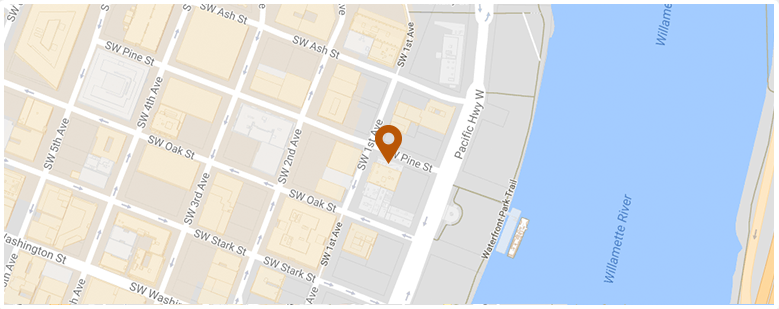
50 SW Pine St 3rd Floor Portland, OR 97204 Telephone: (503) 226-3844 Fax: (503) 943-6670 Email: matthew@mdkaplanlaw.com
map image
Contact Information