"I got into an accident and was nervous about finding a personal injury attorney after hearing so many awful stories, but from the start, I felt confident with my choice in Kaplan Law, LLC." Read More - Ben
"Matt and Gillian took great care of me during a stressful time of my life. Very caring and knowledgeable group. I would definitely recommend Kaplan Law!" Read More - Kayleigh
"Incredible service and results! Matthew Kaplan and his paralegal Gillian did an amazing job for me. Not only did they resolve my case beyond my satisfaction, they also were very caring and supportive thru my recovery. I couldn't ask for a better attorney." Read More - Jamal
Matthew D. Kaplan

The death of a patient who was also reportedly a close friend and employee of the accused doctor has left “a Northeast Portland physician (facing) administrative charges” and the possible loss of her medical license, according to a recent article published by The Oregonian.

The newspaper reports that the doctor has been charged with “gross or repeated negligence” connected to a December 2010 procedure in which her misadministration of a local anesthetic caused the patient to suffer a seizure and lose consciousness. The patient died four days later. The doctor, who now stands accused of Oregon medical malpractice, told the investigating board that “the surgery was to remove a lesion, (but) she told her patient’s son it was an attempted ‘tummy tuck’ to remove unwanted fat.”

The report by the medical board cited a number of significant issues, including inadequate evaluation by the doctor prior to surgery, the presence of insufficient back-up resources in case something went wrong and failure “to recognize symptoms of the drug overdose” once they became apparent.

The Consumer Product Safety Commission has issued a voluntary recall of “Little Tricky” kids bike helmets. See the link below for the original CPSC news release, including pictures of the helmets themselves. Parents should immediately double-check their kids’ helmets to ensure that the children are not using the affected products.

The agency news release says that the helmets “do not comply with CPSC safety standards for impact resistance.” That means that in the event of an Oregon bicycle accident the helmets might fail to offer the required protection. “Customers could suffer impact head injuries in a fall,” the CPSC warns.

According to the CPSC the helmets have been on sale since 2006. The company’s “Triple Eight” and “Sector 9” size “S/M” (for “small/medium”) models are affected by the recall. The government is urging parents to ensure that their children stop using the helmets immediately, and to return the helmets to the manufacturer for a full refund.

The mother of a man who died after receiving a mysterious injection while in police custody has filed a civil rights lawsuit in response to what she believes was her son’s wrongful death, according to a recent article in The Oregonian (citing the Salem Statesman-Journal).

The newspaper reports that the Lane County woman blames her son’s death on “deliberate indifference” on the part of prison officials. The 22-year-old died in May 2010 less than two weeks before his prison term was to end. He died, however, only a few hours after receiving a shot of what the suit describes as an “undetermined drug or toxin.”

According to the newspaper, the Oregon wrongful death suit alleges that in addition to administering the mysterious shot, officials ignored instructions concerning the victim’s medications and the fact that he had been diagnosed with a form of autism. The suit alleges that officers guarding the victim did not make the required regular checks of his cell, even after he attempted suicide roughly a month prior to his death. They also allegedly failed to administer necessary medications at the proper times, despite a memo from the “federal Bureau of Prisons” informing officials that the victim “had mental concerns.”

With the holidays now behind us this is a good moment to pause to examine the Oregon drunk driving and Washington drunk driving statistics reported over the Christmas and New Year’s weekends. DUII/DUI crash and arrest numbers are always a sad reminder of the importance of not overindulging when one goes out to celebrate, and of the crucial role our courts play in ensuring personal accountability.

According to radio station KBND, the Oregon State Police reported “one death and 28 DUII arrests on Oregon’s roads and highways.” The comparable figures for the New Year’s period on Oregon roads were 53 arrests and two crashes resulting in three fatalities, according to a report published in The Oregonian. To our north, in Washington, troopers “arrested 161 drivers suspected of being impaired by drugs or alcohol during the Christmas holiday weekend,” according to the Tri-City Herald.

In both states the Christmas figures represent notable decreases compared with the comparable period a year earlier. The Oregon New Year’s figures, however, were up by approximately 25% over the previous year and show a 55% increase compared to two years ago.

A few days ago I wrote about the importance of access to our courts and the myth that Oregon personal injury lawsuits are frivolous actions designed to clog up the legal system and undercut the business community. A case settled earlier this month in the southern part of our state illustrates my point perfectly. Through a settlement announced just before Christmas a severely injured motorist has used the legal system to achieve accountability from those responsible for his suffering and, in the process, to see justice done.

According to an account by the Associated Press, the victim of a horrific Oregon car-truck accident a year ago in Central Point will receive a $1.4 million payment to account for the injuries and trauma he suffered when “a trailer detached from the rig that was pulling it and slammed into his Chevy Silverado, flattening it and trapping him inside.”

Trapped in the wreckage for an hour-and-a-half the pick-up’s driver was badly injured. Upon finally reaching a hospital “he was treated for a broken neck, spinal fluid leakage… and (multiple) fractures… as well as nerve damage in his right arm and wrist,” the news agency reports. His suit against the truck driver and the driver’s employer alleged that the truck was operating recklessly at the time of the Oregon truck crash and that the vehicle had not been properly maintained.

A few weeks ago I alerted readers to the new movie Hot Coffee and the vital message it has for all of us as Americans. It is important that we educate ourselves concerning attempts by powerful corporations to curtail access to our courts. Now, the American Association for Justice has done us all a service by taking on one of the most powerful organs of corporate America, the United States Chamber of Commerce.

As a recent article on AAJ’s website lays out, though the C of C complains loudly and often about excessive lawsuits which are supposedly clogging our courts, “the U.S. Chamber is actually one of the most aggressive litigators in Washington D.C., entering lawsuits at a rate of twice weekly.” At the same time, however, the Chamber, through its Institute for Legal Reform, lobbies heavily “for legislation that would close the courthouse doors on anyone who would attempt to hold negligent corporations accountable.”

As every Portland personal injury attorney can attest, the barriers corporate America puts in the way of ordinary citizens seeking to confront powerful companies whom they believe have wronged them are formidable. Contrary to popular belief, getting to court is not easy. Winning in court is even harder, especially when one is faced with powerful and deep-pocketed corporate adversaries. As the article notes, the Chamber’s ILR branch “has the sole mission of making it more difficult for individuals harmed by negligent corporations to access the civil justice system.” The article contains a link to two detailed AAJ reports documenting the Chamber and ILR’s activities.

A fatal accident earlier this month at an Eastern Oregon railroad crossing where collisions involving trains and vehicles have occurred in the past raises serious questions about corporate responsibility and road/rail safety.

According to Oregon Public Broadcasting (citing an article that originally appeared in the East Oregonian), a 63-year-old county worker died earlier this month “when a train struck a road grader on Canal Road south of Hermiston” in the Eastern part of the state. The worker was using the grader to spread gravel along one side of the tracks at the time of the accident. According to OPB “the train dragged the grader about 100 feet before it stopped.” The grader operator died at the scene of the Oregon train and car accident.

What makes this tragedy especially noteworthy are facts indicating it was ultimately preventable. As the article explains, at the crossing in question “motorists cannot see trains coming from the west until they emerge around a nearby curve. The crossing is uncontrolled, meaning it does not have traffic control arms.”

The circumstances surrounding a product liability penalty announced this week by the Consumer Product Safety Commission go a long way toward explaining why both government oversight and the remedies offered by our courts are so important when defective or dangerous products find their way to market.

According to the Sacramento Bee, and an announcement on the agency’s website, the Consumer Product Safety Commission “has reached a settlement with E&B Giftware LLC of Yonkers, N.Y., resolving CPSC staff allegations that E&B failed to report a defect with its fitness balls.” The agency reports that the company has been hit with a $550,000 civil penalty as a result of its failure to act promptly on legitimate product safety issues.

A statement published on the CPSC website notes that E&B sold three million fitness balls between 2000 and 2009, despite, over that period, “47 reports of the fitness balls unexpectedly bursting when overinflated by consumers, resulting in injuries, including a fracture and bruises.” The agency notes that the balls were recalled by the company in 2009, but that more recent investigations have shown that the manufacturer was aware of some of the potential problems for a significant period of time prior to agreeing to the recall.

A pair of recent stories from Washington go a long way toward putting Oregon’s, and the nation’s, distracted driving problem in context: last week the National Transportation Safety Board formally called for a nationwide ban on “driver use of personal electronic devices,” according to the Washington Post. This came only a few days after new data compiled by the National Highway Traffic Safety Administration showed that “for all the criticism and new legal bans, texting by drivers just keeps increasing, especially among younger motorists,” according to a report filed by the Associated Press.

Both of the organizations are independent federal agencies. The NHTSA studies and promotes highway and traffic safety while the NTSB is charged with investigating transportation accidents of all types (i.e. not just cars and trucks).

The NTSB statement was particularly strongly worded, according to the Post, and followed the lengthy investigation of a crash last year in Missouri in which “a 19-year-old pickup driver sent 11 texts in the 11 minutes before the accident.” The paper adds that the NHTSA’s data show that in 2009 (the last year for which numbers are available) distracted driving resulted in 5000 deaths and half-a-million injuries on America’s roads.

Kevin Pierce’s long journey back to snowboarding is an object lesson for everyone here in Oregon concerned about traumatic brain injuries in sports. Once one of the world’s top riders and a likely member of the 2010 US Olympic team, the snowboarding star was severely injured “when he fell and hit his head on the icy wall” of a halfpipe where he was training.

A few weeks short of the second anniversary of that accident, Pierce got back on a snowboard, last week according to the New York Times. The paper reports that his road to recovery has been long and slow. That first run, at a ski resort in Colorado, was a slow cruise down an easy slope: “No tricks. No big air,” the newspaper reported.

Even now, Pierce’s life remains marked by “an unsteady walk, blurry vision and a diminished memory.”

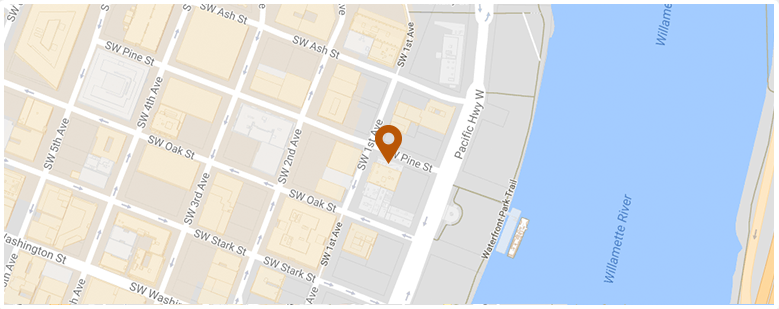
50 SW Pine St 3rd Floor Portland, OR 97204 Telephone: (503) 226-3844 Fax: (503) 943-6670 Email: matthew@mdkaplanlaw.com
map image