"I got into an accident and was nervous about finding a personal injury attorney after hearing so many awful stories, but from the start, I felt confident with my choice in Kaplan Law, LLC." Read More - Ben
"Matt and Gillian took great care of me during a stressful time of my life. Very caring and knowledgeable group. I would definitely recommend Kaplan Law!" Read More - Kayleigh
"Incredible service and results! Matthew Kaplan and his paralegal Gillian did an amazing job for me. Not only did they resolve my case beyond my satisfaction, they also were very caring and supportive thru my recovery. I couldn't ask for a better attorney." Read More - Jamal
Matthew D. Kaplan

One might have thought that when considering health policy the safety of hospital patients would be just about everyone’s top priority – medical professionals and legislators (and, of course, patients themselves) alike. After all, there are few areas of our lives in which we base crucial decisions to the judgment of others more than in the realm of health care. Yet as it considers Governor John Kitzhaber’s health care reform bill Oregon’s legislature is not only ignoring simple remedies that could lower costs even as they improve the quality of care in our state, it is also threatening to leave the poor outside the system, with no way to obtain justice when doctors, hospitals and nurses fail to deliver the care patients deserve.

It is distressing to see Oregon’s legislature spending too little time addressing patient safety issues as it considers health reform. As a recent article in The Oregonian notes, the cost savings offered by the proposed legislation lie mostly in the future. Broadly speaking that is good – one of the few things that liberals and conservatives agree on these days is the fact that rising medical costs represent a significant long-term budget problem at both the federal and state levels (how that problem should be addressed is an issue that elicits far less agreement). But as nationwide surveys that have been around for quite some time have shown, there are a number of basic fixes that can be implemented more-or-less immediately which will both reduce costs and improve patient safety.

Even more distressing, however, are aspects of the proposed law that would make it difficult or impossible for patients injured by negligent doctors to defend themselves in court. Under the current version of the legislation, strict limits would be placed on the ability of patients covered under Medicaid or the Oregon Health Plan to seek justice for their injuries at the hands of negligent providers. The result would be to create a two-tiered system of responsibility and accountability, one in which – to use an extreme example – a doctor who amputated the wrong limb of a patient with private insurance would be held accountable for his horrific mistake, but would receive no sanction if the patient in question was too poor to afford private coverage.

This story from Seattle is worth noting because it highlights one of the things bike riders in an urban environment fear most, and one of the types of Oregon and Washington bicycle accident that is most easily preventable – and one for which there is never really any good excuse.

According to West Seattle Blog, a local online publication, a cyclist in the Seattle area was hospitalized yesterday after “a car door opened in front of him causing him to flip over the door.” Quoting local police, the blog reports that despite the fact that he was not wearing a helmet the rider, a 30-year-old man, “remained conscious and responsive but could not remember the accident,” when police and emergency services personnel arrived to help him. He was taken to a local hospital “in stable condition.” The fact that the victim could not remember the accident is an especially worrisome sign – indicating a possible traumatic brain injury.

Several notable issues arise from this short item. The Washington bicycle accident is a reminder of how dangerous riding in a city can be – even a city as bike-friendly as ours are here in the Pacific Northwest. The victim in this accident appears to be extremely lucky, especially granted that he was not wearing a helmet. It is worth adding that the accident he experienced – being launched head-first over the handlebars – is just about the most dangerous kind of bike accident a rider can be involved in. That is why it is especially important that drivers always remember to look carefully before opening a car door. Checking one’s mirror alone is not sufficient: people getting out of a car need to turn around and look directly behind and beside the vehicle. We are all aware of our cars’ blind spots when they are moving. That awareness should not cease just because the car is parked.

A six-year-old Oregon child was injured in a crosswalk accident in Forest Grove earlier this month – highlighting the need for pedestrians and drivers alike to exercise extra caution whenever children and moving vehicles are present in the same area.

According to an account in the Forest Grove News-Times, “police said the accident happened… as the child walked with a family member across the street in a crosswalk. The child was walking ahead of the adult and was struck by a Ford Explorer.”

The victim was taken to Oregon Health and Science University Hospital and treated for what were described by the paper as “non-life threatening” injuries. The truck’s 33-year old driver “was cited for failing to yield to a pedestrian and driving with a suspended license.”

A recent frightening incident on I-205 led to a multi-vehicle Oregon auto crash involving a pick-up truck, a large commercial truck and a TriMet bus. A man from Monmouth was injured, several other vehicles damaged and the busy road was closed for several hours during morning rush hour, according to both The Oregonian and the Portland Tribune.

The chain of events leading to the crash began with a driver “passing on the right shoulder” who then abruptly “cut back into traffic,” according to The Oregonian. The driver of a pick-up swerved to avoid the reckless driver, went into a spin and crashed into a tractor-trailer. A TriMet bus traveling behind the pick-up also swerved in an effort to avoid the unfolding accident but wound up becoming part of it. Exactly what happened to the reckless driver who set all of this in motion is not mentioned in the media accounts – a fact which implies that the person ultimately responsible managed simply to drive away (particularly since both newspapers report that the police did not issue any citations at the scene of the multi-vehicle Oregon traffic crash).

That only one person was hurt in such a complex Oregon highway accident is a testament to the importance of seat belts. According to the Tribune “all drivers were using safety restraints.” That, at least, can be taken as a good sign. It was also surely fortunate that the bus was empty at the time of the accident. As I have noted in previous posts, TriMet has had a couple of difficult years leading to some significant questions about how – and how safely – it operates.

In a Miami courtroom today, a panel of federal judges are scheduled to hear arguments in a case with implications for athletes here in Oregon suffering from traumatic brain injuries. According to the Associated Press, the judges are “considering whether to consolidate lawsuits filed around the country by more than 300 former NFL players seeking damages for concussions they suffered.” The list of defendants includes some players, such as Tony Dorsett and Jim McMahon, who were once among the game’s biggest stars.

With the NFL fully engaged in the annual hype surrounding the Super Bowl the timing is, perhaps, unfortunate for the league. It serves, however, as an important reminder of risks of the game, even as it seems likely to revive the bad publicity the league has received for what some former players, attorneys and doctors describe as its lack of attention to long-term mental health issues. Granted the example that professional players set for other football players, and aspiring players, at every level the implications of the suit are significant. The growing public realization here in Oregon and elsewhere of the seriousness of traumatic brain injuries is surely not something the NFL wants to remind fans of in the run up to February 5’s clash between the Giants and the Patriots.

As ESPN notes, the number of players filing or joining traumatic brain injury suits has grown rapidly in recent months. The suits have been filed across the country, and today’s hearing in Miami deals with the narrow legal issue of whether all of these cases should be consolidated and go forward as a single legal action. The NFL denies charges that it failed to protect the players both during and after their careers. The players counter with painful personal stories all too familiar to any Oregon brain injury victim or their family: memory loss and more serious conditions including, as reported by ESPN, “headaches, dizziness and dementia.”

The New Year brought with it quiet news of an important development in the battle against Oregon distracted driving. Beginning this month, Oregon drivers stopped by police for using a handset while driving will no longer be able to avoid the two-year-old Oregon distracted driving law’s penalties by claiming that they were making a work-related call.

The language of the original bill passed by the legislature and signed into law by the governor allowed an exception for use of a handheld cellphone by an Oregon driver if the call in question “is necessary for the person’s job,” as the Los Angeles Times writes. This was arguably intended to be a way to protect police and other emergency services personnel whose jobs often require the use of a cellphone or hand-held radio.

In practice, however, it developed into a glaring loophole. As the Gresham Outlook noted in a recent editorial, the work exception “was that annoying escape route for ticketed drivers who used the ‘I was on a work call’ defense to get out of paying fines.”

The death of a patient who was also reportedly a close friend and employee of the accused doctor has left “a Northeast Portland physician (facing) administrative charges” and the possible loss of her medical license, according to a recent article published by The Oregonian.

The newspaper reports that the doctor has been charged with “gross or repeated negligence” connected to a December 2010 procedure in which her misadministration of a local anesthetic caused the patient to suffer a seizure and lose consciousness. The patient died four days later. The doctor, who now stands accused of Oregon medical malpractice, told the investigating board that “the surgery was to remove a lesion, (but) she told her patient’s son it was an attempted ‘tummy tuck’ to remove unwanted fat.”

The report by the medical board cited a number of significant issues, including inadequate evaluation by the doctor prior to surgery, the presence of insufficient back-up resources in case something went wrong and failure “to recognize symptoms of the drug overdose” once they became apparent.

The Consumer Product Safety Commission has issued a voluntary recall of “Little Tricky” kids bike helmets. See the link below for the original CPSC news release, including pictures of the helmets themselves. Parents should immediately double-check their kids’ helmets to ensure that the children are not using the affected products.

The agency news release says that the helmets “do not comply with CPSC safety standards for impact resistance.” That means that in the event of an Oregon bicycle accident the helmets might fail to offer the required protection. “Customers could suffer impact head injuries in a fall,” the CPSC warns.

According to the CPSC the helmets have been on sale since 2006. The company’s “Triple Eight” and “Sector 9” size “S/M” (for “small/medium”) models are affected by the recall. The government is urging parents to ensure that their children stop using the helmets immediately, and to return the helmets to the manufacturer for a full refund.

The mother of a man who died after receiving a mysterious injection while in police custody has filed a civil rights lawsuit in response to what she believes was her son’s wrongful death, according to a recent article in The Oregonian (citing the Salem Statesman-Journal).

The newspaper reports that the Lane County woman blames her son’s death on “deliberate indifference” on the part of prison officials. The 22-year-old died in May 2010 less than two weeks before his prison term was to end. He died, however, only a few hours after receiving a shot of what the suit describes as an “undetermined drug or toxin.”

According to the newspaper, the Oregon wrongful death suit alleges that in addition to administering the mysterious shot, officials ignored instructions concerning the victim’s medications and the fact that he had been diagnosed with a form of autism. The suit alleges that officers guarding the victim did not make the required regular checks of his cell, even after he attempted suicide roughly a month prior to his death. They also allegedly failed to administer necessary medications at the proper times, despite a memo from the “federal Bureau of Prisons” informing officials that the victim “had mental concerns.”

With the holidays now behind us this is a good moment to pause to examine the Oregon drunk driving and Washington drunk driving statistics reported over the Christmas and New Year’s weekends. DUII/DUI crash and arrest numbers are always a sad reminder of the importance of not overindulging when one goes out to celebrate, and of the crucial role our courts play in ensuring personal accountability.

According to radio station KBND, the Oregon State Police reported “one death and 28 DUII arrests on Oregon’s roads and highways.” The comparable figures for the New Year’s period on Oregon roads were 53 arrests and two crashes resulting in three fatalities, according to a report published in The Oregonian. To our north, in Washington, troopers “arrested 161 drivers suspected of being impaired by drugs or alcohol during the Christmas holiday weekend,” according to the Tri-City Herald.

In both states the Christmas figures represent notable decreases compared with the comparable period a year earlier. The Oregon New Year’s figures, however, were up by approximately 25% over the previous year and show a 55% increase compared to two years ago.

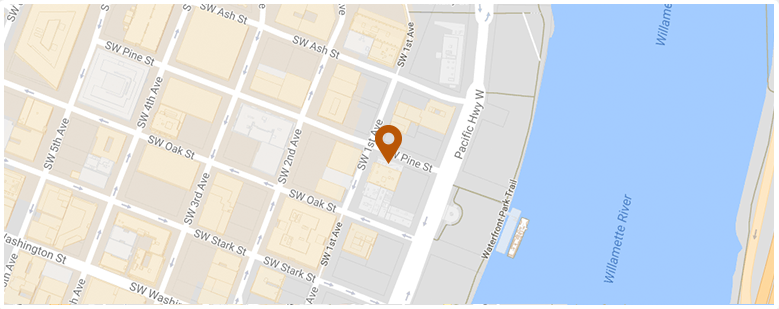
50 SW Pine St 3rd Floor Portland, OR 97204 Telephone: (503) 226-3844 Fax: (503) 943-6670 Email: matthew@mdkaplanlaw.com
map image
Contact Information