"I got into an accident and was nervous about finding a personal injury attorney after hearing so many awful stories, but from the start, I felt confident with my choice in Kaplan Law, LLC." Read More - Ben
"Matt and Gillian took great care of me during a stressful time of my life. Very caring and knowledgeable group. I would definitely recommend Kaplan Law!" Read More - Kayleigh
"Incredible service and results! Matthew Kaplan and his paralegal Gillian did an amazing job for me. Not only did they resolve my case beyond my satisfaction, they also were very caring and supportive thru my recovery. I couldn't ask for a better attorney." Read More - Jamal
Matthew D. Kaplan

An OHSU study just published in a medical journal may have uncovered key evidence linking Alzheimer’s disease and traumatic brain injuries and, more importantly, hinted at a way both can be addressed medically according to a recent article in The Oregonian.

According to the newspaper, a scientific paper prepared by OHSU and a university in New York “discovered that a traumatic brain injury fouls up the brain’s waste removal system, causing toxic proteins to build up among the cells. A similar phenomenon exists with Alzheimer’s.” The article goes on to note that if TBI and Alzheimer’s do, indeed, stem from similar chemical causes then there is “hope that scientists will find a drug one day to slow the development of Alzheimer’s or neurodegeneration after a brain injury.”

According to The Oregonian’s account of the study, the breakthrough lies in the discovery of “the brain’s waste removal system.” It continues: “Scientists had long suspected that the brain, which is separated from the body by a protective blood-brain barrier, had a mechanism for flushing out waste. But they did not have a clue about the process.” Now, they do. Another important feature of the study is its identification of the failure of this waste-flushing process as the core cause of both Alzheimer’s and of many traumatic brain injuries – a link between the two conditions that has long been suspected but has been difficult to prove scientifically.

The New York Times reported this week on a decision targeting cyclists that might surprise some: “In the wake of two pedestrian deaths caused by collisions with bicycles, Central Park has lowered the speed limit for cars and bicycles to 20 miles per hour from 25, while reconfiguring intersections with especially heavy foot traffic.” Though the announcement mentioned cars it was mainly focused on bikes since large sections of the park are closed to motor vehicles at any given time (on weekends the entire park is off-limits to cars except for a couple of car-only passages that are largely below ground level and mostly invisible to other park users).

The speed limit change is part of “Vision Zero,” a program of safety improvements touted by New York Mayor Bill de Blasio with the goal of eliminating pedestrian deaths citywide. Earlier this year the Times reported that as part of Vision Zero police had stepped up speed limit enforcement in the park, at one point issuing “tickets to 103 bicyclists” in a single weekend, though that level of enforcement is not the norm. The program’s most visible element has been the lowering of the speed limit on most of New York’s streets from 30 mph to 25 mph.

In both fatal accidents congestion appears to have been a major issue, according to the Times. One victim was struck by a cyclist who “said he had swerved to avoid other pedestrians.” The other involved “a 17-year old bicyclist dodging a pedicab.” The paper quotes the head of the Central Park Conservancy, the non-profit group that handles day-to-day operations of the park, saying “There’s no question: Slower traffic will mean a safer park.”

Oregon DUI stories often, sadly, seem to be an inevitable part of every holiday weekend. Here in Oregon Thanksgiving week began with a DUI story that may raise broader issues.

“Police say a Salem woman was under the influence of alcohol early Tuesday when she drove her car the wrong way down Interstate 5 and crashed into another car, killing a passenger inside,” according to a report this week in The Oregonian. The newspaper reports that the 49-year-old woman “was driving northbound in the southbound lanes of I-5 for several miles, police said, before her 2003 Volkswagen Jetta collided head-on with a southbound BMW near mile marker 266.5, near Keizer.”

A 49-year-old Nyssa woman riding in the BMW “was pronounced dead at the scene of the crash,” while that car’s driver and a second passenger were injured. The driver was treated at Salem Memorial Hospital while the second passenger was transported to the Portland area for treatment. The wrong-way driver was also treated at a Salem hospital for crash-related injuries and, once released, was charged “with second-degree manslaughter, criminally negligent homicide, driving under the influence of intoxicants, assault, reckless endangerment and reckless driving.”

Investigators from Oregon’s Occupational Safety and Health Administration are looking into a possible Oregon industrial accident that claimed the life of a Scappoose woman on Thanksgiving Day.

According to a report in The Oregonian the 43-year-old woman “died Thursday afternoon in an explosion that investigators believe was started by sparks from a metal grinder at an industrial work site.” The fact that, according to the local sheriff’s office, the site of the accident was being leased by a trucking company from a third party may prove to be significant in determining whether this incident meets the legal definition of an Oregon industrial accident.

Third-party liability is often overlooked in reporting on incidents like this, but is important nonetheless. Under Oregon law a company or a property owner’s duty to provide a safe workplace extends to sub-contractors as well as its employees. While we obviously cannot draw any firm conclusions based solely on the short piece in The Oregonian, it will be important for OOSHA investigators and, in turn, the courts to consider where ultimate responsibility for this fatal accident may lie.

An experiment by a Connecticut television station designed to highlight the problem of distracted driving among truck drivers turned up a wealth of disturbing evidence.

NBC Connecticut.com set up cameras on three major interstate highways “over the course of several months looking for distracted drivers behind the wheels of big rigs… it didn’t take long for us to find several drivers of tractor-trailers who appeared to be either talking or texting while driving.” Like Oregon, Connecticut has a comprehensive distracted driving law that bans the use of cellphones without a hands-free device and bans texting by drivers in all circumstances.

The article goes on to quote a spokesman for Connecticut’s Motor Transport Association asserting that the trucking industry has always advocated “tougher laws and better training to stop distracted driving,” as NBC Connecticut puts it. The TV station’s findings, however, highlight the importance of enforcement mechanisms to prevent distractive driving. Specifically, other states need to do what Oregon did several years ago and close loopholes that allow truck drivers and others involved in serious accidents to avoid distracted driving responsibility by claiming that their phone calls were “work-related.”

A recent story in the Salem Statesman-Journal highlighted some critical changes the ODOT is now beginning to implement in the name of traffic safety, but did an equally good job of drawing attention to how those changes get approved.

The article focused on the September 24 death of a well-known Salem-area psychiatrist in a fatal Oregon car crash on I-5. According to the newspaper the accident took place when a vehicle traveling the interstate highway in the other direction crossed the median. The psychiatrist died at the scene. A colleague who was travelling with him died at an area hospital a few days later from injuries suffered in the crash.

The circumstances of the accident raise longer-term questions about Oregon wrongful death, and whether the fatal crash may prompt a legal action. More immediately, what made the reaction to this accident different was the outpouring of emotion from the Salem community, an outpouring which only increased when the Statesman-Journal revealed “that in the previous 10 years there had been 20 crashes along I-5 in Salem that involved vehicles crossing the center median into oncoming traffic.” The paper noted that the ODOT has plans to install simple cable-like barriers along that stretch of the highway. Cable barriers have been shown to be a relatively inexpensive way to prevent crossover crashes. The paper also discovered, however, that bureaucracy and political infighting had led to progress implementing the plan to install the barriers moving slowly at best. Indeed, a low-bidder to carry out the work was not scheduled to be selected until next February, even though, the paper reported, a decision in principle to move forward had been reached some time ago.

Last month I wrote about the spreading scandal relating to potentially lethal airbags installed in millions of vehicles from nearly a dozen carmakers over more than a decade. The airbags have a defect that can cause the steel cylinders used to inflate them to fragment, sending shrapnel into the bodies of the people the bags are meant to protect. Car accidents involving the defective airbags, manufactured by an auto parts supplier named Takata, are believed to have resulted in at least four deaths.

This week, however, the story became even more serious when the New York Times reported that as far back as 2004 “Takata secretly conducted tests on 50 airbags it retrieved from scrapyards, according to two former employees involved in the tests.” The paper goes on to report that when the tests confirmed the defect in the airbags “instead of alerting federal safety regulators to the possible danger, Takata executives discounted the results and ordered the lab technicians to delete the testing data from their computers and dispose of the airbag inflaters in the trash.”

“Today, 11 automakers have recalled more than 14 million vehicles worldwide because of the rupture risks,” the Times notes. In addition to the four fatalities linked to the defective products “complaints received by regulators about various automakers blame Takata airbags for at least 139 injuries, including 37 people who reported airbags that ruptured or spewed metal or chemicals.” The newspaper adds that Takata is the world’s largest airbag company “accounting for about one-fifth of the global market.”

If there is any night of the year when extra-cautious driving and attention to pedestrian safety are required in residential areas it is Halloween. Small children are everywhere, running up and down streets, many of them dressed in dark costumes as the sun sets. The news spreading around the northwest today is of a terrible accident that appears to have brought this fact home in the worst possible way.

According to The Oregonian “two girls, ages 6 and 7, and a 20-year-old woman were in critical condition with life-threatening injuries on Saturday morning, police said. The woman was reportedly put into a medically-induced coma.” This was the tragic outcome of an apparent Washington drunk or impaired driving incident in which “a Ford Mustang… jumped the curb and struck a group of trick-or-treaters on a Vancouver sidewalk Friday night.” The newspaper adds that, according to police, the man driving the car “was likely speeding and driving impaired.” A 33-year-old woman also suffered broken bones in the Washington car accident.

Police say the driver, a 47-year-old male, only came to a stop after hitting a pole. He is reported to have only minor injuries. The paper reports that toxicology tests are still being conducted but the police already suspect that drugs may also have been a factor in the driver’s impairment.

As I have written on several previous occasions, distracted driving here in Oregon and around the country is not exclusively a teen problem – but it is also important to acknowledge that it is an issue of particular relevance to teens and other young drivers.

The latest attempt to reach that audience and impress the importance of this issue on them comes from, of all places, CalTrans, California’s state transportation agency. According to a recent Tech Wire story, reprinted by the newsletter Government Technology, the agency “has launched a mobile app and online game designed to teach teenagers the importance of safe driving habits and avoiding distracted driving while on the road.” The app is currently available for free in the Google Play store, the publication reports (there is no mention of an iOS version at this point).

According to Government Technology the app and game “puts the player in the driver’s seat and challenges them to obey the speed limit in a virtual car while slowing down in highway work zones and avoiding phone calls and other potential distractions… CalTrans seems aware of the potential mixed message of releasing a game app, and says the game should not be played while driving.” If that last point seems a little obvious the fact that the agency felt compelled to make it is also evidence of how deep the distracted driving problem runs, especially among teens.

For more than a week we have been learning details of what may be one of the biggest recalls in automotive history. The potential car accidents linked to it are especially scary because the recall is focused on one of the most basic safety features of modern automobiles: the airbags.

As the Associated Press reported earlier today, a recall of cars with airbags made by Takata, a Japan-based supplier of parts to numerous car companies, is now thought to effect “more than 12 million cars… (including) dozens of models made by BMW, Chrysler, Ford, General Motors, Mazda, Honda, Mitsubishi, Nissan, Subaru and Toyota dating to the 2001 model year.” As a result of the recall order AP reports that AutoNation, the nationwide chain that is the country’s largest car dealer, says it will stop selling the affected makes and models. The company’s CEO also went on record criticizing the car manufacturers “confusing and incoherent” handling of the situation.

As the news agency reports, the Takata-made airbags “can inflate with too much force, blowing apart metal canisters and sending shards flying at drivers and passengers. Safety advocates say that four people have died due to the problem.” The article goes on to note that “government investigators believe that prolonged exposure to moisture in the air makes the air bag inflator chemicals burn too fast, creating too much pressure.”

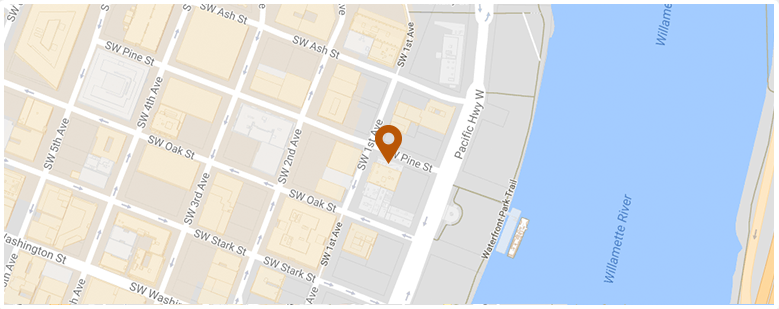
50 SW Pine St 3rd Floor Portland, OR 97204 Telephone: (503) 226-3844 Fax: (503) 943-6670 Email: matthew@mdkaplanlaw.com
map image