Articles Posted in Motor Vehicle Accidents

With an ice storm warning now extending throughout the day Sunday and road closures throughout the Pacific Northwest this is a weekend to avoid any travel that is not absolutely necessary.

That is not just my opinion, it is the official word from public safety officials throughout the state. As The Oregonian has been reporting – and regularly updating on its home page – the severe weather gripping much of Oregon and Washington State poses a real threat to anyone out on the roads.

These warnings do not only apply to well-known danger zones, like the stretch of interstate in Eastern Oregon known as Cabbage Hill. According to the newspaper, local leaders in both Portland and Beaverton are urging everyone to “just stay home.” Portions of I-5 were closed at this writing. Roads and sidewalks are icy, Portland’s streetcars are not running and Tri-Met is “no longer reliable” according to city transportation officials quoted by the newspaper.

A leaked state audit of Tri-Met, details of which appeared in The Oregonian this morning, speaks of morale problems among “front-line” workers (such as bus drivers) and portrays an agency where “safety first” is often little more than a slogan.

The newspaper’s summary of the 54-page report is startling: “TriMet needs to fix a culture where low morale, secrecy, safety problems and more than $1 billion in unfunded financial obligations threaten to wreck the public transit agency,” the Oregonian says, summarizing the report’s key findings. The leaked report is a draft, not a final, official document but that fact does little to ease the sense that state auditors uncovered serious problems as they examined TriMet. The report was compiled by the Oregon Secretary of State’s office.

Perhaps even more surprising is the fact that TriMet does not appear to be disputing the picture the report paints. The newspaper reports that TriMet officials “took the Secretary of State’s criticisms in stride… in a 10-page response, TriMet General Manager Neil McFarlane didn’t disagree with the findings. Rather, he seemed to ask how high he should jump to implement the audit’s suggested improvements.”

An item posted late last night on The Oregonian’s website offers details of a serious Washington bicycle accident involving a teenage rider in which a motorist faces assault charges and, potentially, drunk driving charges as well.

The paper, citing the Everett Herald, reports that a 52-year-old Everett man driving a pick-up truck “allegedly struck a teenage cyclist, launching the boy off a 30-foot overpass… the crash caused the victim, 16, to fall about 20 feet onto a hillside, police said. His body then tumbled an additional 10 feet down into the street.” The paper reports that the boy’s injuries include a possible broken neck – meaning that, while they are not, according to the paper, life-threatening, they could be life-altering for both him and his entire family.

The pick-up truck driver “told police he had been drinking beer or wine a few hours before the crash and believed he suffered a seizure.” The paper reports that when he was arrested at the scene the suspect “had trouble standing and could not easily move his hands. Officers said the suspect slurred his speech and had bloodshot eyes.” Bail for the suspect was set at $25,000, the paper reports.

A new year begins on Wednesday and, with it, a collection of new laws take effect. From my perspective as Portland distracted driving lawyer one of the most important new measures involves the tightening of our state’s laws concerning texting and the use of cellphones while driving.

Concerning distracted driving, the big news is that fines for the offense are about to rise significantly. When the law went into effect four years ago the fines were modest, topping out at only $90. Starting January 1, however, “texting or talking on a cell phone while driving will fetch higher fines – at least $142 and up to $500” according to The Oregonian. The higher fines are good news for all of us who are concerned with the issue of Oregon distracted driving and want to see more done about it. Simply put, a potential $500 fine is a much more significant deterrent than $90. Oregon has long been one of the nation’s leaders on this issue, and it is good to see our state leading again.

Some of the other notable measures that take effect this week include a statewide ban on the use of tanning beds by minors without parental permission, a measure allowing landlords to require tenants to maintain renter’s liability insurance and a law preventing employers from requiring access to the social media accounts of employees and job applicants.

As we move through this holiday weekend here is a sobering thought about Oregon distracted driving: at any given moment during daylight hours nine percent of all drivers on the road nationwide are using cellphones, according to the National Safety Council.

The Council has just released its annual analysis of driving and cellphone usage and while the figures are for 2011 – the latest year for which full data sets are available – the numbers can be chilling to read. For example: a driver using a cellphone – even with a hands-free device as required by law here in Oregon and elsewhere – is four times more likely to be involved in a crash. More than one-in-five of all “fatal, injury and property-damage only crashes are likely attributable to talking on cellphones.” That added up to 1.1 million traffic crashes, according to the Council’s analysis.

The Council survey draws together data from a number of government, academic and non-profit sources. Two sections of the report stand out as particularly striking. First, its conclusion that using a hand-free device such as a headset, or the increasingly popular Bluetooth speakerphones built into many newer cars, does not lower the risk of a distracted driving crash nearly as much as one might think. Second, that the distracted driving problem is more widespread than originally thought because cellphone-related crash data is under reported almost everywhere in the country.

The non-profit National Safety Council has published an excellent tip sheet to help parents prepare teen drivers for the special challenges that come with winter.

Oregon car accidents can happen any time of the year, of course, but winter is different. As the website notes: “Winter conditions can challenge even the most experienced drivers. It is incumbent upon a parent to prepare a teen as best as possible for driving under those difficult circumstances that adverse weather brings.”

Many of these recommendations are so basic that one might overlook them, but they bear repeating: slow down, factor in more travel time to get from point A to point B so you don’t unconsciously feel a need to rush; gently test a moving car’s brakes when ice and snow are present to get a sense of road conditions; don’t use high beams when it is snowing. Don’t use the cruise control in the snow either. Keep a greater distance between vehicles than one does in easier driving conditions.

Last week the New York Times carried an op-ed piece on the subject of urban cycling, particularly bike commuting, that managed to be thoughtful, funny and harrowing all at the same time. Topped by the provocative headline: “Is it OK to kill cyclists?” the article cites numerous recent instances of fatal bike accidents from around the country in which bike riders were killed by drivers who then were subject to only the lightest of punishments.

A 24-year-old riding inside a bike lane in San Francisco was killed by a truck making a right turn and police issued no citation. A Seattle area teenager who ran over and killed a cyclist in 2011 was “issued only a $42 ticket for an ‘unsafe lane change’ because the kid hadn’t been drunk and, as (the police) saw it, had not been driving recklessly.” As the article rightly points out: “Laws in most states do give bicyclists full access to the road, but very few roads are designed to accommodate bicycles, and the speed and mass differentials – bikes sometimes slow traffic, only cyclists have much to fear from a crash – make sharing the road difficult to absorb at an emotional level.”

The writer cites a friend who advised him that the best survival strategy was to assume “that every driver was ‘a mouth-breathing drug addict with a murderous hatred for cyclists.’” On one level that is not necessarily bad advice, but the tragedy is that in this day and age it is even necessary. With cycling now, as the article notes, $6 billion industry and an outdoor activity whose popularity is surpassed only by running this is a subject that resonates far beyond the our own streets in legendarily bike-friendly Portland – a fact made clear that even here we suffer several fatal Oregon bike and car crashes every year.

The Oregonian highlights an initiative by Beaverton’s police that is good for the public, and could serve as a model for other communities across Oregon. According to the newspaper as part of a pedestrian safety initiative “more than 30 citations were issued and one arrest made” yesterday alone in Beaverton.

“Beaverton police patrolled Southwest Hall Boulevard and Broadway Street between 11 am and 1 pm to raise awareness and enforce pedestrian right of way laws… There were 25 crosswalk-related citations issued Wednesday and another seven for other traffic-related violations,” the paper reports, citing a Beaverton police spokesperson.

Let’s pause and think about that for a moment: more than 30 violations observed and ticketed by police in and around a single intersection over a period of just two hours on a weekday. The newspaper notes that two similar patrols elsewhere in the city during September resulted in “69 crosswalk-related citations and 23 citations for other traffic-related violations,” so it is fair to say that this week’s experience can be called typical. Many Oregon car accidents are avoidable – this kind of activity often leads to the most avoidable accidents of all.

The 2009 death of an Oregon-bound family on a California freeway led this week to an important wrongful death ruling by a court in our neighbor to the south. As reported by the Los Angeles Times a 13-year-old girl is now the only survivor of her family’s SUV accident. The family car hit the rear of an illegally parked truck near La Crescenta, California while on its way to Oregon for a Thanksgiving vacation.

According to the newspaper the truck’s driver was parked “in an area designated for emergencies only without his trailer lights or emergency reflectors on… (the driver’s) attorney argued at trial that his client had pulled over to the side of the road to take medication for a severe headache, which constituted an emergency.” The victim’s attorney, however, pointed out that the driver had given conflicting versions of the incident at different times, “including stopping to urinate and pulling over to sleep,” the Times reports.

When the family SUV burst into flames the teenage girl and her elder brother managed to reach safety but their parents and another brother were not able to get away from the burning car. The newspaper notes that the surviving brother “committed suicide in June, four days before his mother’s birthday,” a fact that highlights in the worst way imaginable the intense psychological trauma these two children have gone through.

Regular readers know that I am a strong supporter of SafeKids Oregon, so I’m pleased to share the fact that SafeKids Oregon has joined with other SafeKids organizations across America and overseas to promote Teen Driver Safety Week.

As SafeKids Oregon announces on their website (see link below), “although SafeKids primarily focuses on children ages 0 – 14, we believe that teaching safety to pre-drivers will help all children and youth be safer now and in the future.” This week’s activities are focused on social media as a way of making young soon-to-be drivers aware of the importance of safety and the responsibility that comes whenever they, or anyone else, sits down behind the wheel.

A key component of the Safety Week initiative is Teen Driver Source, an information-sharing program run by the Children’s Hospital of Philadelphia. As the SafeKids website outlines, the initiative brings together “a team of researchers, educators and communicators from the Center for Injury Research and Prevention. The Teen Driver Safety Research Team takes a multidisciplinary approach to study the causes of teen driver-related crashes and then provides information, tools and other resources to help prevent these crashes.” Put another way, it offers tools that allow the lessons learned across the United States to be applied everywhere, rather than in just a particular city or state.

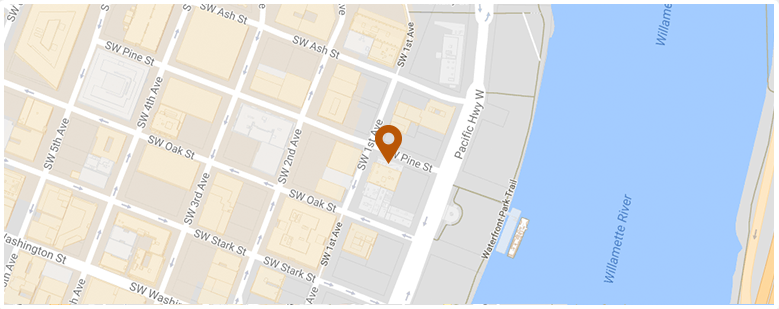
50 SW Pine St 3rd Floor Portland, OR 97204 Telephone: (503) 226-3844 Fax: (503) 943-6670 Email: matthew@mdkaplanlaw.com
map image