
Articles Posted in Injuries to Minors

An innovative program at a high school in Yamhill recently brought together students and local safety officials to demonstrate the dangers of Oregon drunk driving, according to an account in the Yamhill Valley News-Register.

The program, known as SKID (Stopping Kids Intoxicated Driving) was developed in 1998 by the Sheriff’s Office in Washington County, west of Portland. It encourages students to work with local police and fire officials, the sheriff’s office, state police and a local funeral home to demonstrate Oregon drunk driving car crash scenarios that are, in the paper’s words, “highly realistic but not real.”

The demonstration described by the newspaper was designed to simulate the effects of drunk driving and drug use in the imagined aftermath of prom night. In addition to the students assigned to simulate impaired driving, others were texting in the car, some of them riding without wearing seat belts. Those details were designed to emphasize to teens the importance not just of not driving while impaired, but also of not choosing to ride along with an impaired driver.
Oregon parents of a 12-year old boy killed in a go-kart accident in Washington state have filed a Washington wrongful death suit against Benton County, the city of Richland (where the accident occurred) “and several other people and organizations whose negligence (the parents) claim contributed to their son’s death,” the Tacoma News-Tribune reports.

Kenneth McKinster died in 2008 “when his kart slid off the track while he was trying to navigate a hairpin turn during a weekend racing event,” the paper reports. His parents believe the kart itself was poorly designed, and was later improperly maintained by the Tri-City Kart Club and by the city and county which, at the time, owned the track itself. According to area TV station KEVW the case is expected to be heard in court before the end of the year.

Go-karts are motorized vehicles capable of traveling at fairly high speeds but including very few of the safety devices we all take for granted in ordinary cars. That places a special responsibility on the owners and operators of go-karts and similar vehicles when it comes to safety. Injuries to children here in Oregon and Washington can easily occur, as this case tragically demonstrates.

A poignant reminder of the long-term effects of concussions on football players cane over the weekend when Terry Bradshaw revealed in a blog post that “he is suffering from deficits in short-term memory and impairments in his hand-eye coordination,” according to the Los Angeles Times. The newspaper reports that the former Pittsburgh Steelers quarterback, a long-time NFL commentator on television, attributes his ever-worsening problems to “at least six concussions” sustained during his NFL career.

Bradshaw, of course, played in the 1970s and it might be argued that today’s players are better-trained and use better equipment than their predecessors. Two minutes watching NFL films from that era, however, will show any viewer that while today’s equipment may be better, today’s players are bigger, stronger, play the game faster and hit much, much harder than those of a generation ago.

Bradshaw’s revelations of the ongoing effects of brain injuries come at a time when the league is trying to improve its less-than-stellar record of caring for players once their careers are over. It also, as the paper notes, arrives at a time when team officials and players in the worlds of football and hockey are increasingly aware of the damage lesser hits can cause. The Times cites a doctor at UCLA who mentions the cumulative effects of multiple less-than-concussion-level hits – an issue that the NHL has recently begun paying particular attention to.

A surprising – and heartening – article in the sports section of the New York Times last week revealed that heightened awareness of the serious nature of sports-related concussions and other traumatic brain injuries has turned up in an unexpected forum: video games.

The paper reports that “Madden NFL 12, the coming version of the eerily true-to-life NFL video game played by millions of gamers, will be realistic enough not only to show players receiving concussions, but also to show any player who sustains one being sidelined for the rest of the game – no exceptions.”

Considering the extent of the criticism being weathered by the real-life NFL over head injury issues and the long term health of the league’s players, this development can only be called striking. The article quotes John Madden himself saying that the change in the game’s format was driven partly by the desire for ever-greater realism, but also from a belief that children need to understand how serious a matter concussions can be. “We want that message to be strong,” Madden told the Times.

Oregonians could learn some lessons about the dangers of drunk driving accidents from an incident unfolding to our south, in Northern California.

A 64-year-old retired La Selva Beach man is facing serious charges after what media reports describe as a classic drunk driving hit-and-run accident. The Santa Cruz Sentinel, quoting police sources, says the alleged perpetrator “was driving a 2006 Camry south on State Park Drive approaching the Highway 1 off ramp just before 2 p.m.” last Sunday when he hit a 12-year-old boy in a crosswalk.

The paper reports that the driver fled, but witnesses at the scene “helped identify him” leading to his arrest just over an hour later. The good news is that the child does not appear to have been seriously injured.

An important article published in the New York Times last week indicates that the manufacturers of football helmets are moving to address problems in the way their products are used – a move that could benefit many young athletes in a time when traumatic brain injuries stemming from football and other rough sports are an issue of increasing concern.

According to the newspaper, “the National Athletic Equipment Reconditioners Association (Naera) announced (last) Thursday that is would no longer accept helmets more than 10 years old.” As the paper notes, many schools regularly send football helmets in for reconditioning, but concerns have been rising that as the products age it can become difficult if not impossible to bring the gear back to a point where it meets appropriate safety standards. Under current standards, the paper notes, so long as the equipment met applicable safety standards when it was new “helmets of any age and condition can be worn, despite concerns over how the stiffening of foam and the degrading of the polycarbonate shell can leave a player more susceptible to concussions.”

Though the article does not say this, it appears that football helmet manufacturers and reconditioners may be taking a cue from the ski industry. For several decades the manufacturers of ski bindings have indemnified their products for a finite period of years (usually 10 or 12). Once that period expires, skiers quickly discover that few ski techs will agree to make even minor adjustments to the bindings. A cynic might say the companies are forcing skiers to purchase new equipment on a regular basis, but the policy also ensures that the vast majority of skiers are using relatively up-to-date equipment – an important consideration in such a potentially dangerous sport.

A Central Point boy is hospitalized with dire injuries following an Oregon dog attack late last month, according to an area newspaper and television station. The Columbian reports that the nine year old “was attacked by three large pit bulls at his father’s home in Central Point.” He is reported to be in “fair” condition at the Rogue Valley Medical Center.

The exact circumstances of the attack are unclear from the available media accounts. Area TV station KPTV reports, however, that the animals were captured in the wake of the Oregon dog attack and “will be held in quarantine by animal control officers… to check for rabies and other problems that might have led to the attack.”

Because the incident involves a serious Oregon child injury the authorities are expected to take special care with their investigation. According to KPTV the “pit bulls appeared to have torn off a large chunk of the nine year old boy’s scalp.”

A Florida lawsuit concerning a serious burn suffered by a four year old boy while visiting Disney World raises questions every parent should be concerned about regarding safety and possible injuries to children at theme parks and other recreational areas.

Contrary to what one might think, the case involves food safety – not the safety of amusement park rides (arguably the first thing many parents worry about when visiting a theme park). According to an account of the incident published in USA Today, the boy was severely burned while having dinner in a restaurant at Disney’s Magic Kingdom resort near Orlando “when a paper cup of scalding nacho cheese splashed on his face after he’d grabbed a food tray to keep from falling out of an unsteady chair.” A picture accompanying the newspaper report shows a small child with horrific burns disfiguring his face.

Some commentators have compared this to the famous McDonald’s hot coffee case of the mid-90s. But even if you were among those who thought the coffee case excessive it is important to understand that there are key difference between that case and this one. Aside from the obvious factor that a child is involved, it is (or ought to be) clear that customers have different expectations from different products. Coffee is intended to be consumed hot. Nachos, especially the processed kind one finds at an amusement park or a ballgame, are generally warm, at best. One does not expect the goopy cheese sauce to be cold – but no reasonable customer is expecting it to be scalding hot either.

An article just published by the online magazine Slate raises an intriguing question: is it safer to drive head-first into a parking spot, the way most Americans do? Or to back into it? The question is relevant because if there is strong data suggesting that backing into parking spaces is, by and large, safer that, in turn, would mean that we ought to begin looking at Oregon car accidents in different ways.

We all know, of course, that Portland car accidents can lead to any number of traumas: Oregon brain injuries, injuries to children, even wrongful death. Who among us has not had a near miss either when backing out of a parking space or when passing by (whether in a car or on foot) someone who is doing so without paying sufficient attention.

Though Slate notes that “parking lot crash statistics are a bit hazy,” it goes on to note: “a study by the Insurance Institute for Highway Safety in 2001 and 2002 found that 14 percent of all damage claims involved crashes in parking lots (some number of which must have involved vehicles moving in and out of spaces).” Further, the National Highway Traffic Safety Administration in a report to Congress last year estimated that “backover crashes,” as they are officially known, “cause at least 183 fatalities annually” as well as approximately 7000 injuries. The NHTSA is studying new rules that it hopes may lower these numbers by cutting the size of vehicle blind spots.

February 6 to 12 is National Burn Awareness Week. Here in Portland, Safe Kids Oregon (a project of the Oregon Public Health Division) opens its website promoting burn awareness with a particularly startling fact related to injuries to Oregon children: a “young child’s skin is thinner than older children and adults, and their skin burns at lower temperatures and more deeply.”

As the site goes on to note there are numerous ways that burns can happen in and around the home. We are all aware, for example, of kitchen dangers: steam, open flames, burners that look cool when they are not, etc. And most people with small children are aware that they should block sockets and replace frayed cords to lessen the risk of electrical burns. It is worth remembering, however, that burns can happen anywhere in the home. Safe Kids Oregon’s Burn Awareness Week web page, for example, includes a very useful section on bathroom hazards.

As the website notes, “accidental childhood injury” is “the leading killer of children 14 and under.”

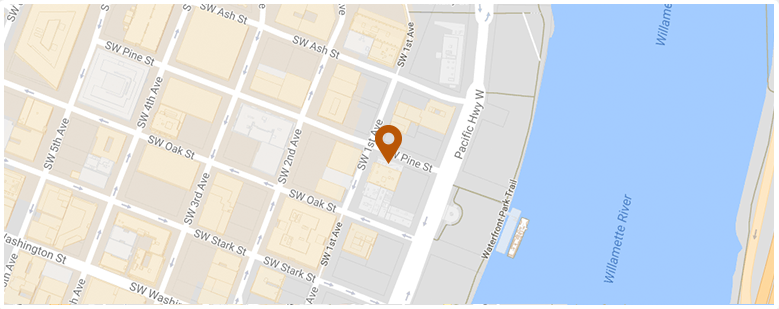
50 SW Pine St 3rd Floor Portland, OR 97204 Telephone: (503) 226-3844 Fax: (503) 943-6670 Email: matthew@mdkaplanlaw.com
map image