
Articles Posted in Injuries to Minors

Just as the July 4 holiday weekend got underway news broke of a sweeping recall of school buses. According to an Associated Press report, republished by ABC News, “Blue Bird is recalling more than 2,500 All American school buses and some transit buses to fix a problem that could make steering more difficult. The company also is recalling a smaller number of school buses that may be prone to a propane fuel leak, according to paperwork filed with the National Highway Traffic Safety Administration.”

It will be worth keeping an eye on the NHTSA vehicle recall website over the next week or two for further details as this story develops. At this writing the NHTSA had not posted information about the Blue Bird recall, presumably because the company’s paperwork has not yet been completely processed. In the meantime, however, it is safe to say that it is difficult to imagine a clearer risk of injuries to children than a school bus with a steering or a fuel leak issue.

The AP story did not say how many school buses are affected by the steering-related recall notice, only that it involves “some buses made between 2011 and last May.” The story put the number of transit buses affected at 400, but did not say in which cities they are currently on the road. The fuel leak issue involves “388 Vision school buses made in 2012 or 2013,” the news agency reports.
With the arrival of summer it is time, once again, to remind every parent (and older sibling) out there of the importance of protecting children from window falls. These tragedies are among the most easily preventable Oregon injuries to children.

The issue is back in the news after two incidents in recent weeks here in Oregon, one of them fatal. Earlier this month a four-year-old North Portland boy died after falling from a 3rd floor window, according to television station KOIN. The station also reports that a Beaverton girl was seriously injured in April after a fall from a second floor window.

As the station notes, “statistics show more than 3000 children under the age of 6 fall from windows every year.” It might have added that window fall incidents regularly rise each summer – making the timing of the station’s report particularly important. What makes these incidents especially heart-breaking is how easily preventable they are. It starts, of course, with education – reminding adults as well as kids that screen windows, which are designed to keep bugs out, are never strong enough to prevent even a relatively small child from falling, and reminding parents that children – small ones especially – need to be watched carefully, and should never be left alone in a room with an unlocked window, let alone an open one.

Yesterday at the White House President Barack Obama hosted a special event designed to spotlight the dangers of concussions and traumatic brain injuries in youth sports. As someone who has worked and written on these issues for years it is inspiring to see them receiving this kind of attention at the presidential level.

Citing the Centers for Disease Control, the White House website notes that “kids and young adults make nearly 250,000 emergency room visits each year as a result of brain injuries from sport and recreation. And that doesn’t include visits that young people made to their family doctor, or those who don’t seek any help.”

To put these issues in the spotlight, Mr. Obama was introduced at the event by a teenage girl who suffered a concussion while playing soccer. The President told attendees that concussions “are not just a football issue. They don’t just affect grown men who choose to accept some risk to play a game they love and excel at. Every season, you’ve got boys and girls who are getting concussions in lacrosse and soccer and wrestling and ice hockey, as well as football.”

An announcement last week by New York’s University of Rochester received little attention in the national media, but deserves more. According to a news release from the university’s medical center, researchers there have made a significant breakthrough in the study of sports-related traumatic brain injuries, especially to children.

The medical center says the development of a new testing model “provides a foundation for scientists to better understand and potentially develop new ways to detect and prevent the repetitive sports injuries that can lead to the condition known as chronic traumatic encephalopathy (CTE).” The key to the research is the discovery “that mice with mild, repetitive traumatic brain injury (TBI) develop many of the same behavioral problems, such as difficulty sleeping, memory problems, depression, judgment and risk-taking issues, that have been associated with the issue in humans.”

As the news release goes on to explain, the lack of a reliable animal-based testing model has held back research on repetitive TBI and other sports injuries. If the model stands up to further peer-reviewed research it could, over time, prove to be crucial not only in the diagnosis and treatment of sports injuries but in developing new treatments, equipment and procedures to prevent them. The news release quotes one of the Medical Center’s doctors summarizing the importance of the findings: “While public awareness of the long-term health risk of blows to the head is growing rapidly, our ability to scientifically study the fundamental neurological impact of mild brain injuries has lagged.”

An item posted late last night on The Oregonian’s website offers details of a serious Washington bicycle accident involving a teenage rider in which a motorist faces assault charges and, potentially, drunk driving charges as well.

The paper, citing the Everett Herald, reports that a 52-year-old Everett man driving a pick-up truck “allegedly struck a teenage cyclist, launching the boy off a 30-foot overpass… the crash caused the victim, 16, to fall about 20 feet onto a hillside, police said. His body then tumbled an additional 10 feet down into the street.” The paper reports that the boy’s injuries include a possible broken neck – meaning that, while they are not, according to the paper, life-threatening, they could be life-altering for both him and his entire family.

The pick-up truck driver “told police he had been drinking beer or wine a few hours before the crash and believed he suffered a seizure.” The paper reports that when he was arrested at the scene the suspect “had trouble standing and could not easily move his hands. Officers said the suspect slurred his speech and had bloodshot eyes.” Bail for the suspect was set at $25,000, the paper reports.

The tragic death of an infant last year at a Seattle day care center is spurring calls to action in the state legislature. According to an Associated Press report reprinted in The Oregonian, Washington legislators will soon debate a proposal to “require formal investigations at child care centers when a death occurs, even if the child appears to have died from natural causes.”

“The proposal is named for a 5-month-old girl who died last year while napping in a Seattle home day care center where another death occurred in similar circumstances more than a decade earlier,” the news agency reports. The May 2013 Washington child death has been attributed to Sudden Infant Death Syndrome, or SIDS, which AP describes as “a major cause of death for children 2 and under in child-care settings.”

SIDS deaths can often be prevented with proper infant care techniques including the careful monitoring of sleeping children, but much about SIDS remains unknown and controversial. For those reasons it is surprising that Washington law does not, right now, require an investigation of this and any similar deaths. Common sense would seem to argue that any Washington child death or serious injury should be thoroughly investigated even when it appears to be from natural causes. Only by looking thoroughly at the circumstances surrounding each such tragedy can we learn from it.

A story published last week in the Los Angeles Times spotlights both the help technology can offer in the fight against traumatic brain injuries, and the surprising resistance that such technology can, and does, encounter.

The paper reported on a “wireless alert system” that can be placed in football helmets. Sensors placed inside the helmet trigger an alert on a smartphone or a similar device carried by a coach or trainer on the sidelines if the wearer suffers a potentially concussion-inducing blow to the head. The system, according to the paper, “gains data from five sensors placed on a plastic-like, paper-thin lining placed on top of helmet padding. The sensors measure linear and rotational acceleration as well as the duration and location of a hit. A computer chip in the helmet transfers data to a hand-held alert monitor – typically carried by a trainer – via a low power signal similar to Bluetooth.” The system can be adjusted according to the level of play (middle school v high school v college).

One might have imagined that the main problem this raised for high schools was financial – the systems cost about $150 per unit. When one LA area high school offered the sensors to all 120 of its football players earlier this year, however, only 20 stepped up to purchase them. What surprised even the school’s head athletic trainer, however, was the reason: according to the LA Times “parents worried about sons being pulled from games and missing playing time. Several said they dropped the sensor topic after their sons declined to wear one.” The trainer told the paper, “In the society we live in, the knowledge is there but the parents, I don’t know – it confused me.”

The non-profit National Safety Council has published an excellent tip sheet to help parents prepare teen drivers for the special challenges that come with winter.

Oregon car accidents can happen any time of the year, of course, but winter is different. As the website notes: “Winter conditions can challenge even the most experienced drivers. It is incumbent upon a parent to prepare a teen as best as possible for driving under those difficult circumstances that adverse weather brings.”

Many of these recommendations are so basic that one might overlook them, but they bear repeating: slow down, factor in more travel time to get from point A to point B so you don’t unconsciously feel a need to rush; gently test a moving car’s brakes when ice and snow are present to get a sense of road conditions; don’t use high beams when it is snowing. Don’t use the cruise control in the snow either. Keep a greater distance between vehicles than one does in easier driving conditions.

The 2009 death of an Oregon-bound family on a California freeway led this week to an important wrongful death ruling by a court in our neighbor to the south. As reported by the Los Angeles Times a 13-year-old girl is now the only survivor of her family’s SUV accident. The family car hit the rear of an illegally parked truck near La Crescenta, California while on its way to Oregon for a Thanksgiving vacation.

According to the newspaper the truck’s driver was parked “in an area designated for emergencies only without his trailer lights or emergency reflectors on… (the driver’s) attorney argued at trial that his client had pulled over to the side of the road to take medication for a severe headache, which constituted an emergency.” The victim’s attorney, however, pointed out that the driver had given conflicting versions of the incident at different times, “including stopping to urinate and pulling over to sleep,” the Times reports.

When the family SUV burst into flames the teenage girl and her elder brother managed to reach safety but their parents and another brother were not able to get away from the burning car. The newspaper notes that the surviving brother “committed suicide in June, four days before his mother’s birthday,” a fact that highlights in the worst way imaginable the intense psychological trauma these two children have gone through.

Regular readers know that I am a strong supporter of SafeKids Oregon, so I’m pleased to share the fact that SafeKids Oregon has joined with other SafeKids organizations across America and overseas to promote Teen Driver Safety Week.

As SafeKids Oregon announces on their website (see link below), “although SafeKids primarily focuses on children ages 0 – 14, we believe that teaching safety to pre-drivers will help all children and youth be safer now and in the future.” This week’s activities are focused on social media as a way of making young soon-to-be drivers aware of the importance of safety and the responsibility that comes whenever they, or anyone else, sits down behind the wheel.

A key component of the Safety Week initiative is Teen Driver Source, an information-sharing program run by the Children’s Hospital of Philadelphia. As the SafeKids website outlines, the initiative brings together “a team of researchers, educators and communicators from the Center for Injury Research and Prevention. The Teen Driver Safety Research Team takes a multidisciplinary approach to study the causes of teen driver-related crashes and then provides information, tools and other resources to help prevent these crashes.” Put another way, it offers tools that allow the lessons learned across the United States to be applied everywhere, rather than in just a particular city or state.

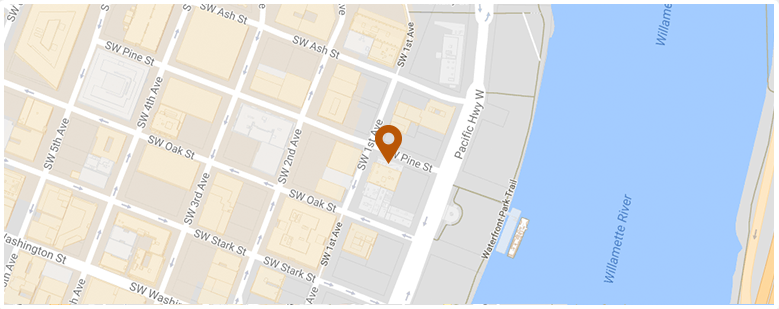
50 SW Pine St 3rd Floor Portland, OR 97204 Telephone: (503) 226-3844 Fax: (503) 943-6670 Email: matthew@mdkaplanlaw.com
map image
Contact Information