"I got into an accident and was nervous about finding a personal injury attorney after hearing so many awful stories, but from the start, I felt confident with my choice in Kaplan Law, LLC." Read More - Ben
"Matt and Gillian took great care of me during a stressful time of my life. Very caring and knowledgeable group. I would definitely recommend Kaplan Law!" Read More - Kayleigh
"Incredible service and results! Matthew Kaplan and his paralegal Gillian did an amazing job for me. Not only did they resolve my case beyond my satisfaction, they also were very caring and supportive thru my recovery. I couldn't ask for a better attorney." Read More - Jamal
Matthew D. Kaplan

Oregon does not have an NHL team, but many in the state who worry about Oregon traumatic brain injuries have been watching developments in the world of professional hockey over the last few days. As I have previously noted, NHL hockey differs in significant ways from the game TV viewers saw during last month’s Olympics. Among the biggest differences: the NHL still allows hits to the head – an action that carries a significant danger of traumatic brain injuries, even among athletes wearing helmets (which are required in the NHL). Such hits are banned in international hockey.

What brought this issue to the fore is not the fact that March is Traumatic Brain Injury Awareness month, but rather a gruesome incident in an NHL game last Sunday. During the third period of a game against the defending Stanley Cup champion Pittsburgh Penguins, Marc Savard of the Boston Bruins was knocked unconscious by a check to the head administered by Pittsburgh’s Matt Cooke. Savard, one of the team’s star forwards, was taken off the ice on a stretcher, wearing a head-brace. According to ESPN he has been diagnosed with a grade 2 concussion and is widely expected to be out for the remainder of the season.

What has outraged hockey fans – and not just in Boston – is the league’s decision not to punish Cooke for the infraction, despite the fact that he has been suspended on three previous occasions for unnecessarily rough play (two of those suspensions involved hits to the head). Even one of Cooke’s own teammates, Bill Guerin, “expected Cooke to be suspended”, according to the Boston Globe, and expressed incredulity when he was not. “If a guy gets hurt like that with a shot to the head, there’s got to be something,” the Globe quoted Guerin saying.

March is National Brain Injury Awareness Month, an appropriate moment to remind ourselves of the dangers that can accompany many otherwise fun and healthy activities. CBS Sports touches on this with the harrowing story of a teenager who sustained a concussion playing middle school football. Because the injury was not properly evaluated on the field Zachary Lystedt, then 13, returned to the game, with devastating consequences.

According to CBS, the teenaged Tahoma, Washington linebacker “writhed on the ground” after an initial hit near the end of the first half of a 2006 game. He returned to the field after halftime, but as the game ended collapsed in pain, his eyesight gone because swelling in his brain was cutting off an optic nerve. The teenager was rushed to the hospital where he spent a month in a coma, and another 20 months on a feeding tube. Today, “he has very little feeling and movement on his right side and remains dependent on a wheelchair,” according to CBS.

As he recovered Lystedt became an advocate for stronger rules governing student athletes and potential traumatic brain injuries. Last year Washington’s legislature passed a law, named in his honor, establishing “the most stringent return-to-play protocols of any state in the country,” according to CBS. Among other things, the law bars student-athletes who suffer a suspected concussion from returning to the playing field until they have been examined and cleared by a licensed medical professional. Lystedt now spearheads an effort to get similar legislation adopted in all 50 states, and possibly at the federal level.

New parents have been told for years to use rear-facing car seats until their babies turn one year old and weigh 20 pounds, after which front-facing child seats are the norm. But data from both Oregon and the federal government are leading medical and safety professionals to reassess this long-held belief, according to state publications and a recent article in the Bend Bulletin.

Expert opinion is coalescing around the idea that children should face backwards until they are at least two years old, the Bulletin reports. Oregon’s Public Health Service adds that “children under the age of two are 75% less likely to be killed or severely injured in a motor vehicle crash is they are riding rear facing rather than forward facing.”

There is an especially great danger of Oregon traumatic brain injuries and spinal cord injuries when young children are not properly restrained in an approved car seat. The Bulletin, citing child emergency physician Dennis Durbin, notes that “young children have weaker neck muscles than older children and adults. Their ligaments are looser. And the bones in the neck aren’t locked together in the same way as an adult’s.” These physiological factors put small children at a significantly higher risk of traumatic brain injuries when they are in a forward-facing car seat. Rear facing seats are safer because in a crash they tend to provide more support for a child’s neck and back.

An Oregon bicycle and car accident in which a Portland man allegedly intentionally hit a cyclist is being heard in the Clatsop County courts. Prosecutors say the 23 year old driver “just took off” after hitting a cyclist in Seaside, according to TV station KVAL. The station reports that the suspect was found hiding in the woods after abandoning his truck near the scene of the accident.

The Oregonian reports that the cyclist was seriously injured in the incident, and that the driver has been charged with attempted murder, first-degree assault and felony hit-and-run. Bail was set at $250,000.

The accident is a reminder of the importance of both cycling safety, and of the need for the strict enforcement of laws requiring motor vehicles to share the road with law-abiding Oregon bicycle riders. Drivers who intentionally run down cyclists are, mercifully, rare. Far more common, however, are careless motorists who simply do not pay as much attention as they should to Oregon bike riders. A Portland bicycle injury lawyer can advise cyclists who have been hit by cars – whether accidentally or intentionally – on their legal rights and whether they are entitled to damages to cover expenses incurred as a result of an Oregon cycling accident involving a car or truck. Such accidents can be especially dangerous, since Portland cyclists hit by a car stand a significant chance of suffering an Oregon traumatic brain injury.

A new high-tech device represents an early – though almost certainly not the last – attempt to solve the problem of distracted driving via technology. An application called “Textecution” can, when installed on a compatible smartphone, disable texting, email and web surfing functions while the owner is driving.

According to the tech site TMC News the application is currently available only for handsets running Google’s Andriod operating system, though versions for other platforms are anticipated. The site reports that the application is being marketed to parents as a way to promote safer driving habits among teens. A number of studies in Oregon and nationwide have shown distracted driving – specifically texting or talking on the phone while behind the wheel – to be a growing problem. The legislature has sought to crack down on Oregon distracted driving by banning texting by Oregon drivers, as well as the use of phones without a hands-free device.

As TMC points out, in its early form Textecution has some bugs that may need to be worked out. It reportedly uses a phone’s GPS capabilities to determine whether the phone is in a moving vehicle. That does not, however, make it capable of distinguishing between a phone whose owner is driving the car and one whose owner is merely sitting in the passenger seat (or riding on a bus).

Police in Florida responding to reports of a dog that was loose and attacking people shot and killed a pit bull in the Orlando area this week, according to a report in the Orlando Sentinel.

According to a recent Oregon government report on animal bites, “each year, nearly 4.5 million Americans are bitten by dogs, and nearly 25% of those bitten require medical attention.” In the Florida case, two officers answered a call after local residents reported dog attacks. The Sentinel quoted police official reports which stated that upon arriving at the address the officers tried to capture the dog, but were forced to shoot it after it attempted to attack them. It was, the paper reports, the second such incident in the Orlando area in a month.

Though dogs are often beloved pets, owners have a responsibility to keep them under control, lest they become a danger to the wider neighborhood. Last year, an Oregon state study using data from June 2002 to July 2003 found records of 636 Multnomah County dog bites – a surprisingly high number, even for Oregon’s most populous county. Boys age 5-9 were the most likely to be bitten, according to the survey. This Portland dog bite data highlights the importance of strong legal representation by an experienced Oregon dog bite attorney should you or a member of your family become the victim of an Oregon dog attack.

A Vancouver WA man is under arrest after leading police on a high-speed chase that ended with an Oregon Car crash on Sauvie Island. According to TV station KPTV, the driver, identified as 35 year old Ashley Siclovan, led police on a chase at speeds in excess of 100 mph for 18 miles. A police car was disabled while attempting to stop him. The chase eventually ended in an Oregon car accident when Siclovan allegedly crashed his vehicle into the gate of a state fish and wildlife office on Sauvie Island.

According to The Oregonian, Siclovan was arrested and taken to the Columbia County jail. He has been charged with felony attempt to elude, reckless driving, criminal mischief and second degree kidnapping. The last charge relates to a female passenger who he let out of the vehicle after crossing onto Sauvie Island. The woman later told police that Siclovan had refused to let her out of the car as he attempted to escape from the police. She was not arrested.

It is fortunate that no one appears to have been harmed in the incident. The chase is a reminder, however, of the damage a reckless driver can potentially cause. If you or a loved one has been the victim of a Portland reckless or high speed driver consulting with an Oregon auto accident injury lawyer at the earliest possible opportunity is a prudent course of action. An experienced Portland personal injury lawyer can offer valuable assistance, and help you determine whether your situation merits a claim for injuries or other damages suffered in an Oregon auto accident.

A state appeals court has upheld a $1.4 million Oregon medical malpractice judgment against the Oregon Health & Science University’s hospital and one of its doctors. The court rejected arguments by the university and doctor that state law capped Oregon medical malpractice liability at $200,000, according to local media reports. The Portland Business Journal reports that the hospital plans to appeal the ruling.

The focus of the case is former Portland TV host Ken Ackerman. According to The Oregonian, Ackerman contends that a botched 2003 operation to repair a bulging spinal disk has left him in near constant pain, reduced his dexterity in one hand and reduced his sensitivity to hot and cold on one side of his body. Ackerman sued for $5 million and was awarded $1.4 million after a 2006 Portland medical malpractice trial. His suit also challenged a law limiting damages against state employees performing their official duties to $200,000. The question of whether the law protected the doctor and hospital from damages above that figure was effectively resolved when the State Supreme court overturned the limits in a separate 2007 case.

Ackerman’s latest victory is good news for anyone who has been the victim of Oregon medical malpractice and is seeking compensation for his or her injuries. A Portland medical malpractice attorney can advise clients on the best ways to approach a case, based on the victim’s own particular experiences. In addition to medical bills and lost wages or salary, compensation can include awards for pain and suffering, and for lost potential income. The state’s moves to revise the old caps on liability awards is an important acknowledgement that in this age of ever-rising medical costs the value of damages associated with Oregon medical malpractice claims should also rise accordingly.

A 38 year old Oregon cyclist died in an Oregon auto accident last week after being hit by a car on Oregon route 99 near Creswell. According to Oregon State Police, quoted by The Oregonian, the Portland-area bicycle and car collision took place when Creswell cyclist John Clayton was riding northbound on 99. Clayton died after being struck head-on by a car that had pulled out of the southbound lane to execute a pass.

The driver of that vehicle also sideswiped the car he was trying to pass. According to the Creswell Chronicle, Clayton was pronounced dead at the scene of the accident. The paper reported that he was wearing neither a helmet nor any reflective clothing, though it is worth emphasizing that he was riding as he was supposed to: with traffic, along the right-hand side of the road.

Clayton’s tragic and preventable death is a reminder of how important it is for Oregon drivers to take special care when they are around cyclists. Our state, and the city of Portland, are widely considered to be among the most bicycle-friendly places in America, but that does not mean every driver on the road uses the care and discretion one would hope for when they are around cyclists.

The men’s hockey tournament at the Vancouver Winter Olympics got underway last night. As a recent article in the New York Times details, though many of the players appearing in the Olympics come from the NHL, hockey played under international rules – including all games in the Olympics – differs in several significant ways from the game Americans are accustomed to seeing. Many of the rule changes are designed to minimize traumatic brain injuries.

As the newspaper writes: “The biggest difference is on checks to the head. While the N.H.L. continues to debate whether some hits to the head should be penalized, the I.I.H.F. (hockey’s international governing body) has outlawed them.”

Another obvious difference: international hockey – like college hockey here in the States – shows no tolerance for on-ice fighting. More subtle differences include rules requiring visors and the use of chin straps on players’ helmets, and mandating that a player whose helmet comes off leave the ice immediately.

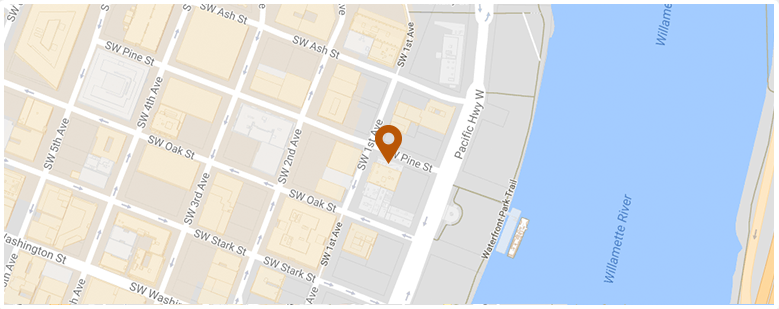
50 SW Pine St 3rd Floor Portland, OR 97204 Telephone: (503) 226-3844 Fax: (503) 943-6670 Email: matthew@mdkaplanlaw.com
map image