"I got into an accident and was nervous about finding a personal injury attorney after hearing so many awful stories, but from the start, I felt confident with my choice in Kaplan Law, LLC." Read More - Ben
"Matt and Gillian took great care of me during a stressful time of my life. Very caring and knowledgeable group. I would definitely recommend Kaplan Law!" Read More - Kayleigh
"Incredible service and results! Matthew Kaplan and his paralegal Gillian did an amazing job for me. Not only did they resolve my case beyond my satisfaction, they also were very caring and supportive thru my recovery. I couldn't ask for a better attorney." Read More - Jamal
Matthew D. Kaplan

Two former Portland-area prosecutors made headlines in The Oregonian this week with their advocacy of marijuana legalization. According to the newspaper Norm Frink and Mark McDonnell both believe that legalization is inevitable and, as a result, are trying to focus public attention on getting the details right.

“This is just a political fact in Oregon, even if some people don’t want to admit it,” the newspaper quoted Frink saying. “As a result,” the paper went on to note, “Frink and McDonnell, who headed the district attorney’s drug unit before retiring, on Tuesday announced that they wanted legislators to refer a marijuana legalization measure to voters in November.” The key to their idea is combining a voter referendum with legislative action. Oregonians would be asked to approve marijuana for personal use, but would charge the legislature with working out the details before the new law went into effect. “The two want to put off allowing legal possession of marijuana until after the legislature figures out how to set up a regulatory system,” The Oregonian reports.

The experience of Washington and Colorado would appear to validate this idea. When the two states became the first to make the possession and use of marijuana legal for personal recreational use the result was an immediate legal conundrum. At the most basic level, legalization puts state law in conflict with the federal government, but there are a number of equally serious – and in some ways more immediate – issues. Take drunk driving, for example. It ought to be relatively easy to agree that impaired driving brought on by pot use is just as dangerous as driving while drunk. Any state legalizing marijuana, however, will need to figure out ways to measure and assess the drug as part of a drunk driving arrest: what level of marijuana impairment crosses a safety line? What is the best and most efficiently to measure it? How should the use of marijuana and alcohol together be treated (presumably the two in combination could cross an impairment threshold at a point when neither, by itself, does so)?

With an ice storm warning now extending throughout the day Sunday and road closures throughout the Pacific Northwest this is a weekend to avoid any travel that is not absolutely necessary.

That is not just my opinion, it is the official word from public safety officials throughout the state. As The Oregonian has been reporting – and regularly updating on its home page – the severe weather gripping much of Oregon and Washington State poses a real threat to anyone out on the roads.

These warnings do not only apply to well-known danger zones, like the stretch of interstate in Eastern Oregon known as Cabbage Hill. According to the newspaper, local leaders in both Portland and Beaverton are urging everyone to “just stay home.” Portions of I-5 were closed at this writing. Roads and sidewalks are icy, Portland’s streetcars are not running and Tri-Met is “no longer reliable” according to city transportation officials quoted by the newspaper.

With Seattle in the Super Bowl this weekend excitement surrounding the Big Game is even higher than usual here in the Pacific Northwest. Unfortunately, increased excitement can often lead to overindulgence, and local and federal officials alike warn that Super Bowl weekend can be a dangerous time to be on the road.

According to a news release issued earlier today by the National Highway Traffic Safety Administration “on Super Bowl Sunday 2012 alone, 38 percent of fatalities from motor vehicle crashes have been connected to drunk driving, compared to 30 percent on an average weekend.” The NHTSA has partnered with the NFL and the Techniques for Effective Alcohol Management (TEAM) Coalition to urge fans to be careful and drink responsibly wherever they choose to watch this Sunday’s game.

If self-control is not sufficient to prevent Oregon drunk driving, everyone should also be aware that police will be out in force across Portland this weekend. “The Portland Police Bureau and the Oregon State Police are teaming up on Sunday in a crackdown on drunken drivers. Their message: ‘Think before you drink.’ If you do, arrange for safe transportation to Super Bowl activities,” according to a report in The Oregonian.

A leaked state audit of Tri-Met, details of which appeared in The Oregonian this morning, speaks of morale problems among “front-line” workers (such as bus drivers) and portrays an agency where “safety first” is often little more than a slogan.

The newspaper’s summary of the 54-page report is startling: “TriMet needs to fix a culture where low morale, secrecy, safety problems and more than $1 billion in unfunded financial obligations threaten to wreck the public transit agency,” the Oregonian says, summarizing the report’s key findings. The leaked report is a draft, not a final, official document but that fact does little to ease the sense that state auditors uncovered serious problems as they examined TriMet. The report was compiled by the Oregon Secretary of State’s office.

Perhaps even more surprising is the fact that TriMet does not appear to be disputing the picture the report paints. The newspaper reports that TriMet officials “took the Secretary of State’s criticisms in stride… in a 10-page response, TriMet General Manager Neil McFarlane didn’t disagree with the findings. Rather, he seemed to ask how high he should jump to implement the audit’s suggested improvements.”

An item posted late last night on The Oregonian’s website offers details of a serious Washington bicycle accident involving a teenage rider in which a motorist faces assault charges and, potentially, drunk driving charges as well.

The paper, citing the Everett Herald, reports that a 52-year-old Everett man driving a pick-up truck “allegedly struck a teenage cyclist, launching the boy off a 30-foot overpass… the crash caused the victim, 16, to fall about 20 feet onto a hillside, police said. His body then tumbled an additional 10 feet down into the street.” The paper reports that the boy’s injuries include a possible broken neck – meaning that, while they are not, according to the paper, life-threatening, they could be life-altering for both him and his entire family.

The pick-up truck driver “told police he had been drinking beer or wine a few hours before the crash and believed he suffered a seizure.” The paper reports that when he was arrested at the scene the suspect “had trouble standing and could not easily move his hands. Officers said the suspect slurred his speech and had bloodshot eyes.” Bail for the suspect was set at $25,000, the paper reports.

The tragic death of an infant last year at a Seattle day care center is spurring calls to action in the state legislature. According to an Associated Press report reprinted in The Oregonian, Washington legislators will soon debate a proposal to “require formal investigations at child care centers when a death occurs, even if the child appears to have died from natural causes.”

“The proposal is named for a 5-month-old girl who died last year while napping in a Seattle home day care center where another death occurred in similar circumstances more than a decade earlier,” the news agency reports. The May 2013 Washington child death has been attributed to Sudden Infant Death Syndrome, or SIDS, which AP describes as “a major cause of death for children 2 and under in child-care settings.”

SIDS deaths can often be prevented with proper infant care techniques including the careful monitoring of sleeping children, but much about SIDS remains unknown and controversial. For those reasons it is surprising that Washington law does not, right now, require an investigation of this and any similar deaths. Common sense would seem to argue that any Washington child death or serious injury should be thoroughly investigated even when it appears to be from natural causes. Only by looking thoroughly at the circumstances surrounding each such tragedy can we learn from it.

An article in today’s Oregonian (it was published online last night) details the early discussions in Salem about legislation that would dramatically alter where and how liquor is sold here in Oregon. It is a potentially complex issue, one made no simpler by the potential Oregon dram shop law issues raised by the bill.

According to the newspaper: “Under a so-called “hybrid” plan… the state would maintain its monopoly control over liquor but would allow sales in large grocery chains. Smaller state-licensed liquor stores would remain, and merchants would be allowed to set their own prices above a stipulated floor.”

The Oregonian adds that if the plan, which is being proposed by the Oregon Liquor Control Commission, becomes law it “would represent the biggest shale-up of Oregon’s liquor delivery system since Prohibition ended 80 years ago.” The paper notes that there are other liquor law reform proposals under discussion in Salem this winter, including “a possible ballot measure that would take the state out of the liquor sales business and hand it over to the private sector.”

When the news broke right before New Year’s that Michael Schumacher, arguably the world’s most famous race car driver, had been seriously injured in a skiing accident it immediately focused public attention on safety and winter sports.

According to numerous media reports Schumacher was skiing ‘off piste’ (a common term at European resorts referring to terrain which is open to recreational skiers but is not groomed or marked specifically as a trail) with his son at the French resort of Meribel on December 29 when he lost control, fell and struck his head on a rock. Schumacher suffered a traumatic brain injury and has been in a medically-induced coma ever since. He has undergone two surgeries and, according to CNN, doctors describe his condition as “stable but critical.”

That same CNN article (see link below) contains an especially important point regarding the accident. According to CNN “a French prosecutor investigating the ski accident… said that speed was not an important factor.” CNN reports French officials telling the media that Schumacher was traveling at “the speed of a very good skier on a slope which was not very steep” and also ruled out a fault with the race car driver’s skis. It has been widely reported that Schumacher was wearing a helmet at the time of the accident.

As we enter the New Year’s holiday period let me add my voice to the many out there reminding everyone to be safe and act responsibly tonight and tomorrow.

Throughout the country – perhaps even the world – New Year’s Eve and the days surrounding it have a reputation for being a particularly dangerous time to be on the roads. People overindulge and then get behind the wheel – sometimes consciously, more often simply without thinking clearly. The results are a danger not only to themselves and their passengers but also to everyone else on the road.

According to the Oregon State Police, during last year’s 102-hour ‘holiday reporting period’ (6pm on December 28 through midnight on January 1) “12 people died in four separate fatal traffic crashes on Oregon roads… The 12 fatalities, including 9 deaths in (a) December 30 bush crash, equals the highest number reported previously two different years – 1998 and 1999, during this holiday period since 1970 when ODOT began to gather these statistics.” The fatal bus crash on Deadman’s Pass in the east of the state led to a federal investigation and, as I noted at the time, raised significant Oregon wrongful death issues.

A new year begins on Wednesday and, with it, a collection of new laws take effect. From my perspective as Portland distracted driving lawyer one of the most important new measures involves the tightening of our state’s laws concerning texting and the use of cellphones while driving.

Concerning distracted driving, the big news is that fines for the offense are about to rise significantly. When the law went into effect four years ago the fines were modest, topping out at only $90. Starting January 1, however, “texting or talking on a cell phone while driving will fetch higher fines – at least $142 and up to $500” according to The Oregonian. The higher fines are good news for all of us who are concerned with the issue of Oregon distracted driving and want to see more done about it. Simply put, a potential $500 fine is a much more significant deterrent than $90. Oregon has long been one of the nation’s leaders on this issue, and it is good to see our state leading again.

Some of the other notable measures that take effect this week include a statewide ban on the use of tanning beds by minors without parental permission, a measure allowing landlords to require tenants to maintain renter’s liability insurance and a law preventing employers from requiring access to the social media accounts of employees and job applicants.

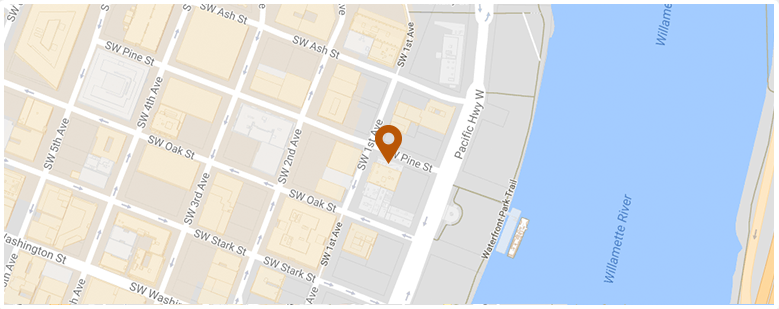
50 SW Pine St 3rd Floor Portland, OR 97204 Telephone: (503) 226-3844 Fax: (503) 943-6670 Email: matthew@mdkaplanlaw.com
map image