"I got into an accident and was nervous about finding a personal injury attorney after hearing so many awful stories, but from the start, I felt confident with my choice in Kaplan Law, LLC." Read More - Ben
"Matt and Gillian took great care of me during a stressful time of my life. Very caring and knowledgeable group. I would definitely recommend Kaplan Law!" Read More - Kayleigh
"Incredible service and results! Matthew Kaplan and his paralegal Gillian did an amazing job for me. Not only did they resolve my case beyond my satisfaction, they also were very caring and supportive thru my recovery. I couldn't ask for a better attorney." Read More - Jamal
Matthew D. Kaplan

Residents of Plymouth, Washington and neighboring Hermiston, Oregon were greeted this morning by what the Associated Press described as “a mushroom cloud of black smoke visible for more than a mile.”

The cause was an explosion at a natural gas plant on the Washington side of the Columbia River. The news agency reports that the blast injured four workers at the plant and forced “about 400 people to evacuate from nearby farms and homes.” It quotes local law enforcement officials blaming the incident on a gas leak.

While it is certainly true that the incident could have been much, much worse – “I think if one of those huge tanks had exploded, it might have been a different story,” the AP quotes the local sheriff saying – the accident still raises worrisome questions about Oregon and Washington industrial accidents and about the overall quality of the safety procedures at this and similar facilities.

On Friday General Motors announced yet another expansion of the widening recall of its small cars. According to the New York Times, the company “is expanding its ignition-switch recall to include an additional 971,000 small cars worldwide, including 824,000 in the United States, that may have been previously repaired with defective switches.”

As I noted in a post earlier this month, well before today’s announcement GM had already recalled more than a million cars built since the 2003 model year because of a defect that may lead the ignition switch to cut off. That, in turn, could mean that air bags fail to deploy in the event of a crash. As the latest developments indicate it is now clear that many cars had the faulty switches added to them when they went in for repairs.

More disturbing, however, are the continuing revelations about the way in which GM has handled this scandal. In a move that may yet lead to wrongful death lawsuits, company documents have shown that GM misled grieving families for years, telling those who had lost loved-one in crashes linked to the flaw “that it did not have enough evidence of any defect in their cars, interviews letters and legal documents show.” This happened even as the company was internally debating the best way to fix the problem, the newspaper reports.

A reckless and dangerous driver caused problems on I-5 this afternoon but is now in jail, according to The Oregonian. The newspaper’s website reports that a 26-year-old Portland man is being held in the Marion County jail on charges of reckless driving and “18 counts of recklessly endangering another person.”

According to the newspaper, witnesses said the driver “was speeding, passing cars on the shoulder and weaving across all three lanes of traffic in a 1999 gold Ford Taurus… Oregon state police caught up with him right before 1 pm as he exited I-5 toward Salem Parkway Avenue.”

It goes without saying that incidents like these can cause serious, sometimes fatal, Oregon car accidents. In some instances these can lead to serous traumatic brain or spinal cord injuries or even deaths.

Yesterday’s announcement that Toyota has reached a settlement with the Justice Department was striking on several accounts. First there is the settlement’s sheer size. “Toyota will pay a $1.2 billion penalty to settle the criminal probe into its handling of unintended acceleration problems that led to recalls of 8.1 million vehicles beginning in 2009,” according to an account in USA Today.

The paper adds: “the federal criminal probe… was independent of federal safety regulator and congressional probes of the Toyota sudden-acceleration recalls. It looked at whether Toyota provided false or incomplete statements to the National Highway Transportation Safety Administration in the events leading to recalls for floor mats that could trap gas pedals and gas pedals that could stick… Toyota already paid two federal fines of $16.375 million in 2010 for delays in reporting the floor mat and pedal defects, and another $17.35 million in 2012 related to an additional mat recall.”

As the paper goes on to report, the problem first came to public attention in 2009 “with a rash of runaway car reports.” Five deaths have been directly linked to the problem, but the larger issue – and the one that Toyota must continue to deal with – is evidence that the company knew about these problems but covered them up.

We have all heard stories of medical price-gouging, but an investigation published earlier this week by the Tampa Bay Times shows that in Florida hospitals have taken the practice to a new level.

According to a lengthy investigation by the newspaper, a change in Florida law several years ago allowed hospitals to charge special fees for the use of trauma centers. The centers are specialized facilities within emergency rooms and hospitals have long argued that establishing and maintaining them incurs unique costs which the institutions ought to be able to pass along to patients and insurance companies. For such fees “a fair cost, according to the federal government’s Medicare program, is just under $1000.” According to the newspaper, however, because the fees are not regulated “the average fee today tops $10,000; the most expensive hospital regularly charges $33,000.”

To be clear: these fees are in no way related to actual services rendered. They are, as the newspaper puts it, a “cover charge.” The paper recounts numerous instances in which patients “were charged more in trauma fees than for their actual medical care.” Since the fees are both unregulated and unrelated to the actual medical services a patient receives, the hospitals have an obvious incentive both to raise the fees as much as they can and to admit patients to the trauma center regardless of whether or not they actually need to be there. In one particularly shocking case, “an uninsured woman… was charged $33,000 even though she only needed someone to treat superficial cuts.”

A disturbing article published this week in the New York Times outlines a series of failures by both corporate America and the federal government. Its focus is General Motors’ recent recall notices involving well over a million vehicles manufactured since the 2003 model year (click here for GM’s latest news release with full details of models and years effected). The vehicles have a defect in the air bag system that in some instances means the air bags will not deploy during a crash because the ignition switch has been cut off.

According to the Times, GM now acknowledges that at least 13 deaths can be tied to the defect. What is disturbing is the paper’s report that the automaker’s engineers were aware of the issue in 2004 – more than a year before the first of those 13 documented deaths. Equally bad is the record of federal regulators from the National Highway Traffic Safety Administration. According to the paper, “after two of the (Chevy) Cobalt crashes, the regulators took a close look at the cause, each time raising the possibility of a defect. They also met with GM about the issue. But despite the red flags, they never opened a broader investigation into whether the car was defective.”

As the paper goes on to report, a number of lawsuits related to the documented deaths have already made their way through the court system. Class action law was created precisely to enable ordinary Americans to defend their rights in cases of this sort of willful and negligent misconduct, especially when it results in wrongful deaths. The recall notices are still new and are still sinking in for many people (the initial recall was issued on February 19 and was later extended to hundreds of thousands of other vehicles) so it is also important to note that the full impact of the situation is not yet clear. It is clear that the court system will probably hear much more about these vehicles in the months and years to come.

When attention focuses on the question of sports and traumatic brain injuries we usually think of football, hockey or boxing. A new study from Boston University, however, highlights the potential TBI dangers of a sport we do not often think of as violent: soccer.

As outlined by the New York Times earlier this week, the study focuses on “encephalopathy, the degenerative brain disease linked to repeated blows to the head” which, it reports, “has been found posthumously in a 29-year-old former soccer player, the strongest indication yet that the condition is not limited to athletes who played sports known for violent collisions.” Equally intriguingly, the newspaper notes that the soccer player died of ALS, commonly known as Lou Gehrig’s Disease, and offers evidence that the repeated head trauma involved in soccer may have played a role in his development of the disease at the relatively young age of 27.

The man mentioned in the article was a top-level college and semi-pro soccer player. The Times quotes his parents remembering his love of the game, and the pride he took at being good at heading the ball. It quotes a doctor who performed a brain examination after the player’s death saying that he had “extensive frontal lobe damage” of a type more commonly associated with football than soccer. The article cautions that there is no way to establish an irrefutable link between the game and these brain injuries, but the BU study concludes that this, and other data, are cause for both concern and for further study.

In Salem today the Senate Judiciary Committee sent to the full Senate an important bill that could change the way Oregon drunk driving cases are decided. According to The Oregonian the legislation “would no longer require everyone on diversion for drunken or drugged driving to install… interlock devices, which force drivers to blow into a breathalyzer that shows they haven’t been drinking before their car will start.” According to the newspaper “about 10,000 people a year are placed on diversion for the first-time offenses of driving while intoxicated, and about 70 percent never commit another offense.”

At issue are that recidivism rate and a debate about how closely practice here in Oregon should resemble that in other states.

Proponents of the bill note that for many people DUII is a one-time offense. “My experience says that the vast majority of the individuals are in the system once and only once,” the paper quotes Senate Judiciary Committee Chairman Floyd Prozanski saying. The counter-argument, spearheaded by Mothers Against Drunk Driving (MADD) is that “many offenders repeatedly drive drunk before they’re caught for the first time” the newspaper reports. It cites MADD’s legislative director, Frank Harris, accusing the legislature of “playing some risky business with public safety.”

An effort in Salem to close a striking loophole in Oregon’s laws regulating class action lawsuits is attracting attention across the country as legislators seek both to bring Oregon into accord with practice in most of the rest of the United States and to help poor Oregonians overcome the challenges they face when protecting their rights through our legal system.

For many people the words “class action” conjure images of high profile national cases involving prescription drugs or unsafe cars, or of working conditions most of us can barely imagine (e.g. coal miners in West Virginia). A recent case here in Oregon, however, illustrates just how high the stakes can be in seemingly simple cases. As Portland TV station KOIN notes in a web report, a Multnomah County jury ruled earlier this month “that BP was wrong to charge 35 cents extra for people using their debit cards at Arco gas stations in Oregon.” That may not seem like a lot of money but, according to the station, the overcharging effected “nearly 3 million people” just in the two and a half years between January 2011 and August 2013 (the period covered by the suit). The verdict amounts to an estimated $200 per customer – $600 million in all.

Unless they have kept very good banking records, however, many Oregonians won’t see any of that money. Arco’s parent company, BP, says it has not retained the relevant records. Drivers who can document the number of times they used debit cards at Oregon Arco stations may be able to get some money back – but the vast majority of the “class” covered by the settlement is unlikely ever to see anything. This is where politics comes into play: the question of what happens to any unclaimed damages. Oregon is one of only two states where a company in BP’s position can put the unclaimed money back into its corporate pocket (the other state is New Hampshire).

New York City’s new mayor, Bill de Blasio, unveiled a plan yesterday designed to eliminate pedestrian traffic deaths in America’s largest city. His proposals are worth looking at here in Oregon because they may contain lessons we can learn from here in Portland.

According to the New York Times, the focus of the initiative is stepped-up enforcement of existing laws combined with a proposal to lower the city’s speed limit from 30 to 25 miles per hour. “Our lives are literally in each other’s hands. Our children’s lives are in each other’s hands,” the mayor told a news conference Tuesday.

The strategy is called “Vision Zero” and is “adopted from a Swedish traffic safety approach that views all traffic deaths as inherently preventable,” according to the Times. De Blasio advocated these measures during his campaign last year, but they took on special urgency when New York “experienced a spate of traffic deaths, including three pedestrian deaths last month in fewer than 10 days” in the first weeks after the new mayor took office.

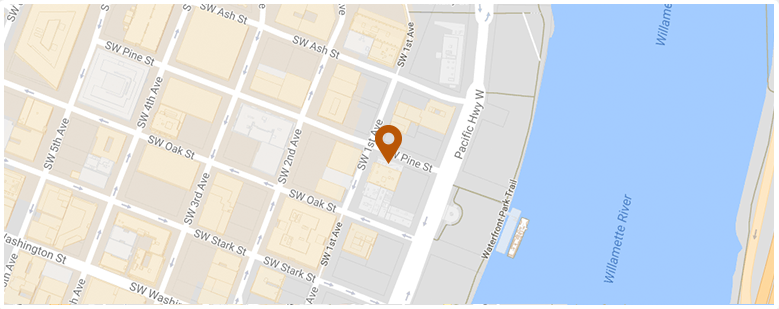
50 SW Pine St 3rd Floor Portland, OR 97204 Telephone: (503) 226-3844 Fax: (503) 943-6670 Email: matthew@mdkaplanlaw.com
map image