"I got into an accident and was nervous about finding a personal injury attorney after hearing so many awful stories, but from the start, I felt confident with my choice in Kaplan Law, LLC." Read More - Ben
"Matt and Gillian took great care of me during a stressful time of my life. Very caring and knowledgeable group. I would definitely recommend Kaplan Law!" Read More - Kayleigh
"Incredible service and results! Matthew Kaplan and his paralegal Gillian did an amazing job for me. Not only did they resolve my case beyond my satisfaction, they also were very caring and supportive thru my recovery. I couldn't ask for a better attorney." Read More - Jamal
Matthew D. Kaplan

The death earlier this month of a six-month old Hillsboro girl whose father forgot that she was in the back of his car when he went inside his office for work is a sad reminder of a problem that is far more extensive than most people think. As The Oregonian put it last weekend, “though the tragedy that played out in Hillsboro… is incomprehensible to many, research shows it’s a scenario that has played out hundreds of times nationwide since the late 1990s as parents and caregivers grapple with a growing litany of distractions.”

This Oregon child death is also a reminder, as SafeKids tells parents every year (see link below) around this time, that even as the weather turns cooler a closed car can still become very, very hot as it sits in the sun for hour after hour.

“In the United States, at least 635 children have died of hyperthermia in vehicles since 1998. In 51 percent of those cases, the parent of caregiver said they had forgotten the child was inside,” the paper reports, citing data from an expert on the subject at San Jose State University in California.

A recent news item from Maine offers an important autumn reminder about safety and Oregon injuries to children. According to the Portland (Maine) Press-Herald, a teenager died and 22 other people were injured when “a mechanical malfunction caused the Jeep towing a trailer of passengers on a haunted hayride… to careen down a steep hill and crash.” The report cites information from “state officials.”

The newspaper reports that local and state police are still working to determine the exact cause of the accident, but the overall nature of the incident is something that merits our attention here in Oregon. Fall and the early part of winter are times when hayrides, Christmas tree cutting parties and similar activities take many people outdoors in unusual ways. No one would suggest banning this kind of family Halloween, Thanksgiving and Christmas fun, but this tragic incident in Maine is a reminder that safety also needs to be considered when planning these kind of events.

The fact that events like these often involve children only makes the need for safety more critical. Whether it is a Halloween Hayride or a Christmas tree cutting party (that might involve children who have never before been close to power tools), it is critical that anyone organizing events like these take appropriate precautions to ensure the safety of everyone involved.

Two weeks ago I blogged about questions surrounding guardrails installed on highways here in Oregon and throughout the country. As I noted then, Oregon has opted not to join several other states in suspending use of “ET-Plus” guardrails made by a Texas company and used nationwide, despite reports, as the New York Times put it this week, of crashes “in essence, turning the rails into spears when cars hit them and injuring people instead of cushioning the blow.”

“’The device is not performing as it is designed and intended,’ a Missouri transportation official wrote of the problematic railheads in an internal communication,” according to a report this week in the Times.

As I reported last month, all this is especially worrisome when we consider Oregon car crashes, not just because the ODOT has opted not to act but because it says it is not really able to act, since it has no reliable records on where the guardrails in question are actually installed. The design change that led to the charges concerning the ET-Plus rails took place in 2005. As a result, the design is now widely in use throughout Oregon and the rest of the United States.

The Oregonian reports this morning on an Oregon pedestrian death involving a MAX train. The Oregon pedestrian accident took the life of a 71-year-old Portland man Friday night. “Transit police are continuing to investigate the incident,” according to the newspaper.

The man reportedly died when hit by a MAX train early “Friday night near East Burnside and 160th Avenue.” The newspaper quotes a Tri-Met spokesperson saying that “the Blue Line train was eastbound and that trains usually move about 35 mph in the area where the incident took place. She said the accident took place near a pedestrian crossing specifically designed to help make sure that people getting ready to cross the tracks have a good view of oncoming trains.”

The Oregonian quotes family members saying that the victim had lived in the neighborhood since 2001 and was in good health. He was taking his regular evening walk at the time of the accident, according to family members who spoke to the newspaper.

A report in yesterday’s Oregonian details problems with a common type of guardrail used throughout the country, along with the disappointing revelation that Oregon will not follow the lead of at least three other states and move to replace the rails. This, despite evidence linking them to “grisly deaths and severed limbs” in car crashes around the country.

The guardrails in question are “fitted with so-called ‘ET-Plus’ energy absorbing impact plates on the end… Guardrails with end plates are supposed to lessen the severity of a crash, by absorbing the initial energy while shifting the vehicle to ride down the rail without deflecting back into traffic.” The newspaper reports, however, that a study by The Safety Institute found that a design introduced by the rails’ manufacturer in 2005 and now in widespread use “was 1.36 times more likely to produce a severe injury and 2.86 times more likely to produce a fatality” than the original design.

The article goes on to note that lawsuits in five states “have blamed ET-Plus guardrails for at least four deaths and nine severe injuries.” As a result, Nevada, Missouri and Massachusetts have “suspended use of the barriers.” According to the newspaper, however, Oregon’s DOT plans to keep using them partly because no problems have been reported in our state but also because “even if ODOT wanted to replace its ET-Plus barriers on Oregon highways, the agency wouldn’t know where to start. The agency has apparently lost track of where they’re installed.”

An article published in Friday’s New York Times brings the issue of General Motors and its massive recalls sharply back into focus. It tells the story of a 27-year-old Virginia woman who died in a car crash only days after receiving a recall notice on her 2006 Saturn. That notice concerned the ignition switch issue that has received so much media attention this year. It is also noteworthy that it was the third issue for which her car had been recalled. It is useful to be reminded that the GM recall story is far from over – but several details buried deep inside the article are points of special concern.

The victim in the crash highlighted by the article died earlier this year. That fact is significant, because even though the defects in GM cars stretch back many years the fatal crashes associated with them have been seen by most people as something that happened several years ago and is only now traceable to the company’s negligence. The article notes that as of this week the mediator administering a fund to compensate victims “had determined that 21 deaths were eligible, raising GM’s longstanding death tally of 13 by more than 50 percent.”

Equally disturbing (though, admittedly, not a new development for anyone who has followed this issue closely) is the paper’s reporting that “during months of outcry over GM’s handling of the (ignition) switch issue, as investigations and lawsuits mounted, the company has fought any effort to get the recalled cars off the road until they are repaired… To date, hundreds of thousands of cars remain on the road, and the automaker continues to maintain that they are safe.”

A mysterious outbreak of E. coli here in Oregon has left one child dead and resulted in injuries to two others, leaving parents and public health officials alike struggling for answers here in the Pacific Northwest.

As The Oregonian reported last week “all three children – ages 3, 4 and 5 – were at birthday parties in Lebanon on August 23. All three were exposed to recreational water and ate watermelon. All three suffered kidney failure.” Though it is worth adding that the children were not all attending the same birthday party (two were at one party and the third child was at a different party) the similarity of the cases does raise significant questions, particularly whether something in the food they ate may have been tainted.

As the newspaper notes, in the wake of these injuries to several children state health officials in both Washington and Oregon have been interviewing the parents as well as other adults in an effort to track and isolate the cause of the outbreak. “Without a solid culprit, such as an undercooked hamburger, epidemiologists can link cases with DNA tests on the bacteria,” the paper notes.

The death this week of a 33-year-old Mill City man is being investigated by the sheriff’s office in Linn County but, based on a report in the Salem Statesman-Journal, there are strong indications that it fits the definition of an Oregon industrial accident.

As I wrote in this space just a few days ago, the lumber industry has one of the highest rates of workplace fatalities here in a state where workplace deaths rose last year, even as they declined nationwide. According to the Statesman-Journal this particular accident took place on Wednesday in Mill City. The victim is reported to have been at work in a lumber mill “repairing a wood press when it activated and crushed him.”

“Police are investigating the situation along with the Oregon Occupational Safety and Health Administration, or OSHA,” according to the newspaper. One of the things they will surely look at is whether this fatality should be classified as an Oregon industrial accident. Oregon law requires that machinery, particularly potentially dangerous machinery, be serviced properly and that workers operating and maintaining it have proper training. It is disturbing to read that a wood press activated at a point when it should not have been connected to a power supply at all. In lumber mills and other potentially dangerous workplaces proper “Lockout/Tagout” procedures, like those outlined by the US Department of Labor (see this link) are essential. Rules like this do not represent onerous government regulation but, rather, are essential safety measures designed to protect workers from employers who might be tempted to cut corners to put a few extra dollars onto the bottom line.

A report released by the Bureau of Labor statistics earlier this month draws attention to a disquieting trend: though the number of workplace deaths fell nationally last year, here in Oregon the numbers went up.

According to reporting by The Oregonian, the BLS report found that “the number of Oregon work-related deaths increased 12 percent, from 43 to 49, between 2012 and 2013. Yet the number of workplace fatalities decreased by 5 percent nationwide to 4,400.” As someone who has written extensively about Oregon industrial accidents and the importance of workplace safety I find both the numbers and the overall trend disturbing.

The largest single source of Oregon workplace deaths was crashes involving cars, trucks and other vehicles. “Safety regulators tied a majority of the Oregon deaths to traffic- or equipment-related accidents. The report says 19 workers died as a result of vehicular crashes and 12 people were killed by machines or other objects.” The report’s accounting system also takes note of police and firefighters killed or injured in the line of duty. The relatively large number of vehicle crashes (accounting for more than one-third of all workplace deaths) is worth special attention. Under Oregon law there may be a case for a wrongful death action by surviving loved ones if a third party is found to be at fault in the incident.

The extraordinary tragedy that unfolded at Hagg Lake late last month is spurring calls for action. As reported by The Oregonian, four people, representing three generations of the same family, all drowned in the lake on August 25. The bodies of a three-year-old boy along with those of his “mother, grandmother and uncle” were located “about 30 to 40 feet from the shoreline in water that ranged from 8 to 13 feet deep.”

A week later “members of fire agencies across Washington County, as well as invited guests including Washington County Parks Superintendent Todd Winter and Forest Grove Parks and Recreation Director Thomas Gamble, spent about ninety minutes discussing ideas and safety concerns at Hagg Lake.” Their talks came as part of a safety forum organized with the help of SafeKids Washington County. The meeting was called to consider community responses to the drownings and ways to prevent anything like this from happening again, The Oregonian reports.

Prevention emerged as the most significant theme among the participants. Though the focus on safety for children was paramount, last month’s events also show that safety is not something anyone should take for granted.

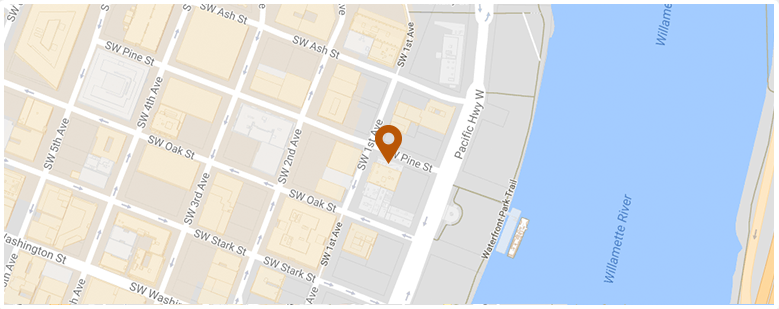
50 SW Pine St 3rd Floor Portland, OR 97204 Telephone: (503) 226-3844 Fax: (503) 943-6670 Email: matthew@mdkaplanlaw.com
map image