Articles Posted in Wrongful Death

I could not let this week come to an end without taking note of the fact that it has been National Poison Prevention Week. The March 18-24 period was marked by events here in Oregon and across the country designed to raise awareness of the dangers poisons pose to children. Safe Kids Oregon and the Oregon Poison Center were the main organizers here in the state. 2012 marks the 50th anniversary of National Poison Prevention Week, which was first designated by Congress in the early 1960s.

The issues we consider during this time are important. As a news release from Safe Kids Oregon notes, “more than 90% of poisonings happen in people’s homes.” Adding that each year around 100 children aged 14 or under die from unintentional poisoning. More alarmingly, the release states that “approximately one-half of all poison-related calls to the Oregon Poison Center have to do with children ages 5 and under.”

Even more worrying is the revelation that “the greatest portion of these calls involve drugs like pain relievers.” This is noteworthy because many of us, when we think of children and accidental poisoning in the home, think of cleaning or pest control products. It is useful to be reminded that common medications can be just as deadly, especially where small children are concerned.

The revelation by The Oregonian last week that Oregon’s Occupational Safety and Health Agency has levied over $26,000 in fines against Precision Castparts was a reminder of the importance of Oregon workplace safety, and of the need for both regulatory and legal vigilance as we all struggle to prevent Oregon industrial accidents.

According to the newspaper, the company was cited for “32 violations at its large parts campus in Milwaukie and Southeast Portland, raising significant safety concerns for the third time since 2008.” Citing an Oregon OSHA spokeswoman, the paper notes that some of the violations “were repeats.” The overall list of infractions focused mainly on “cleaning operations in the two plants.” The company manufacturers parts for airplane engines and industrial gas turbines. It also does work for the military.

It is good to read that none of the safety violations cited by OSHA were deemed to be “willful” on the company’s part – the most serious category. Still, the newspaper reports, “28 were serious, with nine having the potential to cause death.”

The Oregon Occupational Safety and Health Division is investigating the circumstances of a fatal Oregon workplace industrial accident late last month involving a man who fell into a chemical holding tank aboard a barge on the Willamette River, according to local TV station KOIN.

According to The Oregonian, the Portland Fire Department’s hazmat rescue team was called to the barge near Swan Island after workers realized one of their colleagues was missing and that he had last been seen standing near an open hatch aboard what the newspaper describes as “a 40-feet-by-50-feet barge filled with a toxic and corrosive chemical liquid called lignin amine…. (which) is often used to spray fruit trees.”

When rescue crews arrived they found the hatch leading to one of the barge’s tanks open and the man’s body at the bottom, the newspaper reports. The Oregonian quotes a member of the Portland Fire & Rescue team describing the tank as a “double hazard,” noting both the extremely confined space inside the tank and the hazardous materials it contained. According to the paper, the atmosphere at the bottom of the tank contained only 1% oxygen, guaranteeing that the victim would have perished within minutes of falling in. While standard safety procedures would have required wearing a life vest, the paper says it is unclear whether the victim was doing so – though granted the lack of air inside the tank it is not likely that a vest would have saved him.

An opinion column published in Eugene’s Register-Guard newspaper earlier this month raises a number of important questions about a staple of agricultural life: aerial spraying. While crop dusting is viewed as an essential component of agriculture by many farmers, it has its detractors as well (the op-ed’s author is identified as a “farmer and forestland owner”) and there is no question that without proper safeguards and appropriate caution by pilots the practice may lead to Oregon wrongful death or to less severe – but nonetheless serious – medical consequences.

The op-ed criticizes the state bodies charged with regulating aerial spraying for what the author calls their “utter failure” to protect the public. Its harshest criticism, however, is reserved for Oregon regulations and legal opinions that leave those involved in aerial spraying “immune from liability for off-target drift, unless the poison causes organ failure or death.”

Clearly such a development, leading to a Eugene or Salem wrongful death, would be the most serious consequence imaginable. This is not, however, merely a health issue. Issues of commerce and people’s livelihoods are also involved. For example, with the growing popularity of organic products, the drift of pesticides from one farmer’s land to another has become a serious issue being addressed by legislatures in many parts of the country. Obviously the possibility of drift is far greater when the pesticide is applied from the air. Leaving aside entirely any potential health concerns, many organic farmers around the country fear the loss of high-value crops should someone else’s ill-applied pesticide drift across onto their land.

An Idaho mine operator says it plans to contest citations and fines totaling $1 million levied by the federal government in the wake of a miner’s death earlier this year, the Associated Press reports in an article reprinted in The Oregonian. The violations that led to the citations, in turn, raise wrongful death questions and are a reminder for us here in Oregon that mine operators and other employers in hazardous industries have, at all times, both a legal and a moral obligation to do everything they can to keep employees safe.

The 53-year-old victim, a 12-year veteran of the mine according to AP, died last April after a cave-in at the place where he and his brother were working, approximately one mile underground. The two “had just finished watering down blasted-out rock and ore in the mine in the Idaho Panhandle before the collapse,” the news agency writes.

The miner’s job involved “drilling holes in a rock face, blasting it to rubble, then carting the debris to the surface to be processed into silver, lead and zinc.”

A ruling earlier this month by the Ninth Circuit Court of Appeals has opened the way for the parents of a teenager shot dead by police officers in Washington County to move ahead with an Oregon wrongful death lawsuit, according to a recent article in The Oregonian.

The case stems from the 2006 death of an 18-year old near Tigard, in Washington County, Oregon. The teenager was threatening to kill himself with a pocketknife when police officers arrived at the site of the incident. Within four minutes the officers had fired 11 shots, killing the teen, despite pleas from his family and friends that the boy posed a threat to no one but himself. The family has long claimed that the law enforcement officers overreacted and made little effort to assess the situation before using deadly force.

After the Washington County sheriff’s office issued an investigative report absolving the officers from any improper conduct the teen’s family “brought suit against the officers and the county in (an Oregon) wrongful death claim, alleging an unconstitutional use of force,” according to the newspaper. A federal district court issued a summary judgment in favor of the officers and the county, but the circuit court has now reversed that ruling and sent the case back to the lower court.

When five Beaverton families and Mattel Corporation settled Oregon wrongful death lawsuits related to contaminated water near one of the company’s former plants earlier this year issues related to cancer rates and carcinogens were not closed. According to a recent article in The Oregonian a new study conducted by a Beaverton resident, combined with a reassessment of the toxicity of the chemical at issue – trichloroethylene, also known as TCE – are potentially bringing the question of Oregon wrongful death claims back into the public arena.

The newspaper’s article focuses on a long-running Beaverton wrongful death case involving a plant that was originally owned by View-Master and later passed through several other corporate hands before being closed by Mattel in 2001.

In 1998, the paper reports, “TCE was found in concentrations 320 times the federal standard in a private well that supplied drinking water” for the plant. “Many former workers, who sipped the tainted water later suffered from cancers, according to an unofficial health study.” In May, Mattel settled Oregon wrongful death claims with five families. Now, however, the paper reports that a new health study funded by the Oregon Community Foundation “may strengthen the case for other workers who wish to file lawsuits.” The study “suggests a strong connection between TCE exposure and certain cancers,” the paper quotes its author, Amanda Evans-Healy saying. Evans-Healy was one of the successful defendants in the earlier set of Beaverton wrongful death actions.

The federal government’s Food and Drug Administration announced recently that Beaverton-based King International has agreed to recall its ShoulderFlex Massager. The Oregon product recall was ordered after evidence emerged that ShoulderFlex use can lead to serious injuries or even a product liability-related Oregon wrongful death.

“One death and one near-strangulation have been reported after a necklace and piece of clothing became caught in a rotating component of the device. In other cases the FDA says people’s hair became caught in the ShoulderFlex,” Portland television station KATU reports.

The station notes that all 12,000 of the massagers the company has sold nationwide since 2003 are being recalled. It adds that efforts to obtain a comment from the Beaverton-based company were unsuccessful.

The family of a Salem firefighter who killed himself after being offered the choice of resignation or being fired from the department have filed an Oregon wrongful death suit against the city, according to a recent report in the Salem Statesman-Journal. The paper says that his family believes Craig Warren, a 20-year veteran of the city fire department, was neither properly treated by the department’s medical personnel when he began manifesting signs of mental illness, nor was he humanely treated by the department when it decided to discipline and, later, fire him.

“It’s our opinion that the way the city conducted the investigation of Mr. Warren, especially when they became aware that he was having some emotional difficulties, was very cruel,” the paper quotes the family’s attorney as saying. It also quotes city officials declining comment on the grounds that they were still examining the particulars of the Oregon wrongful death lawsuit.

According to the Statesman-Journal, the path to this Salem wrongful death case began when Warren was interviewed three times in 2009 by his departmental commanders and ordered to utilize the department’s employee assistance program, after they noticed that “he was disturbed,” had begun making “inappropriate comments” to colleagues and exhibited a high level of anxiety. At about the same time, the department underwent “a switch in psychiatrists (which) resulted in a medication mistake and Warren was not fully treated,” the paper reports.

It is one of the things we all most fear – and over which we have the least control – when entering the hospital: preventable errors. Recently, Portland’s main newspaper has been reporting on an equally disturbing problem related to preventable errors and Oregon medical malpractice: the fact that because some of the reporting hospitals do regarding their mistakes seems to be coming up short. As a result, there is not as much data available to doctors and medical administrators as there should be. That, in turn, may mean that some hospital errors are going unaddressed because word of them is not making its way through the state health system.

The issue was brought to light by a recent article in The Oregonian. The paper noted that “at least 34 patients died as a result of preventable mistakes in Oregon hospitals last year.” The real issue, however, is that fully one-third of Oregon’s hospitals “chose not to report a single error in 2010.” As the paper notes, “this strains credulity.”

Hospital reporting is an issue I’ve addressed before – and one that should command a lot more public attention than it does. It is, of course, natural that few people like to acknowledge error, but when reporting data could lead to better procedures and, eventually, a drop in Oregon hospital deaths we have entered a realm where pride has no place.

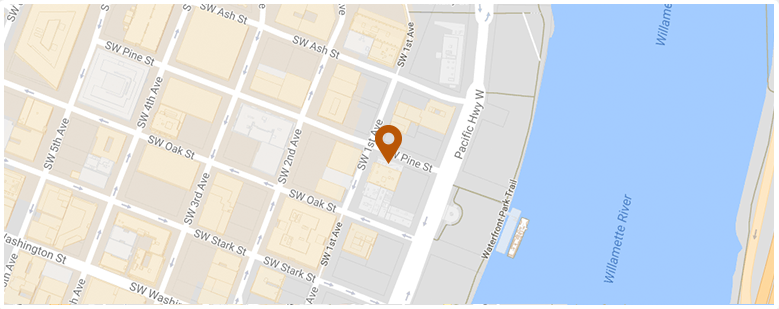
50 SW Pine St 3rd Floor Portland, OR 97204 Telephone: (503) 226-3844 Fax: (503) 943-6670 Email: matthew@mdkaplanlaw.com
map image