
Articles Posted in Products Liability

An article published this week in the online magazine Slate makes a compelling case that the Consumer Product Safety Commission, an organization many of us think of as an important guardian of Americans’ safety and rights, could do a lot more to make its own workings transparent.

The article begins with a simple example: “Sometime before October 2011, an unknown child was injured by an unknown product that was produced by an unknown manufacturer. The Consumer Product Safety Commission published a report of the injury in its online database of safety complaints.” It also notes that the unnamed company has so far been able to contest what it views as inaccurate charges that its product is unsafe by filing a secret lawsuit against the CPSC, all the while keeping its name, its product and the allegations against it from being identified in the CPSC database.

Perhaps even more shocking is the revelation that when a federal court in Maryland allowed the secret suit to go forward, accepting the company’s argument that letting people know it was being sued might be bad for business, the government opted not to appeal that decision. According to Slate three consumer-advocate groups have since then been “granted permission to intervene by the court in October (and) are pressing on” with the appeal that the federal government refused to lodge.
Now that Thanksgiving is over and Christmas, Hanukkah and the New Year are fast approaching it is a good time to remember that holiday joy should also be tempered with a measure of caution. Earlier this month the US Public Interest Research Group released its annual survey of dangerous toys, Trouble in Toyland. It is a reminder that parents need to take care during the coming weeks to ensure that unsafe products do not threaten their families.

The issue here is not so much the common dangers that any responsible parent is always aware of – choking hazards, for example (though, to be clear, these remain very real). Rather it is with manufacturing problems that parents may not immediately be able to see, but which pose a risk of death or serious injury to unsuspecting children.

Trouble in Toyland notes that “toys with high levels of toxic substances are still on store shelves, as well as toys with lead content above the 100 parts per million limit.” It also expresses particular concern about toys containing “small powerful magnets that pose a dangerous threat to children if swallowed.”

An article published yesterday in the New York Times raises serious questions about product safety issues concerning bed rails, and is worth our notice here in Oregon. The paper’s reporting is built around the shocking revelation that the Consumer Product Safety Commission and the Food and Drug Administration have both “known for more than a decade about deaths from bed rails but had done little to crack down on the companies that make them.”

Even the fact that two government agencies had so much evidence raising questions about these dangerous products came to light only after a woman whose mother died in a bed rail accident launched a persistent letter-writing campaign. The woman became concerned about safety issues after her 81-year old mother died when she was “apparently strangled after getting her neck caught in side rails used to prevent her from rolling out of bed” at the nursing home where she lived.

The newspaper reports that data compiled by the CPSC documented 150 adult deaths, mainly among senior citizens, as a result of bed rails between 2003 and mid-2012. “Over the same time period, 36,000 mostly older adults – about 4,000 a year – were treated in emergency rooms with bed rail injuries,” the Times adds.

We’ve all seen the tiny red and yellow bottles in the supermarket. Most of us have seen the TV commercials too: 5-Hour Energy bills itself as an afternoon pick-me-up for flagging office workers, and as time-efficient replacement for a late commuter’s morning coffee.

According to an investigation by the New York Times, however, information compiled by the federal government raises important questions about the safety of 5-Hour Energy and similar products. “Since 2009, 5-Hour Energy has been mentioned in some 90 filings with the FDA, including more than 30 that involved serious or life-threatening injuries like heart attacks, convulsions and, in one case, a spontaneous abortion” the newspaper reports.

The paper notes that the mention of a product in an FDA filing does not necessarily mean that the product is connected with a particular incident – only that a connection is possible or suspected. Still, the Times reports that 13 fatality reports mention 5-Hour Energy and that the government, as a result, is concerned. The Times adds that the regulatory world concerning energy drinks is often confusing because some are treated as beverages while others (including 5-Hour Energy) are classified as dietary supplements. Each category has different rules regarding both labeling and whether and how adverse events need to be reported to the government. The article quotes an FDA official saying that the reports are prompting a closer examination by the Agency.

Following up a story I originally wrote about last month, there are new developments in the death of an 11-year-old Portland girl in a September accident involving a party bus.

According to The Oregonian the girl died when her skull was crushed as she “tumbled out of an emergency window on the bus when it careened around a corner… at Southwest First Avenue and Harrison Street.” She is reported to have been sitting atop a horseshoe-shaped couch in the back of the bus at the time of the fatal Portland bus accident. “The bus was full of kids on their way to a birthday party but no adults were in the back,” the newspaper reports.

As troubling as this lack of adult supervision is the revelation that the bus itself lacked the proper safety inspection permit and was being operated by a man who was not licensed to drive this type of vehicle, according to The Oregonian. This image of a company putting immediate profits ahead of safety is chilling not only for any parent considering whether to let a child attend a party involving this sort of bus but, frankly, for any adult who might be thinking of hiring a party bus for a special celebration. The fact that a window that was supposed to function as an emergency exit flew open so easily is a reminder of how essential the required government safety inspections are.

Last week the US Chamber of Commerce held its annual Legal Reform Summit – an event designed to scare Americans into believing that our courts are out of control. The American Association of Justice took this opportunity to set the record straight, posting an online slide show designed to educate Oregonians and other Americans about the Chamber’s excesses.

Titled “Top 10 Ways the US chamber Hurts Americans” the presentation highlights both the Chamber’s hypocrisy – its denunciation of “bailouts” even as it sought them for its largest corporate members – and the broader damage it does to the nation at large as one of the leading promoters of climate change denial.

This is an embedded Microsoft Office presentation, powered by Office Web Apps.

A recent announcement by the Consumer Product Safety Commission that Burlington Coat Factory has agreed to a civil penalty totaling $1.5 million is a victory for everyone concerned about injuries to Oregon children.

According to a CPSC news release: “The settlement resolves CPSC staff allegations that from 2003 to 2010, Burlington knowingly failed to report immediately to CPSC, as required by federal law, that it had sold many different children’s sweatshirts and jackets with drawstrings at the neck.” It adds that drawstrings at neck level can cause strangulation “that can result in serious injury or death.” The government has recommended against them for many years and they have been formally banned since 2006.

Even more disturbingly, the CPSC alleges that between 2008 and 2012 Burlington “knowingly sold or had in its store inventories many of these garments after they had been recalled.” The resulting $1.5 million civil penalty is the largest that the commission has ever assessed for a violation of this type.

The death of a six month old baby eight years ago, and another closely-averted tragedy two years later, set in motion a chain of events leading to the recall this month of hundreds of thousands of potentially dangerous strollers, according to a report by the Associated Press.

The strollers were finally recalled a few days ago “because children can become trapped and strangled between trays on them,” the news agency reports. The manufacturer, Peg Perego USA, issued a recall effecting “approximately 223,000 strollers, which include Venezia and Pliko-P3 strollers in various colors, made between January 2004 and September 2007.” The recall affects strollers with “a child tray and one cup holder.” Models with differing designs are not subject to the recall.

The article also notes the announcement of a much smaller recall (5,600 units) of strollers from another manufacturer: Kolcraft Enterprises. These are being pulled off of the market “due to potential falling and choking hazards,” the AP reports. The action stemmed from six reports of broken front caster wheels “and two reports of the basket’s support screws and nuts detaching.”

Earlier this month news broke of a head-spinningly large fraud settlement involving the pharmaceutical giant GlaxoSmithKline. According to ABC News the company “agreed to an unprecedented $3 billion settlement with the US government over allegations that the company advertised drugs for uses not approved by the Food and Drug Administration.”

Over the years we have all become a bit numb to horror stories about the health care industry. One of the few things both sides in the debate surrounding the Affordable Care Act appear to agree on is that the US healthcare system is in need of significant reform (exactly what sort of reform is a subject of far more debate).

Cases like this are the sort of thing that not only give an entire industry a bad name, but make reasonable people wonder how much deeper, and broader, corporate fraud is in the health care and pharmaceutical industry. To what extent are other companies putting their own profits ahead of patient and consumer safety?

The crash of a small aircraft near Vancouver this week is a reminder that Oregon and Washington product safety concerns can apply to large items, like an airplane.

According to The Oregonian a passenger on the small plane died and the pilot was critically injured in the Washington small aircraft accident. Quoting witnesses, the paper reports that the “plane possibly had engine trouble soon after takeoff.” The plane was attempting to return to Fort Vancouver’s Pearson Air Field when it crashed.

As is the case with all air crashes a careful investigation is now under way. The reports of possible engine trouble, however, are an indication that investigators should consider whether the airplane itself was defective. Airplanes, of course, are complicated machines and one must also consider the possibility that there was a maintenance issue involved, or even pilot error. None of this, however, precludes consideration of the aircraft itself.

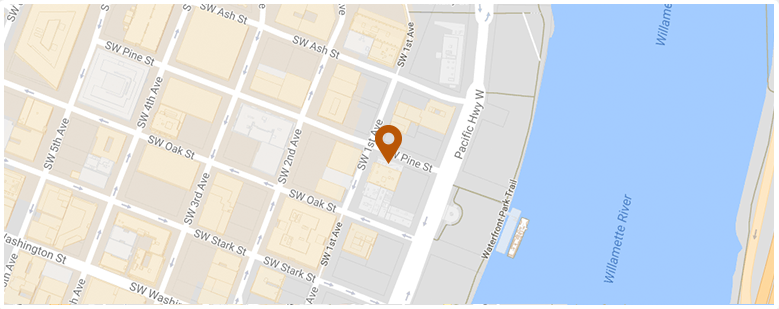
50 SW Pine St 3rd Floor Portland, OR 97204 Telephone: (503) 226-3844 Fax: (503) 943-6670 Email: matthew@mdkaplanlaw.com
map image