Articles Posted in Bicycle Accidents

The state department of transportation plans to address issues raised by the death of a cyclist in a Portland bicycle accident last December on a notoriously dangerous stretch of SW Barbur in Southwest Portland.

As I noted in a post last December, the issue most recently came to public attention with the death of 26-year-old Angela Burke. Burke was struck by an allegedly drunk and stoned driver as she rode along a section of SW Barbur that is notorious among local cyclists as one of the scarier stretches of road in Greater Portland. According to media reports at the time the driver who hit Burke was traveling at approximately 75 mph in a 35 mph zone.

According to Bike Portland, the ODOT plans to install four beacons along the most dangerous stretch of road: the crossing points near the Rasmussen apartments where a crosswalk straddles the road very close to a potentially dangerous bend. The website quotes an ODOT spokesman who notes that “the speed of the vehicles and the curve” make the crossing “a real challenge.”

Do cyclists wearing headphones pose a danger equivalent to drivers using a handheld cellphone to talk or text? That is a question the Oregon legislature is poised to address during the current session.

Rep. Michael Schaufler (D-Happy Valley) has introduced a bill (HB 2602) that, according to the advocacy organization BikePortland “would create a new traffic violation for ‘unsafe operation of a bicycle’”. The offense would target anyone riding “a bicycle on a highway while wearing a listening device that is capable of receiving telephonic communication, radio broadcasts or recorded sounds.” Violations could lead to a fine of up to $90 – the same amount as violations of the Oregon distracted driving law. To judge from the coverage at BikePortland the reaction among local cyclists has been far from positive. A selection of comments posted on the blog of BikePortland publisher/editor Jonathan Maus is pretty much uniformly negative.

An interesting aspect of this legislation which has not been addressed in the media coverage, however, is the degree to which this attempt to cut down on Oregon bicycle accidents differs in fundamental philosophical ways from the existing, year-old, Oregon distracted driving ban.

A crowd turned out on Barbur Boulevard last night to remember Angela Burke, according to an account posted on the Bike Portland website. Burke, 26, was killed last week by what The Oregonian, quoting police and witnesses, described as a speeding car (reportedly doing 75 in a 35 mph zone) traveling barely on the edge of control.

The Oregonian reports that the driver who allegedly struck Burke was arraigned last Friday “on allegations of negligent homicide and driving under the influence of intoxicants.” He was reported to have significant amounts of both alcohol and marijuana in his system at the time of his arrest, shortly after the Portland fatal pedestrian car crash that killed Burke. The suspect has another court date scheduled later this week.

As both the newspaper and Bike Portland noted, the stretch of Barbur where Burke died is notoriously difficult for Oregon pedestrians and cyclists to cross safely, especially at rush hour. Even those going to last night’s vigil were urged to take safety precautions.

Portland takes justifiable pride in being one of the most bicycle-friendly communities in America. According to US Census figures, quoted by The Oregonian, Portland leads all larger American cities in the percentage of our population that uses bikes to commute to work or school. Bike friendliness can, however, come with a price. According to the same analysis by the newspaper, a recent study by the Oregon Health and Science University found that bike commuters are at significantly high risk for injury than drivers or more occasional riders when it comes to Oregon bike accidents.

According to the paper, an astonishing 20 percent of all Portland bike commuters report being injured in an Oregon bicycle accident during the last year. The good news is that many of those accidents were minor (so minor what the article quotes some local bike advocates complaining that the study used too broad a definition of “accident”). Fully one-quarter of Portland bike accidents, however, were serious enough to require “medical attention.”

Put another way: “Compared with auto commuters, bicyclists are 12 times more likely to be seriously injured in a crash, largely because they are far more vulnerable, the study says.” The biggest thing we can do to lower those numbers, according to the authors, is to “focus on improving the safety of the bicycle commuting environment.” Or, in plain English, we can concentrate not only on improving and maintaining the city’s bike infrastructure, but also on enforcing the traffic laws.

A driver who allegedly hit two Portland cyclists in the space of a minute is being sought by police, according to an account of the incidents in The Oregonian. The Portland car and bicycle accidents took place “shortly before 8 a.m. Tuesday”, the paper reports. In both instances police describe the bikers as lucky to be alive, and say that officers were shocked by the apparent circumstances of the incidents.

Citing law enforcement sources as well as eye-witnesses, the newspaper describes a young (age 18 to 20) and erratic man driving a Subaru with no license plates. The first victim, a 47 year old man, was struck as he signaled to change lanes. He describes the driver as “clearly mad that I was in his way” and said the car sped around him, knocking him off of his bike in the process. The second incident took place barely a minute later near the Rose Garden. In that incident a 27-year old woman was struck and hurled through the air. She required hospitalization, though her injuries were described as not being life-threatening.

The incidents are a reminder that even in this – often cited as one of the most bicycle-friendly cities in America – things can go desperately wrong. If you have been hit by a car as part of an Oregon bicycle accident you owe it to yourself and your loved ones to make contact with a Portland bicycle injury lawyer as soon as possible.

A fascinating analysis published last week in the online Portland newspaper Enzyme PDX looks at the question of road fatalities – an issue as ever-present here in Portland as it is anywhere else. Specifically, the article compares Portland’s approach to road safety the approach used in Sweden. As the article notes, Portland’s population is just over one-third that of Sweden. But even though Sweden has a lot more people, it and Portland recorded around the same number of traffic fatalities in 2009 (355 for Sweden, 331 for Portland). This year, Portland’s streets have been deadlier – 198 fatalities so far in 2010 versus only 162 in Sweden. Again, that’s not Stockholm – it is all of Sweden.

Why, Enzyme PDX asks, do Sweden’s roads seem to be so much safer? The difference, the news site suggests, is essentially philosophical. Since 1997 Sweden’s traffic planners have worked on the assumption that they – the planners – are responsible for constantly modifying the traffic system in an effort to reduce or eliminate serious injuries and deaths while keeping traffic moving. This does not, they stress, relieve drivers of responsibility in any way. It does mean that the people who manage the transport system see lowering fatalities as just as much of a daily task as keeping the traffic moving.

Some of Sweden’s methods are well-known. The country has famously tough drunk driving laws and is equally famous for the zeal with which it enforces them. Less well known, and explored at length by Enzyme PDX is the effort the Swedes put into figuring out how best to help bikes, cars and pedestrians co-exist on the country’s streets and roads. Much of the time, that means forcing cars to slow down in areas where bikes and foot traffic are present. According to the website, speed limits in Swedish cities are a mere 18.6 miles per hour (30 km per hour) – because years of data analysis has shown that to be the optimal speed for overall safety in mixed-use areas.

Luck, and his helmet, appear to have saved the life of a 13-year old Milwaukie, Oregon child injured this week in an Oregon bike accident. According to The Oregonian, the boy “survived a collision with a car”, in part because he was wearing a heavy-duty helmet received as a gift from his mother only days earlier.

The Oregon bicycle accident took place at the intersection of Southeast Thiessen and Oetkin Roads south of Milwaukie’s city center. According to the newspaper, a motorist making a left turn collided with the boy, throwing him off the bike head-first and into the car’s windshield.

The boy “suffered a broken toe, dislocated left hip and fractured femur in the crash,” The Oregonian reported, but, thanks to the helmet, has no serious head injuries. Police officers quoted by the newspaper speculated that the boy was helped by the fact that he was wearing a heavy-duty skateboarding helmet rather than a traditional bike helmet at the time of the accident. The difference in helmets may have been a factor in the boy’s avoidance of Oregon traumatic brain injury.

A Portland driver accused of intentionally running over a cyclist last year was found guilty of assault by a Multnomah County judge Monday, according to media reports. Sentencing is scheduled for June 8, according to The Oregonian.

The Multnomah County judge cleared Wayne Thompson of first and second degree assault charges but found him guilty of the lesser crime of Third Degree Assault. The Portland auto and bike collision took place last August. According to The Oregonian Thompson and cyclist Michael Luther argued in a parking lot near the intersection of Northeast 122nd Avenue and Glisan Street before “Thompson put his car into reverse and backed into Luther at an estimated 40 mph, police said.” Witnesses said that at the time of the accident Thompson “was looking over his left shoulder, in the direction of travel, and appeared agitated when he struck Luther.”

Though he was wearing a helmet at the time of the incident, Luther suffered an Oregon traumatic brain injury and has been unable to return to work.

About 50 people, including Portland’s mayor, gathered last week to mark the unveiling of a unique spot: a shrine dedicated to Portland bicyclists by St. Stephen’s Episcopal Church, along with the introduction by the church of a formal ‘bicycle liturgy’, according to a recent article in The Oregonian.

Central to the shrine is a ‘ghost bike’ covered in flowers and dedicated to the memory of a young Portland cyclist who was struck by a car and died in an Oregon bicycle accident in 2007. Mayor Sam Adams told those attending the service that “out of the great tragedy of (Tracey) Sparlings death emerged the city’s bike boxes, designed to prevent more right-hook turns like the one that killed” her, the newspaper reported. According to the church publication Episcopal Life, Sparlings was struck and killed by a cement truck which failed to see her while turning. The driver of the truck was not prosecuted.

The event was a reminder that even in Portland – often regarded as one of the most bike-friendly cities in the country – riders often find themselves endangered by drivers who are not keeping an eye out for cyclists.

An Oregon bicycle and car accident in which a Portland man allegedly intentionally hit a cyclist is being heard in the Clatsop County courts. Prosecutors say the 23 year old driver “just took off” after hitting a cyclist in Seaside, according to TV station KVAL. The station reports that the suspect was found hiding in the woods after abandoning his truck near the scene of the accident.

The Oregonian reports that the cyclist was seriously injured in the incident, and that the driver has been charged with attempted murder, first-degree assault and felony hit-and-run. Bail was set at $250,000.

The accident is a reminder of the importance of both cycling safety, and of the need for the strict enforcement of laws requiring motor vehicles to share the road with law-abiding Oregon bicycle riders. Drivers who intentionally run down cyclists are, mercifully, rare. Far more common, however, are careless motorists who simply do not pay as much attention as they should to Oregon bike riders. A Portland bicycle injury lawyer can advise cyclists who have been hit by cars – whether accidentally or intentionally – on their legal rights and whether they are entitled to damages to cover expenses incurred as a result of an Oregon cycling accident involving a car or truck. Such accidents can be especially dangerous, since Portland cyclists hit by a car stand a significant chance of suffering an Oregon traumatic brain injury.

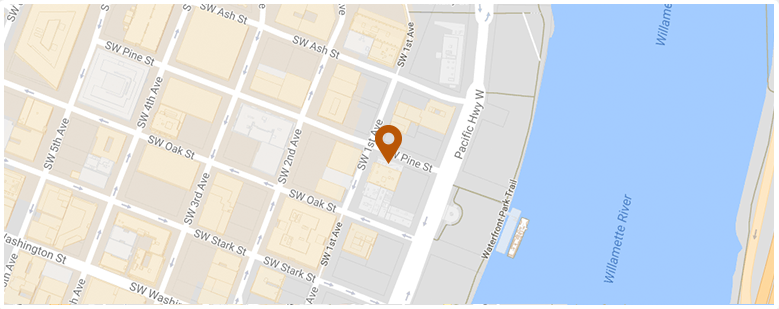
50 SW Pine St 3rd Floor Portland, OR 97204 Telephone: (503) 226-3844 Fax: (503) 943-6670 Email: matthew@mdkaplanlaw.com
map image