Articles Posted in Drunk Driving

Two former Portland-area prosecutors made headlines in The Oregonian this week with their advocacy of marijuana legalization. According to the newspaper Norm Frink and Mark McDonnell both believe that legalization is inevitable and, as a result, are trying to focus public attention on getting the details right.

“This is just a political fact in Oregon, even if some people don’t want to admit it,” the newspaper quoted Frink saying. “As a result,” the paper went on to note, “Frink and McDonnell, who headed the district attorney’s drug unit before retiring, on Tuesday announced that they wanted legislators to refer a marijuana legalization measure to voters in November.” The key to their idea is combining a voter referendum with legislative action. Oregonians would be asked to approve marijuana for personal use, but would charge the legislature with working out the details before the new law went into effect. “The two want to put off allowing legal possession of marijuana until after the legislature figures out how to set up a regulatory system,” The Oregonian reports.

The experience of Washington and Colorado would appear to validate this idea. When the two states became the first to make the possession and use of marijuana legal for personal recreational use the result was an immediate legal conundrum. At the most basic level, legalization puts state law in conflict with the federal government, but there are a number of equally serious – and in some ways more immediate – issues. Take drunk driving, for example. It ought to be relatively easy to agree that impaired driving brought on by pot use is just as dangerous as driving while drunk. Any state legalizing marijuana, however, will need to figure out ways to measure and assess the drug as part of a drunk driving arrest: what level of marijuana impairment crosses a safety line? What is the best and most efficiently to measure it? How should the use of marijuana and alcohol together be treated (presumably the two in combination could cross an impairment threshold at a point when neither, by itself, does so)?

With Seattle in the Super Bowl this weekend excitement surrounding the Big Game is even higher than usual here in the Pacific Northwest. Unfortunately, increased excitement can often lead to overindulgence, and local and federal officials alike warn that Super Bowl weekend can be a dangerous time to be on the road.

According to a news release issued earlier today by the National Highway Traffic Safety Administration “on Super Bowl Sunday 2012 alone, 38 percent of fatalities from motor vehicle crashes have been connected to drunk driving, compared to 30 percent on an average weekend.” The NHTSA has partnered with the NFL and the Techniques for Effective Alcohol Management (TEAM) Coalition to urge fans to be careful and drink responsibly wherever they choose to watch this Sunday’s game.

If self-control is not sufficient to prevent Oregon drunk driving, everyone should also be aware that police will be out in force across Portland this weekend. “The Portland Police Bureau and the Oregon State Police are teaming up on Sunday in a crackdown on drunken drivers. Their message: ‘Think before you drink.’ If you do, arrange for safe transportation to Super Bowl activities,” according to a report in The Oregonian.

An item posted late last night on The Oregonian’s website offers details of a serious Washington bicycle accident involving a teenage rider in which a motorist faces assault charges and, potentially, drunk driving charges as well.

The paper, citing the Everett Herald, reports that a 52-year-old Everett man driving a pick-up truck “allegedly struck a teenage cyclist, launching the boy off a 30-foot overpass… the crash caused the victim, 16, to fall about 20 feet onto a hillside, police said. His body then tumbled an additional 10 feet down into the street.” The paper reports that the boy’s injuries include a possible broken neck – meaning that, while they are not, according to the paper, life-threatening, they could be life-altering for both him and his entire family.

The pick-up truck driver “told police he had been drinking beer or wine a few hours before the crash and believed he suffered a seizure.” The paper reports that when he was arrested at the scene the suspect “had trouble standing and could not easily move his hands. Officers said the suspect slurred his speech and had bloodshot eyes.” Bail for the suspect was set at $25,000, the paper reports.

An article in today’s Oregonian (it was published online last night) details the early discussions in Salem about legislation that would dramatically alter where and how liquor is sold here in Oregon. It is a potentially complex issue, one made no simpler by the potential Oregon dram shop law issues raised by the bill.

According to the newspaper: “Under a so-called “hybrid” plan… the state would maintain its monopoly control over liquor but would allow sales in large grocery chains. Smaller state-licensed liquor stores would remain, and merchants would be allowed to set their own prices above a stipulated floor.”

The Oregonian adds that if the plan, which is being proposed by the Oregon Liquor Control Commission, becomes law it “would represent the biggest shale-up of Oregon’s liquor delivery system since Prohibition ended 80 years ago.” The paper notes that there are other liquor law reform proposals under discussion in Salem this winter, including “a possible ballot measure that would take the state out of the liquor sales business and hand it over to the private sector.”

As we enter the New Year’s holiday period let me add my voice to the many out there reminding everyone to be safe and act responsibly tonight and tomorrow.

Throughout the country – perhaps even the world – New Year’s Eve and the days surrounding it have a reputation for being a particularly dangerous time to be on the roads. People overindulge and then get behind the wheel – sometimes consciously, more often simply without thinking clearly. The results are a danger not only to themselves and their passengers but also to everyone else on the road.

According to the Oregon State Police, during last year’s 102-hour ‘holiday reporting period’ (6pm on December 28 through midnight on January 1) “12 people died in four separate fatal traffic crashes on Oregon roads… The 12 fatalities, including 9 deaths in (a) December 30 bush crash, equals the highest number reported previously two different years – 1998 and 1999, during this holiday period since 1970 when ODOT began to gather these statistics.” The fatal bus crash on Deadman’s Pass in the east of the state led to a federal investigation and, as I noted at the time, raised significant Oregon wrongful death issues.

Police are investigating a suspected fatal Oregon drunk driving car crash in the east of the state, according to a report by an Idaho TV station that covers the region. According to KIVI a 41-year old man from Vale, in the easternmost part of Oregon, died last week in the crash on Highway 20, in rural Malheur County.

According to the TV station the victim “was headed eastbound on Highway 20 on September 15th when his vehicle crossed into the westbound lane and collided with a semi-trailer… according to police (the driver) was likely under the influence of intoxicants after a citizen report matching his vehicle was called into dispatch before the accident.”

There are several lessons we can take away from this tragedy. The first, and most obvious, is the unnecessary damage to so many lives that drunk driving causes. I’ve written on many previous occasions about the dangers that large semi-trucks pose on the roads of Eastern Oregon. In this case, however, a driver who was doing nothing wrong had his life, and potentially the lives of other drivers and passengers in the vicinity, put in danger by someone else’s irresponsible conduct.

It’s a cliché: safety is everyone’s responsibility. It is also, however, true, and that fact was reinforced last week by Washington State’s Supreme Court. According to an Associated Press dispatch, republished by The Oregonian, the court held that “cities, counties and utility companies can be liable when faulty road design leads to injuries in car crashes – even when the driver is drunk.

According to the news agency the case focused on a crash near Anacortes. “Two people who had been drinking were injured when their car ran off the road and struck a utility pole that was reportedly closer to the roadway than guidelines dictated.” In overturning a lower court ruling the state Supreme Court held that “government entities owe a duty to ensure roads are reasonably safe for public travel, no matter whether the driver is at fault,” according to the AP.

Obviously this is not, and ought not to be taken as, an excuse of or license for drunk driving. Indeed, in legal terms it is important to remember that DUI is a crime regardless of whether one gets involved in an accident or not. In this instance, however, the court was addressing a bigger issue: whether a driver’s physical condition at the time of a particular accident can be used as an excuse by government or a utility company to escape responsibility for its own negligence. The court held that government and public utilities both have a broader responsibility to provide a safe environment for all users of public roadways. The bad behavior of individual drivers does not absolve the city or county from their responsibility to provide a roadway that is safe for everyone – regardless of the irresponsible behavior of some individual drivers.

A New York Times report this weekend about a terrible multi-vehicle crash in Nevada is a reminder of the importance of issues Portland’s own mayor has spent the last few weeks spotlighting.

A Reuters news agency dispatch, republished by the Times, cites local law enforcement, reporting that “five members of a California family were killed in Nevada when their van was struck from behind by a teenage driver who was arrested on suspicion of driving under the influence.” The 18-year-old driver suffered minor injuries in the crash which reportedly happened when he rear-ended the van. In addition to the five people who died two other members of the same family were also riding in the van and were treated in area hospitals following the DUII accident. The crash took place on Interstate-15 about 80 miles north of Las Vegas.

The accident comes as Portland mayor Charlie Hales has worked to spotlight an increase in DUII incidents in our city. As a recent report in The Oregonian noted, “five of the 11 people killed in Portland traffic crashes since Jan. 1 involved people driving under the influence.” Hales has sought to use the media to publicize a situation he views with “alarm” and to remind Oregonians: “Drive sober to save lives. Doing otherwise is illegal and reckless,” the paper notes, adding that the current pace of DUII-related fatalities in Portland is well ahead of last year’s.

A three-vehicle Polk County, Oregon car accident over the weekend left one man dead and five people hospitalized, according to a report in The Oregonian.

The Oregon auto accident took place in the town of Dallas, about 60 miles southwest of Portland. The newspaper, quoting the Oregon State Police, reports that the sequence of events began Saturday evening when a van driven by a man from Woodburn “was heading west when it traveled across the center line and collided” with a vehicle headed in the opposite direction on State Route 22.

The driver of the eastbound vehicle was a 69-year-old Silverton man. He was pronounced dead by paramedics responding to the accident. Two other people in the car were taken to a Salem hospital with what The Oregonian describes as “critical” injuries. The driver of the van was not seriously injured in the initial crash, but was struck by a third vehicle, a westbound pickup truck, when he stopped to assess the initial accident. He was taken to the same Salem hospital as the victims in the car and is reported to be suffering from “serious injuries.” The two people in the third vehicle were treated in McMinnville for minor injuries.

A single car accident in the early hours of Friday morning is calling attention to the problem of Portland drunk driving and the damage it can cause.

According to a report in The Oregonian, in the early hours of Friday “a gold four-door 1998 Toyota Corolla crashed into the overpass abutment at Northeast 33rd Avenue and Columbia Boulevard, ejecting the 34-year-old driver from the vehicle.” The paper notes that the woman wound up trapped underneath the car. After being rescued she was taken to an area hospital with what were described as “life-threatening injuries.” The newspaper quotes police sources saying that an investigation is still in progress, but that the crash appears to be alcohol-related.

While we can take some small consolation from the fact that this terrible accident involved only a single car, it also serves as a powerful reminder of the damage drunk driving can do – a reminder that is especially timely as we enter the heart of the Holiday Season. The period between Thanksgiving and the New Year is always filled with parties, visits to and from relatives and many, many opportunities to overindulge.

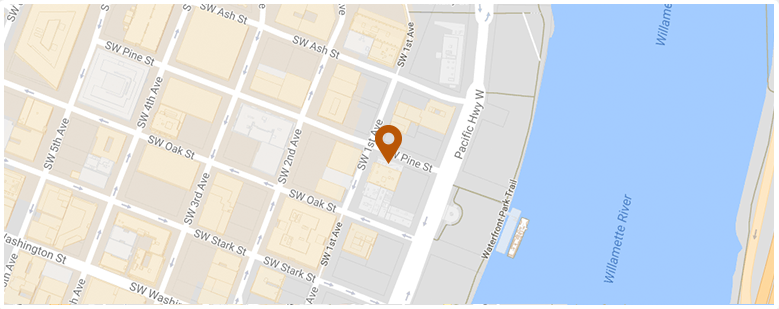
50 SW Pine St 3rd Floor Portland, OR 97204 Telephone: (503) 226-3844 Fax: (503) 943-6670 Email: matthew@mdkaplanlaw.com
map image